
Research Focus: Neural Control of Human Movement
The Neurophysiology Laboratory focusses on identifying how the nervous system controls human movement. Within this broad area of investigation, research is divided into two main categories:
- How sensory feedback contributes to movement control, including
- The role of reflexes in neural control of movements such as walking and grasping
- The importance of feedback from sensory receptors in the skin
- Using electrical stimulation to generate contractions of human muscle. This work has relevance both for understanding how the nervous system controls movement but also for using electrical stimulation for rehabilitation for persons with movement disorders.
How intrinsic properties of neurons within the spinal cord play a role in helping to shape motor output, including
- The extent to which such intrinsic neuronal properties contribute to normal voluntary contractions and "abnormal" contractions such as those during muscle cramps, spasms and spasticity.
- Whether activating these spinal neurons may be useful clinically for functional electrical stimulation (FES) of muscle to help restore movement and overcome the muscle wasting that results from disuse.
- Current findings show that:
- when electrical stimulation is applied over human muscle, large contractions develop which are not due to the direct activation of the muscle beneath the stimulating electrodes.
- They result from the “reflex” activation of neurons within the spinal cord, probably involving plateau potentials in the spinal neurons.
- This suggests that human spinal neurons may play a very active role in helping to shape motor output.
Other Research
Nerve conduction velocity in an elephant is measured. See story.
Electrically stimulating reflex pathways in the spinal cord holds new hope in preventing muscle atrophy. See story.
Recently Presented Posters
| International Motoneuron Society 2022 | Functional Electrical Stimulation (FES) and Transcutaneous Spinal Cord Stimulation (tSCS): Better Together? | 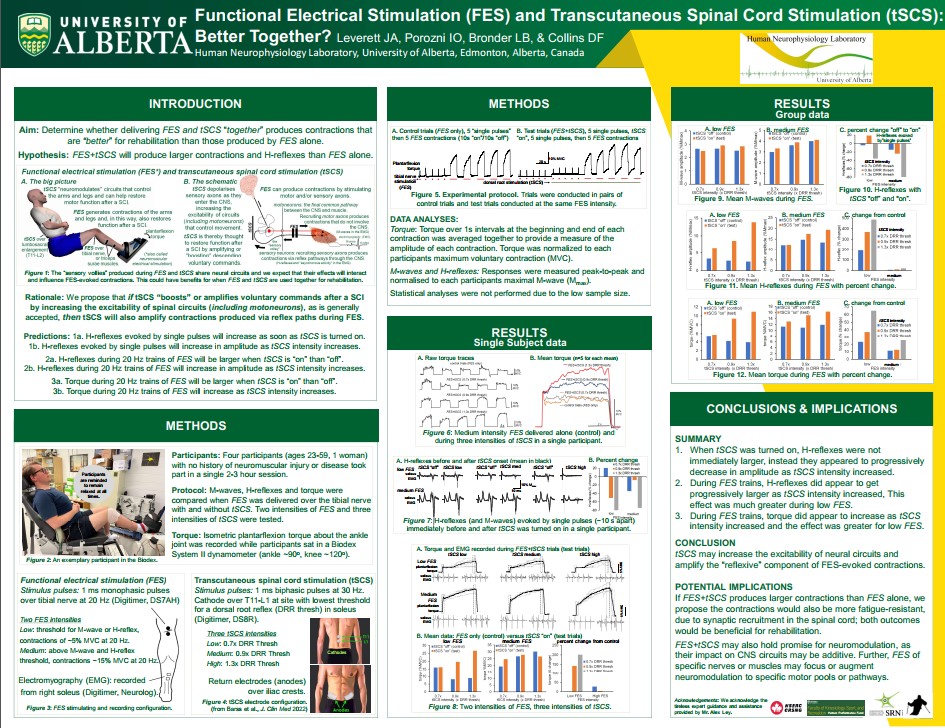 |
| Research Revealed 2022 | Do receptors in the skin contribute to the perception of movement in the hand? | 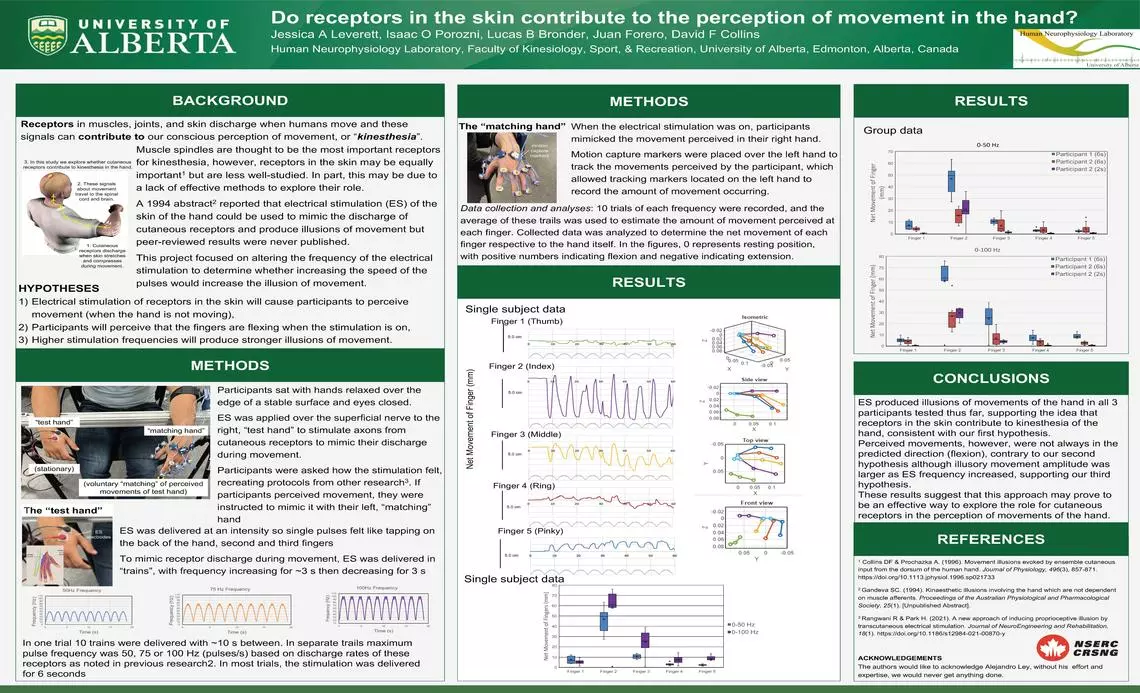 |
| Research Revealed 2022 | Swipe Left on this Pulse: optimizing electrical stimulation to reduce paralysis | 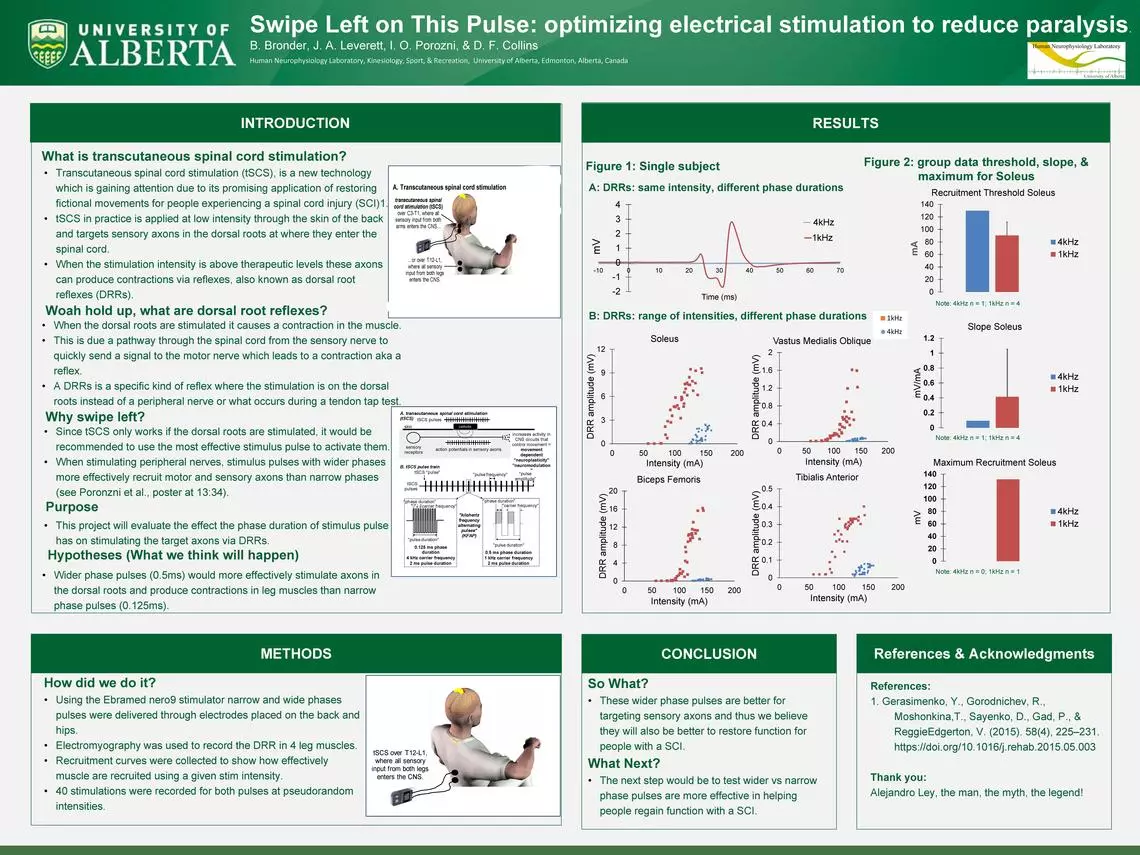 |
| Research Revealed 2022 | Optimising Electrical Stimulation to Recruit Axons in a Human Nerve. | 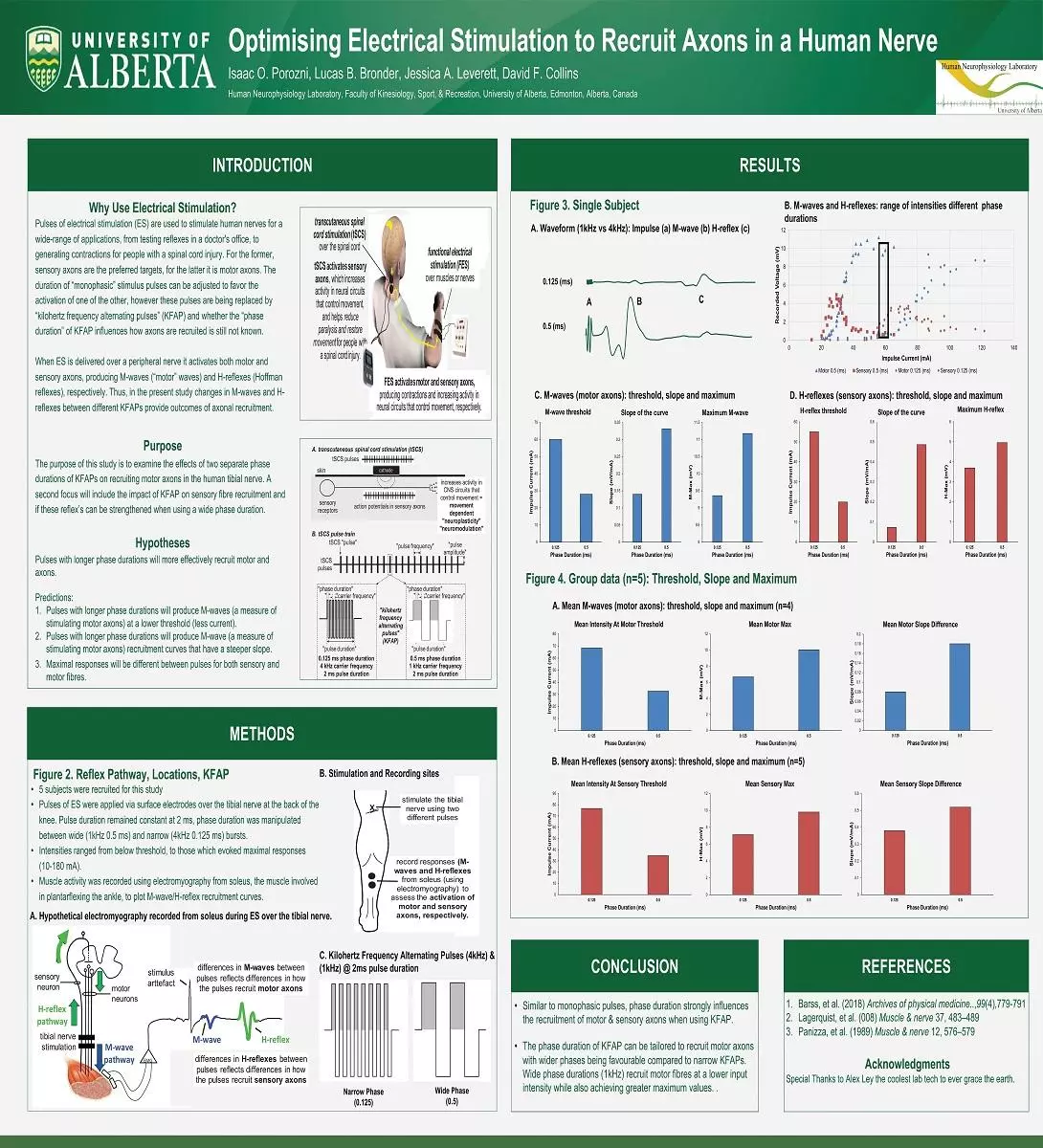 |
| ISEK Congress 2020 | Stimulus phase duration, not waveform, influences the relative recruitment of sensory and motor axons in a human peripheral nerve. | 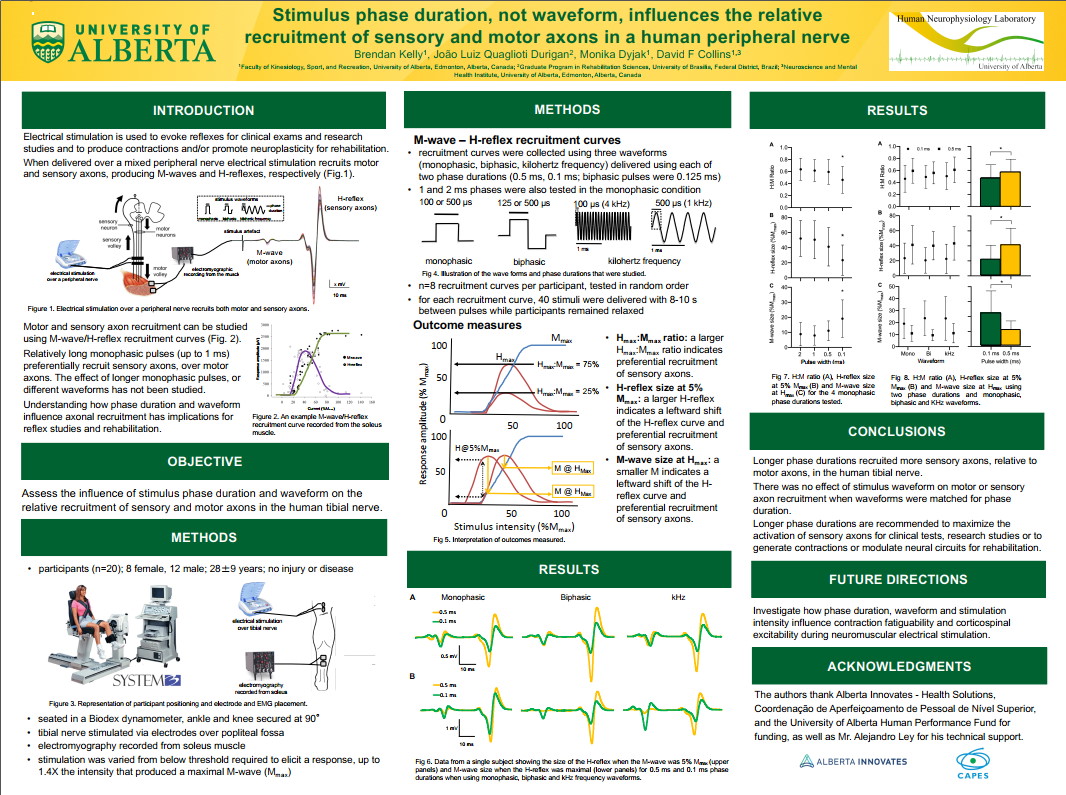 |
| ISEK Congress 2020 | Stimulus phase duration, |
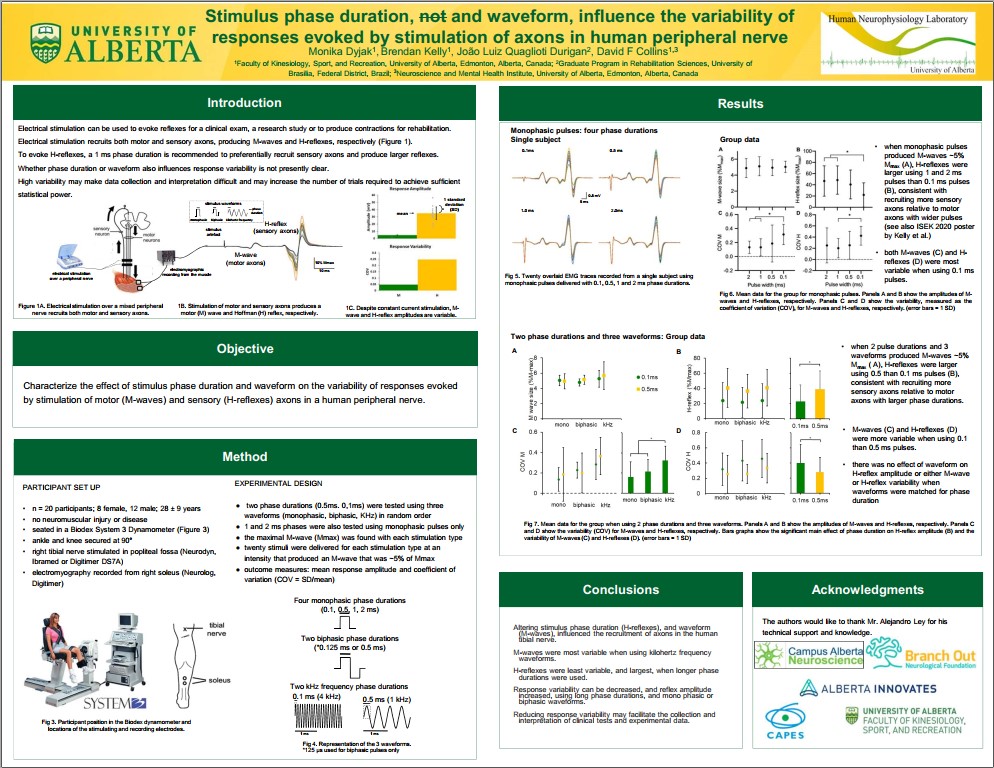 |
| Research Revealed 2018 | Multi-channel functional electrical stimulation: how many channels are optimal to reduce contraction fatigability? | 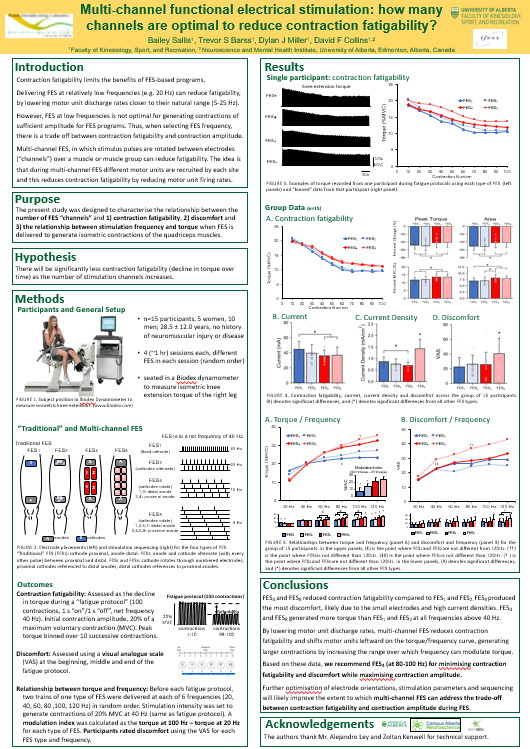 |