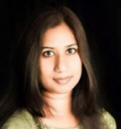
 Hema
Velanki Hema
Velanki
MSc student, Neuroscience
Bachelor of Medicine, Bachelor of Surgery
(Rajiv
Gandhi University of Health Sciences, Bangalore, India)
Joined Mushahwar laboratory in September 2015
The overall goal of my project is to develop an intervention
that would improve the rate of tissue healing after the
development of a pressure ulcer. Deep pressure ulcers affect a
wide sector of the patient population including the elderly,
those with neural injuries or diseases such as stroke or spinal
cord injury, bone and joint diseases, cardiac or renal failure,
coma, or even those undergoing long surgical procedures.
Pressure ulcers can originate at the surface of the skin and
progress inwards if unattended, or at deep bone-muscle
interfaces and progress outwards. To accomplish our goal, I will
determine whether intermittent electrical stimulation can be
used as a treatment modality to accelerate healing progress and
understand the underlying mechanisms of action. Early detection
and treatment can prevent deterioration of the soft tissue
around the bony prominences and establish a better quality of
life.
PhD Students
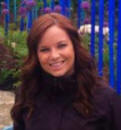 Ashley Dalrymple PhD student, Neuroscience
Project:
Restoration of Walking after Incomplete Spinal Cord Injury
BSc, Electrical Engineering, Biomedical Option, 2013
(University of Alberta, Edmonton, Alberta)
Joined Mushahwar laboratory in September 2013
The overall goal of my work is to develop an intervention to
improve mobility after an incomplete spinal cord injury (SCI).
The most common type of SCI is incomplete, where some weak
ability to move remains, and the functional deficits vary from
person-to-person. Restoring walking is a top priority for people
with paraplegia and is a central research and clinical goal.
Intraspinal microstimulation (ISMS) is a novel approach
developed in our lab for restoring walking after complete
paralysis due to SCI. This method involves the implantation of
fine, hair-like microwires into a small region of the spinal
cord that houses connections to leg muscles. Low levels of
electrical current are passed through these wires to activate
these areas to produce functional leg movements. I will develop
strategies to control walking after an incomplete SCI.
Specifically, I will develop control strategies for ISMS to
dynamically adapt to each individual’s injury and augment
remaining function. By using ISMS to restore walking daily, it
is probable that after removing the stimulation, voluntary
control, coordination, and balance will improve. Over time, the
subject may be less reliant on the assistance provided by ISMS
to walk. My work will not only restore lost function due to
injury, but also assist the spinal cord in forming new effective
connections. Adaptive control strategies will allow for
patient-specific rehabilitation, which is necessary as no two
SCIs are alike.
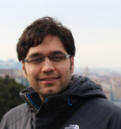 Amirali Toossi PhD
Candidate, Neuroscience
Project: Preparation of Intraspinal
Microstimulation (ISMS) Technique for Clinical Testing
BSc, Electrical Engineering, 2010
(K.N.Toosi University
of Tech., Tehran, Iran)
MSc, Electrical and Computer
Engineering, 2012
(University of Alberta, Edmonton,
Canada)
Joined Mushahwar laboratory in October 2012
The ultimate goal of this project is to develop
an intervention that would restore standing and walking for people
with spinal cord injury. Over the years our lab has developed a
neural interface that delivers electrical pulses to the spinal
cord of the animals and has allowed them to stand and walk again
after spinal cord injury. Past research results suggest that this
technique maybe viable for people with paraplegia as well. In
order to be able to test this intervention in people there are
still some questions that need to be addressed which are the
specific focus of my project: 1-Where exactly should the implant
be placed in humans? 2- Obtaining direct information about the
target region of the implant in humans by conducting
intra-operative experiments in two human volunteers. 3- Developing
a suitable implant for humans. The results of these projects will
be extremely valuable to developing the first version of an
implant suitable for testing in humans.
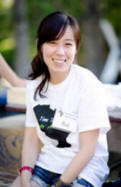 Rui Zhou PhD
Candidate, Neuroscience
BSc, Biomedical Engineering, 2006
(Department of
Biomedical Engineering, School of Medicine, Sun Yat-Sen
University, China)
MSc, Electrical and Computer Engineering, 2008
(Institute of Biomedical Engineering, Department of Electrical
and Computer Engineering, University of New Brunswick,
Canada)
Joined Mushahwar laboratory in September 2010
The overall goal of my project is to develop rehabilitation interventions for
improving walking after spinal cord injury. Restoring walking has been one of
the most frequently expressed desires after paralyzing injuries or diseases. To
recoverwalking after spinal cord injury (SCI), conventional rehabilitation
interventions primarily focus on leg training for restoring ambulation using
approaches such as body weight supported treadmill locomotor training. However,
walking involves more than just leg movement; the arms are an important part of
walking. A few research groups have suggested the relevance of the arms in the
rehabilitation of locomotion after SCI, but active arm involvement in the
rehabilitation of walking has not been investigated. The first goal of my
project is to investigate the role of the arms in the rehabilitation of
over-ground walking after incomplete SCI (iSCI). The second goal is to
understand the connectivity between the arm (cervical) and leg (lumbar) control
regions in the spinal cord and the changes that occur in the strength and
directionality of interlimb coupling after iSCI. My third goal is to investigate
how interlimb coupling modulates corticospinal excitability in the presence and
absence of rhythmic arm movements in people with iSCI. This rehabilitation
intervention can also be used to improve walking capacity in people with other
neural injuries or diseases such as stroke, cerebral palsy and multiple
sclerosis. Furthermore, because this intervention does not require extensive
effort from physiotherapists (unlike conventional interventions), it can be
readily translated to the clinic where more people with neural injuries or
diseases can be treated than currently is the case, without increasing the
number of clinical staff. It has the potential to improve the quality of care
while substantially reducing the cost of health care in rehabilitation.
Post-doctral Fellows
 Leandro Solis Post-Doctoral Fellow, Division of
Physical Medicine and Rehabilitation
Prevention and Treatment
of Pressure Ulcers
PhD, Rehabilitation Science
(University of Alberta, Edmonton, Alberta).
MSc, Biomedical Engineering
(University of Alberta, Edmonton, Alberta).
BSc,
Industrial and Systems Engineering
(Universidad de
Monterrey, Monterrey, Mexico)
Joined Mushahwar laboratory in January 2004
The goal of this research is the prevention and treatment
of pressure ulcers in people at risk. This includes anyone who
has diminished or compromised mobility like the elderly, people
with spinal cord injury, or those admitted to hospitals across
the continuum of care. Our research has led to the development
of a system that is effective at preventing the development of
pressure ulcers originating at the deep bone-muscle interface.
This system is called 'Smart-e-Pants' and acts by restoring the
natural and subconscious muscle contractions performed by able
bodied individuals when they fidget. The different variations of
the system would allow it to be used by anyone at risk either in
the clinic or at home without interfering with their daily life
activities or care.
 Einat (Natalie) Ravid Post-Doctoral Fellow, Division of Physical Medicine and
Rehabilitation
Prevention of Deep Vein Thrombosis Using
Intermittent Electrical Stimulation
PhD, Biomedical Engineering, 2013
(University of Alberta, Edmonton, Alberta).
Joined Mushahwar laboratory in September 2013
The research project explores the possibility and feasibility of using
intermittent electrical stimulation to prevent deep vein thrombosis (DVT). DVT
is a blood clot that forms in the deep veins of the calf and can be life
threatening if it travels in the blood steam and reaches the lungs. The leading
risk factors for DVT include hospitalization, surgery, immobility and pregnancy
and postpartum and old age. During walking the calf muscles compress the deep
veins of the leg and propel the blood in the veins toward the heart, thus
minimizing the risk of a blood clot formation. Our aim is to activate the calf
muscles with electrical stimulation in a manner that is similar to the natural
muscle activation during walking. The muscles are contracted for a few seconds
(2-5 seconds) every 3-5 minutes. Testing on able body individuals show that this
pattern of stimulation results in consistent increase of blood velocity in the
vein during contraction without muscle fatigue. These promising results will
soon be tested on stroke survivors in the Glenrose Rehabilitation Hospital, to
assess feasibility and comfort with the intervention.
Support Staff:
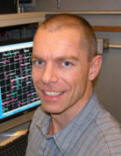 Dirk Everaert Research Associate, Division of Physical Medicine and
Rehabilitation
Multiple Projects
Postdoctoral Fellowship, 2004-2006
(Dick Stein Lab,
University of Alberta, Edmonton, AB, Canada)
Postdoctoral Fellowship, 2002-2004
(Jane Macpherson
Lab, Oregon Health Sciences University in Portland, Oregon,
USA)
PhD in Motor Rehabilitation and Physiotherapy
(University of Leuven, Belgium)
MMSc, Orthopedic Physical Therapy
(Emory
University, Atlanta, Georgia, USA)
BSc in Physical
Therapy
(University of Leuven, Belgium)
Joined Mushahwar laboratory in
November 2011
As a research associate I'm involved in several ongoing projects in the lab.
I'm involved in the projects that research intraspinal microstimulation, a
technique to restore walking after spinal cord injury, in animal models. I also
have a role in the design, development and testing of the methods and apparatus
that will be used for the first human application of intraspinal
micrsostimulation. More recently, I became involved in the DVT (Deep Venous
Trombosis) prevention project, for which I perform the ultrasound scans. My
responsibilities include animal surgery, training and care, assembly of
micro-electrode arrays, design and development new methods for ISMS, supervision
of students during experiments, overseeing analysis of results, maintaining
animal protocols and SOPs, and providing expertise on the data collection
hardware and software (Cerebus neural recording system, Vicon 3D motion
analysis, ultrasound imaging, etc), statistical analysis, research methodology,
human and animal anatomy, and spine biomechanics.
 Michel Gauthier Research
Associate
Multiple Projects
Rod
Gramlich
Laboratory Technologist
Multiple Projects
Neil
Tyreman
Laboratory Technologist
Multiple Projects
Alumni:
Post-doctoral fellows: Dr. Natalie
(Einat) Ravid (2013-2016) Dr. Ana Lucas-Osma (2011-2014) Dr.
Nitin Sharma (2010-2012) Dr. Jeremy Bamford (2010) Dr.
Jonathan Norton (2003-2005) PhD
students: Bethany Kondiles (Visiting Graduate Student,
2016) Kevin Mazurek (Visiting Graduate Student, 2013)
Leandro Solis (2013) Brad Holinski (2012) Jacob Vogelstein
(Visiting Graduate Student, 2006) Pavel Musienko (Visiting
Graduate Student, 2004) Dorothy Barthelemy (Visiting Graduate
Student, 2003) Jeremy Bamford (2009) Sherif ElBasiouny
(2007) Lisa Guevremont (2007) Sean Snow (Visiting Graduate
Student, 2001-2004) MSc students: Daniel
Hallihan (2013) Alisa Ahmetovic (2012) Imad Khaled (2012)
Laura Alvarado (2012) Breanne Christian (2011) Lisa Lovse
(2010) Selina Gyawali (2009) Niek Poppe (Visiting Graduate
Student, 2008) Andrew Ganton (2007) Roger Calixto (2007)
Leandro Solis (2007) Jason Dyck (2006) Rajiv Saigal
(Visiting Graduate Student, 2002)
Undergraduate students: Nicholas Anstey (2016)
Brianne McDonald (2015) Berton Quon (2015) Bennett Csorba
(2015) Vincent Tan (2015) Oriana Shaw (2014-2015) Ana
Catuneanu (2013-2014) Brandon Lieu (2013) Seoyoung Kim
(2012-2013) Kian Parseyan (2010-2013) Lisa Kawasaki (2012)
Yahya Kinyogo (2012) Elizabeth Twist (2012) Yang Hu
(2011-2012) Alethe Kabore (2010-2012) Jennifer Assh (2011)
Yonghui (Matthew) Wu (2011) Ben Kostiuk (2010) Robert
Ogilvie (2010-2011) Cara Anne Curtis (2009-2011) Jonn Kmech
(2010) Leonora Ogbeide (2010) Isaak Kornelsen (2009) John
Hoang (2007) Daniel Moroz (2007) Steven McGie (2006)
Bernice Lau (2006) Noopur Gupta Parmar (2005) Jason Dyck
(2006) Andrew Ganton (2004) Benjamin Poon (2003) Dawn
Feddersen (2003) Sabrina Rashid (2003) Keith Fenrich (2003)
Jan Kowalczewski (2003) Costantino Renzi (2002-2005) Sameer
Chhibber (2002) |
 |
|
|
People
MSc Students
Hema Velanki
PhD Students
Ashley Dalrymple
Amirali Toossi
Rui Zhou
Post-Docoral Fellows
Leandro Solis
Natalie Ravid
Support Staff
Dirk Everaert
Michel Gauthier
Rod Gramlich
Neil Tyreman |