Discovering her grandfather’s journals set Shannon Cornelsen on a personal quest to reunite Indigenous families with loved ones buried far from home.
November 18, 2025 By Bev Betkowski
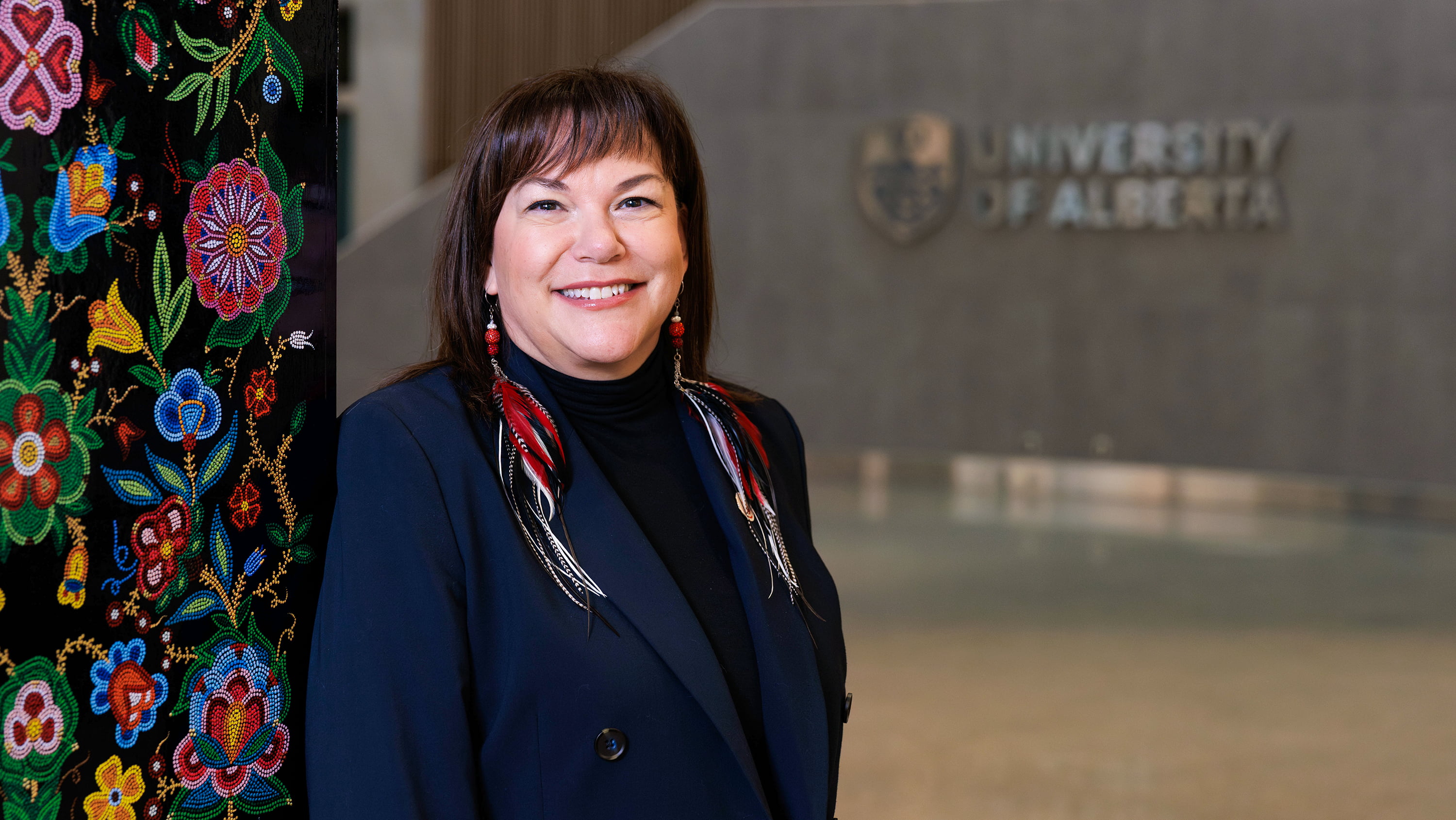
When Shannon Cornelsen discovered her grandfather’s journals, she began a personal quest to reunite Indigenous families with loved ones buried far from home. Her journey took her to the U of A, where she found the mentorship, encouragement and support she needed to carry out her family legacy of truth. (Photo: Alex Pugliese)
In 2019, Shannon Cornelsen discovered 27 journals written by her grandfather, an agent for the federal government department then called Indian Affairs. He’d lived and worked on Stony Plain Indian Reservation, now Enoch Cree Nation, from the mid-1950s until 1980.
As Cornelsen read through the pages, she was surprised to discover the names and dates of when Indigenous patients from Edmonton’s former Charles Camsell Hospital were buried at Enoch. The hospital operated from 1946 to 1980 as part of a segregated health-care system that isolated and institutionalized Indigenous people in “Indian hospitals.”
Inuit and First Nations people from across Western Canada and the North were flown to the Camsell and placed in a tuberculosis sanatorium, often without their consent.
Her grandfather’s meticulous records, she realized, “were the only surviving documents that detail where these people are buried.”
It set Cornelsen, a member of Saddle Lake Cree Nation, on a personal quest to reunite families with their loved ones buried far from home.
“Many people from my family were treated at the Camsell, born there or died there, and my mom had worked there as a nursing assistant for many years, so I knew there were patients who would just go missing,” she says.
“Families deserve closure.”
To take on that heavy work, Cornelsen knew she’d need research skills and academic support to turn the project into a reality, so she enrolled at the University of Alberta.
Graduating this week with a bachelor of arts from the Faculty of Native Studies, Cornelsen now feels confident in her skills and ability to ultimately help close that circle.
“I’m in a position where I can speak for these people, and I’ll be able to connect families and communities with where their loved ones are.”
Exploring topics such as the history of residential schools in Canada and Indigenous human rights, Cornelsen’s degree was vital in “learning about the history of the colonization that has happened to Indigenous people in Canada,” she says.
“That’s really crucial to understanding how deep-rooted segregation and systemic racism in health-care systems came into effect, and it’s helped me understand why so many Indigenous patients ended up at the Camsell,” Cornelsen adds. “They may have felt they had no other treatment options available to them.”
Her degree also deepened her understanding of Indigenous research methodologies, such as sharing oral histories, which is important to the work she plans to carry out.
“Research has to be undertaken with community for the community, and it should stay within the community. That plays a part in how to record and analyze data.”
(Photo: Alex Pugliese)
“
“I’m in a position where I can speak for these people, and I’ll be able to connect families and communities with where their loved ones are.
Shannon Cornelsen
Also graduating with the U of A’s certificate in Indigenous governance and partnership, Cornelsen tapped into extracurricular student activities, feeling it was important to get involved in advocacy beyond the classroom.
“I don’t believe you can be part of a solution if you’re not actively making changes, and that means going out of your comfort zone and advocating for others.”
Her work included serving as co-chair of the National Indigenous Advocacy Committee of the Canadian Alliance of Student Associations, lobbying in Ottawa for increased funding and support for Indigenous learners, meeting with then prime minister Justin Trudeau.
Through the U of A’s Go Abroad program, Cornelsen also widened her own learning curve, taking a summer course at Leeds University in the United Kingdom to learn about the history of colonization and calls for reparations there.
“Being a student in another part of the world was enlightening. They were interested in my perspective as well, as an Indigenous woman in a place where the colonizers originated.”
Tied into her commitment to raising awareness of inequities in the health-care system, Cornelsen has provided historical training to potential graduate students at the U of A interested in health sciences.
“To understand the depth and severity of how Indigenous people have been treated in the health-care system today, you have to understand the past,” she says.
“Whether it was through the inequitable care Indigenous people received, such as forced sterilizations or the actual disappearance of Indigenous patients who passed at the Camsell, it is all part of the larger story of settler colonization in Canada and the disparities Indigenous people continue to face today.”
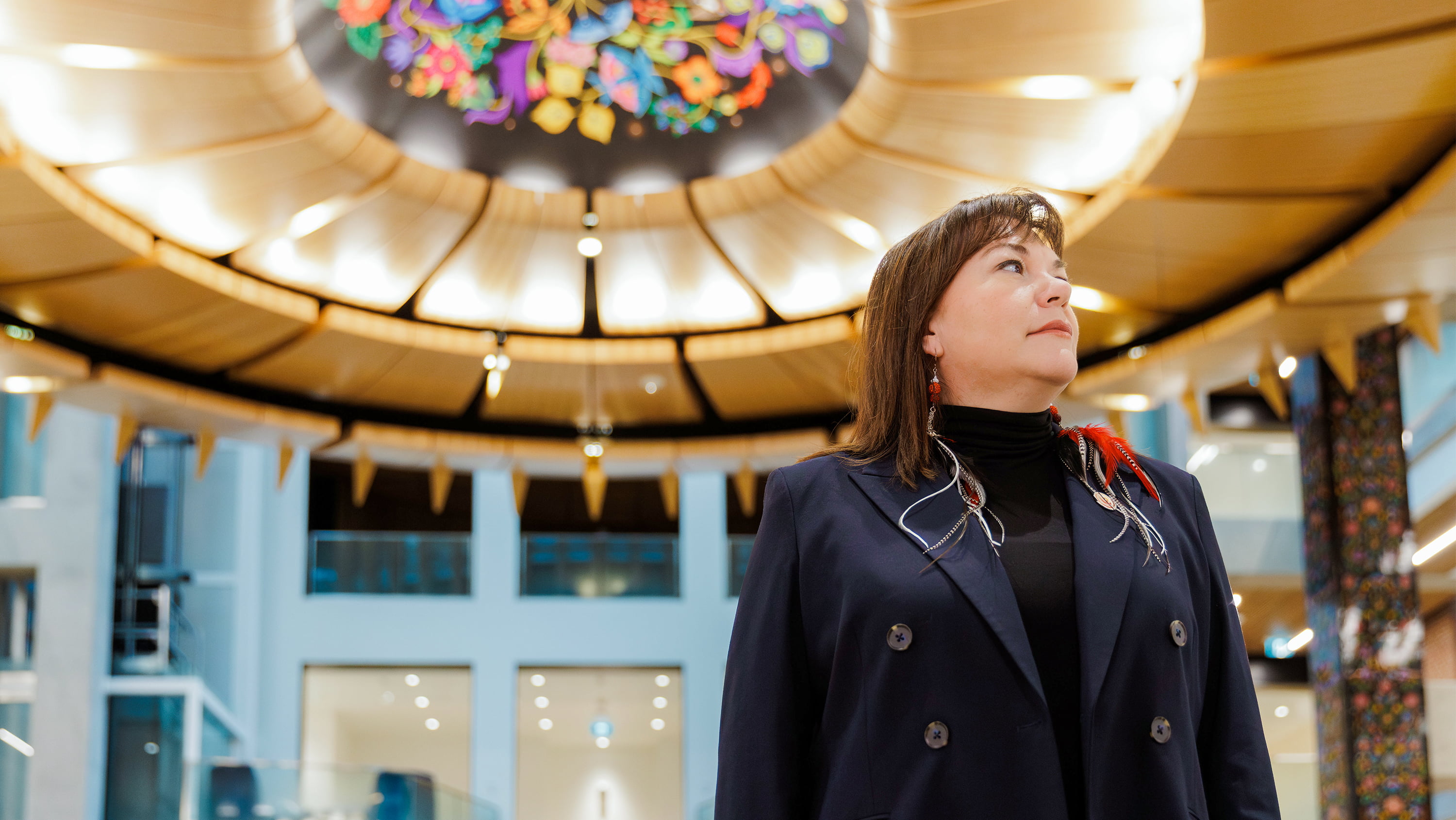
Now pursuing her master’s in Native studies, Shannon Cornelsen is focused on carrying out the legacy of her grandfather’s notes. “This is not just about Indigenous rights. It’s about human rights and human dignity.” (Photo: Alex Pugliese)
Mentorship, encouragement, support
As a mature student, Cornelsen credits the encouragement of her professors for stoking her confidence to earn her degree.
She started her studies five years ago, at age 50, easing back into the classroom through the Transition Year Program, 30 years after graduating from high school.
“I’ve struggled with being told I wasn’t smart enough, I was too poor, I can’t do these things. The mentorship and the people who have told me that I am capable are why I’m here today.”
“I would not have been successful without the resources and the support of the U of A.”
Now pursuing a master’s degree in Native Studies, Cornelsen is focusing her graduate work on carrying out the legacy of her grandfather’s notes.
Through her work identifying patients who were at the Camsell between 1946 and 1963, she now has a list of more than 100 individuals who were not claimed by their families.
She hopes to eventually let their communities know where each of them is buried.
“I would like to identify each person and just be able to tell the story of what they meant to their own communities,” she says.
“This is not just about Indigenous rights. It’s about human rights and human dignity.”