Fixing bodies instead of bikes

After physiotherapy improved his life, Jordan Davis was inspired to reinvent himself and make the same positive difference for others.

Jordan Davis

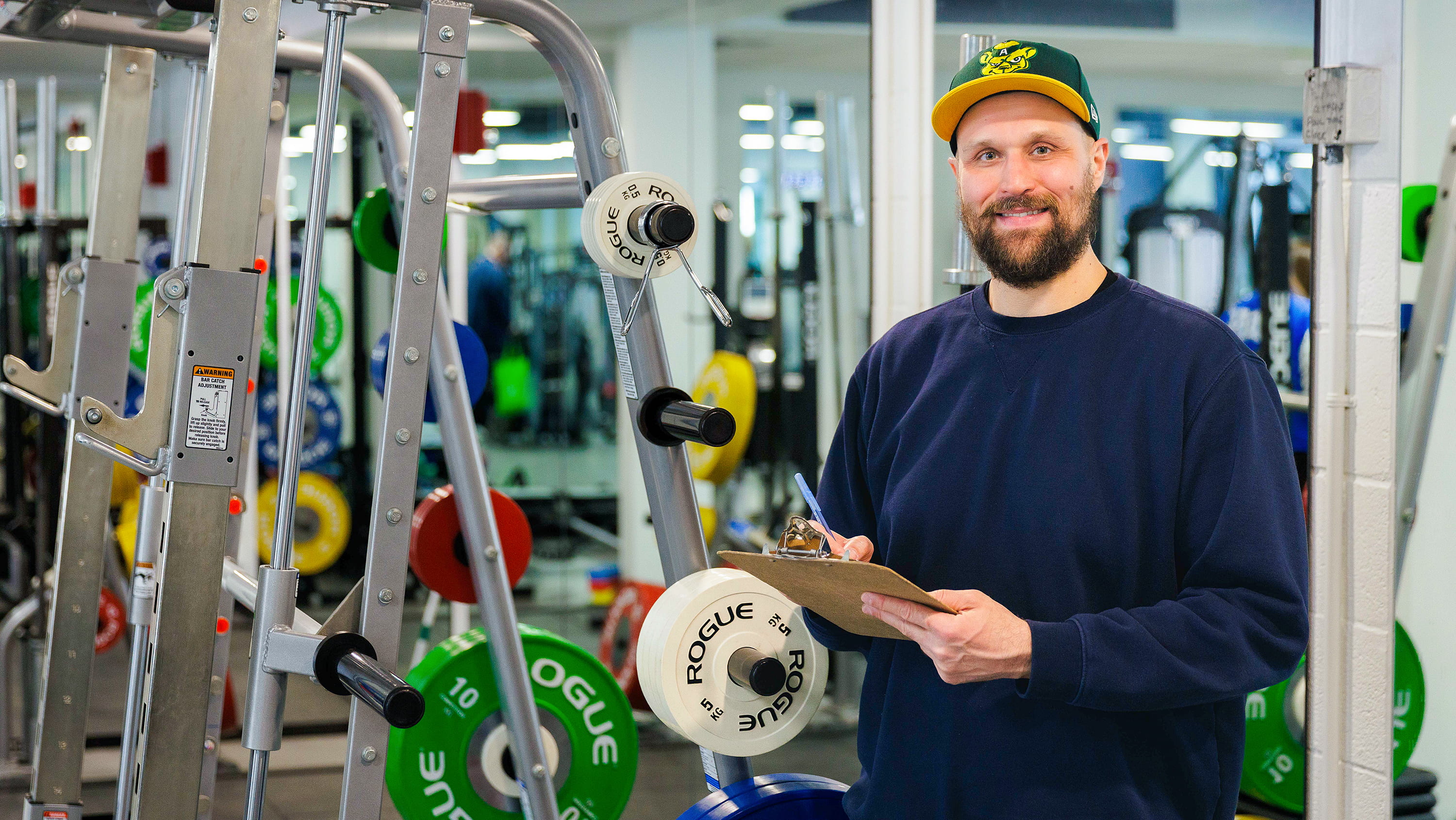
Jordan Davis worked as a motorcycle mechanic before pursuing his bachelor of kinesiology degree, and he sees parallels between fixing bikes and fixing injuries in the body. (Photo: Alex Pugliese)

Grappling with knee problems, sports injuries and a possible cancerous lump a few years ago, Jordan Davis found himself at the lowest point of his life. Sidelined from the football and lacrosse he’d grown up playing, and worried about his health, “it hit me hard,” even as he got on with his work as a motorcycle mechanic, he recalls. 

Depressed and angry at the world, “I was lying in the shop working on a guy’s quad, covered in grease, dirt and mud, and crying to myself thinking, ‘So this is how I go. I’m just going to be a grumpy mechanic at the back of the shop with no friends.’”

Determined to pull himself out of his funk, he started by working out to lose excess weight, but began experiencing knee pain. It eventually led to physiotherapy appointment — and put him on the road to fixing bodies instead of bikes.

Now graduating this week with a bachelor of kinesiology from the Faculty of Kinesiology, Sport, and Recreation, Davis, 40, has a considerably brighter outlook on life. With further plans to earn a master’s degree in physiotherapy and with an all-clear from his cancer scare, the resident of Red Deer, Alta., is excited about being on a path to helping people deal with their aches and pains. 

“I like the idea of empowering people, giving them advice and steps to feel better. Once they buy into that, the world is their oyster.”

A mechanic for humans 

His professional detour began with that visit to a physiotherapist to examine his knee — where he quickly got some relief.

“He got me to lie down and started massaging a spot on my leg, and my knee pain was gone. Talking with him, I wanted to know how he knew what muscle to hit, and he said it was kind of the trade, and that basically, he’s just a mechanic for humans.” 

The idea clicked for Davis, both professionally and personally.

“I find it interesting that the human body isn’t far off from a mechanical machine, with different systems. I like knowing how these systems interact and how if they’re dysfunctional, you can get them back to being better. So I get to still work with my hands and problem-solve.” 

He also likes the idea of giving back to people and to the community. “I always felt that when I was depressed, I was taking myself away from society; I wasn’t building relationships, and now I find I really enjoy meeting people, knowing what their goals are and how to help them achieve those goals.” 

Transferring into the final two years of his degree program from Red Deer, his studies at the U of A strengthened that desire to work with people, including through a field placement at the Steadward Centre, where he honed his skills in communicating and connecting with different clients. 
 

Jordan Davis
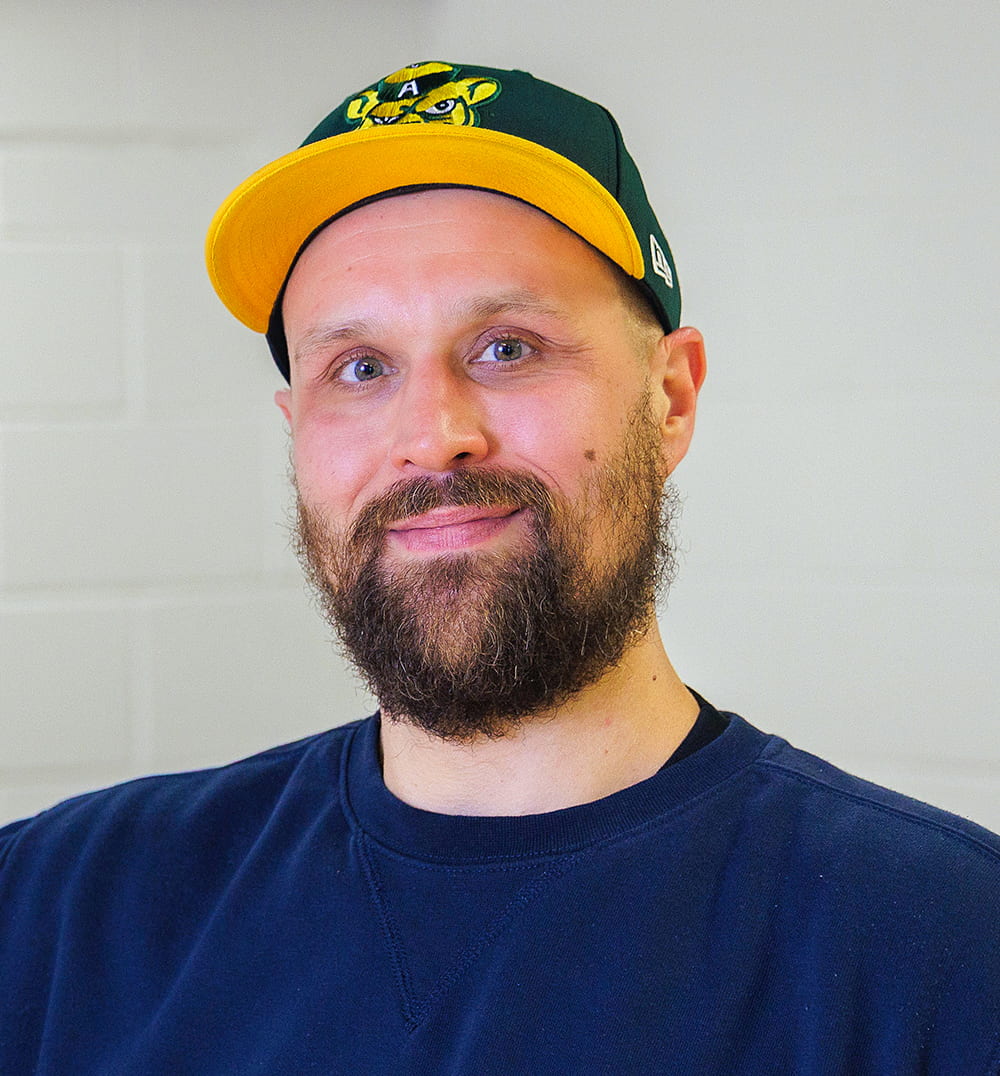
(Photo: Alex Pugliese)

Coming back to school, I had to face my fears, and it made me so much stronger in the sense that I never knew how capable I was. If you have to write a thousand-word paper, start looking into that subject and just do it. Give it a try; it’s better to try and fail than not do it at all.

Jordan Davis

In his placement, Davis worked to provide recreational therapy for various groups, including para-athletes, children living with autism and seniors using wheelchairs. 

“It was the best experience ever. I learned how to be able to read a client and build trust and a rapport with them.”

As a former tradesman himself, Davis hopes to use that skill to include blue-collar workers in his eventual practice, who may tend to just shrug off their job-related pain. 

“A lot of these guys suffer from chronic pain and they do the whole tough-guy thing, where, ‘I have a sore back, but I install floors, of course I’m going to have a sore back.’ And for me, it’s, ‘Dude, you don’t need to have a sore back. We can get you better, and then you can do your job better, you can play with your kids, you can get your life back.’”

“I never knew how capable I was”

His time at the U of A has also been rewarding on a personal level, he adds. 

“I used to be the moody guy working in the back corner of the shop and I would see the same three people every day. Now it’s a different experience, meeting new people, hearing their stories and what their interests are. I love it.”

Tackling a university degree also taught him about his own resilience, after choosing 20 years ago to work and play junior A football instead of taking post-secondary. 

“I did not want to write. I feared reading. And so coming back to school, I had to face my fears, and it made me so much stronger in the sense that I never knew how capable I was. If you have to write a thousand-word paper, start looking into that subject and just do it. Give it a try; it’s better to try and fail than not do it at all.”

During his classroom work, Davis also learned about the depth and impact of research going on at the U of A, and found it to be not just a revelation, but an inspiration.

“Some of these people are literally doing work that’s changing the lives of thousands, if not millions of people. It’s so cool to hear about world-renowned work that started at the U of A, and it gives me so much pride to be a part of this, as an alumnus. 

“I know that I’m not giving back as much as these people, but when you hear about them, I feel like, if I open up a clinic, I need to give it my all.”