When Canada’s wheelchair curling team capped an undefeated run with a 4-3 win over China to claim gold at the Milano Cortina 2026 Paralympic Winter Games, the victory marked Canada’s first Paralympic gold in the event since 2014.
For Dylan Rusnak, a third-year Faculty of Kinesiology, Sport, and Recreation student majoring in adapted physical activity, the win felt especially meaningful.
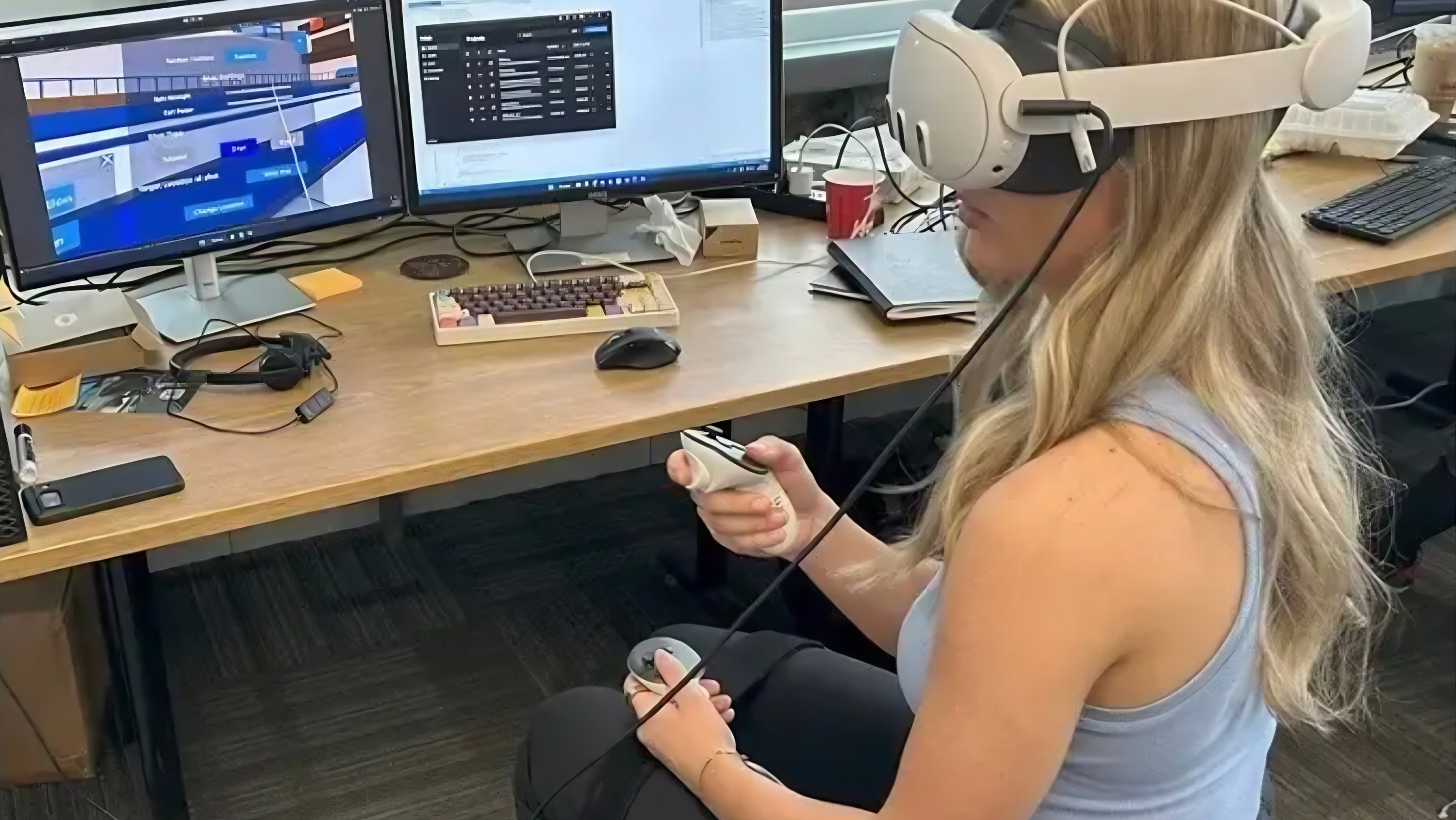
Last summer, Rusnak was part of an interdisciplinary student team at Red Deer Polytechnic that developed a virtual reality training tool for Wheelchair Curling Canada. The project was designed to help athletes prepare for Paralympic competition by recreating the visual and spatial experience of being on the ice.
“When I saw that they won gold, I was elated,” Rusnak says. “It was honestly the coolest thing, being able to see success come from this — not just a deliverable, but a real outcome.”
The project brought together students from kinesiology, animation and computer science. Rusnak was the lone kinesiology student on the team, and she says that perspective shaped much of the project’s practical design.
“We didn’t want to build a program that had no relevance to real-life training,” she says. “I was able to use a lot of theories I learned from class and say, ‘This is what it should probably look like,’ and then they took those ideas and developed them.”
The result was a VR environment tailored to wheelchair curling athletes, who often face barriers including limited access to coaching, training time and specialized resources. Athletes use the headset while seated in a wheelchair-height setup designed to mirror game conditions as closely as possible.
“One of the biggest things the coaches really drilled into us was the dimensional piece of it,” Rusnak explains. “They wanted it to look exactly like the arena they were going into, so the players already had that sense of how long the sheet of ice is.”
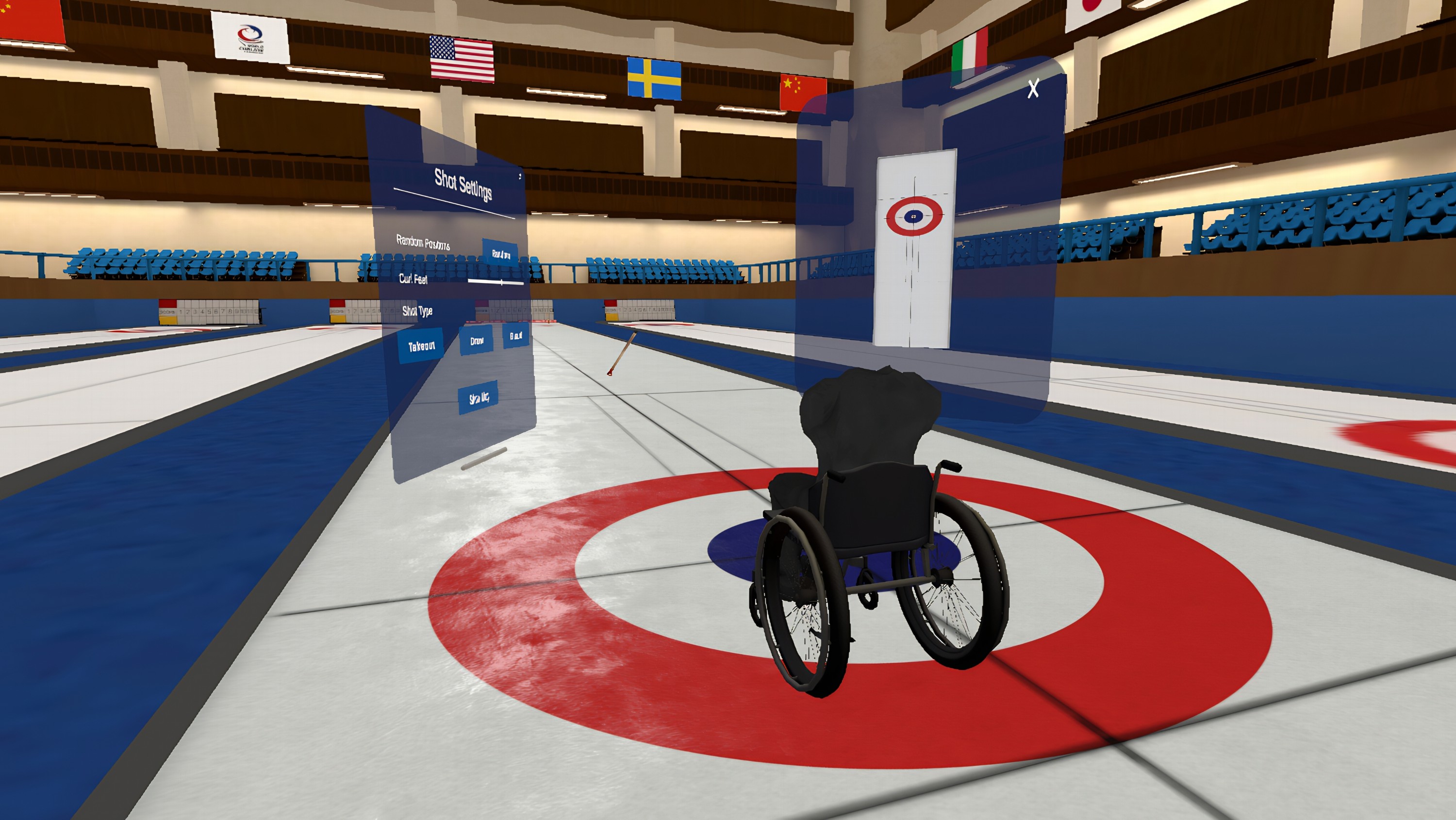
Rusnak helped shape the sport-specific details that made the training tool feel authentic: grip, throwing mechanics, body positioning, tactical play and how movement in the virtual world would transfer to performance on the ice.
“We took so many pictures of hand positions so the animators could get the exact grip,” she says. “You didn’t want to throw something into the game that wasn’t the same in real life.”
She also helped test the system, sometimes spending hours in the headset to make sure what athletes saw and felt matched the reality of competition.
“It was a lot of trial and error,” she says. “But that was the coolest part – seeing it come to life.”