Vital measure could be missing a beat during breath-holding tests, study shows

Researchers advise caution when using low-oxygen tests to assess patients for arrhythmias.

low oxygen

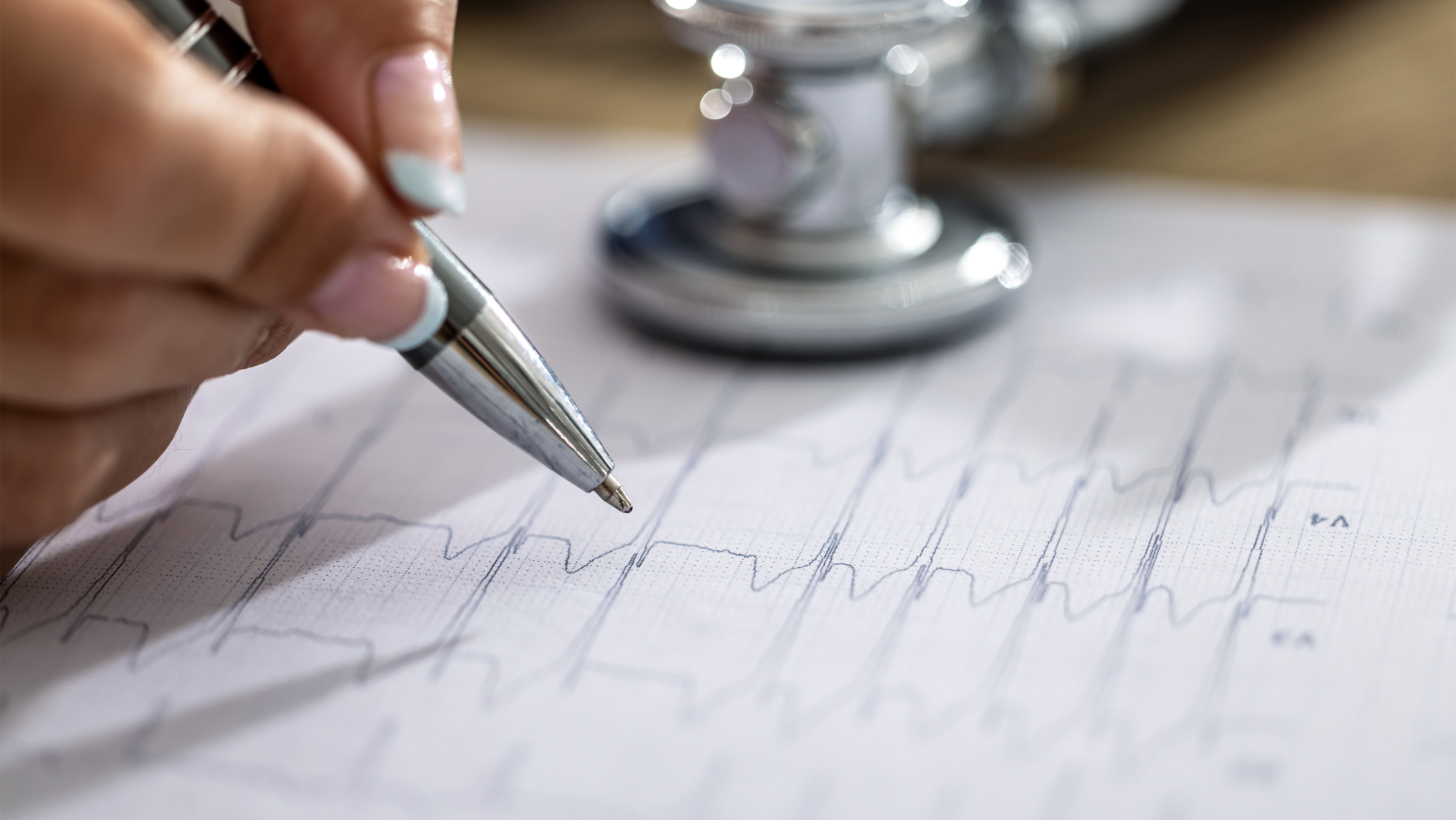
New research shows that breath-holding tests are inconsistent when it comes to measuring cardiovascular risk from an irregular heartbeat. (Photo: Getty Images)

Although heart rate and blood pressure readings from breath-holding tests are usually reliably accurate, another vital measurement could be missing a beat, a University of Alberta study shows. 

Looking at whether a person’s heart and blood vessels react the same way every time they hold their breath while low on oxygen, researchers were surprised to discover that arrhythmias — irregular heartbeats — occurred only some of the time, which may make them harder to predict than previously assumed. 

The findings provide a cautionary heads-up when interpreting irregular heartbeats for a person over time, says Craig Steinback, a professor in the Faculty of Kinesiology, Sport, and Recreation and member of the Women and Children’s Health Research Institute.

“This could be important for how scientists interpret lab results and how cardiovascular risk is assessed in a person,” he suggests. 

“If you think about an average clinical workup on a patient, you might do a test and get an outcome, but that might not mean anything tomorrow, after a second test. Which result do you believe? What does that say about that person’s risk? So it could be important to not over-project in terms of those results.”

For the study, 16 healthy young adults, half male and half female, each held their breath four times a day for two days in a row. Each breath-hold lasted 39 seconds after breathing low-oxygen air for five minutes. The researchers tracked the participants’ heart rate, blood pressure and electrical heart activity for each session. 

 

Desmond Young
(Photo: Supplied)

“

“A coin toss could do just about as well as all of our rigorous science at predicting whether or not someone gets an irregular heartbeat.

Desmond Young

Though heart rate and blood pressure readings were reliably consistent, irregular heartbeats occurred in 45 per cent of the tests, but they didn’t happen every time for the same person. 

The discovery raises questions about repeatability — whether those arrhythmias happen reliably in an individual, says Desmond Young, who was the lead author on the study as a master of science student.

“There was no rhyme or reason and there was no way for us to predict who would get an irregular heartbeat. Someone could hold their breath twice, have no problem, and then on the third try it would show up,” notes Young. 

“A coin toss could do just about as well as all of our rigorous science at predicting whether or not someone gets an irregular heartbeat.”

Though more research is needed to explore reasons for the inconsistency, a better understanding may eventually help hone personalized medicine for people who experience low oxygen in conditions such as sleep apnea, sports like diving and activities like mountain climbing, Steinback suggests. 

“A person day to day might not have the same response or the same pathology, so understanding that helps personalize the approach to care.”


The study was funded by the Natural Sciences and Engineering Research Council of Canada.