
Nature’s equivalent of a common abrasive found in most toothpastes has been named after a University of Alberta geologist in recognition of a distinguished career spent using diamonds to decode the composition and evolution of the Earth’s mantle.
The first natural occurrence of this mineral, chemically known as calcium pyrophosphate (Ca₂P₂O₇), has been officially designated by the International Mineralogical Association (IMA) as grahampearsonite, named for renowned U of A geochemist Graham Pearson.
"It’s a very great honour — especially since the number of minerals left to be discovered is shrinking fast," says Pearson, adding there are estimates that in 20 or 30 years, there won’t be any new minerals left to discover. "It’s nice to get one named after you while you still can.”
Although chemists and dentists have been familiar with the compound for decades, mineralogists only recognize a substance once it is found occurring naturally. "Half the planet brushes their teeth with it every morning, but it hasn't had a geological name until now,” Pearson says.
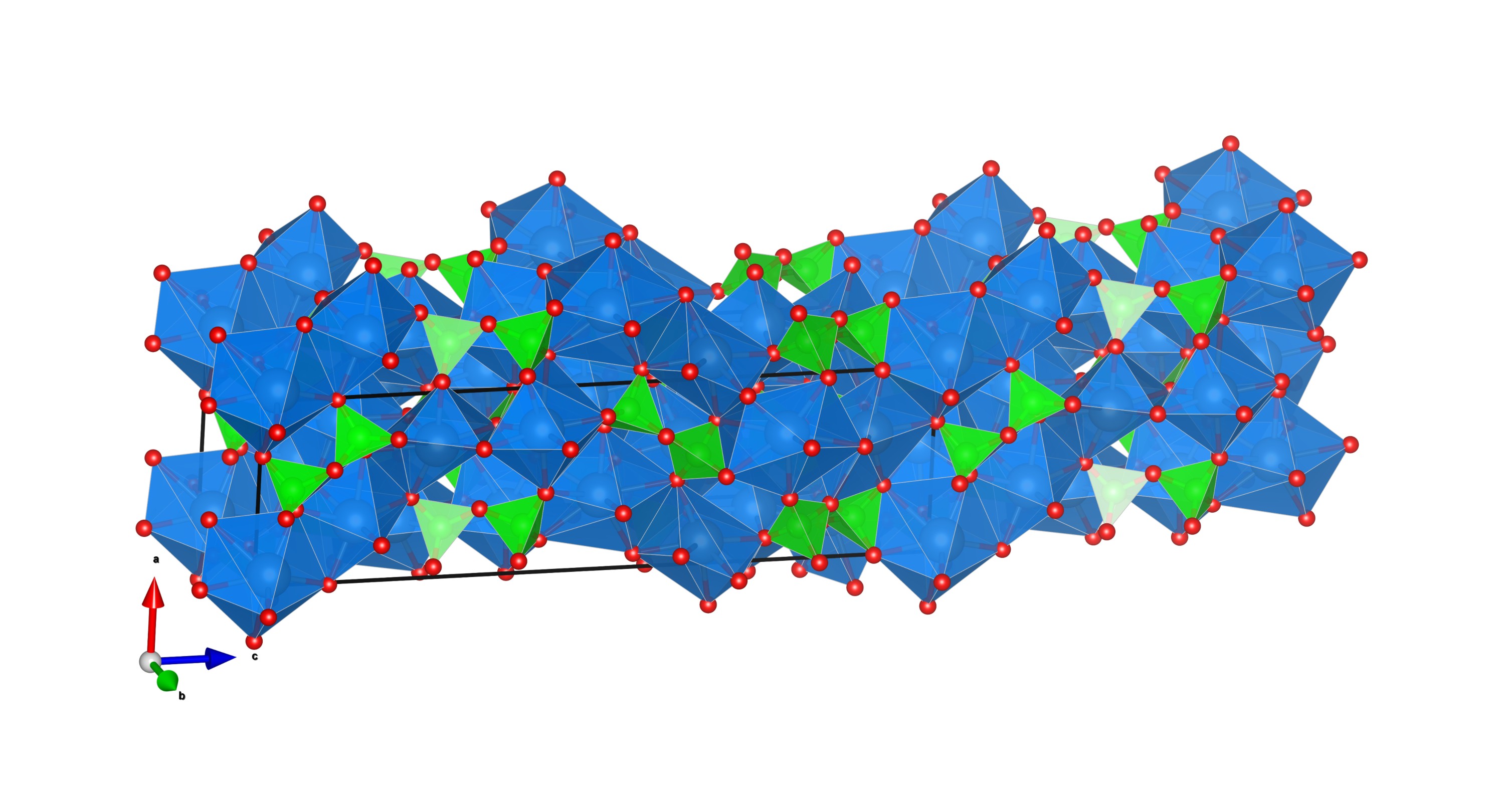
The journey from formation to naming began 500 million years ago, roughly 400 kilometres beneath the Chapadão plateau in Mato Grosso State, Brazil, under what was then the Gondwana supercontinent. There, a diamond formed around a rare mineral and began its slow ascent to Earth’s surface, eventually emerging in a violent volcanic eruption.
Because grahampearsonite requires significant oxygen to form, Pearson notes it is unlikely to form and survive in most deep-earth environments. It only survived the gruelling trip to the surface because it was trapped inside a diamond, which Pearson says made “a remarkably good capsule” that protected the mineral from reacting with other minerals as it moved through shifting pressures and temperatures towards Earth’s surface.
That mineral-packed diamond had long completed its journey when Pearson began examining diamonds to bring clarity to the movement of Earth’s mantle. In 2010, Pearson joined the U of A as Canada Excellence Research Chair in Arctic Resources. There, he established the Arctic Resources Geochemistry Laboratory, one of the largest and most advanced facilities of its kind in the world.
In addition to mapping the history of the mantle, Pearson has developed new techniques for geochemical analysis and pioneered methods for dating minute geological samples. He also developed the first techniques for determining when a diamond was created, as well as its geographical origin. In 2023, he was elected to the Fellowship of the Royal Society, UK – the world’s oldest continuous scientific society.
The choice of Pearson’s name was a nod to his eminent standing in the field and his history with the Juina region of Brazil, where the grahampearsonite was unearthed. Unlike the diamonds found in engagement rings, which typically form 150 to 200 kilometres below the surface, Pearson says Juina diamonds are “absolute scientific treasure troves,” originating from the mantle at depths of roughly 400 kilometres or more.
In 2014, Pearson and an international team famously published the discovery of ringwoodite, another mineral found trapped within a diamond from the Juina region. Analysis showed the ringwoodite contained a significant amount of water (1.5 per cent of its weight), confirming theories that vast volumes of water — perhaps as much as all the world’s oceans combined — are trapped 410 to 660 kilometres beneath Earth’s surface.
As for the grahampearsonite, the team of Brazilian, Chinese and Italian researchers did not remove the mineral from its diamond host. Instead, they used X-ray diffraction while it was still trapped inside to confirm that the natural mineral matches the well-known synthetic compound. The presence of grahampearsonite alongside tuite — another phosphate mineral trapped in diamonds but also formed during meteorite collisions — gives scientists new clues about how phosphorus is stored and recycled between Earth’s crust and mantle.
In naming this discovery, IMA rules stipulate that an honoree cannot be part of the research team that discovers the mineral and that typically, the individual should have made a significant contribution to mineralogy, geology, or a related science.
“Graham Pearson is among the most renowned experts on super-deep diamonds,” says Fabrizio Nestola, mineralogy professor at the University of Padua in Italy and one of the team leads on the grahampearsonite discovery.
“This recognition is well deserved, not only for his outstanding scientific contributions but also for his ability to foster international collaborations and mentor the next generation of researchers.”