Pharmacy students prepare for the worst with disaster scenario
Simulated wildfire tests third-year students’ empathy and skills in a community emergency.
April 29, 2026 By Gillian Rutherford
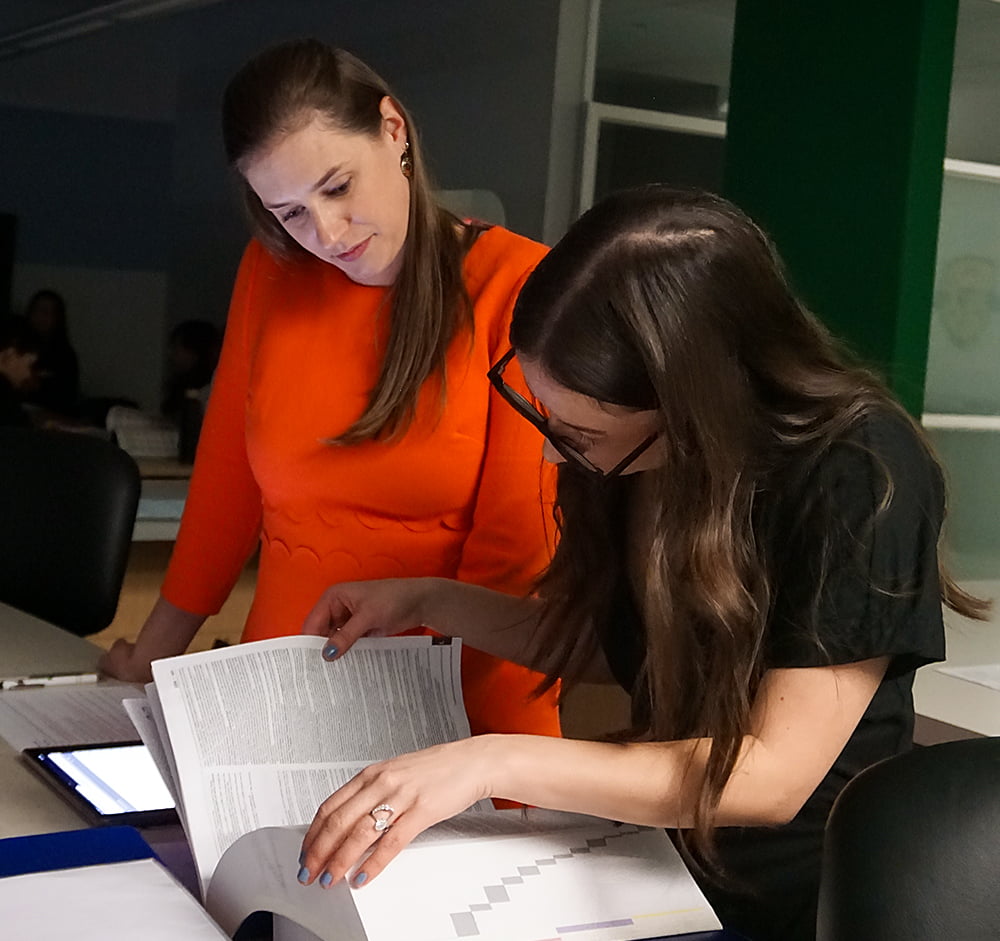
(From left) Pharmacy students Youssef Elezzabi, Jenna Humenny, Nathaniel Fernetti and Kareem Elsafadi take part in a disaster scenario aimed at readying Canadian pharmacists to support communities through emergencies like wildfires. (Photo: Tarwinder Rai / Faculty of Pharmacy and Pharmaceutical Sciences)
It was when the power went off that the disaster really hit home for Nathaniel Fernetti.
The third-year University of Alberta pharmacy student was working behind the counter in the make-believe town of Springfield, Alta., as part of an emergency preparedness simulation.
Wildfires were forcing people in nearby towns to evacuate, the students had been told, so they should expect new patients coming in asking for everything from prescription refills for chronic conditions to new puffers for asthma symptoms. Fernetti’s team divided up the tasks and got to work.
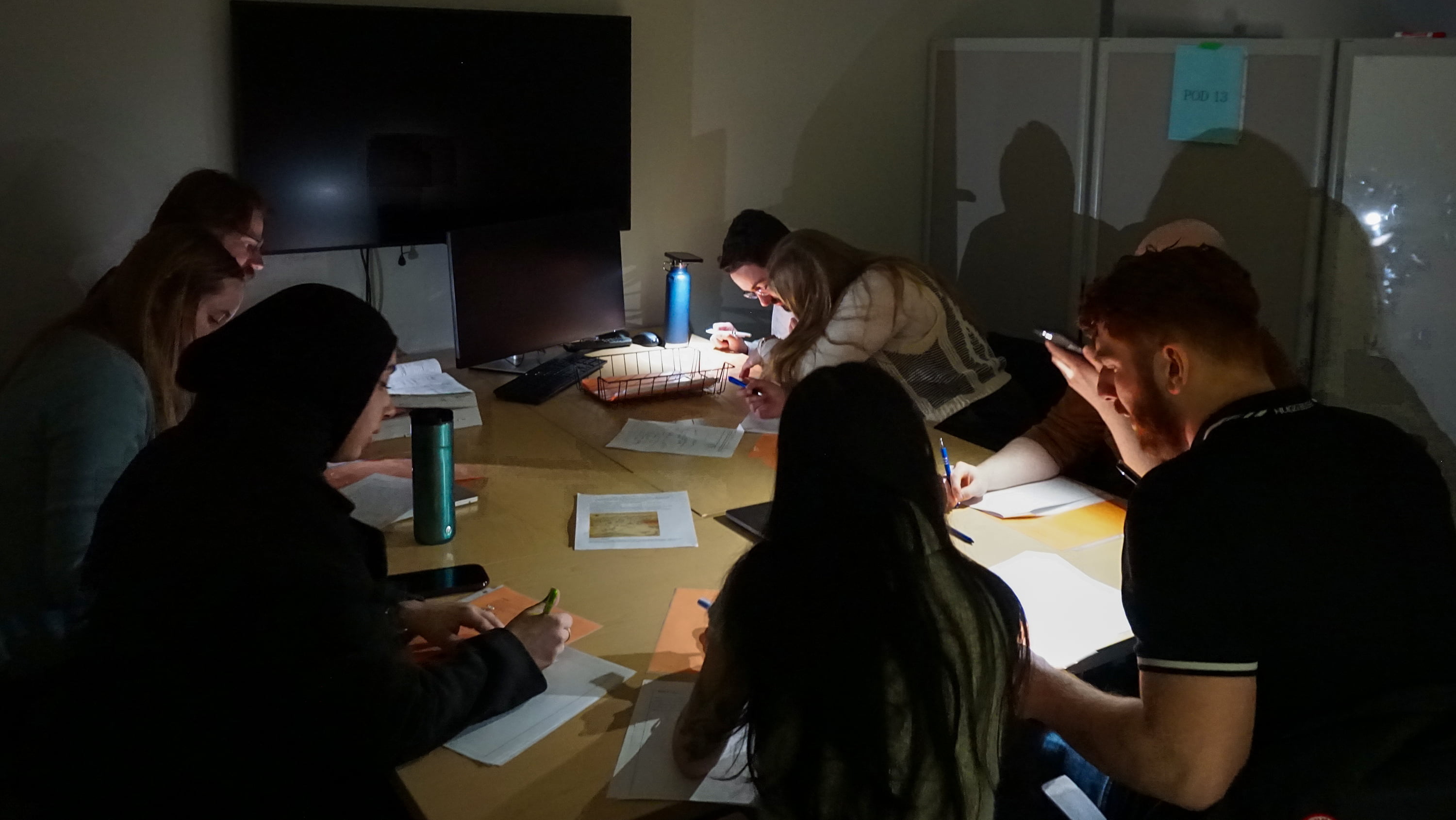
Then the lights went out.
“All we had was our cellphones to see by. Our computer systems were down and we had to check and write everything by hand,” Fernetti remembers. “But people just kept coming to the pharmacy to ask for our help.”
The lesson really hit home: In an emergency, pharmacists have a “duty of care” to keep their doors open no matter what, unless they are directly in danger themselves.
“We have to be there,” emphasizes Fernetti. “We have to support the community. And personally, I’m happy to be there and be that person.”
“You never know who’s going to walk through the door”
The new disaster simulation exercise was developed by U of A assistant professor Kaitlyn Watson and three colleagues at universities across the country. They formed a collective called Mobilizing and Advancing Pharmacy Leadership in Emergencies, or MAPLE for short, in response to the increasing risk of extreme weather events across Canada due to climate change.
(Photo: Supplied)
“
“They literally left with what they’re wearing in some cases and they don’t have access to medications, their insurance information or their money. You’re experiencing them on possibly the worst day of their life.
Kaitlyn Watson
“There’s an expectation from our communities that pharmacists will be there, they’ll be open and they will support us through a crisis,” says Watson. “But then we don’t train the pharmacist to do that.”
The simulation was developed to remedy that. Tested by 130 U of A students this month, it has also been tested by pharmacy schools at Memorial and Waterloo. Watson and team will present at the Canadian Pharmacy Education and Research Conference in June. They are developing a toolkit to offer the course at other universities that have been asking to include the workshop in their pharmacy program.
Watson wrote a book on disaster planning for pharmacies in 2023 and runs a consultancy company to train professional pharmacists on how to be ready for emergencies.
For the student simulation, she tried to make the scenarios as realistic as possible.
“The literature shows that most people, when they evacuate, forget to take their chronic disease medications, so our simulation reflects that,” she says, noting that without power the students had to check for side-effects and drug interactions in huge textbooks rather than their usual online sources.
“In real life, you never know who’s going to walk through a pharmacy door,” she explains. “Your pharmacy might experience a robbery or a cyber attack or a wildfire. You need to be able to be agile and work on your feet.”
Fernetti found communication amongst his teammates was key to prioritizing tasks.
“If you aren’t talking to each other, it’s hard to see links between cases,” he says. “In future, I would take a look at all the tasks together so we all know what’s going on and then figure out which ones really need to get done and put more manpower behind those ones, instead of working as silos.”
Nathaniel Fernetti's team carries on even after the power cut out. (Photo: Supplied)
“It was identified by governments through COVID that pharmacy is an essential service that will provide continuing in-person care,” she says. “For the public, pharmacists are seen as a reliable, accurate, evidence-based source of information.”
One of the most important takeaways from the simulation for the students was to stay calm and really see the patients — played by actors — no matter how stressed they were personally feeling.
“The evacuees have just fled a wildfire,” explains Watson. “They may not know where their family members are. They don’t know if their house is still standing. They literally left with what they’re wearing in some cases and they don’t have access to medications, their insurance information or their money. You’re experiencing them on possibly the worst day of their life.”
Fernetti came through the simulation feeling more confident that he is ready for whatever professional challenges he might face. Just finishing a year as president of Alberta Pharmacy Students’ Association, he hopes to work in a children’s hospital after graduation next year.
No matter where he ends up practising, he intends to use the lessons he learned during the wildfire simulation.
“People are coming to you at the time when they need help most. Every day could be their own personal disaster,” he notes. “That’s what pharmacy is there for, and it’s what drew me to this profession, to be able to be that person who is there for people.”