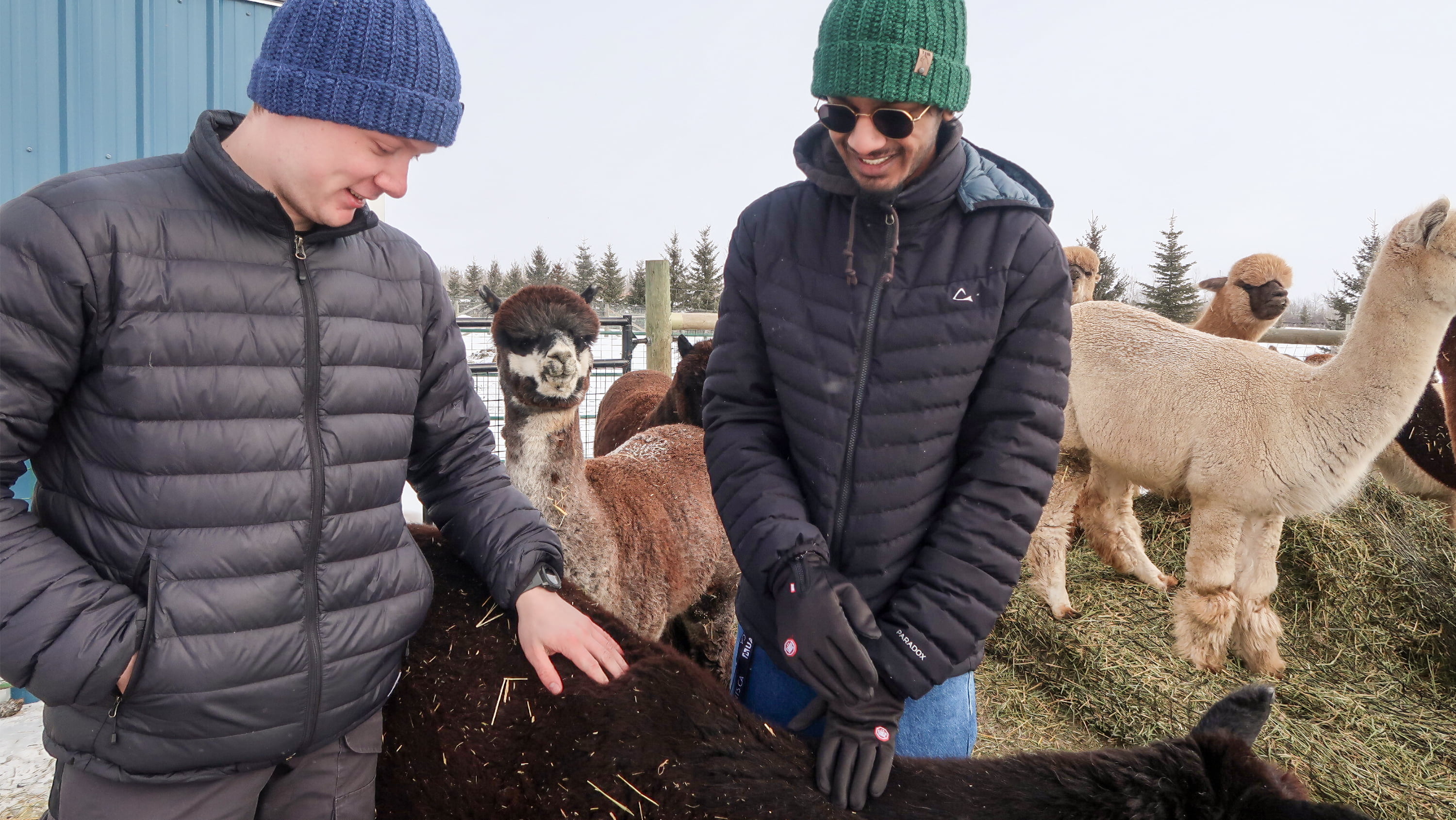
Started up by Leanne Sept and her two sisters 24 years ago, Twisted Sisters & Company Fiber Mill has been creating yarn and goods like hats, mitts and socks ever since, using shorn fleece from the alpaca operation she and her husband run.
The small rural Alberta business, located in Leduc County, makes those sales through its website and at farmers’ markets, but Sept wanted to connect more meaningfully online to draw in potential customers — and wasn’t sure how to do it.
Now, working with a team of third-year University of Alberta Augustana Campus students to refresh the company’s website and create a social media campaign plan to reach more clients, she’s learning how to craft a story “to create excitement, to engage people, to get to that next level. And I hope that’s where the students can take me.”
Their work stems from the Community Partnership Project, one of a series of core courses for Augustana students. The senior-level course sees students working in small groups on projects brought forward by community organizations and businesses. The focus this year included working with farmers and food-related producers in the Camrose, Pigeon Lake and Leduc areas. Students also partnered with an education authority and with organizations developing arts-based approaches to community health.
The course gives students the opportunity to apply what they’ve learned in the classroom to help address real-world challenges, and at the same time strengthen their own capacity, says instructor Stephen Cruikshank, who oversaw their work.
“It teaches them to start thinking critically about their professional skills and then gives them a very practical example of how to apply those skills by engaging with a community partner outside the university.”
Working with Sept to boost the business’s online presence, student Patrick Dunn and his teammates visited the mill and alpaca farm to get a feel for the operation and then set to work.
As well as updating the website’s product inventory and tweaking its design, the team is providing a step-by-step guide Sept can use to craft social media posts “so the audience feels connected to the business,” Dunn says.
“We’re suggesting techniques and different styles of photos, for example, to show the alpacas, because we know people love cute animals.”
The students brought a fresh angle of creating a sense of fun rather than just trying to sell a product, Sept notes.
“They said, just get people to come to you, and then they’ll look at the rest of the website.”
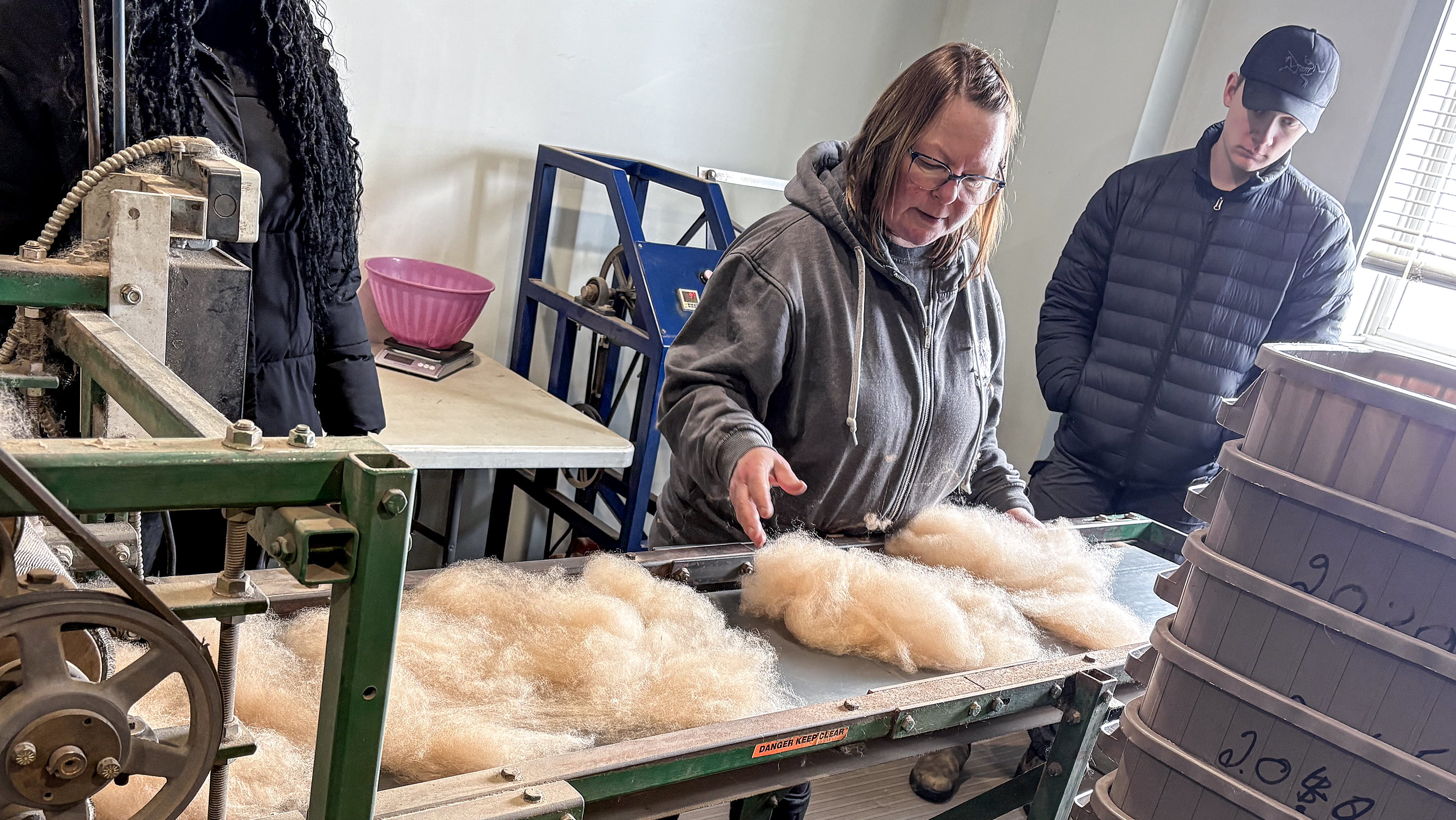
Along the way, the students drew on their degree programs in computing science and mathematics, environmental science and integrative biology to power their research efforts.
Dunn and one of his teammates, both environmental science students, used their knowledge to help identify sustainable practices Twisted Sisters was using in its everyday operations, for possible mention in a marketing plan.
The team also used their computing science know-how. “We researched questions like web design, the times of the week to post content, how to write an effective caption, using hashtags and emojis, and specific ways to engage social media audiences, such as through polls,” Dunn notes.
“We were able to draw on our different backgrounds, interests and specialties to really create what we hope to be a good project that will ultimately help the business.”
The team, along with the rest of their classmates, got an extra boost in their projects through guest speakers from firms like YEG Digital, who provided seasoned advice Dunn and his teammates relied on to guide their work.
“Learning first-hand from a professional about good marketing strategies, paired with our in-depth research, was really to our advantage.”
The team’s work gives her family’s operation a valuable voice as a small business, Sept notes.
“We want to really promote the ideas of being local, having quality products, and that we’re not a factory — everything is made here on our farm. Nowadays, it’s very important to let people know where their products are coming from.
“It would take me years to do the research the students have done and come up with these ideas, so it was a really good fit,” she adds.
The students feel they gained just as much from working on the project, Dunn says.
“We were able to really develop skills like communication, time management and collaboration, and then apply that in a real-world setting with a community partner, where that professionalism, respect and good hard work is really important,” he notes. “That’s going to translate into future careers and future jobs.”
The course ultimately helps students move beyond their classroom credentials and resumes to meaningfully connect during job interviews, Cruikshank adds.
“At that point, what the employer wants to see is the application of their skills, the character of who they are, and how that’s going to apply for the organization they want to work for.”
Meanwhile, Dunn and his fellow students feel good about how their work contributes and connects to the community.
“It’s rewarding to engage with these businesses that came to us with real questions, real concerns and real needs. You’re having a real impact and hopefully a positive effect.”
Student community projects and research from various core courses will be presented April 16 at Augustana’s annual showcase event.