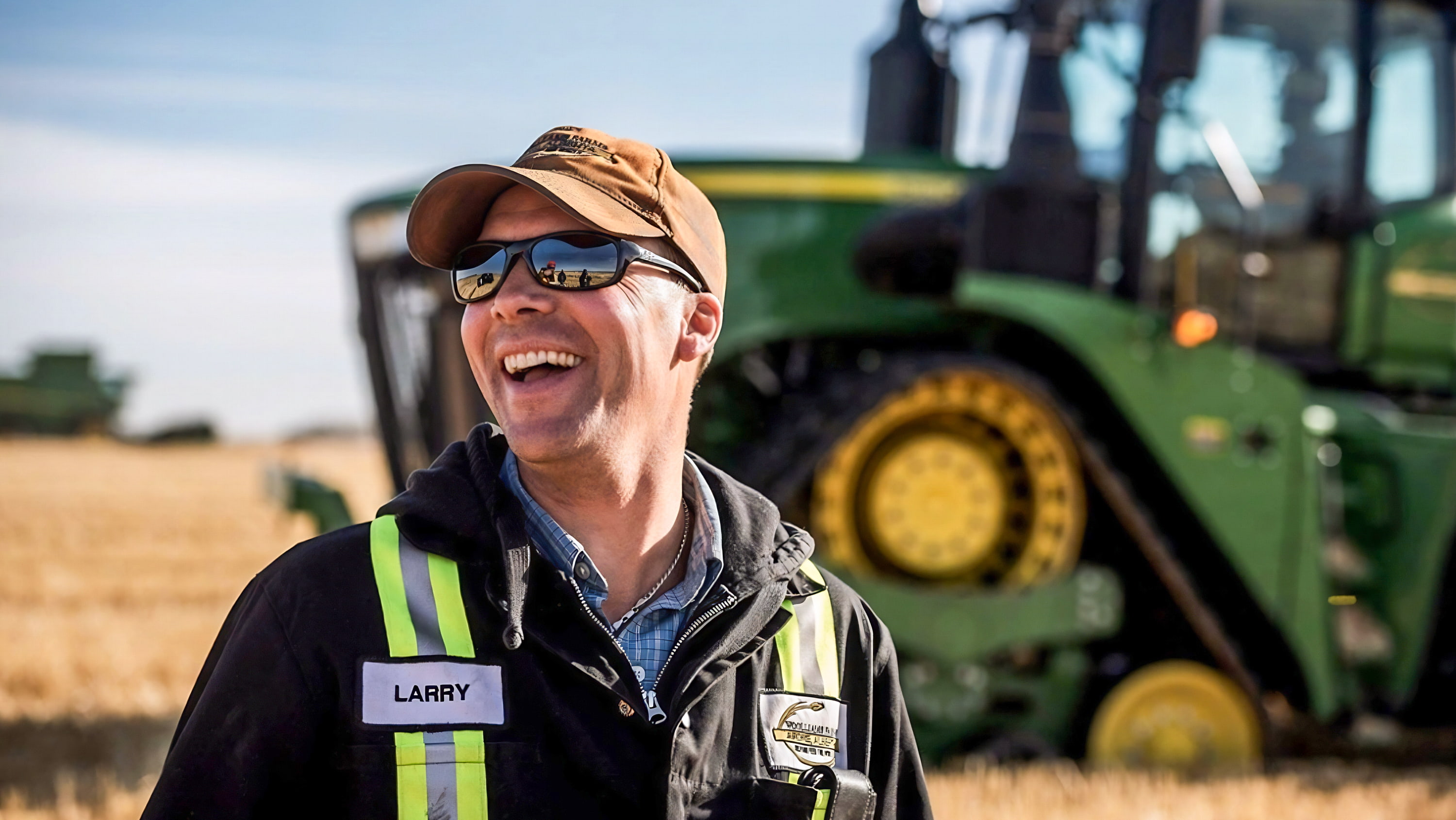
Everyone has a breaking point, says Larry Woolliams, a Rocky View County grain and hay farmer.
For Woolliams, it was the fall of 2019 and spring of 2020, when a particularly wet and snowy season forced him to leave his crop in the field over winter, leading to a roughly 70 per cent loss of his harvest.
“I’m trying to keep all my employees, and my whole living is laying out in the field, and I’ve got no income coming in – talk about financial stress,” Woolliams says.
Despite his best efforts to keep his struggles to himself, friends and family noticed. A close friend finally said something.
“He’s just like, ‘You know what? I’ve been through it. I know where you’re at right now.’ And then I just crumbled.”
Still, it was over a year before a different friend finally persuaded Woolliams to speak with a mental health expert.
Woolliams had resisted the idea. He wondered how much a therapist could really understand about farm life, and what his friends would think if they saw his truck parked outside a therapist’s office.
But when he connected with the right person, someone who understood the pressures of farming, “It was huge,” Woolliams says. “I really realized that one session didn’t even scratch the surface … by the third or fourth one, you’re finally kind of starting to build that trust. And I’m so thankful that I did it.”
The experience left such an impact that Woolliams wanted to help other farmers, which is why he is now the major financial supporter of a new pilot project called the AgWell Farmer Wellness Network.
Launched early last month by AgWell, a University of Alberta initiative based at the Augustana Campus that focuses on farmer mental health, the pilot connects farmers, farm families and those working in agriculture with therapists who understand farm life.
The project is accepting participants from Rocky View County, who can access up to five free counselling sessions.
“Our goal is to make support easier to access in a way that fits real farm life,” says project lead and Augustana psychology professor Rebecca Purc-Stephenson.
Poor mental health in the agricultural community has been a real and growing issue for a long time, Purc-Stephenson says. There are many factors at play: increasing costs, unpredictable weather, market swings, succession planning and limited access to health-care services.
Adding to the mix are cultural norms among farmers that may make them hesitant to speak with a counsellor.
That’s why it is so important to have “farm-informed” therapists, Purc-Stephenson says.
“Being a farm-informed therapist isn’t just what you say in therapy sessions; it’s also communicated by how you approach your work in general,” she says.
In addition to being trained on the specific concerns of farmers, farm-informed therapists will often accept clients outside of regular business hours. They may locate their offices away from spots frequented by members of their clients’ communities, take their clients out for a walk instead of doing sessions in an office, or even dress in clothing that feels more familiar to farmers. Some of the therapists involved in the project are farmers themselves.
“Talking about emotions isn’t something that’s common for many farmers,” Purc-Stephenson says. “Some will have trouble decoding their own emotions – they just don’t have the language – so farm-informed therapists will often set aside time to help them work through those emotions. It’s all about building trust and accounting for the fact that there may be some learning involved.”
AgWell’s approach is modelled after similar programs supported by the Canadian Centre for Agricultural Wellbeing. But it was important to understand Alberta’s unique context, Purc-Stephenson says.
“In Alberta, we have a lot of grain and oilseed operations, so farmers often face greater social and geographic isolation compared with smaller, more densely packed farms in eastern Canada,” she says. “Alberta also consistently reports the highest farm operating expenses compared with other provinces in Canada, another pressure point for farmers.”
Though preventative approaches, such as mental health awareness campaigns, and crisis approaches, such as the national farmer crisis line, have been in place for some time, a middle approach for people who are either not quite in crisis or who are in need of crisis followup has been missing.
“This counselling piece is critical to ensure we have a well-rounded support system in place for farmers,” Purc-Stephenson says. “It’s probably the last major gap.”
The wellness network is the first step to expanding access to practical, agriculture-informed support across Alberta, she says.
Woolliams says that since he started openly discussing his struggles, other friends and members of his farming community have come forward about their own challenges.
And when he started a charity golf tournament to raise money for the project, he was surprised to see tickets sell out fast. It’s clear that the community cares, he says.
“Don’t be afraid to talk,” he says. “That’s the big thing. You’re not alone.”