
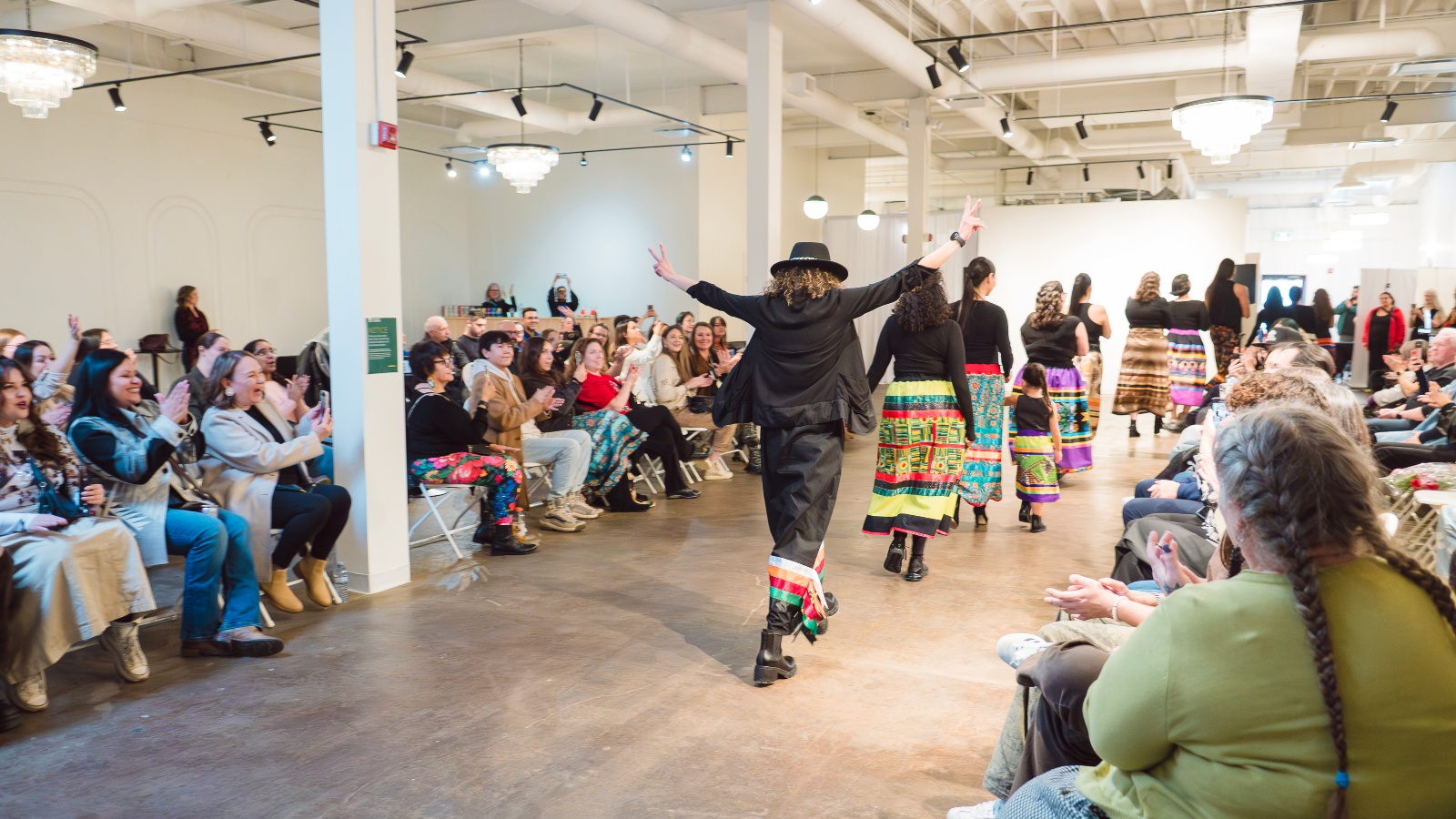
Indigenous fashion is having a moment — on powwow grounds, in community spaces, on international runways and red carpets — and at the University of Alberta, that resurgence took centre stage with a series of events celebrating cultural expression through style.
In November 2025, the Faculty of Native Studies capped off months of programming with Threads of Resurgence: Celebrating Indigenous Fashion, a fashion show highlighting the breadth and depth of Indigenous design. The show followed a webinar on Indigenous Joy in Fashion and Material Culture, a beading workshop and a T-shirt workshop — all created to explore how clothing, adornment and material culture are powerful expressions of identity, pride and resistance.
“Indigenous fashion is everywhere right now,” says Danni Okemaw, Community Engagement and Alumni Relations Coordinator with the Faculty of Native Studies, who co-organized the show. “Whether at powwows, Indigenous fashion shows, Indigenous artisan markets or through amazing Indigenous actors like Lily Gladstone on red carpets — we’re seeing Indigenous youth reclaiming their identity through what they wear. It felt like the right time to honour that.”
From sacred ceremonial items and powwow regalia to ribbon skirts, beadwork and contemporary streetwear, the organizers were intentional about showcasing the full spectrum of Indigenous fashion. Indigenous students and alumni were invited to participate as models, ensuring the runway reflected lived experience as much as artistry.
To curate a diverse lineup of designers, the organizers enlisted Danielle Lapatack, a Cree model and 2025 Bachelor of Arts graduate, to help identify designers whose work represented different nations, styles and approaches.
One of those designers was Osamuskwasis Roan, a student in the Faculty of Education’s Aboriginal Teacher Education Program and founder of the Alberta-based brand Osamuskwasis. Roan launched her label in 2020, drawing on a lifelong connection to traditional arts.
“I grew up being involved in beading and sewing — it just became a part of my life,” says Roan, who began creating her own regalia for powwows at age 12. “Being around our culture and how we express ourselves through dress inspired me to turn that into fashion and to tell stories through it.”
Roan has shown her work at events across North America, including Vancouver Indigenous Fashion Week and SWAIA Native Fashion Week, but says the U of A show carried special meaning. “It was really nice to share my work closer to home,” she says. “And to network with other designers — seeing familiar faces and meeting new people.”
For both Roan and Okemaw, however, the significance of the event went far beyond the runway. It reflected a broader cultural shift — one in which Indigenous fashion is now celebrated rather than suppressed.
“If you go back to the residential school era, our people were forced to wear Western clothing, to cut our hair, to erase who we were,” says Okemaw. “What I see now is Indigenous youth growing their hair, wearing what they want, making ribbon pants and all these incredible pieces that are essentially decolonizing fashion.”
“There was a time when it was illegal for our people to wear regalia,” adds Roan. “Through fashion, I want to highlight our ability to express our culture, to be proud of who we are.”
That shift is personal for both women. Okemaw, who grew up in Winnipeg, remembers changing out of ribbon skirts after community events to avoid microaggressions in public spaces. “Those skirts meant so much to us,” she says. “We just didn’t want to deal with the comments.” Roan similarly recalls rarely seeing ribbon skirts worn casually when she was younger. “Now I see them all the time, and it makes me really happy.”
Behind the scenes, the fashion show and accompanying events were made possible through a unique chain of support that began online. More than half a million learners have enrolled in the University of Alberta’s Indigenous Canada MOOC since its launch — including actor and filmmaker Dan Levy. After signing up, Levy began hosting weekly discussions with the course’s professors and encouraged his fans to learn alongside him.
Levy later reached out to the university to share how transformative the course had been, singling out Dr. Paul Gareau, Associate Professor and Associate Dean in the Faculty of Native Studies and one of the MOOC’s academic leads, as the best teacher he had ever had. That experience inspired Levy to make a generous donation to the faculty — a gift that was matched, and then surpassed, by his fans.
Okemaw used her community connections and conversations with colleagues to envision how those funds could meaningfully support cultural expression — an idea she later shared with Levy. The result was a series of events that brought learning off the screen and into lived, creative practice.
While it’s too soon to say whether Threads of Resurgence will become an annual event, Okemaw says the response from students, designers and attendees was overwhelmingly positive. “It was just a beautiful event that celebrated our Indigenous identities, who we are as a people and how we can come together as a community.”
Roan’s brand has garnered international attention, but she says she would definitely participate in the local event if it were to happen again. “I’d love to do as much as I can for the Indigenous fashion community, to help and be a resource to build it up, especially in Alberta.”