
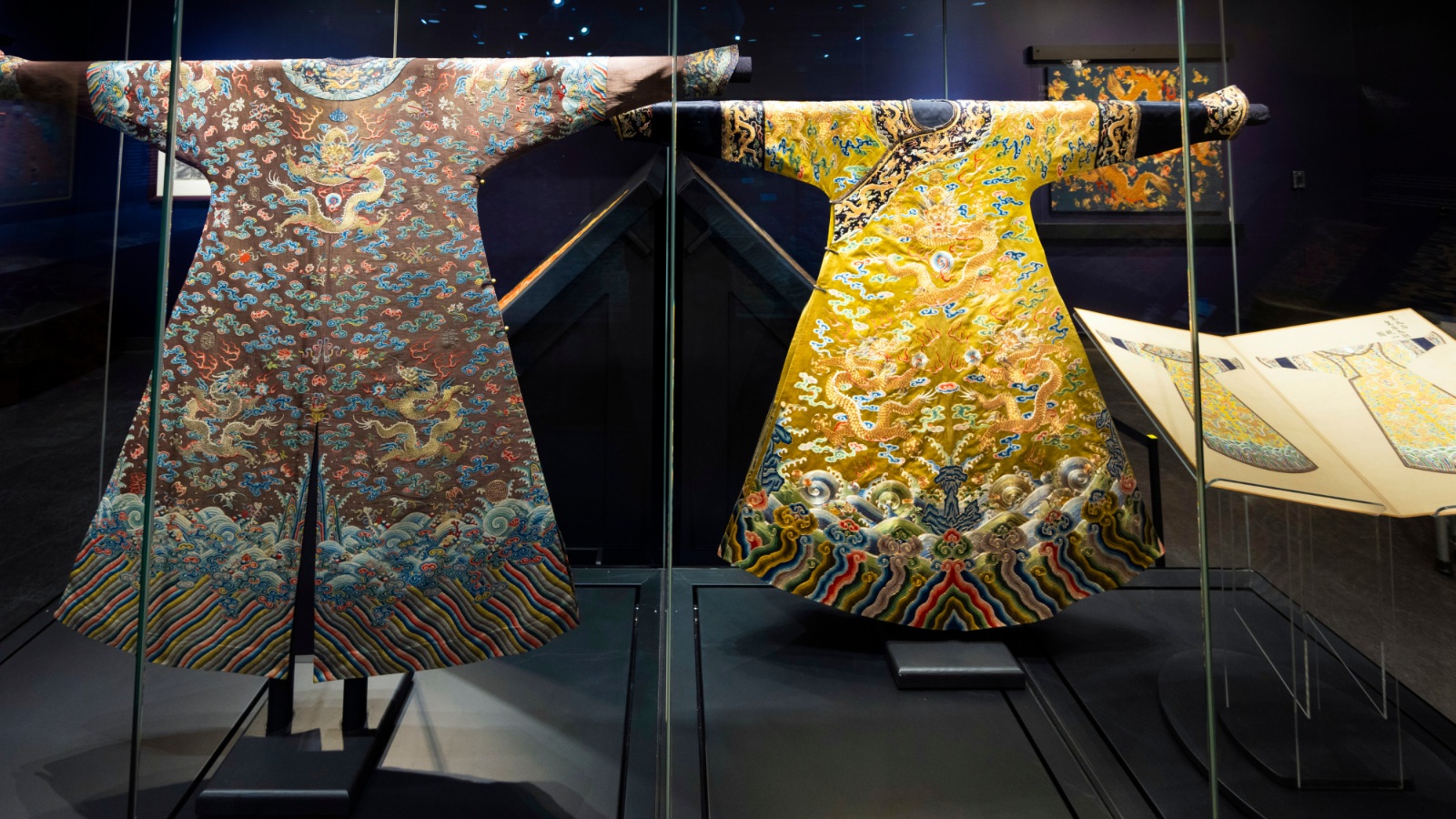
With the Lunar New Year and the Year of the Horse starting Feb. 17, 2026, many folks are taking part in the celebrations that accompany ringing in the new year. Among the special events celebrating family and the arrival of spring are traditions to ensure prosperity and happiness for the coming year. With that in mind, let's take a look at the University of Alberta Museums’ Mactaggart Art Collection for images of good fortune, health and happiness — common wishes for the new year and frequently represented on Chinese fabrics.
“Traditional Chinese clothing and textiles are often imbued with symbols that represent auspicious wishes, status or cultural value," says Sarah Spotowski, Curatorial Assistant for the Mactaggart Art Collection, which contains more than 1,000 textiles from the Ming and Qing dynasties. "Everything from colour to composition provides clues as to both the wearer’s identity and usage of the garment or textile. Typical auspicious symbols seen in the Mactaggart Art Collection represent longevity, good fortune, happiness, imperial power, rank, religious beliefs, festival celebrations, wealth and protection.”
Collection Curator Isabel (Pi-Fen) Chueh describes common symbolic imagery found throughout the collection.
- Dragon: symbol of authority, power and honour. Dragon symbols were regulated for use by the imperial court during the Ming and Qing dynasties, but later were adopted by broader society.
- Bat: a homophonic symbol, in that the Chinese word for bats sounds similar to “fu,” meaning good fortune.
- Shou: a longevity symbol that is popular for textiles associated with birthdays and auspicious occasions.
- Peonies: represent wealth, prosperity and honour. They are found not only on textiles but also in many other forms of Chinese material culture, such as paintings, ceramics and home furnishings.
- Tigers with wang character: the king of all beasts, representing strength and bravery. The stripes on a tiger’s forehead are believed to resemble the Chinese character “wang,” which means “king.” Tigers are popular in clothing worn by young boys, often decorated with numerous protective symbols.
- Butterflies: represent longevity (the Chinese word for butterfly is a homophone for “octagenarian”) and are often used for joyful occasions such as weddings.
Samples from the collection
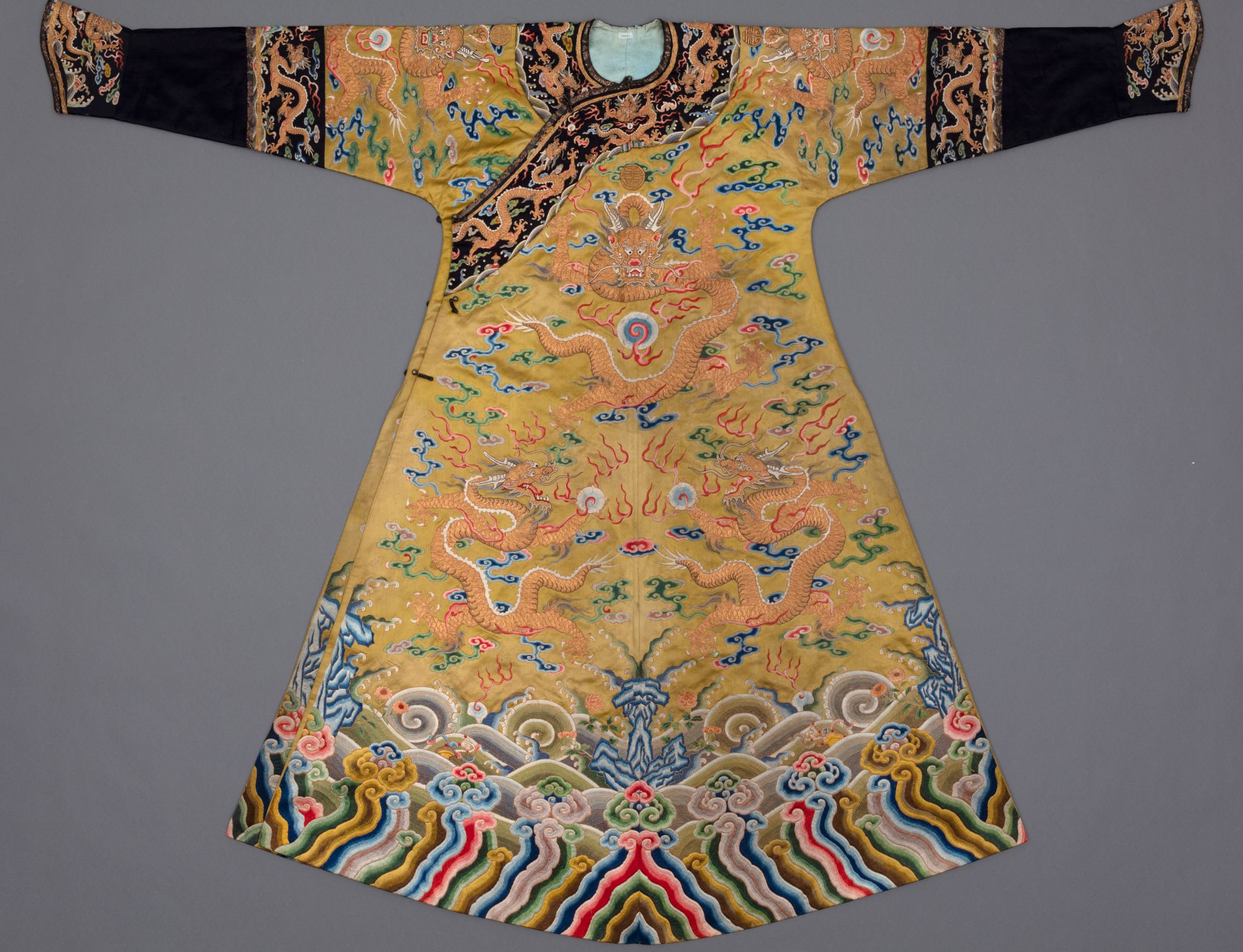
Yellow Silk Dragon Robe for Empress or Imperial Consort, Qing 18th century, Mactaggart Art Collection, University of Alberta Museums, Gift of Sandy and Cécile Mactaggart, 2005.5.7
A ceremonial robe that follows the regulations from the Huangchao liqi tushi (“Illustrated Regulations of the Ceremonial Paraphernalia of the Imperial Qing Dynasty”). This robe features nine five-clawed dragons, indicating that the wearer was a woman close to the emperor. The dragons on the robe are floating in the heavens, and are surrounded by clouds and a “shou” symbol above the central forward-facing dragon. Along the hem are waves capped with ruyi-shaped crests (wish-granting symbol), rock formations and flowers, including peonies.
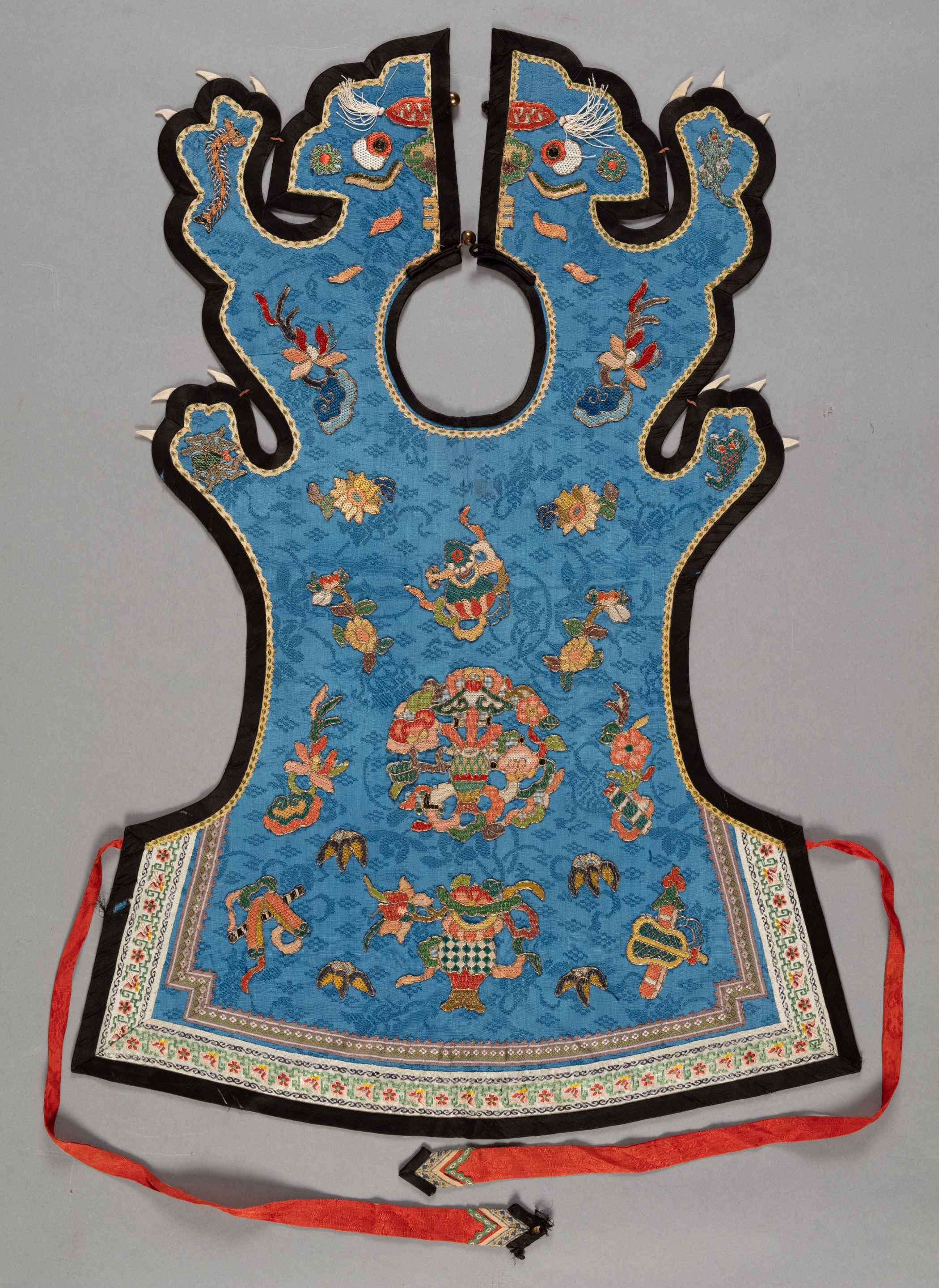
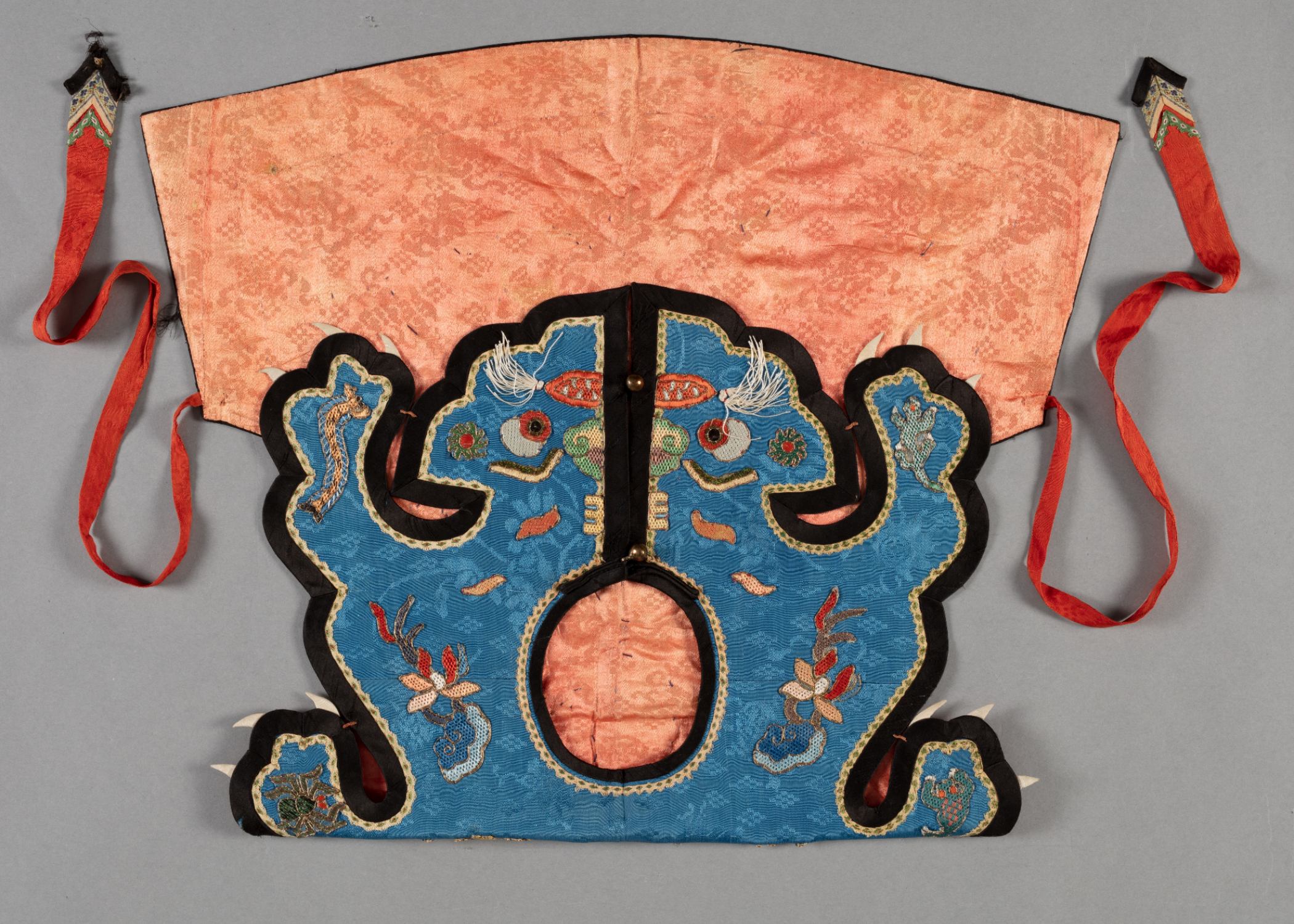
Tiger Shaped Blue Silk Bib for a Child, Qing 19th century, Mactaggart Art Collection, University of Alberta Museums, Gift of Sandy and Cécile Mactaggart, 2005.5.20
During the Qing dynasty, mothers eager to protect their children from evil forces sought clothing with beneficial defences. Tiger symbols were thought to protect children from demons by terrifying them with their ferocity. This special silk garment, likely made by the child’s mother or maternal grandmother, would have been worn during festivals or other special occasions.
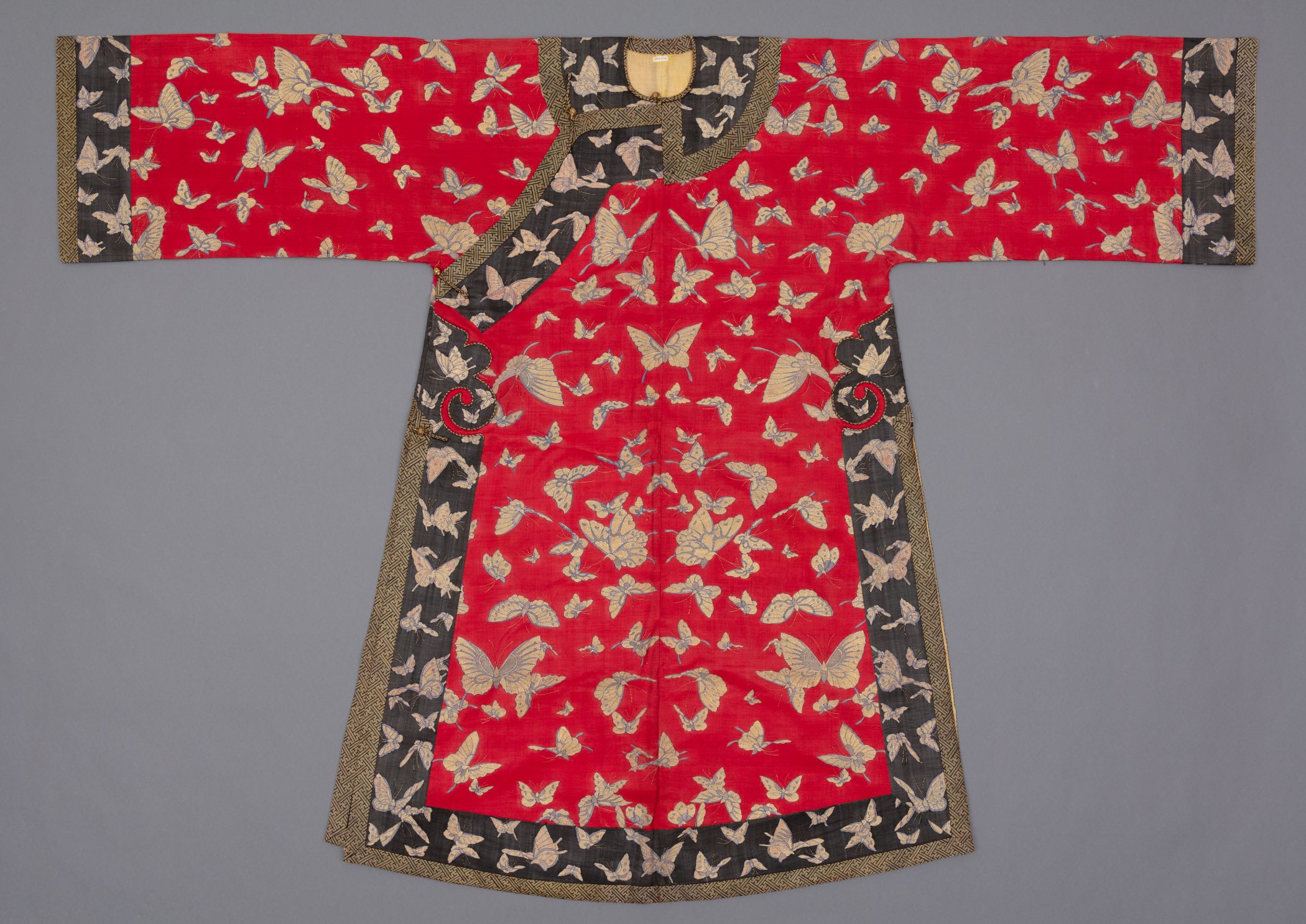
Red Silk Tapestry Weave Informal Robe for a Woman, Qing 19th century, Mactaggart Art Collection, University of Alberta Museums, Gift of Sandy and Cécile Mactaggart, 2005.5.323
Butterflies represent longevity (the Chinese word for butterfly is a homophone for “octagenarian”) and, paired with the colour red, suggest this robe may have been worn for a wedding ceremony.
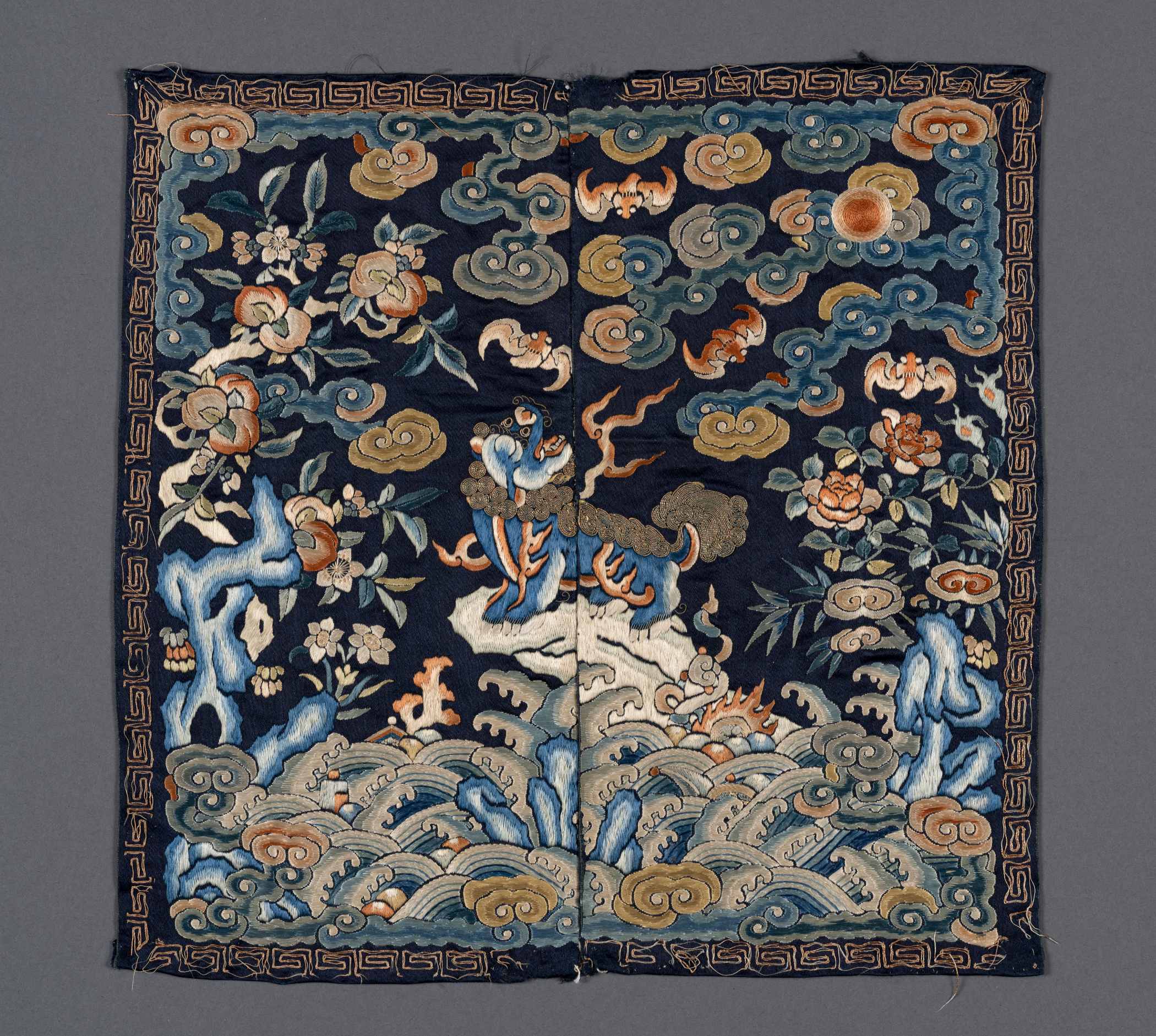
Rank Badge for a Second Rank Military Official, Qing 19th century, Mactaggart Art Collection, University of Alberta Museums, Purchased by University of Alberta Museums, 2022.7.4
Rank badges were worn by both civil and military officials in the Qing dynasty (1644-1911). The nine ranks of civil officials were represented by birds, while the military ranks used beasts. The square section of highly decorated fabric is a visual representation of social order, and relates to Confucian ideals of hierarchies, filial piety and transmission of knowledge. Rank badges worn in the Qing dynasty are crafted according to the order of the universe. This includes waves (both standing water and curling crests), a rock in the bottom centre with a bird or beast on top and sky with a sun, clouds and other important symbols. This rank badge also features bats (symbolizing good fortune) and peaches (symbolizing longevity).
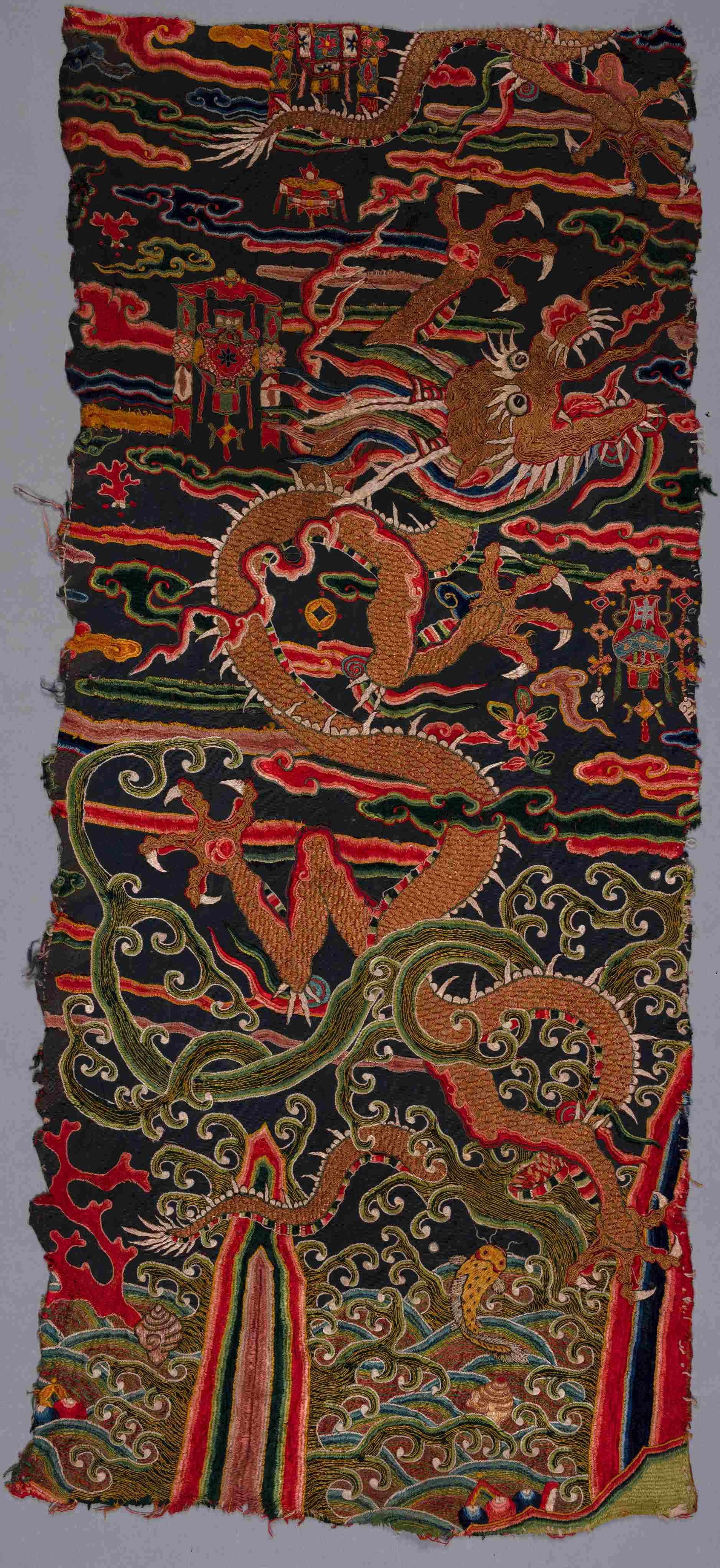
Silk Dragon Robe Fragment, Ming 16th-17th centuries, Mactaggart Art Collection, University of Alberta Museums, Gift of Sandy and Cécile Mactaggart, 2005.5.355
Another textile related to the lantern festival (notice the different lanterns around the dragon). This textile also relates to the saying “bu bu gao sheng,” which means “to climb step by step” and is a wish for wealth and success.
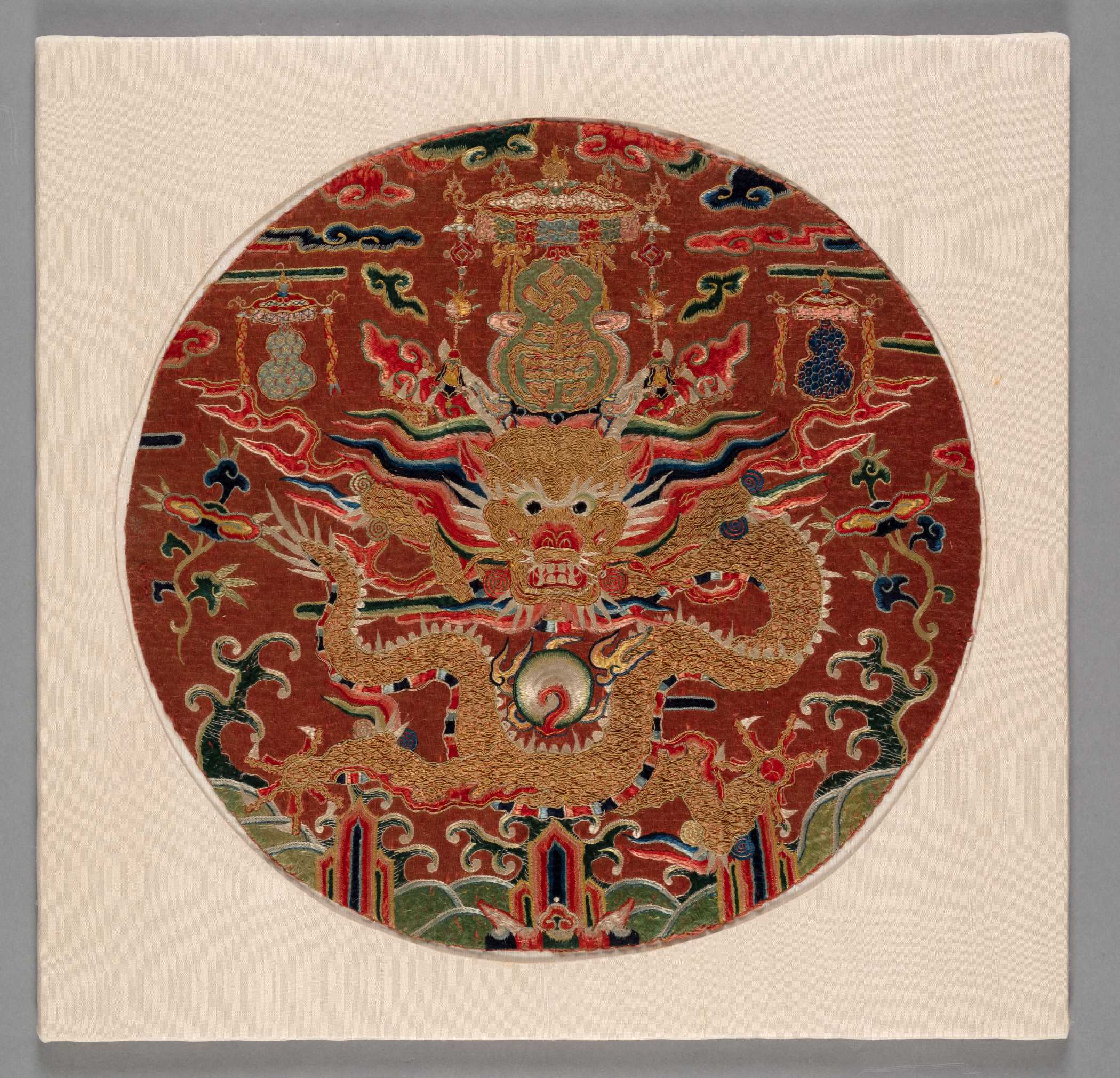
Embroidered Silk Roundel for the Lantern Festival, Ming 16th-17th centuries, Mactaggart Art Collection, University of Alberta Museums, Gift of Sandy and Cécile Mactaggart, 2005.5.439
Festival badges were worn by palace courtiers during the Ming dynasty (1368-1644) to celebrate various holidays and festivals throughout the year. This circular badge was made for a high-ranking member of the imperial family to wear during New Year celebrations. The gourd-shaped lanterns above the front-facing dragon are adorned with longevity characters (“shou” and “wan”), which were worn to celebrate the Lantern Festival, which occurred on the full moon of the first lunar month.
In the spirit of the new year, 新年快乐 (Xīnnián kuàilè) — Happy New Year, and 恭喜发财 (Gōngxǐ fācái) — Wishing you happiness and prosperity.
Highlights from the Mactaggart Art Collection will feature in the inaugural exhibit at The Kenneth and Sandra Wong Gallery (currently under construction).
Interested in learning more? Explore the U of A Museums Mactaggart Art Collection online: