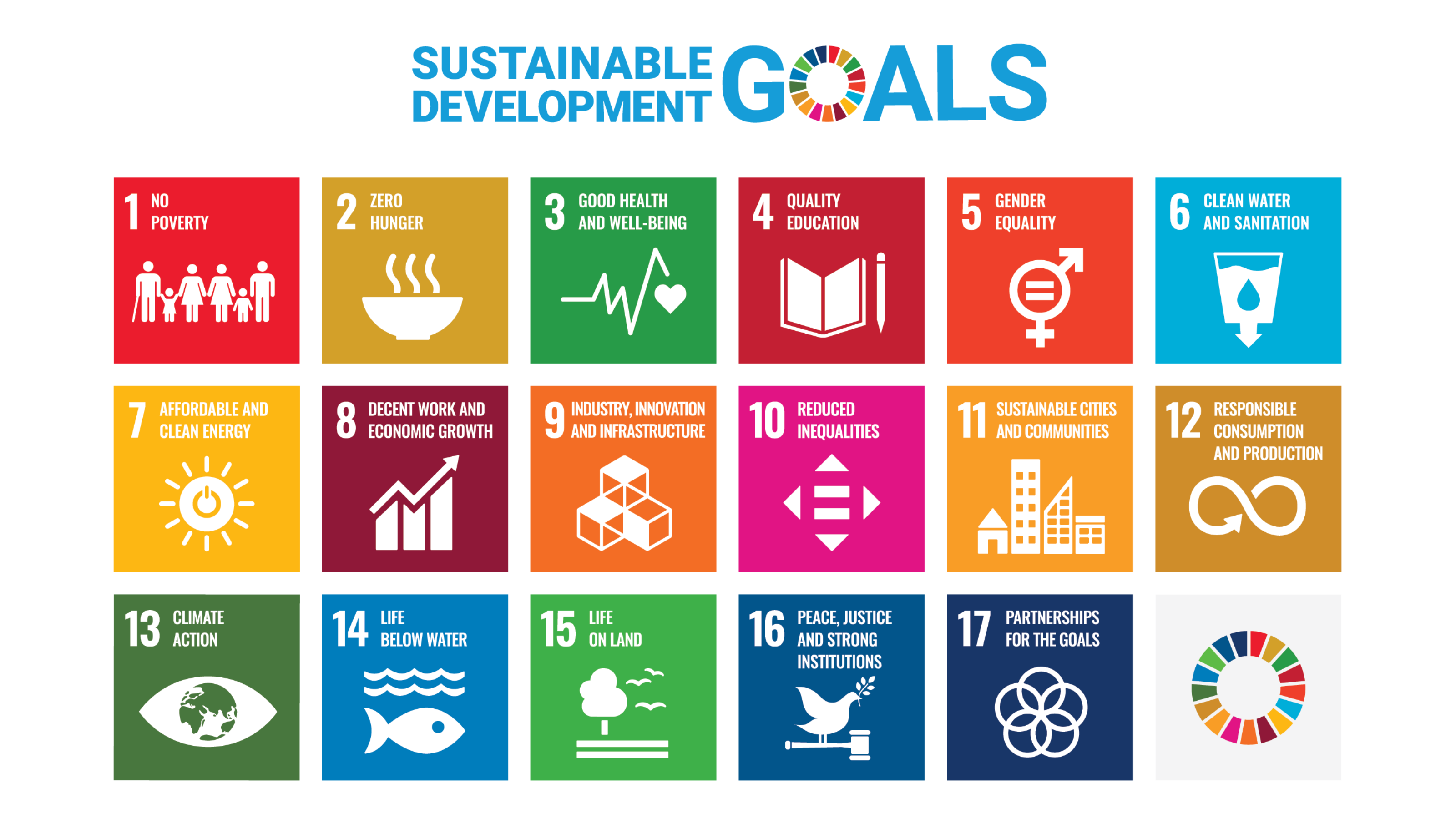
Five years ago, I wrote about the Sustainable Development Goals (SDGs) at the University of Alberta and suggested that paying more attention to them could help us better connect our research and teaching to some of the great challenges of our time. A great deal has happened since then.
One stead-fast thought: The SDGs remain one of the clearest frameworks we have for thinking about the future. They remind us that prosperity alone is not enough – that it matters whether prosperity is broadly shared, whether it strengthens communities, whether it protects the natural systems on which life depends and whether it is supported by institutions and partnerships capable of addressing complex problems over time. If anything, the years since 2021 have only reinforced the need for that kind of integrated vision.
At the U of A, our ability to contribute to that agenda has grown meaningfully. The Sustainability Council has continued to evolve as an academic leadership unit working across faculties to advance sustainability learning, discovery and engagement. The SDGs have also become more visible as an organizing framework for the university’s work — not only in communications and rankings, but increasingly in academic programming, partnership-building and student experience. The university’s strong SDG platform and SDG Info Hub now make that activity far more visible across campus and beyond.
One of the clearest changes since 2021 is the growth of sustainability education itself. The Undergraduate Certificate in Sustainability continues to provide a major point of entry for students from across the university. At the same time, the university’s SUST courses, first launched in fall 2021, have grown from a pilot effort into an established part of the academic landscape, with more than 1,000 students enrolled in the past year alone. Those students came from engineering, arts, science, education, agriculture and many other areas of campus.
This matters because the SDGs call for exactly this kind of intellectual collaboration across boundaries. That is why the university has also begun integrating sustainability more intentionally across the curriculum. In the past year, the Sustainability Council awarded Sustainability Across the Curriculum pilot grants and hosted a panel on building the SDGs into curriculum featuring faculty from Public Health, Augustana, Business and Engineering.
Graduate education is also deepening. In January, the College of Natural and Applied Sciences, along with the founding faculties of ALES and Science, launched a new online Graduate Certificate in Sustainability, and this fall it will launch a new Master of Sustainability, with course contributions from across the institution. Together, these programs create stronger pathways from introductory learning to advanced interdisciplinary and professional study.
At the same time, SDG-related academic programming is not confined to the Sustainability Council’s own orbit. It is increasingly appearing across the university in forms tailored to different disciplines and professions. One example is in the School of Public Health, where the university now offers a Graduate Embedded Certificate in Climate Change and Health. This is significant because it shows the SDGs being advanced not only through broad sustainability language, but through specialized graduate training that equips students to work at one of the most important intersections of our time: climate and human health.
There are also important developments on the governance and democracy side of the SDG agenda. When people think of sustainability, they often think first of climate change, biodiversity or renewable energy. But the SDGs are equally concerned with institutions, civic capacity, justice and peace.
Consider:
- The university’s recently launched Peter Lougheed School of Politics and Democracy that is focused on cultivating new generations of leaders by equipping students, policymakers and citizens with political acumen and practical skills. That aligns directly with SDG goal number 16 on strong institutions and inclusive governance.
- The SDG Info Hub, launched in 2021, provides a central platform for students, staff, faculty and external audiences to explore commitments, courses, initiatives and stories linked to each of the 17 goals. In a large institution, that kind of visibility matters. It helps people see that work happening across different units is part of a larger shared project.
- The U of A rose to sixth in the world in the 2024 Times Higher Education Impact Rankings and remained eighth in the 2025 rankings, which assess stewardship, outreach and research related to the SDGs. More recently, through an application led by Energy & Climate Action, the university sustained its STARS Gold rating, reflecting the breadth of its sustainability efforts across teaching, research, operations and engagement.
SDG-related activity is also visible in student life. Through Sustain SU and other student-led initiatives, the university community has built a culture of practical engagement around sustainability, from the Campus Community Garden and Bike Library to reusable dish programs and student-led funding for greener campus projects.
For me, the most important change since 2021 is not a ranking, a website or even a single new program. It is that sustainability at the U of A has become more coherent as an academic and institutional project. The university is creating stronger pathways from initial undergraduate learning to advanced graduate education. It is embedding sustainability into existing curricula. It is building connections between sustainability and fields like health, engineering, public policy and democratic citizenship. It is creating more opportunities for students to move from theory to application. And it is using the SDGs not merely as branding, but as a practical framework for aligning research, teaching, partnership and public purpose.
Five years on, I am more convinced than ever that the SDGs matter at the U of A. They help us see that work on climate, health, equity, governance, food systems, energy, housing and resilience is connected. They remind us that the great challenges of our time cannot be solved one discipline at a time. And they encourage us to think not only about excellence in isolation, but about contribution: how teaching, research and partnerships can help build a world that is more just, more resilient and more sustainable.
There is still much more to do. But the last five years have shown that the U of A is not starting from scratch. Across this institution, in many units and in many forms, the work of the SDGs is already well underway.