In the fall of 2024, an article appeared in the Russian newspaper Komsomolskaya Pravda with the following headline: “A monument to the victims of the Holodomor was discovered in the Kherson village of Nova Maiachka [in Ukraine].” The authors noted with concern that the monument “still stands … and this is despite the fact that the region became part of Russia two years ago.” Following a campaign of destruction the previous November, over a dozen such memorials had been demolished throughout the oblast, and evidently the journalists had assumed that none remained.
The timing of this November campaign was likely not coincidental, given that Ukrainian people across the world, from the mud-filled trenches of the Donbas to the hallowed halls of Canada’s corridors of power, set aside Nov. 23 to remember a tragedy and a crime that many would rather be forgotten: the forced mass starvation, now widely known as the Holodomor, of millions of Ukrainians in the early 1930s by the Stalinist regime. For the last three years, I’ve had the privilege of teaching a course here at the University of Alberta about this calamity, called HIST 219 – Famine as Genocide in the 20th Century: The Case of the Holodomor. I’ve transitioned some of those teachings into a new massive open online course (MOOC), Famine as Genocide: The Holodomor in Ukraine. This course brings together more than a dozen leading scholars on the famine to produce a first-of-its-kind, free offering.
At the core of these courses there rests a simple implied question: Why does the Holodomor still matter? It is a question that is answered by both the building of monuments and their destruction. For the crime committed against Ukrainians in the early 1930s is not only an ongoing one, but one that in many ways reflects broader patterns of mass atrocity and its denial in the modern era – shining a bright light on the darkest parts of our past, present and future.
The Pravda article on the final remaining Holodomor monument in southern Ukraine suggested “that the topic of the ‘Holodomor’ is part of anti-Russian propaganda … while in reality, many regions of the U.S.S.R. were starving in those years.” A fair point, you might assume, though one is then forced to wonder why Russian-occupying authorities are not just destroying Holodomor memorials but also monuments to victims of Stalinist repression more generally, for instance in Luhansk last summer. Or why these are being replaced by busts of the mustachioed dictator himself in occupied cities such as Melitopol.
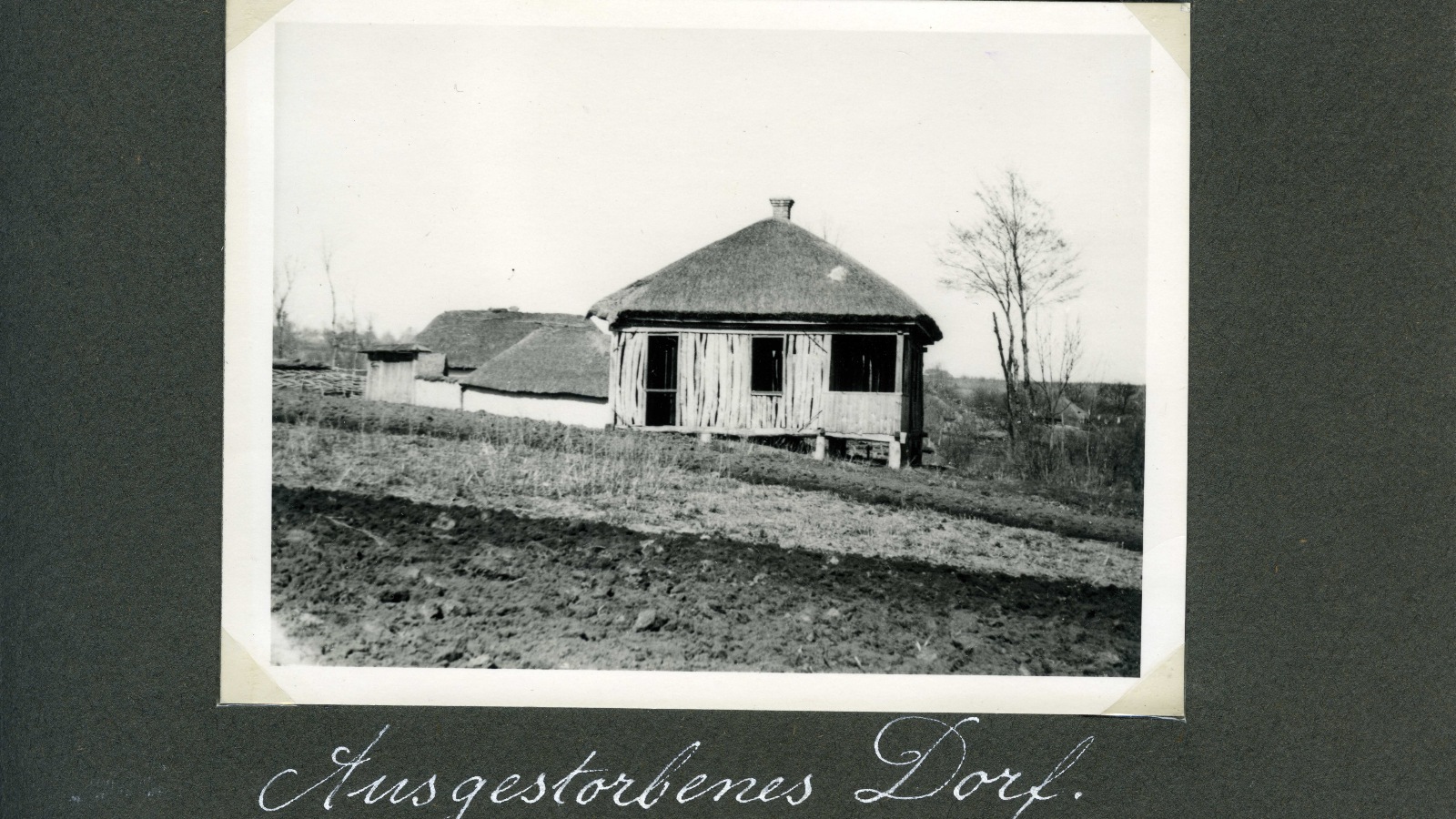
Moreover, one must ask why this 1930s-era starvation seemed to hit certain regions of the vast Soviet empire with particular severity – why, according to recent demographic studies, at the famine’s peak upwards of nine times as many Ukrainians perished as Russians per capita. Why the overwhelmingly Russian oblasts on the northern borders of Ukraine experienced very little starvation. And why the oblasts to the east with large Ukrainian populations experienced a great deal.
Indeed, one has to wonder what precisely Joseph Stalin meant in the summer of 1932 when he told his top Russian officials in the face of reports of famine from his top Ukrainian officials to “give the most serious attention to Ukraine … isolate the whining … and ensure genuinely Bolshevik decisions.” What those decisions were – a ratcheting up of the forced requisition campaign, the ration-blacklisting of entire villages and districts, and a military-style blockade of Ukraine as a whole – are a matter of historical record.
Soviet dissident Lev Kopelev, one of the so-called “Twenty-Five Thousanders” sent into these farming communities to deprive already starving Ukrainian peasants of their last morsels that winter of 1932-33, recalled the following: “I took part in this myself, scouring the countryside, searching for hidden grain, testing the earth with an iron rod for loose spots that might lead to buried grain. With the others, I emptied out the old folks’ storage chests, stopping my ears to the children’s crying and the women’s wails. For I was convinced that I was accomplishing the great and necessary transformation of the countryside.”
Transformation. It is a curious word. Raphael Lemkin, the Polish-Jewish lawyer who coined the concept of “genocide” during the Second World War, cogently observed that such transformation was “… an essential part of the Soviet program for expansion, for it offers the quick way of bringing unity out of the diversity of cultures and nations that constitute the Soviet Empire.” Lemkin shared these thoughts during a 1953 commemoration in New York on the 20th anniversary of the Holodomor, in a speech on what he described as “perhaps the classic example of Soviet genocide, its longest and broadest experiment in Russification – the destruction of the Ukrainian nation.”
Given that April is Genocide Awareness Month, it is worth reflecting on how this attempted destruction is self-evidently a continuing process, which both pre-dated the Soviet experiment and now post-dates it. Thus the forced famine of the early 1930s, as Lemkin himself clarified, was merely an especially horrifying part of a genocidal whole, with “the weapon used against [the farmers being] perhaps the most terrible of all – starvation.” Yet, he added, “there has been an attempt to dismiss this highpoint of Soviet cruelty.”
This attempted dismissal as it played out in western media and politics, and the central role of the Moscow-based Communist International (or Comintern) and its satellite parties in promoting such denialism to global audiences even as Ukrainians were still starving, rests at the heart of my own research. These historical denialist propaganda campaigns also serve as the subject of my contribution to the aforementioned massive open online course. For those interested in a deeper dive into the terrible yet terribly relevant topics outlined in this article, I highly recommend you sign up and spend a few hours on the various modules. You’ll learn not merely about our distant past but, through it, our pressing present.