
Teaching and Learning at the U of A spotlights instructors in the classroom and beyond. Through these stories, we hope to inspire others in our shared commitment to teaching and learning.
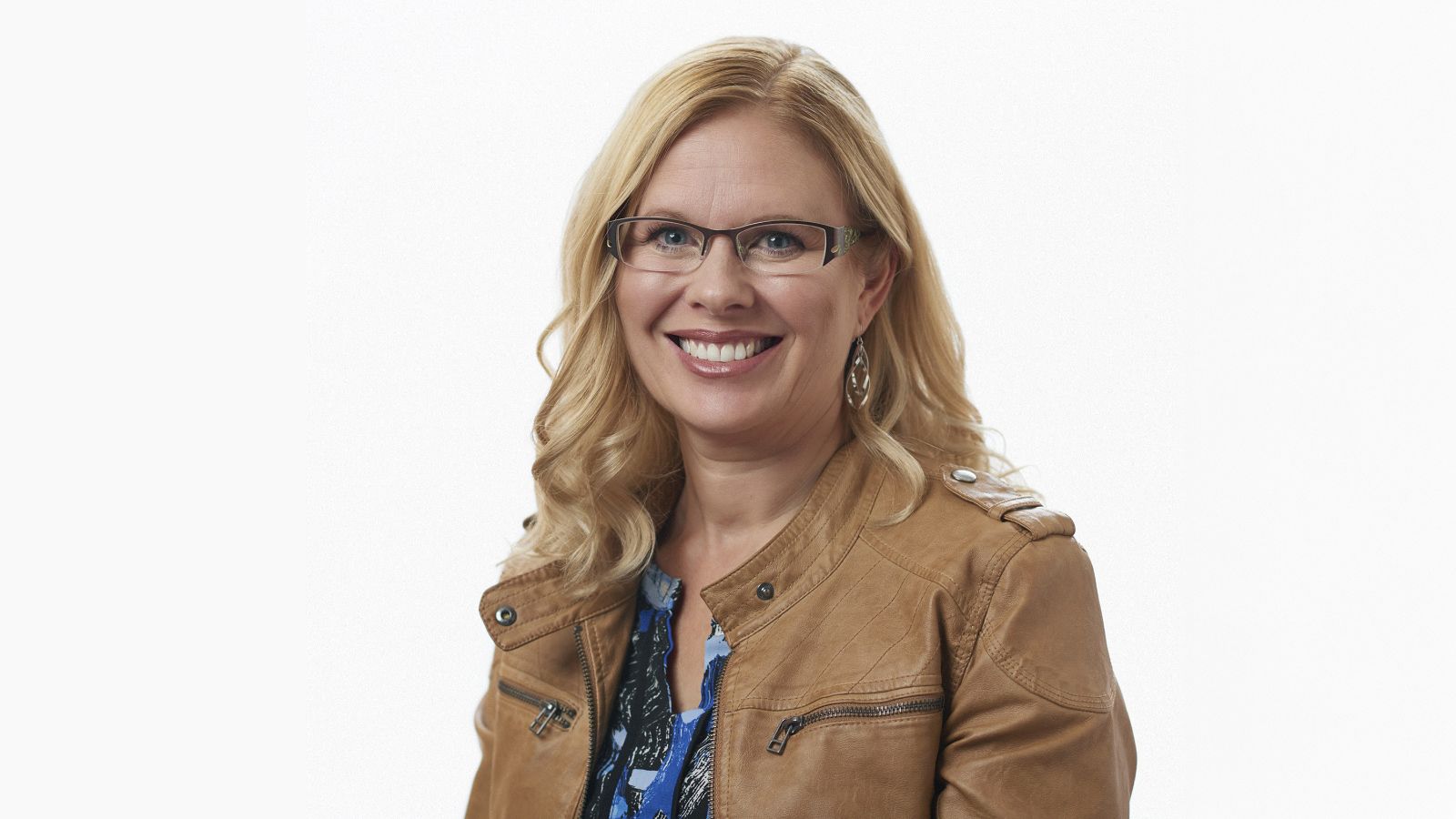
Dr. Carolyn Fleck-Prediger has worked as a speech-language pathologist since 1991, and it was the motivation to better serve her patients at Ponoka’s Halvar Jonson Centre for Brain Injury Rehabilitation that sparked her decision to return to academia after nearly two decades as a clinician.
In around 2010, Carolyn began noticing a persistent issue with patients she was treating at the facility. “For many very involved patients, it was challenging to determine their level of conscious awareness” she explains. “As a treatment team, we were spending a lot of time trying to figure out how much each patient was understanding, especially if they had trouble with their motor responses.”
Determined to find a better way to reach them, she began researching the issue and connecting with neuroscientists working in the area. Eventually, she realized her curiosity was leading her down the road to a PhD — she began her doctoral studies in the Neuroscience and Mental Health Institute (NMHI) at the U of A in 2012.
Despite the demands of her research, she remained at the Halvar Jonson Centre, juggling her studies and clinical responsibilities until she graduated in 2019. This balancing act allowed her to bring a unique perspective to the classroom once she became a sessional instructor in the Department of Communication Sciences and Disorders. Carolyn still had her finger on the pulse of what was happening in clinical settings, having never left her speech-language pathologist role, but she also had a sense of what approaches are most effective in the classroom, having recently been a student herself.
“My clinical experience allows me to provide students with real-world examples of assessments, treatments and strategies that are practical, functional and effective,” says Carolyn, who is a Faculty of Rehabilitation Medicine affiliated clinical educator and academic teaching staff (ATS) lecturer stream course instructor. She currently co-teaches CSD 529: Advanced Cognitive-Communication Disorders.
CSD 529 covers topics including dementia, aging and brain injury. Carolyn delivers the content on traumatic brain injury and right hemisphere disorders, her specialization at Halvar Jonson Centre. “I think that’s why students respond well to the class — they see the direct application of the information that I’m providing,” she says. “It’s a real advantage to have that kind of clinical breadth backing you when you’re in the classroom.”
One of her goals as an instructor is to help her students shift their mindsets and learn to think like clinicians. While students are often focused on simply mastering the knowledge they need for success on tests and good grades in their courses, Carolyn tries to help them develop a broader view that will serve them well in the health-care world.
“As a clinician, you’re driven to make sure clients accomplish things that are meaningful and important to them. The entire interdisciplinary team strives to make the person’s life easier, more productive and rewarding,” she explains.
She approaches teaching and patient treatment similarly, taking a step-by-step approach. The team constantly assesses the patients seen at the clinic, adjusting their treatment plans and collaborating to find the ideal treatment strategies. Carolyn wants her students to “build their knowledge, layer upon layer, with one concept building on the next.”
There are also intangible skills that are difficult to grasp without hands-on experience, such as how to engage families in a treatment plan. “That’s the kind of thing I can relay to students that isn’t really taught in a textbook,” she says.
While Carolyn’s course specifically focuses on cognitive communication, she seizes every opportunity to weave in related information on other facets of speech-language therapy. Her goal is to prepare students for the unpredictability and complexity of real clinical practice. “Patients don’t present in a textbook manner, so it’s important to be able to integrate all of your skills,” she explains.
The final assignment for her course involves challenging the students to correctly diagnose a case, plan an evidence-based intervention and describe an activity targeting a limitation. Students are expected to explain their choices and the rationale behind their decision. “It prepares them for when they step into their placements,” she says. “They know how to write a plan, implement a session, pick a goal, measure outcomes and communicate with patients, families and fellow treatment team members which are all essential clinical skills in the real world.”
Over the course of her career, Carolyn has facilitated the clinical placements of more than 100 speech-language pathology graduate students, and shaped even more in her classes. For her, the best reward is knowing that she’s equipping students with the tools to succeed in their future career paths.
“I get to share my knowledge and what I’ve learned over so many years of clinical experience in order to give them that little boost when they walk into their first job or encounter a patient who’s super challenging,” says Carolyn. “That, in itself, is a huge reward.”