
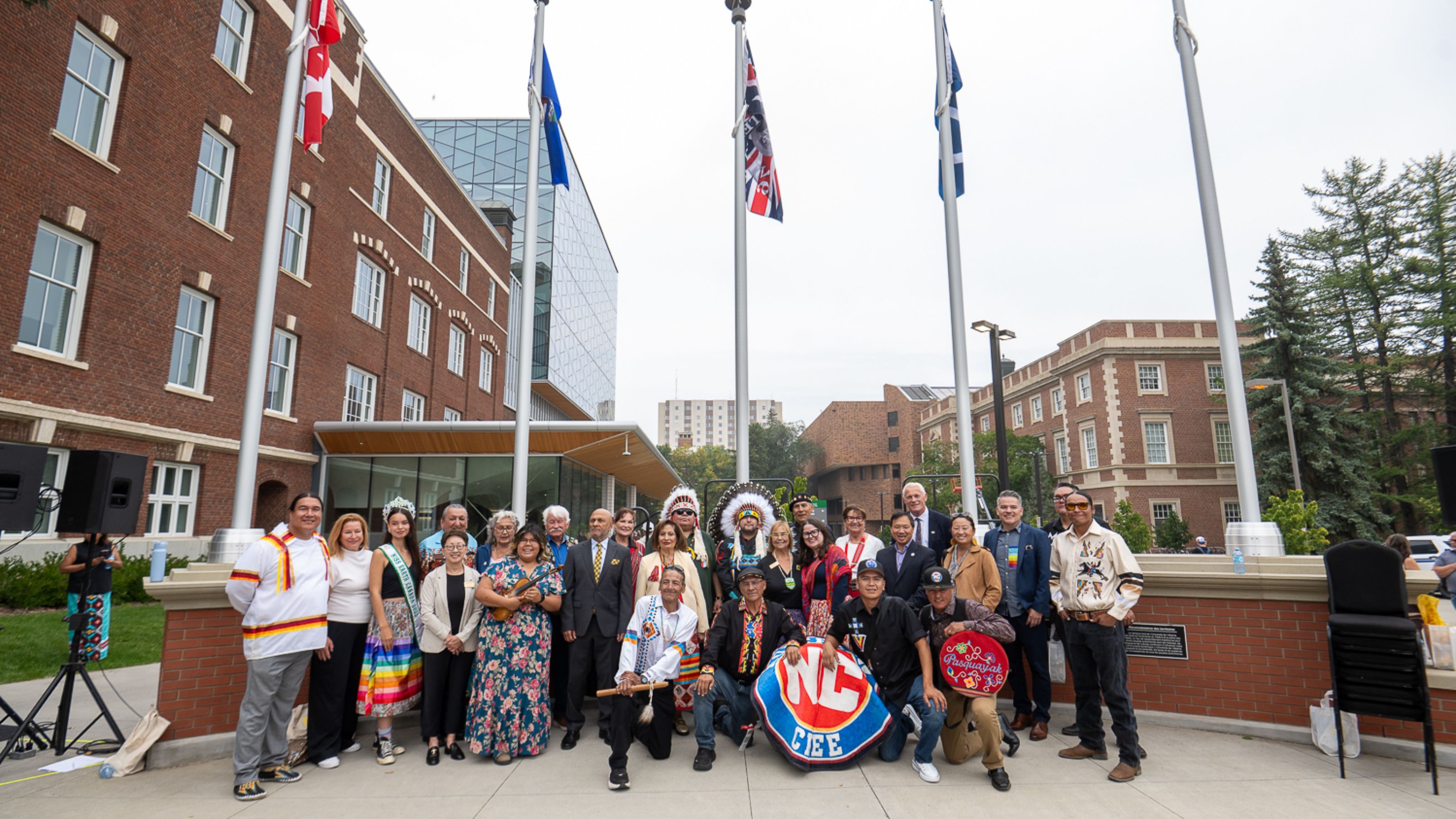
Tansi wahkotomantik ekwa kahkiyaw.
I want to reflect on the United Nations' International Day of Peace on Sept. 21, the 150th Anniversary of Treaty No. 6 in 2026 and the National Day for Truth and Reconciliation on Sept. 30.
This year, the International Day of Peace theme is "invest in peace for everyone, everywhere." In response, the United Nations Secretary-General António Guterres said: “Peace is not just made at conference tables, but in classrooms, neighbourhoods and everywhere people meet with open minds and open hearts. Together, day by day, we can build a more just world, with compassion, equality and dignity for all.”
How does this apply to those who live, play or study on Treaty No. 6 lands? How might we use truth to find peace in and out of our lives at the University of Alberta?
As a Nehiyaw Iyiniw (Cree person), I will use the official language of the Maskwacis Cree to interpret the meaning of the International Day of Peace: Wîtaskiwin-anoch. Or, in other words, Peace Day. What does Peace Day mean for Maskwacis Cree? In my experience, peace is reflected in the four Maskwacis Cree Principles for living a good life and embodied in Treaty No. 6 (sometimes referred to as a Peace and Friendship Treaty or as a Peace and Goodwill Treaty).
The Maskwacis Cree principles for living a good life
I’ve come to know the Maskwacis Cree principles as:
1) Kik Pakitinikoswin: the inherent right to self-determination and Nehiyaw Government
2) Kihci Oyicikêwinah: the original spirit and intent of the Treaty
3) Tepeyimowin: mutual consent
4) Witaskewetowin: Peaceful coexistence and mutual responsibility to honour international treaties
I believe these treasured teachings are a guide, nehiyawak iywiniy, to live a peaceful life with non-Indigenous relatives in a sacred manner from which we all may benefit. In essence, miyo-pimatisiwin (a good way of living), or Pimatsowin.
However, the Maskwacis Cree, like other Indigenous peoples across this land called Canada, lived through the harms and impositions of the Indian Act (see Dr. Crystal Fraser’s The Quad article in June 2026), including the residential school system. I believe the Indian Act and the residential school system disrupted principles of the good life that our signatories believed were embodied in the sacred covenants, the Treaties. It’s hard to believe that most Canadians did not know about the Indian Act and the residential school system until Canada’s Truth and Reconciliation Commission released its final report in December 2015.
So how do we, Maskwacis Cree, and all Canadians recover from these genocidal occurrences in the shared history of this place now called Canada? Why is it important to understand the Neihyaw perspective of the principles of peace? I believe Witaskwin informs Nehiyawak-iwiniy about life and how to live together, drawn from the four principles that guide the Maskwacis Cree and embodied in Treaty No. 6; in other words, Miyo-Pimatisiwin. I recently had a chance to visit with three of the University of Alberta honorary doctorate recipients, Dr. Wilton Littlechild, 1976 LLB, 2007 LLB (Honorary), Dr. Stephen Kakfwi, 2018 LLD (Honorary) and Dr. Marie Wilson, 2017 LLD (Honorary), and each had wisdom to share:
Dr. Wilton Littlechild participated in an international Indigenous initiative for peace at the United Nations that contributed to the 2024 resolution on the Indigenous Peoples Peace Building Initiative. For International Peace Day, Dr. Littlechild shared the following message with the U of A community:
“We have a duty and responsibility to uphold peace; that is a responsibility we all have. Sometimes we do not look at the full bundle when it comes to studying treaty. There is not only a benefit to living treaty, but an equal responsibility to live treaty—not just to talk about it or write about it, but to live with one another every day. This leads to reconciliation and to living in good relations with one another, or positive human relations."
On Sept. 8, 2026, Dr. Stephen Kafkwi and Dr. Marie Wilson participated in the Augustana speaker series, “By Strength We Are Still Here: Ten Years After the TRC.” The conversation explored truth-telling, reconciliation and responsibility.
Dr. Stephen Kafkwi, an author, leader and residential school survivor, emphasized the importance of moving beyond trauma and anger, saying:
“We must forgive and not use our trauma and anger that we experienced in residential school as a form of validation.”
Dr. Marie Wilson, a journalist, author and former Truth and Reconciliation Commission commissioner, emphasized the continuing importance of truth-telling and collective responsibility:
“It is important to continue to tell the story of Canada’s truth about the residential school systems in Canada and the genocidal harm that they have done to its Indigenous peoples. As Canadians, we all have a responsibility to uphold the truth before we can reconcile.”
I think these shared words help each of us understand that peace comes from forgiveness, so we can all live in peace and have a miyo pimatisiwin, a good life. Reflecting on the phrase "Quaecumque vera" from our alumni makes me think peace informs truth. In our Cree language, our word for truth is “teytapwewin”; they go hand in hand, and as we move forward, we need both to create the change we want to see in our daily lives, in our communities and in this academic institution.
I hope the words resonate with you and invite you to reflect on the International Day of Peace, the 150th Anniversary of Treaty No. 6, and the National Day for Truth and Reconciliation. I invite you to include truth, forgiveness and the Maskwacis Cree principles to help guide your journey towards peace.
Ahkamemohk ewka hai hai, ninaskomon.
For more information about the role of Indigenous peoples in International Peace activities, please visit the Indigenous Peace Builders Network.