
The Career Centre at the University of Alberta first opened its doors in 1986 – and its transformation across four decades is one for the books. Now housed under Student Success and Experience, it provides career education, advising and many other services for undergraduate and graduate students, as well as postdoctoral scholars, from all faculties and programs.
For 30 of those 40 years, Blessie Mathew has been there to experience the evolution of the Career Centre. Blessie first started as a student staff member of the Career Centre, and has been the director since 2017, and the assistant dean of Student Success, Careers and Experiential Learning since 2024. “We’re very intentional in not just holding the status quo,” she says. “It’s a creative, innovative, constantly learning and an excelling group of people.” She takes us back to each decade’s milestones and memorable moments.
The ‘80s: the founding era
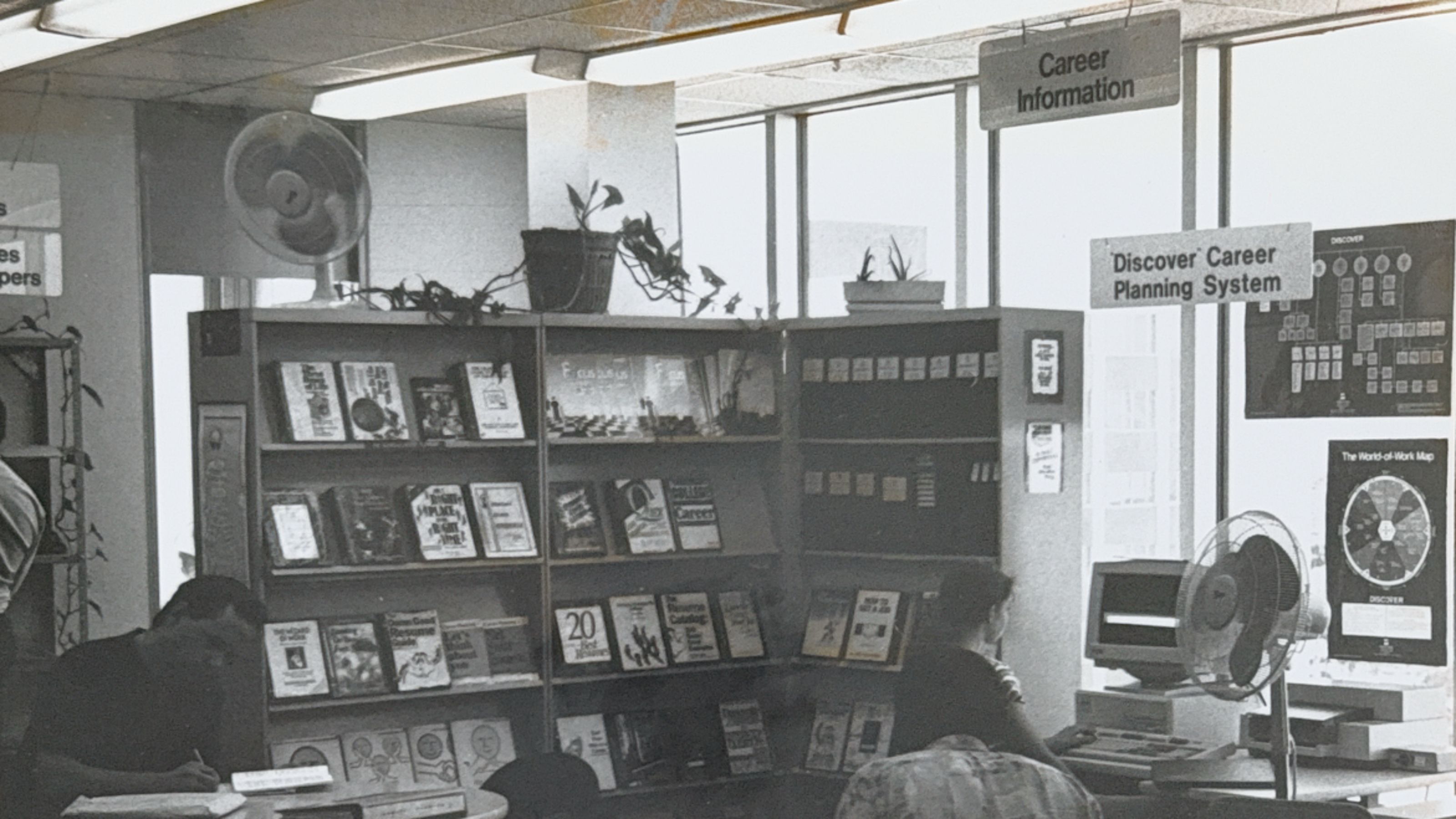
In the ‘80s, the federal Canadian government pulled Canada Employment Centres (CECs) off university and college campuses. Still seeing a need to support students with career guidance, the U of A opened the University Placement Office in Assiniboia Hall in 1986. Corded landline telephones, typewriters and face-to-face meetings were the standard, and email was just a sci-fi dream.
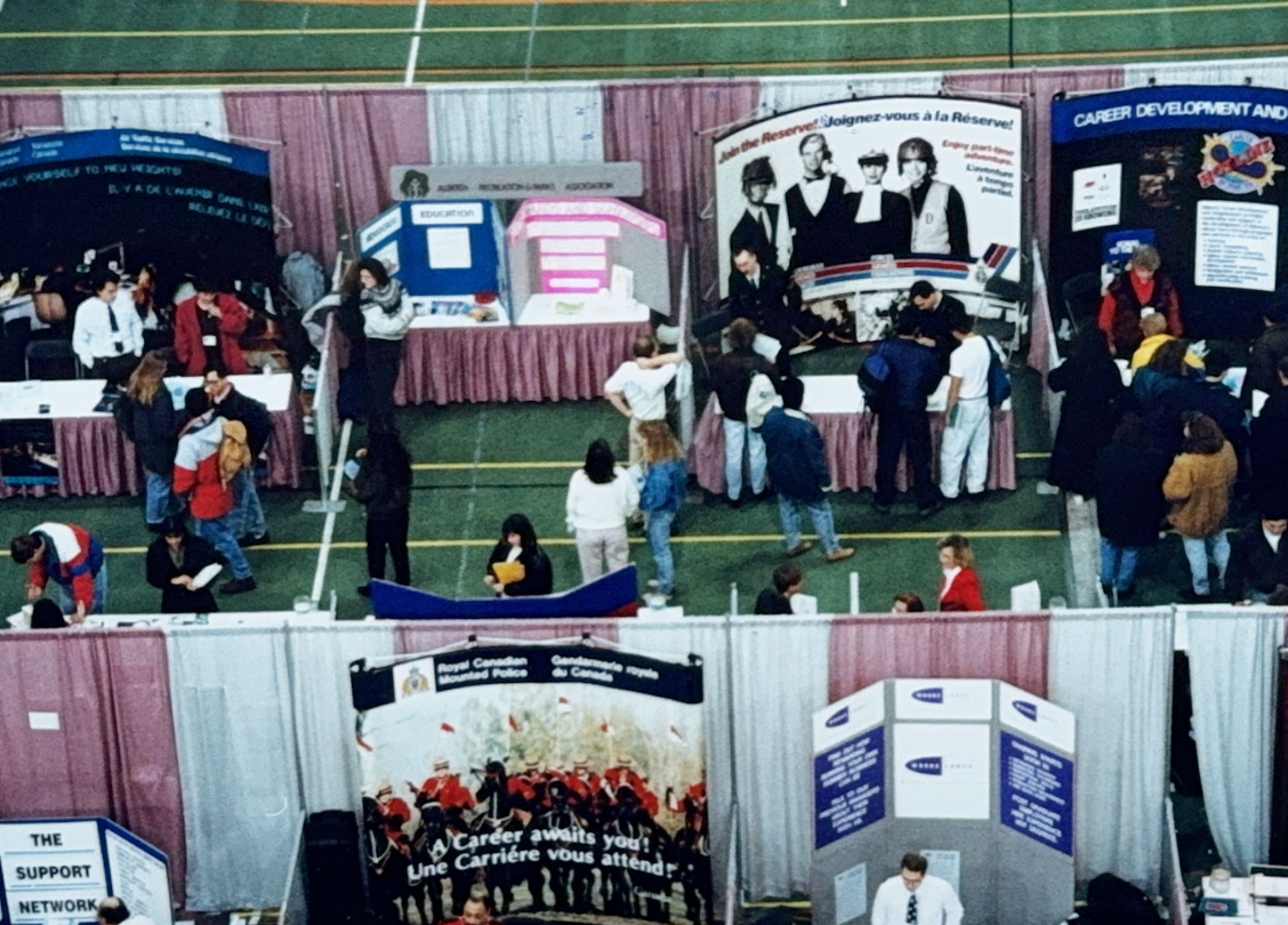
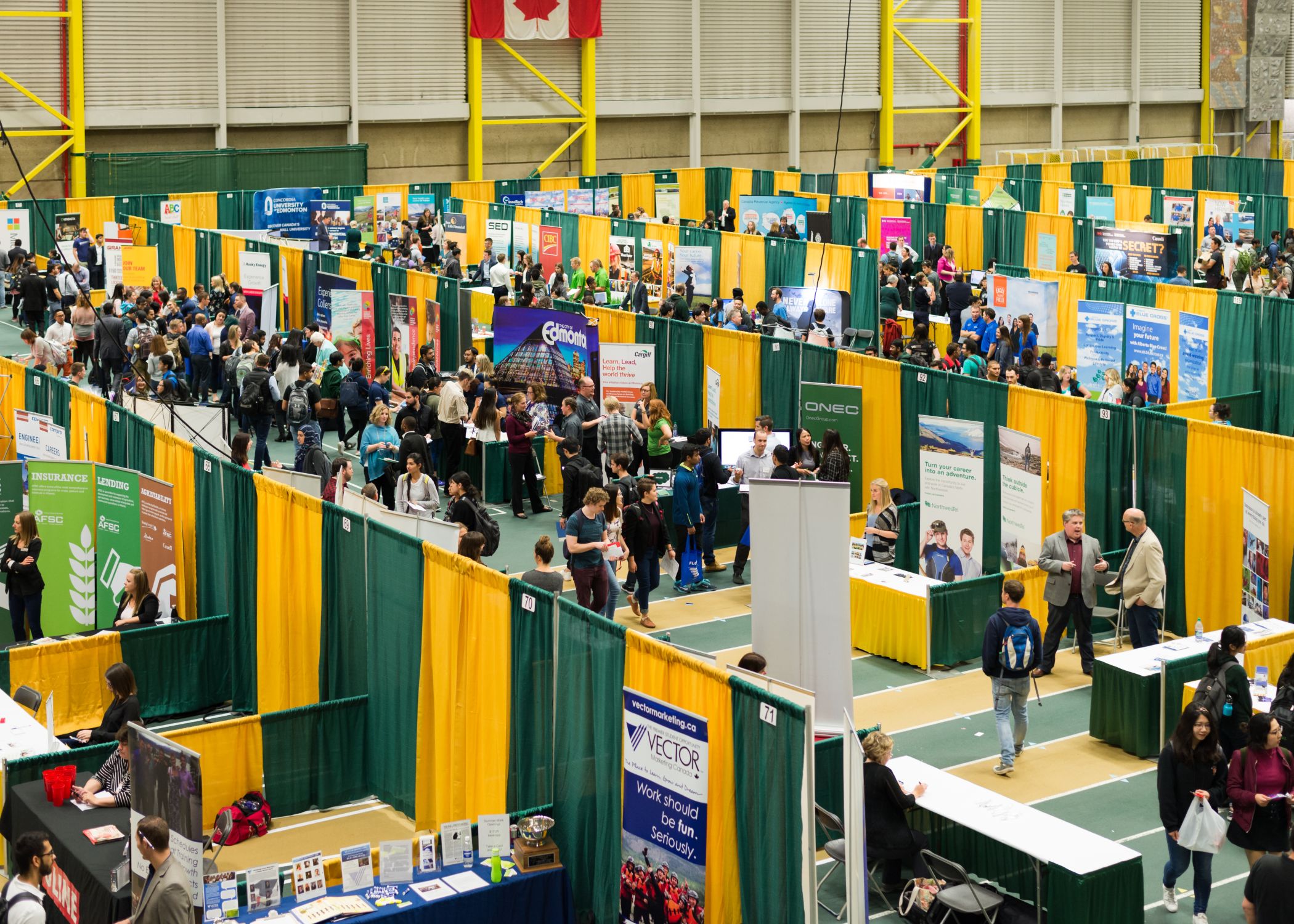
In 1987, the University Placement Office moved to the fourth floor of SUB and was renamed Career and Placement Services (CaPS). There was no reception desk, so the director of CaPS hired a carpenter to build one on wheels. The same year, CaPS held its first career fair, which quickly became one of its core offerings – today, the Career Centre holds four career fairs a year. Paid student placement consultants – later called career peer educators, a role that still exists today – were part of the team from day one, offering one-on-one advising, resume and cover letter writing workshops and interview prep. Across the last four decades, the Career Centre has seen approximately 800 student staff members, many of whom, like Blessie, have returned to work where it all started.
The ‘90s: the tech boom era
Imagine this: it’s the late ‘90s. You’re in CaPS looking at job summaries pinned to the bulletin boards, when one catches your eye. You note the number on the summary, follow the orange wax footprints on the floor leading to a shelf with binders, and find the binder with the corresponding number to read the full job description. You ask for a pre-printed job application on triplicate carbon paper, which you write out by hand or complete on a typewriter at the centre, and when finished, slide it into a letter slot with the correct job posting. Behind the scenes, CaPS staff gather, sort and mail out all of the physical applications to respective employers.
Then, everything changes. Computers replace typewriters, and emails replace paper memos. In 1996, CaPS launches its first-ever website. Staff help students navigate boolean searches – a method that combines keywords with logical operators (specifically and, or and not) to narrow, broaden or filter results – and a new hybrid world where some employers still post job ads in newspapers, while others post on their own websites.
In 1997, CaPS moves its present location to the second floor of SUB. Today, the wax footprints on the floor are still there, leading down memory lane (and, for clarity, nowhere physical).
The early 2000s: the in-depth career exploration era
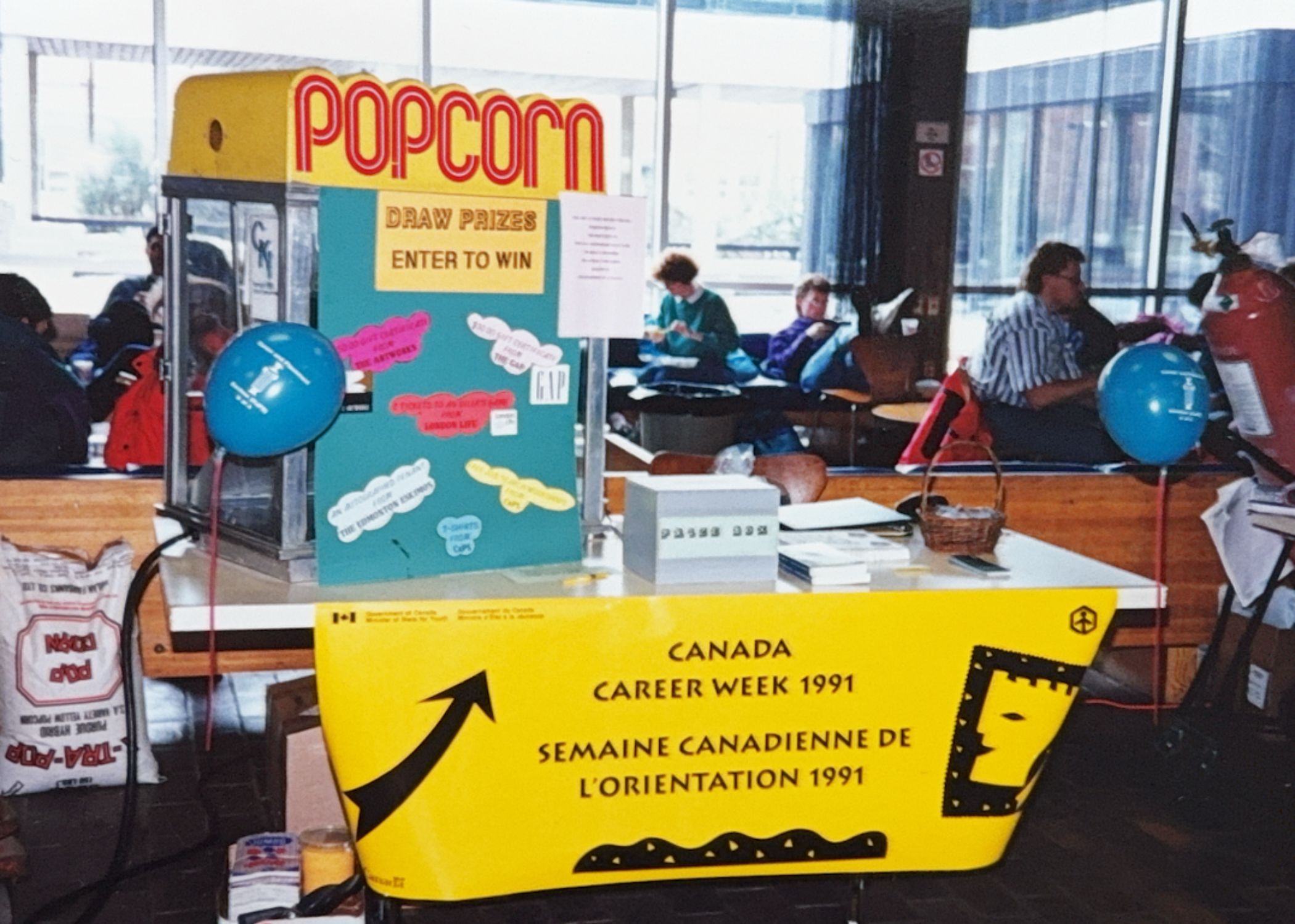
By the early 2000s, everything was online. The economy started shifting: having a degree itself no longer gave someone a competitive edge, and the question “What are you going to do after you graduate?” ceased to have one clear-cut answer. To match changing student needs, CaPS changed its name to CAPS: Your U of A Career Centre in 2001, and during the 2000s, the importance of building work experience during school became a focus. In 2006, the Non-Profit Board Internship Program (NPBI) for undergraduate students was established, a collaboration between CAPS and Community Service-Learning (CSL) that is still going strong today. Supporting graduate students in finding non-academic and academic work also took off, such as offering guidance on teaching philosophy statements.
Research in career development showed that a test-and-learn approach should be taught, encouraging students to try things, reflect on them and then decide what to do next. “Students needed to broaden what they were looking for, but required assistance, because at that time, they were not getting exposed to a lot of different career options,” says Blessie.
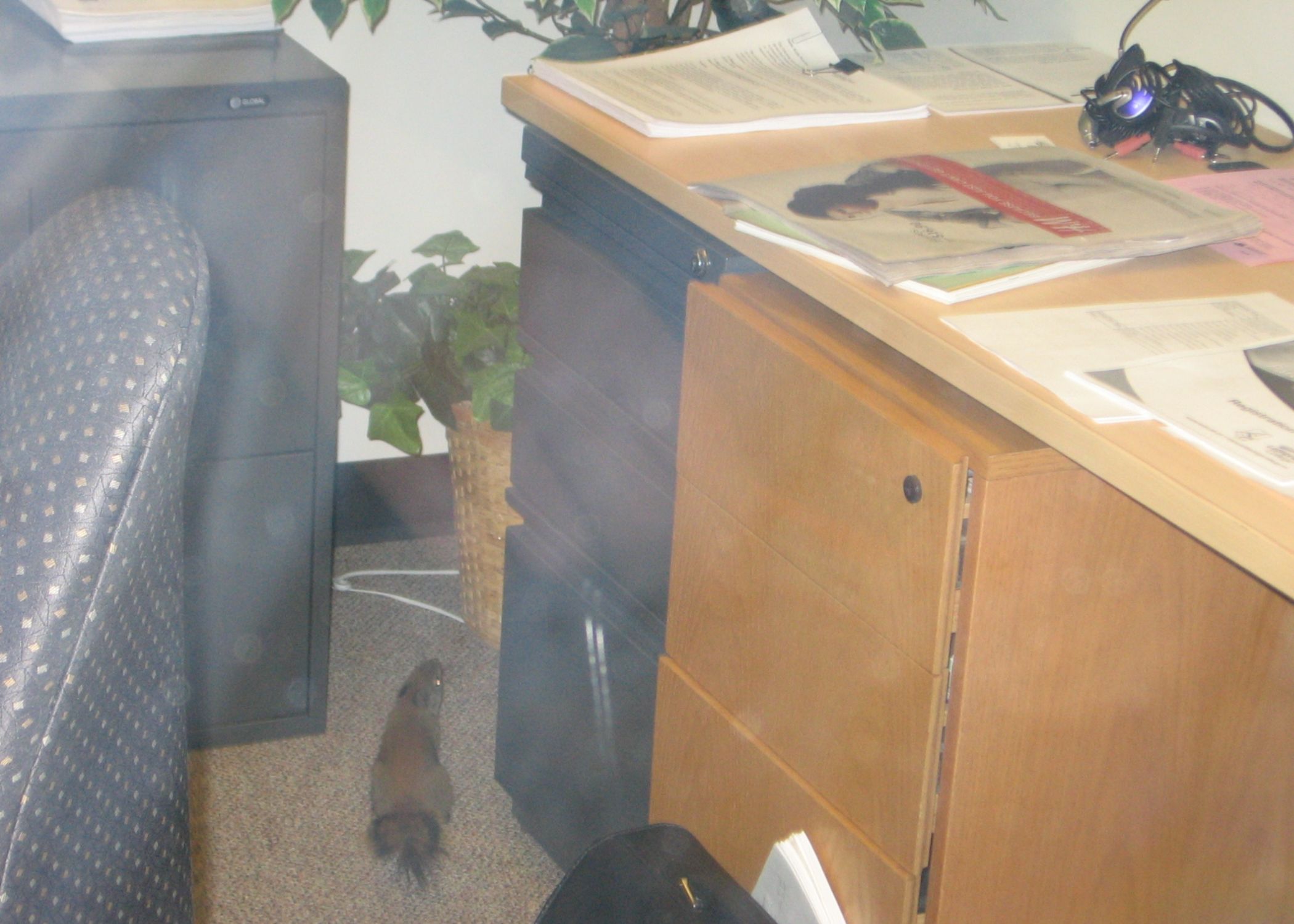
This era ended particularly memorably when a squirrel (given the name Muffin by CAPS staff) strolled through the front entrance of SUB, climbed up two sets of stairs, walked down the hall and waltzed right into the Career Centre. Muffin ended up wreaking havoc in the office of the peer educator supervisor before a brave maintenance man, Nunzio, trapped Muffin using nothing but a garbage bag and set the creature free outside.
The 2010s: the experiential learning era
From career mentoring to job shadowing and networking events, the 2010s took trying new things to a different level. This decade was largely about growing connections between students and employers, and students learning from interacting with industry professionals. Job shadowing, a completely new concept at the time, was well received, recalls Blessie. “Our employers were so happy to be engaging with students in their workplace, because, even now, it's a way for them to build their talent pipeline,” she says. Career mentoring also grew during this era, helping students learn first-hand from professionals. In 2015, the department officially rebranded to its current name, the University of Alberta Career Centre.
To streamline the student and employer experience at the U of A, the Career Centre bought an in-house digital platform, campusBRIDGE, in 2018 and it became the U of A’s official online portal for career development, experiential learning and job postings.
The Career Centre worked closely with campus partners, bringing them onto the platform and ensuring opportunities existed, creating the Green and Gold Student Leadership and Professional Development Grant, and co-creating the ALES Mini-Internship Program and Arts Work Experience (AWE) program, among others.
The 2020s: the integration era
Continuing to create campus partnerships and streamline access to student services both made the 2020s list of goals, but as discovered from past eras, a new decade brings new responsibilities – and new possibilities, too. One recent demand is coaching students to articulate what they have to offer. “Experiential learning programs are really important, because employers are expecting some level of experience as graduates are hitting the market,” says Blessie.
Most importantly, the Career Centre is moving away from students “opting in” to career education to integrating it directly into their degrees, including talking through student goals, how to work towards them, how they might be evolving and next steps. For example, the Enhancing Advising initiative – rooted in the Student Experience Action Plan (SEAP) – offers training to academic advisors and frontline staff to have accurate and meaningful career conversations with students.
“When enrollment numbers continue to grow, we can't just keep adding career advisors,” she says. “We need other folks on campus who intersect with students to be confident enough to have those conversations.” This builds a campus with many career generalists and a handful of career specialists (such as those at the Career Centre) when needed.
The Career Centre is also working on providing students with equitable access to an individualized competency framework, so when they first come to the U of A, they can say, "Once I graduate, these are the things I could have, and this is how to build them,” explains Blessie. “Student and national surveys show that the top reason students are in postsecondary education is for employment outcomes,” she says, acknowledging the importance of also maintaining rich learning environments.
Learn more about the U of A Career Centre here.