
International Open Access Week is held annually to build global momentum toward the open sharing of knowledge and inspire wider participation in making open access a new norm in scholarship and research. This year, we mark International Open Access Week Oct. 19 - 25, 2026.
In April 2026, the Social Sciences and Humanities Research Council (SSHRC) announced the results of its 2025 Aid to Scholarly Journals (ASJ) competition. Six journals published at the University of Alberta Library were awarded this grant and will receive funding over the next three years to support their operations. This allows their authors to reach the widest possible audiences, increasing visibility and impact for both the journal and the researchers whose work they publish. These six journals are among the many high-quality publications disseminated through the U of A Library.
University library publishing programs are well-established across Canada. The U of A’s is one of Canada’s earliest and largest, supporting more than 70 journals through an innovative program that leverages a national network of partners to support independent Canadian journals. U of A-published journals represent Canadian voices, topics of inquiry and perspectives, supporting scholars at all career stages, and providing linguistic and regional diversity in publishing.
This year’s theme for Open Access Week, “the cost of knowledge,” asks us to tackle equitable access to knowledge. The library's scholar-led open access publishing model operates without charging fees for authors or readers. Instead, it relies on in-kind support from publishing partners, support from scholarly societies, grants from agencies such as SSRHC and the FRQ, and funding agreements with libraries.
With recent changes to the Government of Canada's Tri-Agency Open Access Policy on Publications, publishing open access is now an immediate requirement for grant compliance. It requires researchers to ensure that their peer-reviewed research articles are freely and immediately available in a Canadian institutional repository, or made available through a trusted Canadian platform at the time of publication. Dr. Aminah Robinson Fayek, vice-president (Research) supports the move. “Our responsibility as a top research university is to ensure our work creates real-world impact," Aminah says. "Opening up access to our discoveries from Day 1 accelerates innovation, strengthens public trust and expands the reach of U of A scholarship globally. We are fully committed to this direction, and I am grateful to our library team for providing the leadership and resources to help our researchers lead the way.”
To address the policy change, the library team is poised to help researchers explore their options for open access publishing and distribution. This includes support with selecting a suitable journal in which to publish, and assistance navigating thousands of journals. The library team also maintains the university’s institutional repository, ERA, where articles can be deposited.
Beyond the opportunities and benefits of publishing open access, the library team encourages researchers to consider the many ways that their work is findable and accessible. To facilitate this, they have created a list of questions to help “check your research visibility vital signs.”
“The financial cost to fund research can be eclipsed by the human cost of keeping the results of that research hidden," says Amanda Wakaruk, acting head, Library Open Publishing Services.
“We want to help U of A researchers make their published research results easy for others to access and learn from.”
In the Community
Making research visible, accessible and impactful
October 22, 2026
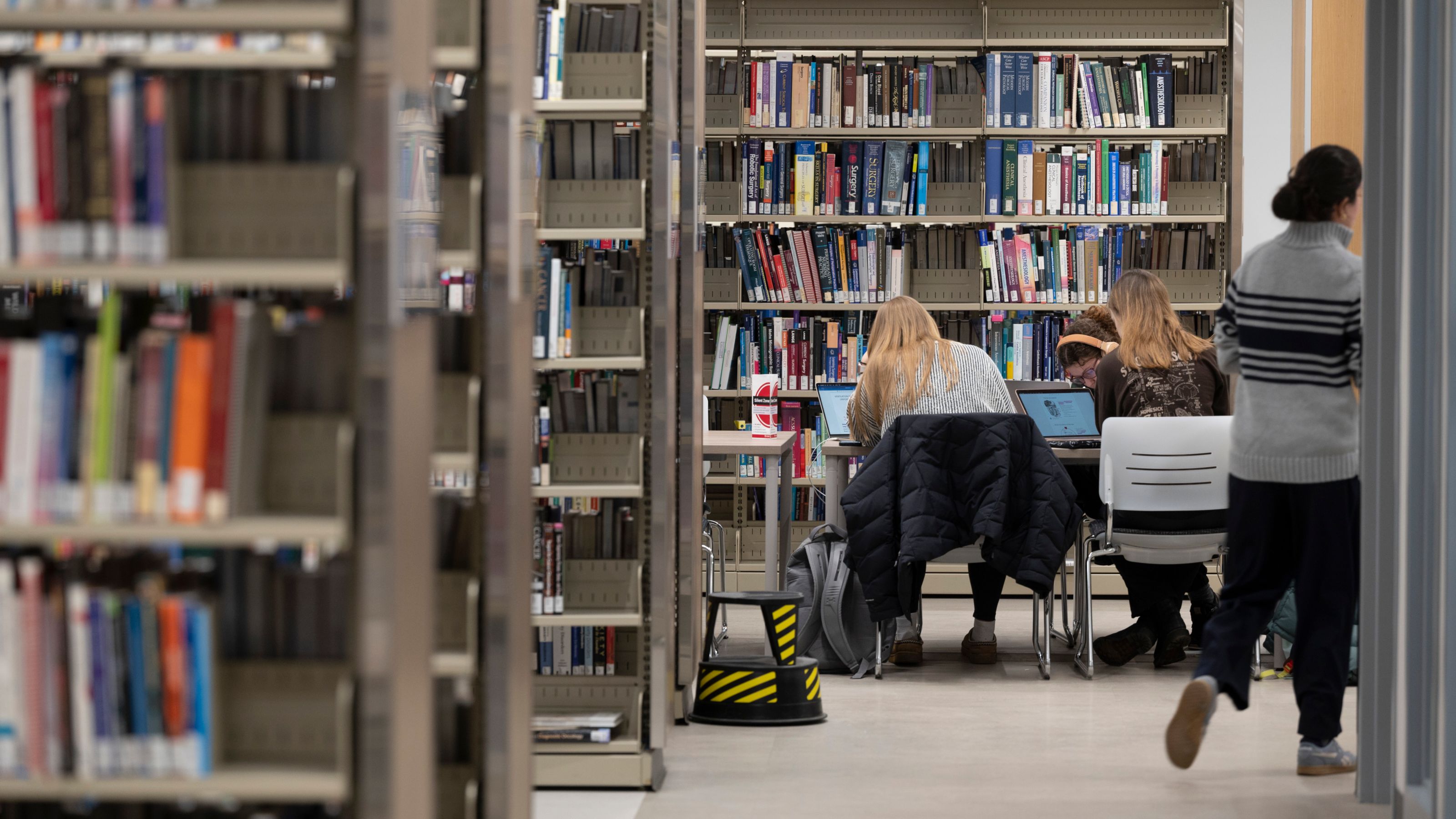
Sperber Library