
In July 2026, the University of Alberta welcomed the international Professional Communication Conference, IEEE ProComm 2026, to Lister Centre. Delegates came from around the world to explore our theme: "Gateways to Culturally Adaptive Communication." As conference co-chair, I expected to spend the week thinking about how professionals communicate across cultures and borders. What I did not expect was how much the conference would teach me about a challenge much closer to home: how we communicate across the disciplinary borders that run through our own campus.
The centrepiece of the conference was a keynote collaboration between two U of A researchers who, on paper, could hardly be further apart. Dr. Carrie Demmans Epp is an associate professor in the Department of Computing Science in the Faculty of Science, a Killam Laureate and Amii Fellow who leads the EdTeKLA research group. Dr. Mark Simpson is a professor in the Department of English and Film Studies in the Faculty of Arts, a core member of the Petrocultures Research Group and co-founder of the After Oil Collective. They paired their keynotes around a single question: What does it actually take for people from different disciplines to understand one another well enough to work together? I then had the privilege of joining them onstage to facilitate a dialogue between them and a question-and-answer session with the audience.
Their keynotes converged in ways that surprised everyone. Carrie spoke about building educational technology in participatory design teams that mix software developers, social scientists, humanists and, most strikingly, children as young as 11. She was candid about the failures. Teams stalled when members used the same words to mean different things, when foundational beliefs about how work should proceed collided, and when misaligned values produced a quiet discomfort that made people stop talking rather than risk conflict. The successes came from deliberate strategies: building trust before building software, balancing power so the youngest and least technical voices carried real weight and surfacing values early rather than discovering misalignment late.
Mark approached the same terrain from the energy humanities. His premise is that energy is never just a technical input; it is a social, cultural and ecological relation that shapes our habits, expectations and ways of being. It follows that the transition away from fossil fuels cannot be solved by engineering alone. It demands social and cultural transformation, which in turn demands that engineers, scientists, humanists, artists, policymakers and activists learn to work together, as they have in the After Oil Collective and in Future Energy Systems, the multidisciplinary research network here at the U of A.
In our dialogue, I wanted to push past the success stories to the structural tensions underneath, so I posed two questions that I suspect many colleagues carry quietly. The first: How do researchers who lead initiatives at the intersection of the humanities, computer science and engineering navigate the friction between maintaining an independent research agenda and the institutional pressure to fulfil a service role, becoming a mere translator or publicist for another discipline, and what are the career and pedagogical costs of performing that role? The second looked forward: How might we envision a model of research in higher education in which the reputational asymmetries between STEM and the humanities dissolve, moving past questions of funding toward a new normal, where technical and humanistic lenses are recognized as equally valid and equally essential for addressing crises such as energy transition and AI integration?
Neither speaker pretended these tensions are resolved. What emerged instead was a shared conviction that naming them openly is the precondition for changing them. Interdisciplinary collaboration fails not only in project meetings but in tenure issues, funding envelopes and the subtle hierarchy of who is understood to be doing the real work. If we want the former to succeed, we have to be honest about the latter.
For those of us from every corner of our university, the lessons travel well. The U of A has asked its faculties and colleges to collaborate across boundaries that were, until recently, quite firm. The keynotes and the dialogue that followed offered permission to treat the difficulties as solvable communication problems rather than intractable conditions: Invest in trust before deliverables, make space for the voices least likely to be volunteered, put values on the table at the start and name the asymmetries of status and reward instead of silently working around them.
There was something fitting about a computer scientist and a literary scholar modelling, on an international stage, the very collaboration they were describing. The delegates have gone home, but the door those two keynotes opened remains open for the rest of us. The next time you sit across from a collaborator whose discipline feels like a foreign country, consider this: The barrier is made of language, habit, values and status. All four can change, and the change starts with talking about them.
Consider This
Speaking across disciplines
October 08, 2026 By Dr. Tom Barker
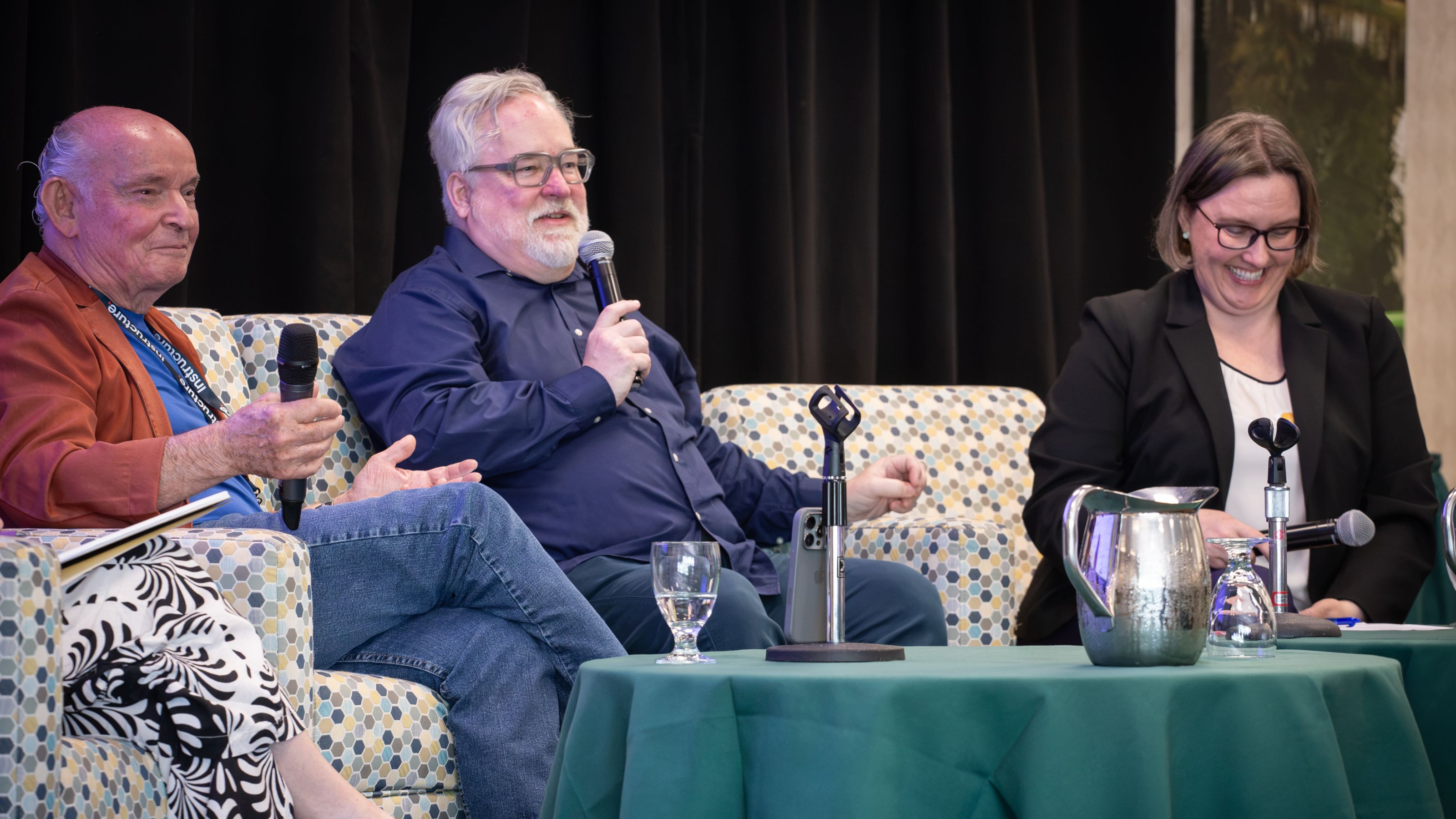
Dr. Tom Barker, Dr. Mark Simpson and Dr. Carrie Demmans Epp. Photo by Hanne Pearce.
About Tom
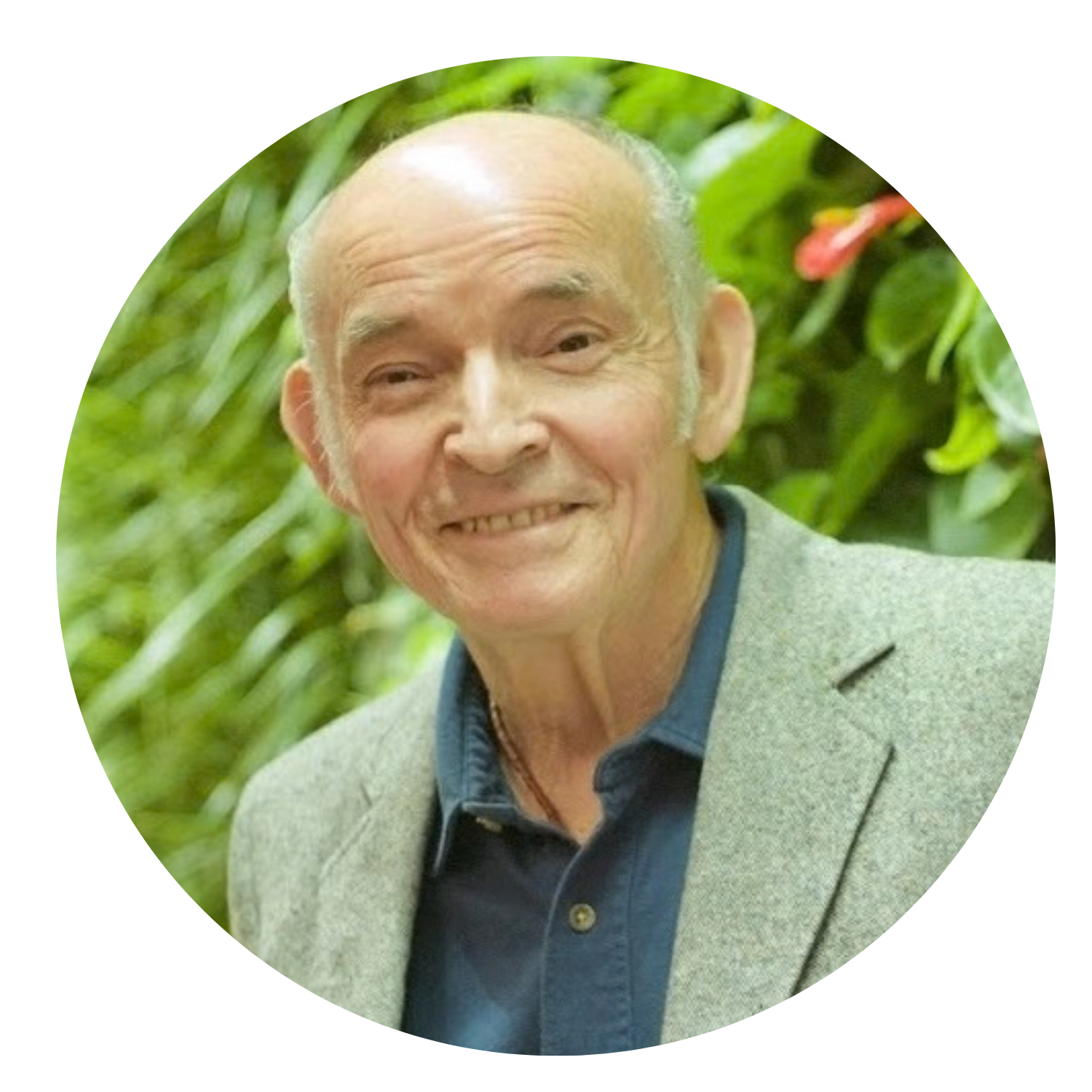
Dr. Tom Barker is a professor in the Department of Media and Technology Studies in the Faculty of Arts. He served as conference co-chair of IEEE ProComm 2026, hosted at the University of Alberta.