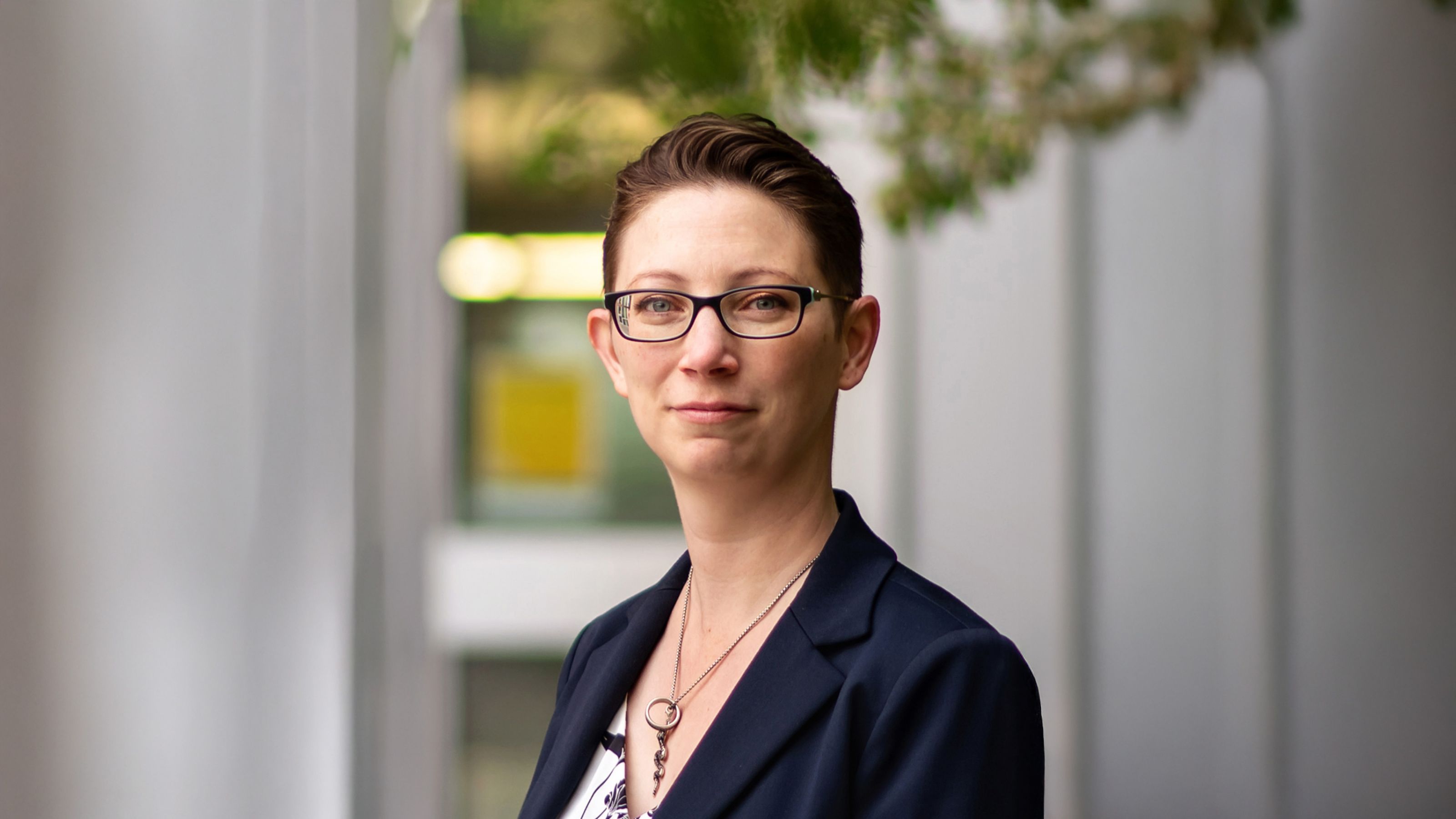
Teaching and Learning at the U of A spotlights instructors in the classroom and beyond. Through these stories, we hope to inspire others in our shared commitment to teaching and learning.
Before Lisa Willis ever stepped foot in front of a classroom of students as an instructor, she already knew the traditional “sage-on-the-stage” style of lecturing wasn’t the right fit for her. Lisa, an associate professor in the Faculty of Science, remembers finding that style of teaching challenging when she was a student herself, sitting amidst her classmates while the professor lectured, trying to absorb all the material. She wanted her students to have a different experience.
While it’s taken some trial and error to figure out her ideal approach, she’s landed on a teaching style that applies no matter the level of students or the course content. “My style includes flipping the classroom, skill development and formative assessments, peer learning and creating inclusive spaces,” says Lisa, who received the Faculty of Science Innovation in Teaching Award in 2025.
Lisa teaches a lower-level undergraduate microbiology course that typically has a class size of 300+ students, as well as a higher-level course focused specifically on glycobiology, her research area. There are certain things she does differently for each class — with hundreds of students in MICRB265, exams with lengthy written responses simply aren’t realistic. However, there are a few core principles she always has in mind no matter the class.
First, she deliberately cultivates a classroom atmosphere where students feel psychologically secure and comfortable speaking up, something that she views as absolutely essential for learning. “I’m really proud to create an environment where students feel safe asking questions and getting things wrong,” says Lisa, noting that people from marginalized groups often face higher penalties for speaking up and consequently can be even more hesitant to do so. “It’s social stigma,” explains Lisa. “If you get the answer correct or ask a lot of questions, you’re a brown-noser, and if you get the answer wrong, you expose yourself to ridicule from your professor and peers.”
“Participating is an integral part of the learning process and getting things wrong is one of the best ways to learn,” she explains. “By reframing these perceived failures as the excellent learning opportunities they are and explicitly separating wrong answers from a person’s perception of their self-worth, I create a space where students can better engage with the learning process.”
She also builds in plenty of opportunities for group work, her classes often buzzing with lively discussion as students bounce concepts off one another and help each other grapple with the course material. “You often learn better in teams, that’s when your ideas get challenged,” she says.
Though there’s plenty of information to absorb in all her courses, Lisa doesn’t believe rote memorization is effective. She allows students to bring in “cheat sheets” to classes and quizzes because she doesn’t merely want them to focus on regurgitating key points from the textbook. Instead, she wants them to think through and understand the actual biological processes they cover in the class, to understand how everything fits together.
Lisa ensures there are a variety of short, accessible videos online in Canvas exploring the course content that students can revisit when they need to brush up on particular concepts. They can then add things like captions if they’re helpful or even combine them with other strategies that work for their particular learning styles. “It allows them to engage with the material in so many different ways to get their brains working,” explains Lisa.
She also weaves in additional components such as a course tracker that includes a checklist of videos to watch, tasks to complete and a timeline that clearly outlines how it can all be accomplished before a milestone like a midterm examination. “They can actually see their progress,” says Lisa. “It’s all very positive and interactive.”
To keep students consistently engaged as they move through all the content they cover in her courses, Lisa also finds ways to highlight real-world applications of the biological concepts they’re learning. For example, she paired a lesson about the microbiome with an activity that took students through a website in biohacking, debunking the fictional from the actual science. A week prior to a lesson on fermentation, she had a lengthy chat with a student who was puzzled over whether to keep the lid on her sourdough starter. “It becomes more meaningful because it’s not abstract anymore,” says Lisa. “It’s not just an academic exercise. Learning about this stuff isn’t so you can write the test, it’s so you can learn about the world and teach your brain how to think.”
Despite having honed her approach since she began teaching in 2020, Lisa always remains flexible, paying close attention to the feedback she receives from students and what she observes so she’s able to pivot or adjust as needed every term.
“I think it’s important to understand how students learn and what matters to them in order to make education relevant,” says Lisa. “Innovating, even if you just do a couple of things, is really important to keep what we’re doing relevant and engaging and of high value to the students.”
In October 2026, Lisa and her interdisciplinary team received $24 million in new federal funding to make Canada’s blood supply more resilient and equitable. Read the story here.
Teaching + Learning
Teaching and Learning at the U of A: Lisa Willis
October 29, 2026 By Adrianna MacPherson