
Glen Cuming, DEFENDS program manager in the Faculty of Engineering at the University of Alberta, often draws on his former military experience in his current role. In 1988, Glen joined the Canadian Armed Forces as a reservist infantry officer while completing his engineering degree, before transferring to the Regular Force as a combat engineer officer in 1997.
The people and organizations Glen worked with in the army almost 30 years ago are important connections in his work for DEFENDS (Dual-Use Ecosystem for Future Engineering, National Defence and Sovereignty), a research and innovation platform led by the U of A that brings together university researchers, businesses and the Canadian Armed Forces.
Glen’s role involves ensuring DEFENDS meets the requirements of its existing funding agreements, and networking is central to that work. Funding for DEFENDS comes from multiple organizations, so the largest challenge is making those connections and then building collaborations, explains Glen. “It's about finding a gap, doing the research, and then supporting the commercialization and eventual operationalization of that technology, so the Canadian Armed Forces can use it,” he says.
There are a lot of networking opportunities at defence conventions, such as CANSEC – Canada's largest global defence and security trade show – and aerospace, defence and security events DEFSEC Atlantic and DEFSEC West. “I really enjoy reconnecting with people I've worked with in the past and making a difference for the military,” says Glen, adding a part of networking is helping U of A colleagues navigate and understand the military’s social subsystem, including ranks, which can be complex.
Currently, Glen is working on connecting the Canadian Defence Academy (CDA) with the U of A to offer military training. “With the military expanding, the Royal Military College [a degree-granting military university that operates under the CDA] may not have the capacity to train or provide education to everybody, and we're willing to help,” he says.
The Canadian Armed Forces offers the Regular Officer Training Plan (ROTP), which pays for a person’s undergraduate degree while they train during the summertime to become a commissioned officer; it also runs the Post-Graduate Training (PGT) program that aligns advanced studies with subsequent military postings.
“These are things we could offer, especially when we're so close to Canadian Forces Base (CFB) Edmonton,” says Glen. “We could also provide French training for CFB Edmonton through Campus Saint-Jean.” Meanwhile, the Faculty of Medicine & Dentistry already has a Military Medical Training Program, admitting up to six Department of National Defence applicants per year.
While Glen’s role focuses on fulfilling the requirements of DEFENDS’ existing funding commitments, he says a big appeal of the job is also knowing the research and researchers at the Centre for Applied Research in Defence and Dual-use Technologies (CARDD-Tech) at the U of A, led by co-directors Dr. Ashwin K. Iyer and Dr. James Hogan. CARDD-Tech’s research concentrates on advancing technologies that serve both military and civilian uses, from space technologies to high-speed flight, quantum technologies to artificial intelligence, and everything in between.
But the most rewarding part of Glen’s job is having a strong sense of purpose. “I think most military people feel that way: When you're in uniform, there's a purpose that's very different to anything else, and that's the thing I missed most after getting out,” says Glen. “This job is the closest I’ve felt to that purpose, where you're contributing to larger defence efforts.”
Glen’s advice to veterans is understanding the transition from military service to civilian life. “I don't think the transition ever stops,” he says, adding the more years in the military someone spends, the more challenging that transition can be. “It’s a different environment. How we interact as military is different. You’ve got to gauge your audience and communication style depending on who you're with,” he says.
Glen also highlights there is more support out there than veterans may be aware of. “Our ability to access help is increasing,” he says. “Get informed of the many different forms of help available, and don't be afraid to ask for that help.” Veterans Affairs Canada (VAC) covers up to 20 hours per calendar year of psychological support with a mental health professional, and veterans can usually receive an appointment within five working days.
Another piece of advice for veterans is not to disregard their experiences and training. “We have a lot to offer when we get out, and I think sometimes we sell ourselves short,” he says. “Be confident you have something positive to contribute.”
Carrying that perspective into civilian life, the meaning of Remembrance Day for Glen has changed over the years. “I've always respected our veterans,” he says. “I had a great-uncle in the Royal Canadian Regiment (RCR), who fought through the Second World War in Italy. He was what they call a D-Day Dodger. So in my early years, even though I wasn’t serving, I still went and honoured those vets. But being in Afghanistan and knowing how many we lost, Remembrance Day has changed a lot for me. It’s an important time to stop and actually think about those, because when you see it, it’s hard to believe.”
Glen was in Afghanistan in 2006 during Operation Medusa, a Canadian-led NATO offensive to clear heavily entrenched Taliban forces from the Panjwai district of Kandahar Province – Canada’s largest conventional battle since the Korean War.
“It’s mind blowing to me that was 20 years ago,” says Glen. “It's really good we think about people who’ve given that ultimate sacrifice for our country, whether it was 100 years ago or two weekends ago.”
Remembrance Day is a national day of observance to honour the service, sacrifice and loss of members of the Canadian Armed Forces and the RCMP who served and continue to serve in times of war, conflict and peace.
At the 11th hour of the 11th day of the 11th month, the month, day and time in 1918 when the First World War ceased hostilities, Canadians pause to observe two minutes of silence to honour the fallen, and recognize the sacrifices of all who served.
In the Community
From uniform to university: leveraging military connections to serve the U of A
November 05, 2026 By Agatha Zarzycki
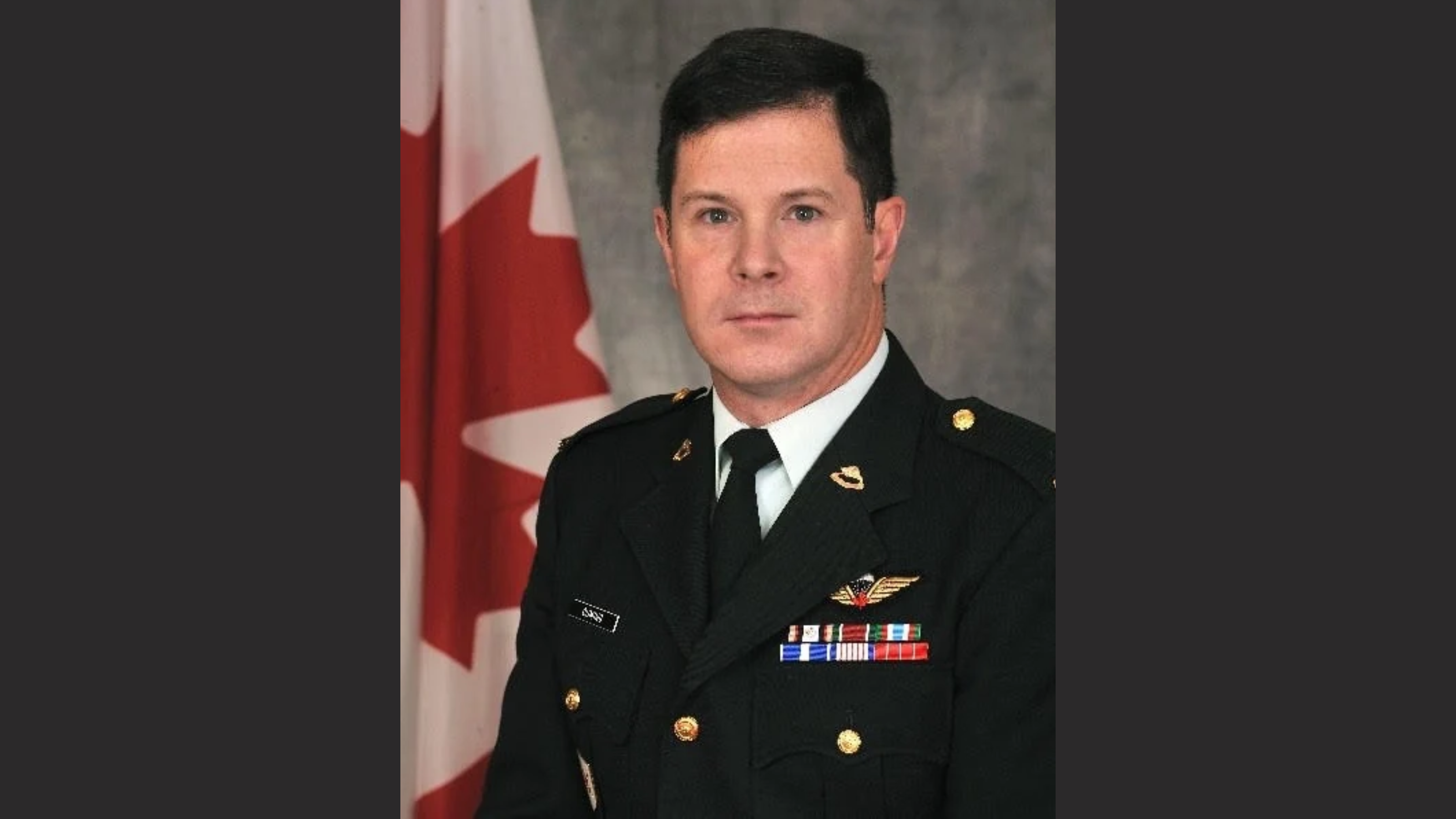
Change of Command Ceremony (June 2010): Glen officially assuming the role of Base Construction Engineer Officer at Canadian Forces Base Wainwright.