Every day at the University of Alberta, people turn purpose into impact — and this year offered plenty of examples, from AI-powered prosthetics and smart clothing that could help people regain their independence, to groundbreaking work in diabetes treatment and crucial climate science. Here are just a few stories that show how our research, teaching and community engagement touches lives from the local to the global.
Video: Smart prosthetic connects the digital and the physical
The U of A’s BLINC Lab showcased its “Bento Arm,” a melding of artificial intelligence, prosthetics and robotics, with an eighth-place finish in an international competition. It was an impressive showing for the only North American team in a field of more than 100 teams from 30 countries, but researcher Patrick Pilarski reminded us of the real goal: “It’s all about improving someone’s ability to do activities in their daily life and community.”

Professor turns genetic marker for ‘bubble boy disease’ into music
To draw attention to the rare genetic disorder affecting young Jakob Guziak, musicologist Michael Frishkopf took an unusual approach: he turned the genetic marker for the condition into a musical composition. With a few embellishments from Frishkopf and stirring lyrics from Jakob’s mom, the resulting piece evokes the family’s struggle to keep Jakob alive: “In the middle of my dreams, you’re holding my hand tight … I’m not ready to lose you now, together we can fight.”
In the 10 months since this story was published, Jakob is thriving and has even joined the tennis program at the Saville Community Sports Centre. Now that’s music to our ears!

Computing science professor wins ‘Nobel Prize in computing’
Rich Sutton literally wrote the book on computational reinforcement learning, a technique that allows AI systems to get better at things through trial and error. With applications in everything from playing poker and personalizing your streaming recommendations to discovering new drugs or optimizing global supply chains, the potential is as limitless as learning itself.
Along with the recognition for Sutton’s seminal work, other notable awards for U of A luminaries this year included a Breakthrough Prize for a group of physicists, a Royal Society induction for mathematical biologist Mark Lewis, and Canada’s top prize for science and engineering going to David Wishart, a leader in the burgeoning science of metabolomics.

The ‘smartwear revolution’ begins: clothing with built-in sensors will improve balance, reduce injuries and support people with muscle weakness
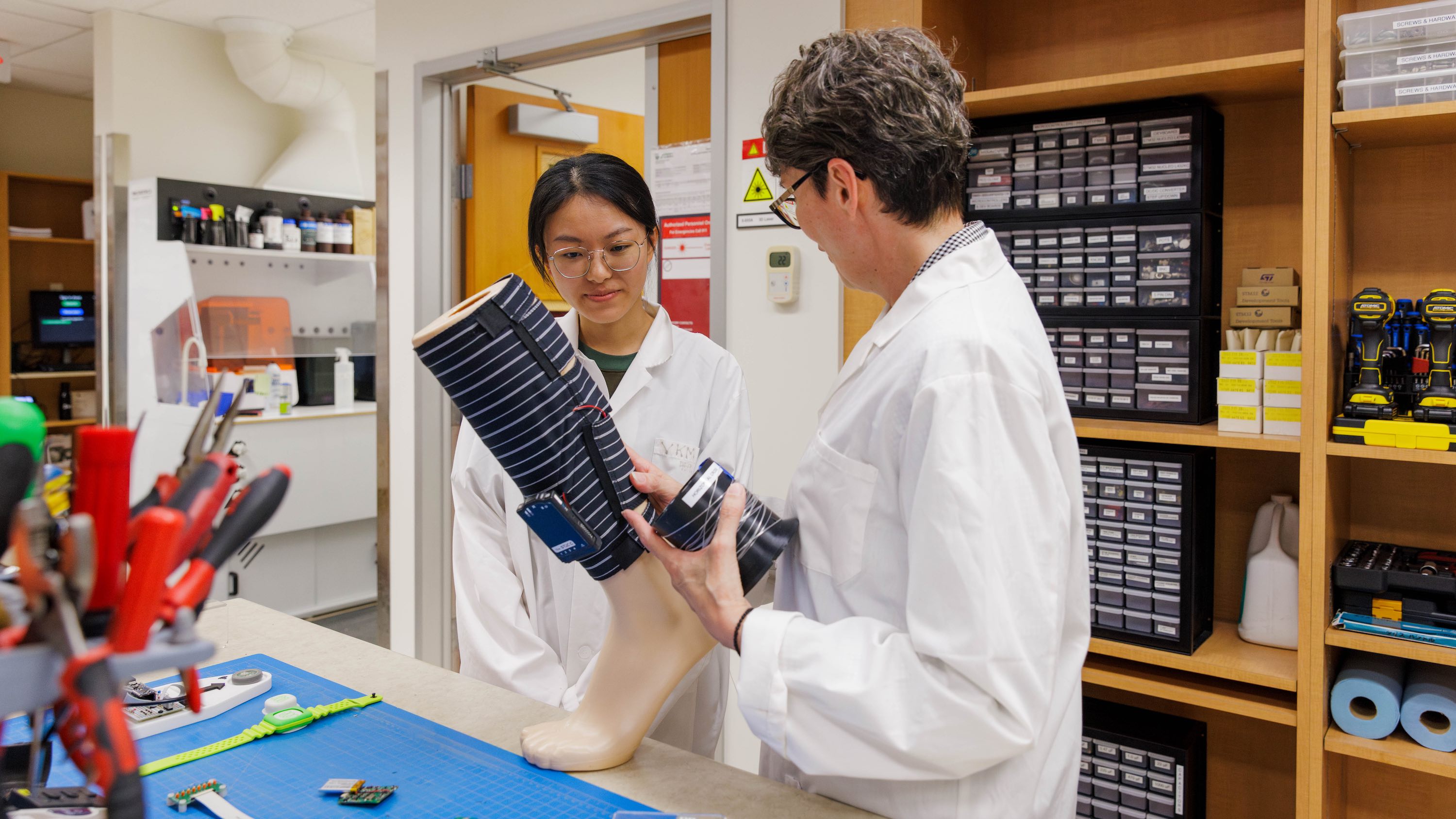
Imagine the stuff of superhero movies becoming reality for people with weak muscles because of injuries, strokes or aging. That’s what a team of researchers from across eight U of A faculties is doing with this project, which received $24 million through the aptly named New Frontiers in Research Fund. They’re developing adaptive smartwear that can change shape and strength at the wearer’s mental command, offering support when they want to stand up, move an arm or lift something heavy — potentially increasing independence and quality of life for millions of people.
Deepest ice core in the Americas drilled in Canadian Arctic
On a remote ice cap at the edge of the Arctic Ocean, glaciologist Alison Criscitiello was part of an international research team that drilled 613 metres and 20,000 years into Earth’s frozen history to get a core sample from just the right place to yield new insights into how the climate and oceans of the Arctic have changed over millennia. Working in temperatures that often dropped below -30 C, the researchers painstakingly drilled for two months to get their prized sample. Maybe shovelling the driveway isn’t so bad after all!

‘It literally saved my life’: Edmonton Protocol celebrates 25 years of success
One of the greatest success stories in U of A history, the Edmonton Protocol for islet cell transplants revolutionized diabetes treatment, eliminating the need for insulin injections for years — and for some patients, decades. But far from resting on their laurels, the researchers who made it a reality are relentless in their pursuit of a cure. With advances like stem cell research opening up new possibilities, they continue to refine and evolve the protocol for the benefit of people around the world.

U of A ranked in global Top 10 for impact on sustainability
As spring turned to summer, the U of A community got some great news in the Times Higher Education Impact Rankings, which assess institutions worldwide on their performance toward achieving the United Nations Sustainable Development Goals. The U of A ranked eighth overall in a field of more than 2,300 universities and finished first in the world for SDG 9: Industry, Innovation and Infrastructure. The university also had a strong showing in the QS Sustainability Rankings released in November, and continued to show leadership with the launch of Canada’s first online graduate certificate program in sustainability.

How the U of A became Canada’s top AI university
Speaking of rankings, did you know the U of A is also a powerhouse in artificial intelligence research? (Let’s just say the third story in this list was no fluke.) In June, the university was ranked first in Canada and 53rd worldwide for AI in the U.S. News Best Global Universities Rankings. A few months later, the prominent Global Ranking of Academic Subjects included AI as a subject area for the first time — and placed the U of A second in Canada and fifth in the world.
This year alone, researchers harnessed the power of AI for everything from designing a blueprint for cancer vaccines and solving health-care challenges to flagging mobility barriers for people with disabilities, predicting ADHD in kindergartners and even recycling space waste.
New health institute will help research breakthroughs reach patients sooner
September saw the momentous launch of the Dianne and Irving Kipnes Health Research Institute. Made possible through a landmark $25-million gift from The Dianne and Irving Kipnes Foundation, the new institute isn’t only a game-changer that will help turn health research at the U of A into positive outcomes for people and communities; it’s also a fitting legacy for the late Dianne Kipnes, whose vision, leadership and lifelong commitment to caring for others was a driving force behind the remarkable philanthropic contributions she and her husband Irving have made to the U of A and to the world.

Fulfilling a family legacy of truth
Every student who comes to the U of A has a story to tell. Whether they’re just beginning their journey with a dream of changing the world, doing research to make those dreams a reality, or celebrating their achievements as they graduate, theirs are stories of exploration, of connection, of challenges embraced and overcome.
Shannon Cornelsen’s story is one of perseverance and advocacy — a personal quest that began six years ago when she discovered her grandfather’s journals and set out to use the details they contained to help reunite Indigenous families with loved ones buried far from home. Graduating in November with her degree from the Faculty of Native Studies 30 years after she graduated from high school, Shannon is now pursuing a master’s degree to continue fulfilling her family legacy and, through her own story, bring the stories of those families and communities to light.