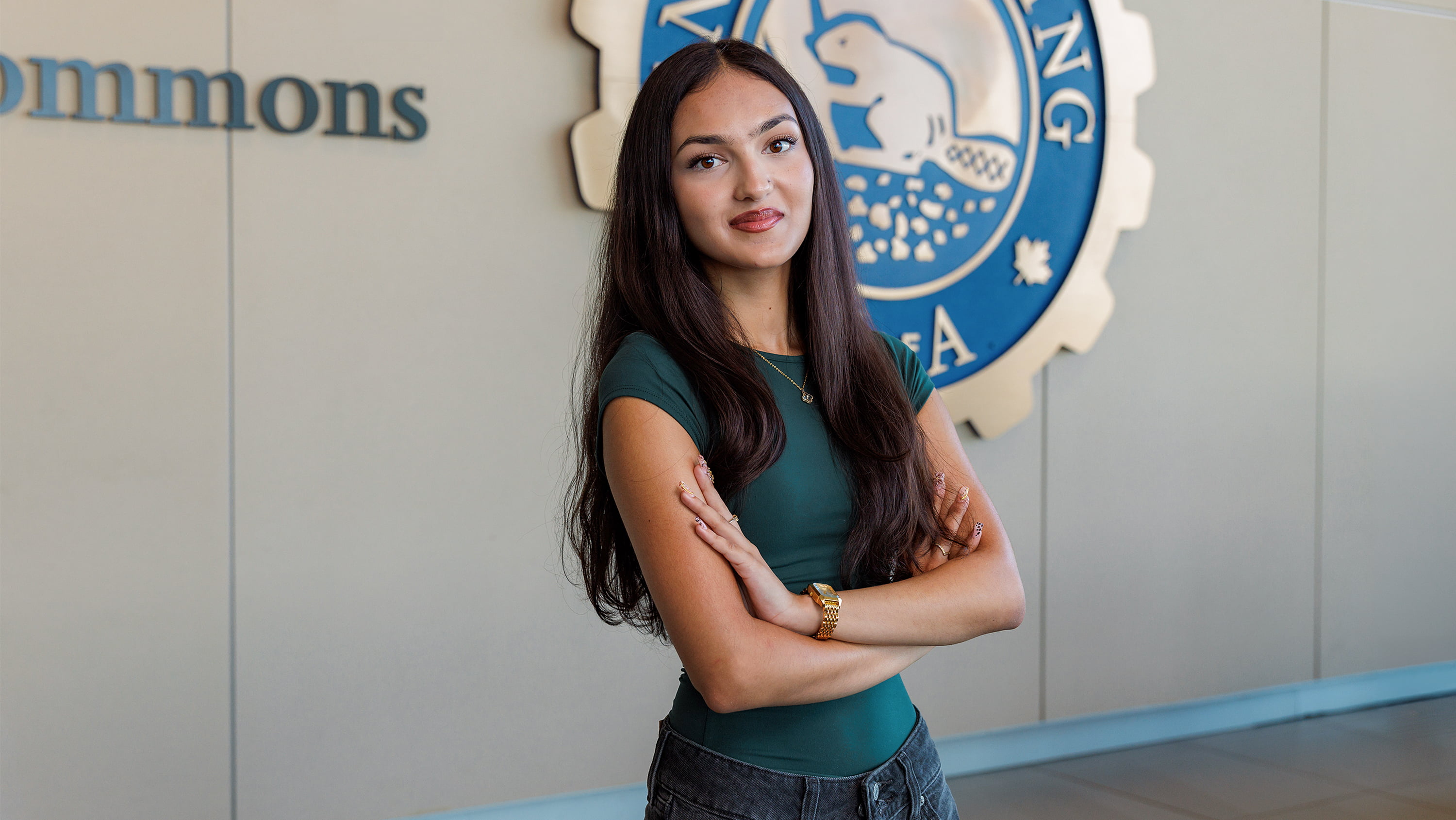
For Siddhi Singh, leadership means building solutions designed to last. When the graduate of Westwood Community High School in Fort McMurray stepped into her school’s Green Initiative club and was entrusted with an aquaponics wall, she thought about how it could evolve. That led her and her fellow students to reconfigure sections of the system, stabilize water conditions and explore 3D printing prototype components using eco-friendly filament.
After a cyberattack affected her school district, she was driven to write The Cyber Shield — a 228-page book on cybersecurity strategies. To expand on this mission, she launched an online initiative called Glow Through Growth to raise awareness and empower communities with essential digital skills.
Alongside her peers, Singh also led STEMQuest, a youth organization bringing hands-on learning to northern and rural communities. Through workshops and elementary school presentations, she mentored more than 150 students on projects like replicating robotic hands.
Extending her strategic thinking to business, she earned national recognition as a top 20 presentation finalist at the 2024 Canadian National Leadership Conference for proposing business strategies for Shopify, while also raising over $4,000 for her local chapter of FBL Canada.
Entering the Faculty of Engineering at the University of Alberta to pursue electrical engineering, Singh now looks forward to opportunities to put her knack for inventive problem-solving to further use, and hopes to launch a startup. She is one of six U of A students to receive this year’s Schulich Leader Scholarship, an annual award of up to $120,000 for high-achieving high school graduates pursuing undergraduate science, technology, engineering or mathematics degrees at 20 top Canadian universities.
“If I’ve done something right, it should outlive me,” she says. “That’s a standard I intend to carry into every project I build.”
Chloe Ge
Chloe Ge’s fascination with engineering began early, when she built the Lego Concorde and became obsessed with its unconventional delta-wing design.
“I don’t only want to see how technology works; I want to understand the mechanical ‘soul’ of the machines,” says the graduate of Dr. Anne Anderson High School in Edmonton.
That curiosity evolved into competition in events like her school’s APEGA Science Olympics team, collaborating to design and refine projects like a vehicle magnetometer and a robotic arm, earning silver awards in 2024 and 2025.
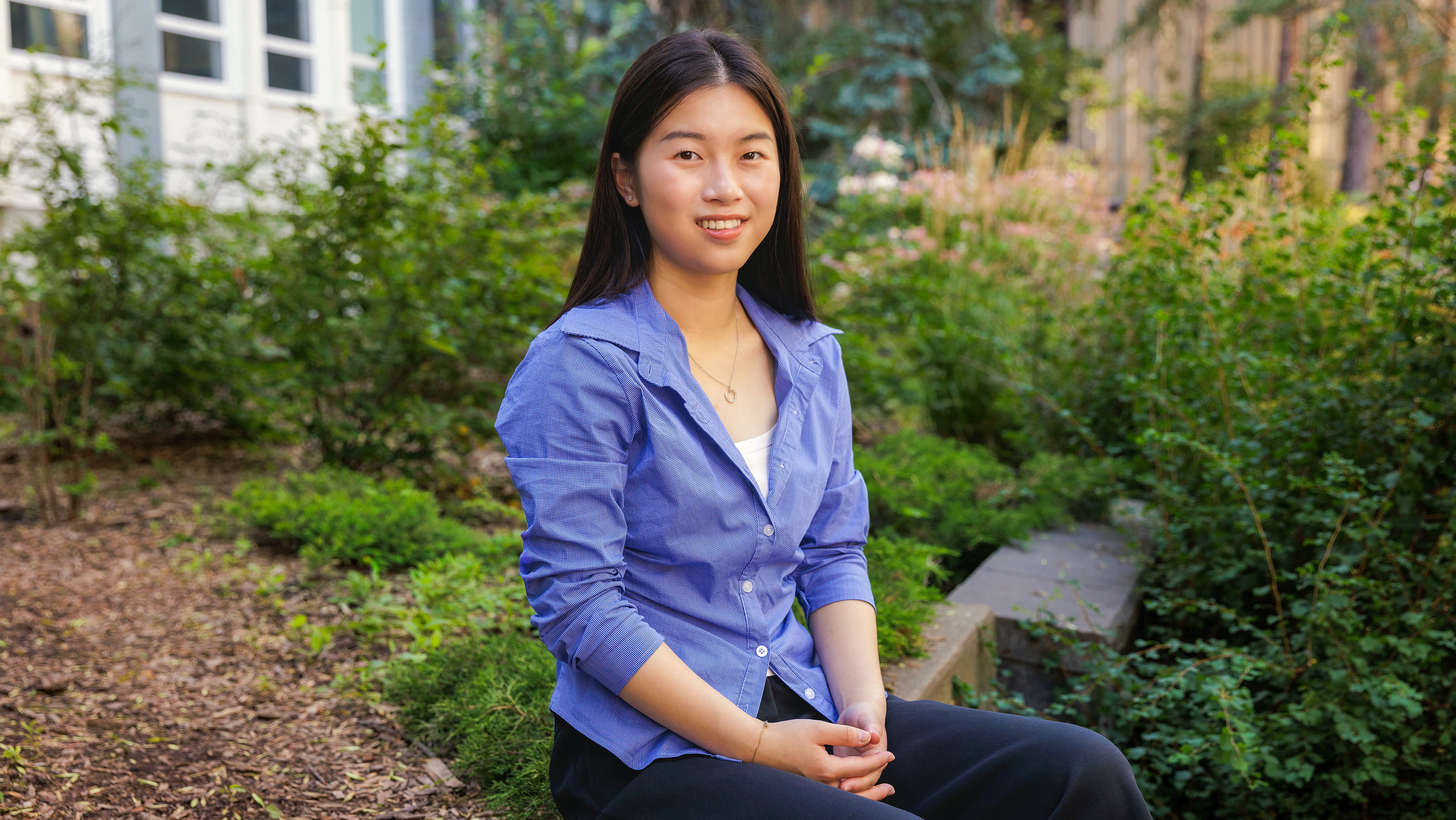
“I am drawn to the pivotal moment when a prototype fails and I must think quickly, collaborate under pressure and transform a setback into a solution,” she says. “In my dictionary, engineering is a form of creative grit that turns the impossible into something functional.”
Her passion for action also led her to serve two terms on the Edmonton Public School Board student senate, representing student voices at the division level.
Her academic pursuits are equally ambitious. She has researched applications of artificial intelligence in drug design under the guidance of U of A engineering professor Dr. Tian Tang, analyzing how AI models accelerate early-stage drug development.
Beyond STEM, she has taught piano to young students for several years, building patience and communication skills that shape her approach to leadership.
As she begins her engineering degree at the U of A, she plans to specialize in mechanical engineering before pursuing graduate studies in aerospace. Her long-term goal is to become an aerospace engineer designing spacecraft for sustainable human space exploration.
“I hope to design and build the hardware that helps humanity reach what currently seems unreachable,” she says, “and along the way, prove to other aspiring innovators that engineering is as much an art form as it is a science.”
Henock Seife
Driven by insatiable curiosity and a desire to tackle problems with no obvious solutions, Henock Seife has already spent years exploring the frontiers of STEM.
“Whenever I dragged my dad to a dark sky reserve at 1 a.m., I felt a sense of belonging in a community not defined by location, but rather by curiosity,” he says.
That feeling of kinship led to a deep passion for space — which Seife describes as “an infinitely vast field where discovery and analysis collide, and the unknown challenges human understanding” — and an impressive array of research accomplishments.
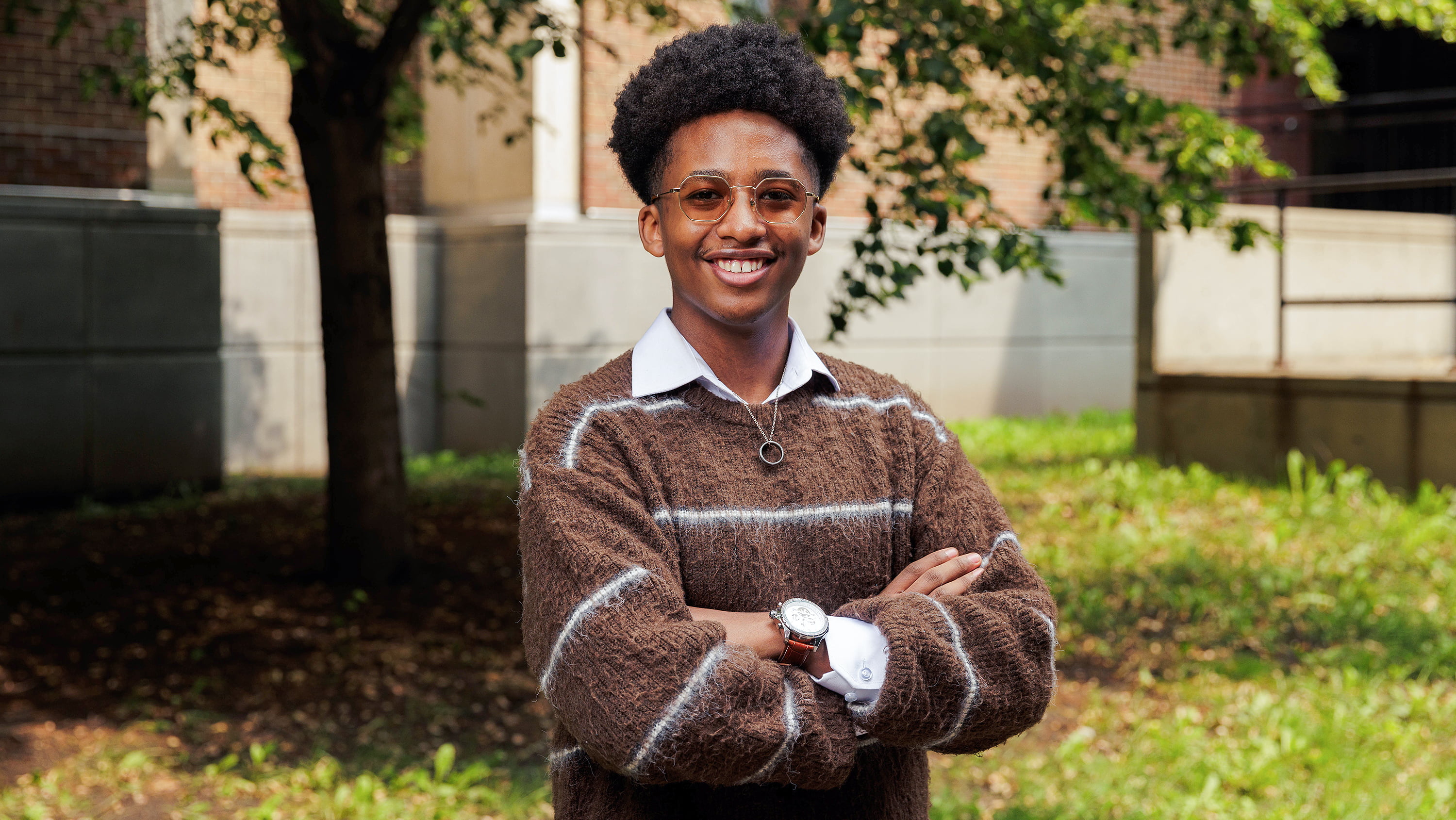
He helped design a low-earth-orbit nanosatellite using hyperspectral scanning to offer an economical solution for analyzing ocean minerals and biology. He has also conducted independent research on solar-wind model analysis, fast-radio-burst research and rocketry, and has even written a scientific paper on solar physics.
A graduate of the STEM Innovation Academy High School in Calgary, he was named a Dean’s List finalist in the FIRST Robotics Competition — an honour awarded to the top 0.5% of FIRST Robotics students worldwide — allowing him to represent Canada on the global stage.
Beyond research, he served on his school’s tech advisory council, collaborating with engineers and educators to shape future-focused STEM education models geared toward workforce needs.
Starting his engineering studies at the U of A, Seife aims to focus on engineering physics, composite materials and energy storage. He sees himself advancing semiconductor and energy technologies to help make energy more accessible for people around the world.
“Space, the most extreme environment known to humankind, has taught me that meaningful progress in STEM comes from embracing uncertainty,” Seife says. “Such a mindset pushes me further to pursue engineering, approaching challenges with persistence and the desire to contribute to something greater than myself.”
Joshua Kirsch
Joshua Kirsch’s passion for studying trees began during the early days of the COVID-19 pandemic, when his elementary school librarian dropped off a collection of books at his home. Intrigued by one of those books, Heritage Trees of Alberta, Kirsch began measuring and documenting local trees, and at 14 he reached out to experts including retired U of A professor Dr. Bruce Dancik, who became a scientific mentor.
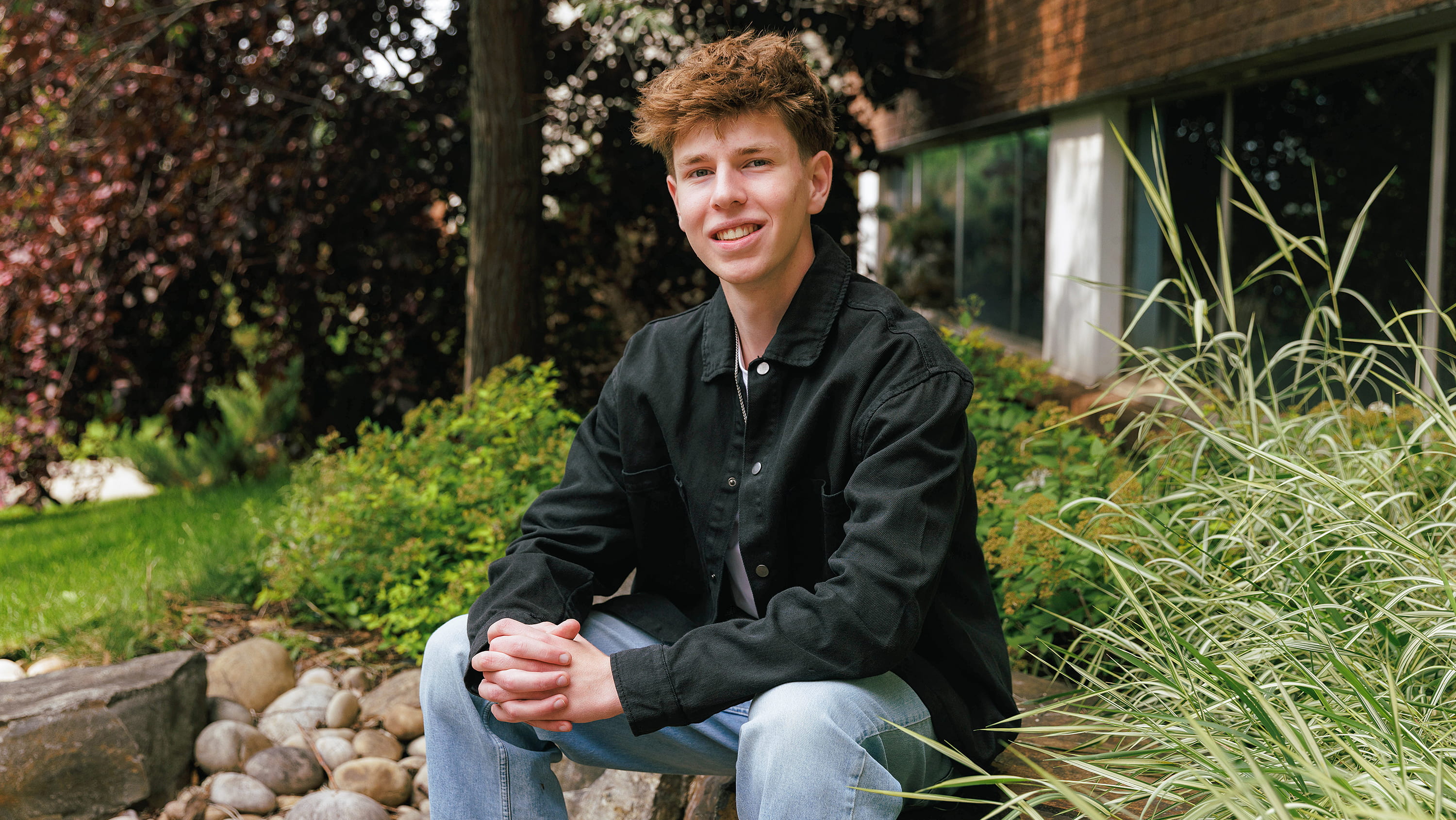
To share his love of trees and his burgeoning research, Kirsch created a public Google Map that reached nearly 30,000 views and was referenced by local urban forestry workers. Seeking to expand beyond existing tools, he developed Ancient Roots Alberta, a web and mobile platform using AI and structured field data to record and map significant trees across the province for scientific study.
In addition to his environmental and tech pursuits, Kirsch is an outstanding student-athlete. He earned the MVP award during his 2025 spring basketball club season, where his leadership inspired the team to name the award the Josh Kirsch MVP Award in his honour.
Entering the Faculty of Agricultural, Life & Environmental Sciences to study forest business management, the graduate of Jasper Place High School in Edmonton aspires to work at the intersection of science, technology and data, turning complex information into practical, accessible tools.
“Not only am I passionate about scientific research, I also love creating systems that develop into trusted and usable resources,” he says.
Kalyx Perea
For Kalyx Perea, technology is a powerful medium for creativity and community building. Combining a lifelong passion for music and computer science, Perea taught himself the Unity game engine and published his own video game for his Computing Science 30 final project.
“Game development offers a limitless canvas to express my ideas and unleash my potential,” he says. “These digital experiences can be a narrative you wish to share, or a competitive sport — the possibilities are endless.”
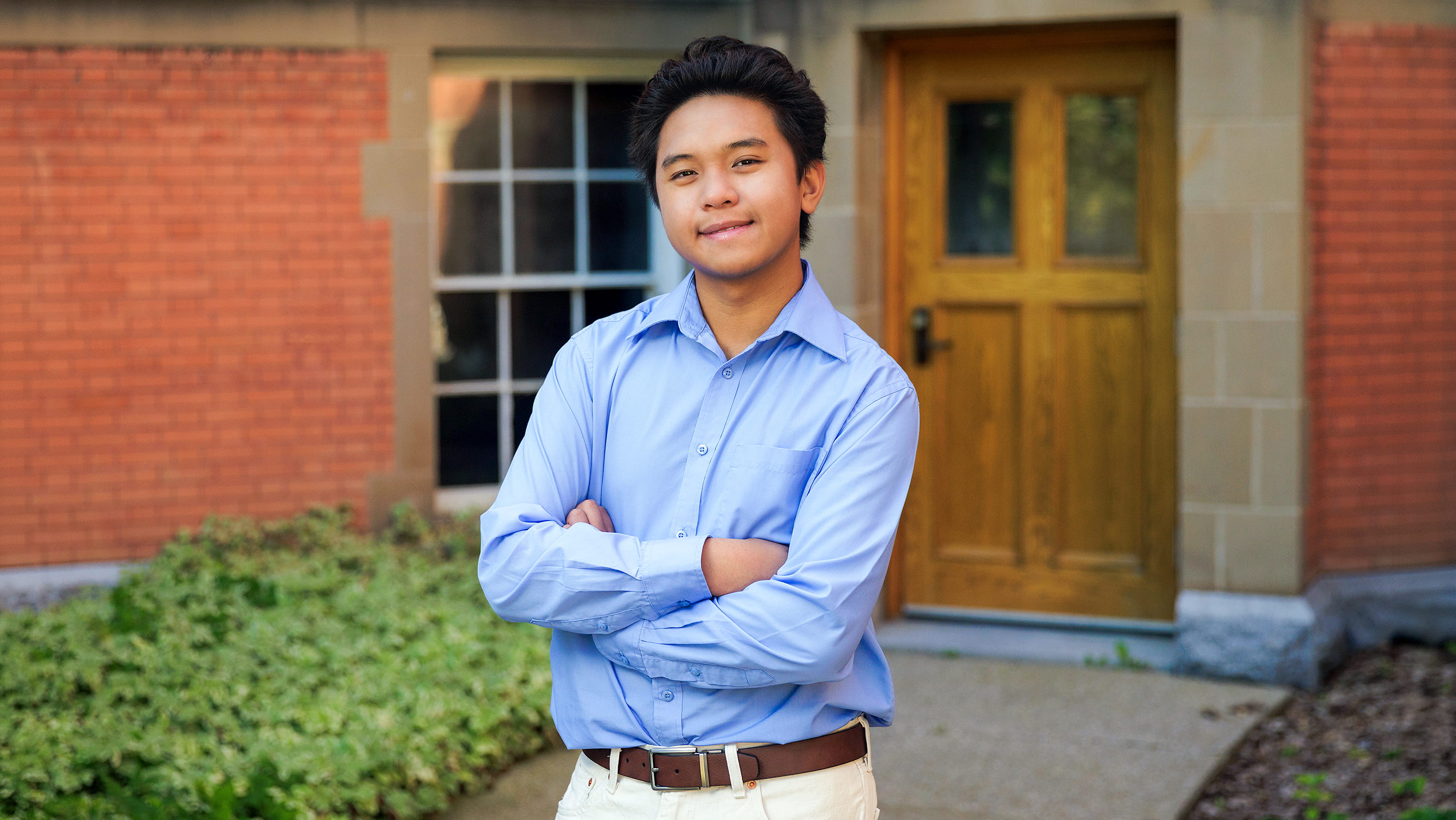
Throughout his time at Edmonton’s J.H. Picard School, Perea balanced honing his tech skills with active involvement in glee, all-city choir and all-city band, while maintaining Principal Honours standing with an average of 90 per cent or better from grades 10 to 12. He also served on student council since junior high, organizing school events and fostering inclusive spaces for his peers.
Perea believes video games hold immense potential beyond entertainment, serving as tools for interactive learning, simulation training and meaningful social connection.
Now joining the Faculty of Science to continue pursuing his passion for computing science, Perea aims to establish his own game development company within the next decade, focusing on creating engaging content that brings people together.
“My goal is to make my mark in the game industry,” he says. “I wish to be a source of inspiration to other digital creators, showcasing the innovative ideas and creative experiences in the games I have yet to create.”
Kristy Murangwa
From an early age, Kristy Murangwa’s imagination was captured by rockets and planes. “At just four, I am told, I was so inspired by the launches on television that I tried to make my paper planes blast off like rockets, nearly lighting one on fire before my mother intervened just in time,” she recounts.
By age 11, she was researching aerospace career paths, inspired by figures like astronaut Sunita Williams. That spark has since grown into a dedicated pursuit of engineering and space science.
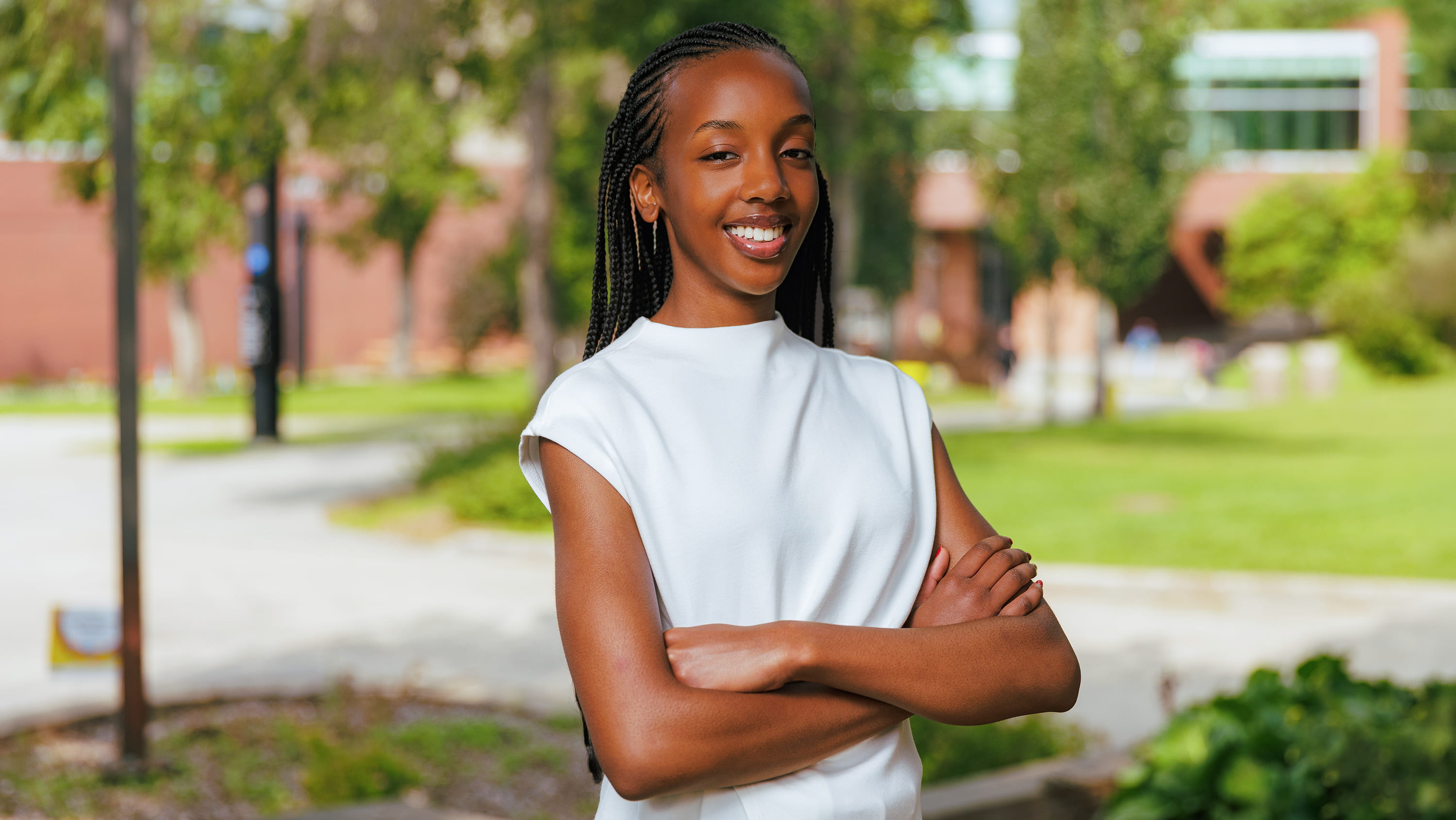
As part of a gold medal-winning team at the APEGA Science Olympics, Murangwa helped build a functional magnetometer. In middle school, she and her sister — who also came to the U of A as a Schulich Leader last year — designed a microgravity toilet concept for NASA’s Lunar Loo Challenge.
Along with her technical projects, Murangwa served as vice-president of her student council at École Alexandre-Taché in St. Albert, driving school activities and community engagement.
Now, as she begins a new chapter in her engineering studies at Campus Saint-Jean, Murangwa aspires to become a mechanical engineer and entrepreneur specializing in aerospace transport, with a focus on making aviation more sustainable and efficient.
“My goal is to build a company that will revolutionize transport, shortening flight travel,” she says. “While I have moved past lighting paper planes, my drive to expand my aviation enterprise and transform transportation remains stronger than ever.”