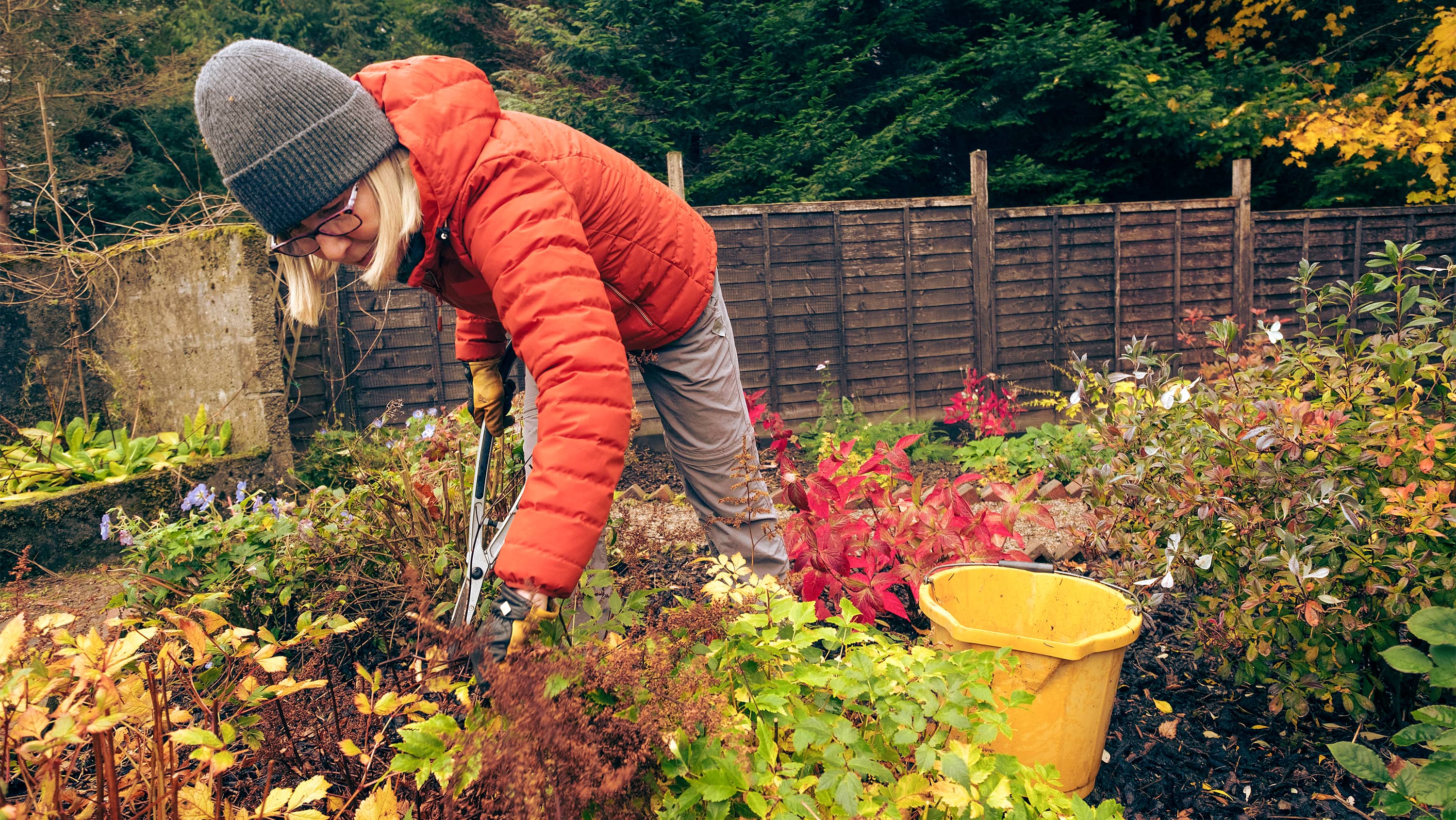
After an Alberta summer drenched in rain, it’s natural to assume the last thing your plants need before winter is more water — but think again, says an expert with the University of Alberta Botanic Garden.
“It sounds crazy to say because of the wet season we had, but now we’re going into a really dry fall, and there’s not much sign of rain,” says horticulturist Barry Greig, who helps care for the garden located west of Edmonton.
“You get two or three weeks with sunny days, no rain, and it’s amazing how quickly things dry up.”
As gardeners put their yards to bed for the winter, there are a few things to keep in mind — starting with the need to water this fall, he says.
Water now for a spring advantage
To help your yard get a good head start next spring, “water everything — perennials, trees, shrubs, bulbs — right up until freeze-up,” he advises. And to make sure they get enough moisture, use the “two-inch rule,” Greig suggests.
“Stick your finger in the soil and go down two inches. If the bottom of that hole has some moisture in it, you’re OK, but if it’s dry, it’s time to water again.”
Heavy fall soaking grows into a “huge advantage” in the spring, he adds.
“Basically, with fall watering, plant roots are frozen in a block of ice. When spring comes and that ice starts to melt, they have a ready-made water supply to access as the ground thaws, as opposed to starting to water in the spring while the ground’s still a little bit frozen and the water’s not being absorbed.”
Snowfall isn’t enough to rely on during spring thaw, he adds. “When the snow melts, there’s very little of it that actually goes back into the soil, because it runs off and evaporates.”
The exception to heavy watering is for soil that isn’t well drained, which tends to pool water instead of absorbing it. If that’s the case, water only lightly or not at all, Greig says.
This year’s deluge of rain may have damaged plants that aren’t sitting in well-drained soil, causing lack of oxygen to the roots, followed by rot. As that happens, the plant dries out, turning yellow and wilted, because the roots can’t take up water.
If the plant still looks like it’s dying or dead by the end of October, the root damage is likely fatal, he notes. But if it’s recovered somewhat or shown new growth, it can benefit from deadheading — snipping off spent blooms to save energy — and by applying a low-nitrogen fertilizer to give the roots a healthy start in spring.
And to avoid future water pooling, redirect drainage away from the plant, or if large-scale landscaping isn’t possible, “incorporate some coarse organic material into your soil,” Greig says.
This includes very grainy sand or other material like compost, or mulch containing dried twigs and bits of bark, to create enough air pockets for water to move through.
Let sleeping plants lie
Once plants have been laid low for the year by frost, it’s generally a good idea to leave them until spring to cut them back and clean up dead debris, Greig says.
“Decaying material like leaf litter provides homes for certain beneficial organisms and provides nutrients as well as insulation for the soil.”
Fall cleanup of any plant tissue affected by fungal disease or harmful pests, however, is important to stop fresh life cycles in spring, he adds. And, for practical reasons, some people simply prefer to get cleanup work done at this time of year, he says: “It saves time in the spring.”
The kindest cut
Prune trees and shrubs only when they’re dormant for the season, either right after the leaves drop or in early spring before they leaf out. Fall trimming offers an advantage, Greig notes. “Once all the leaves are gone, it’s easier to see the structure and form of what you’re pruning.”
Always start by clearing out any diseased, dying or dead wood, and don’t leave nubs larger than one inch long behind.
When thinning vertical shrubs like lilac bushes, be selective. “Replace the old with the new,” Greig says. “Remove the older branch and leave the younger branch to take over. That gives a better air flow to reduce things like fungus that can take hold in really thick, dense growth in the summertime.”
Final cuts should be for shaping and balancing. Smaller, round shrubs such as dwarf Korean lilac can be shaped with hedge clippers. For trees that start to look too tall, the crown — or upper part — can be trimmed.
An exception to fall nips and tucks are maple and birch trees, which should only be pruned in July when their sap flow is at its lowest. “Pruning them in the spring and the fall risks a lot of bleeding. The sap will come out of the cuts you’ve made, and that can attract diseases and pests.”
Dutch elm trees, which are prone to disease, can also only be legally pruned in Edmonton between Oct. 1 and March 31 when there is no risk of spread. “And any of the material from that pruning must be either burned or buried. It can’t go into landfill,” Greig notes.
Show your lawn some love
Lawns also need a bit of care for fall, so when mowing for the final time this year, leave the grass longer than usual, about four inches high, “for that little bit of extra winter insulation for the roots.”
Then, after the leaves have stopped falling, get out the rake. While leaving a small amount of leaf litter behind helps provide nutrients to the turf, a thick layer left over the winter and into spring can cause it to suffocate and rot, and leave it vulnerable to fungal disease. If you don’t get to it before the snow flies, “Make sure you’re vigilant about raking right away in spring when the snow’s gone,” Greig advises.
Pamper your plot
For veggie patches, clear away any frost-killed produce, which can go into the compost bin as long as there’s no disease or pest infestation. Then, top dress the plot with an inch of compost, which provides soil with organic material and nutrition for spring planting.
Now is also a good time to plant locally hardy bulbs such as garlic, tulips or daffodils and root vegetables like horseradish, he says.
“Planting them in the fall helps establish the roots a few weeks before freeze-up, and they’re ready to start growing in spring.”
Mulch matters
Organic mulch — a mix of natural materials like wood chips, bark, leaves, straw or compost — offers a bounty of benefits for soil in the fall, Greig says.
“It adds organic material and nutrients, suppresses annual weeds like chickweed, provides moisture retention in the spring and improves soil structure and drainage. It also regulates the soil temperature throughout really hot days in the summer, and gives a bit of insulation for the winter.”
A layer three to four inches thick is optimal, and can be topped up every few years, he adds. “That keeps the beneficial process going.”