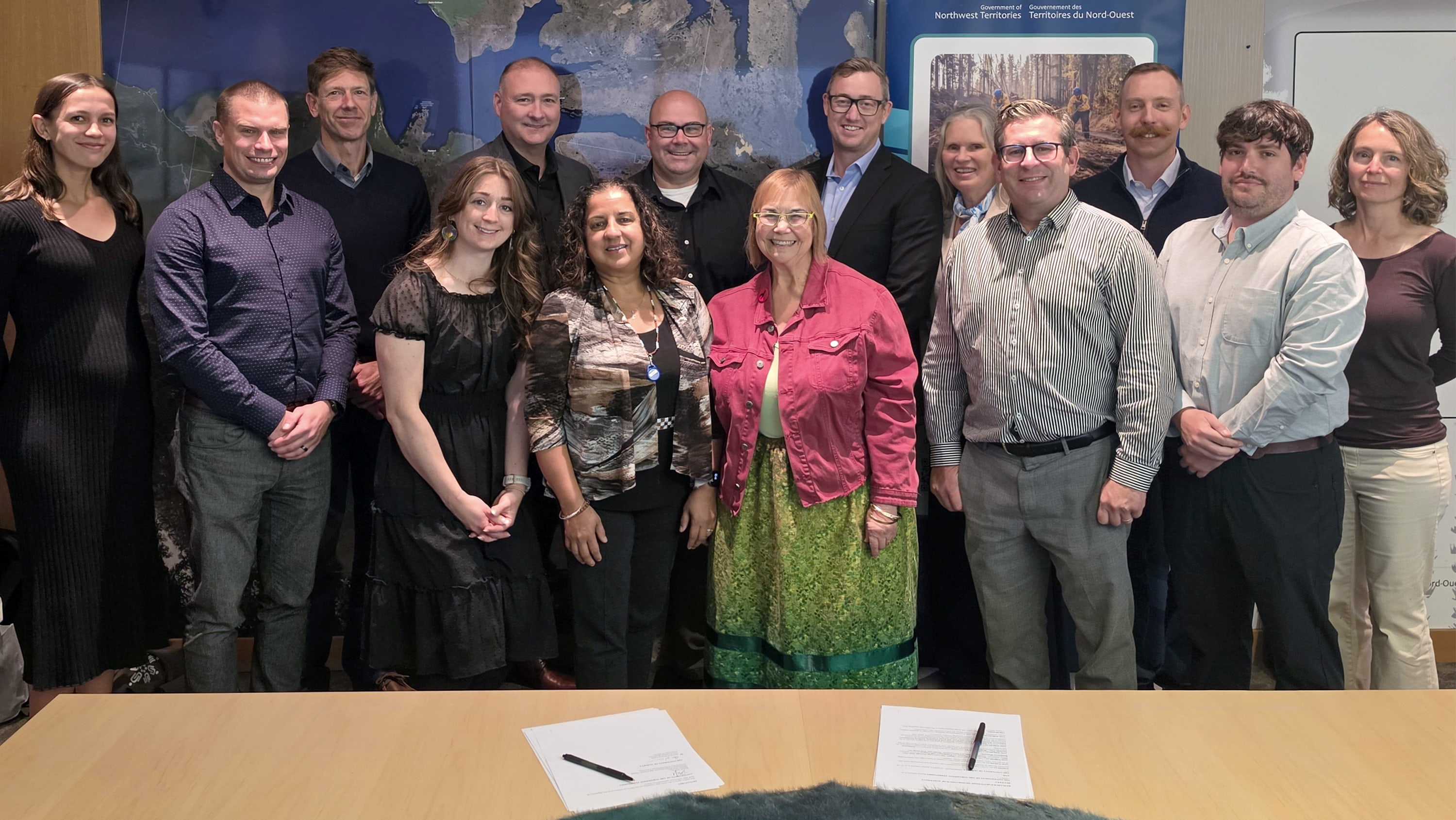
A new research agreement signed today between the Government of the Northwest Territories and the University of Alberta aims to deliver long-term benefits for northern residents while generating critical insights for a world facing rapid environmental and geopolitical shifts.
Merging the territorial government’s Knowledge Agenda with the university’s strategic strengths in research, education and community engagement, the partnership lays a foundation for tackling pressing northern priorities over the next decade.
“By engaging with traditional knowledge and leveraging academic excellence, the Government of the Northwest Territories and the University of Alberta are establishing a modern blueprint for ethical, community-led research,” says Aminah Robinson Fayek, U of A vice-president of research. “Aligned with the goals of Forward with Purpose: A Strategic Plan for Research and Innovation, the outcomes of our partnership will help us address some of the grand challenges of our time and build resilient, enduring communities across the Northwest Territories for generations to come.”
Running through March 31, 2035, the partnership focuses on research critical to the future of the North, including climate change, public health, artificial intelligence, agriculture and social transformation. It also addresses national priorities related to Arctic sovereignty, defence and security, positioning northern communities as leaders in responding to these complex global challenges.
For residents of the Northwest Territories, the agreement is expected to yield practical benefits designed to build local capacity. Northern youth may gain expanded access to scholarships, remote learning programs, co-op placements, internships and on-the-land training, providing pathways into scientific and research fields. The Government of the Northwest Territories will work with the U of A to highlight potential job opportunities for recent graduates within territorial departments, retaining talent within the North.
In addition, government staff participating in graduate supervision may be appointed as U of A adjunct faculty, gaining access to the university’s vast digital library resources and research databases. Both partners will have preferential access to specialized equipment and labs to maximize research funding.
“This agreement creates new opportunities for northern residents to participate in and benefit from research that reflects the realities and priorities of the Northwest Territories,” says Robert Jenkins, deputy minister of environment and climate change with the Government of the Northwest Territories. “By bringing together Indigenous knowledge, community experiences and academic expertise, we are strengthening our ability to address challenges such as climate change and Arctic security. The partnership also supports education, training and career pathways for northern youth, helping build the capacity for a strong and resilient North.”
Crucially, the agreement establishes a collaborative framework for ensuring research activities are Indigenous-led or co-developed with local communities and that the collection, use, disclosure, storage, management or governance of data will adhere to principles of Indigenous data sovereignty.
“The agreement formally recognizes the knowledge systems of Indigenous communities and peoples, and values the experiences of Indigenous communities living with and knowing of northern lands since time immemorial,” says Florence Glanfield, U of A vice-provost for Indigenous programming and research. “This agreement is grounded in, and will contribute to, the research goals outlined in Braiding Past, Present and Future: The U of A’s Indigenous Strategic Plan.”