
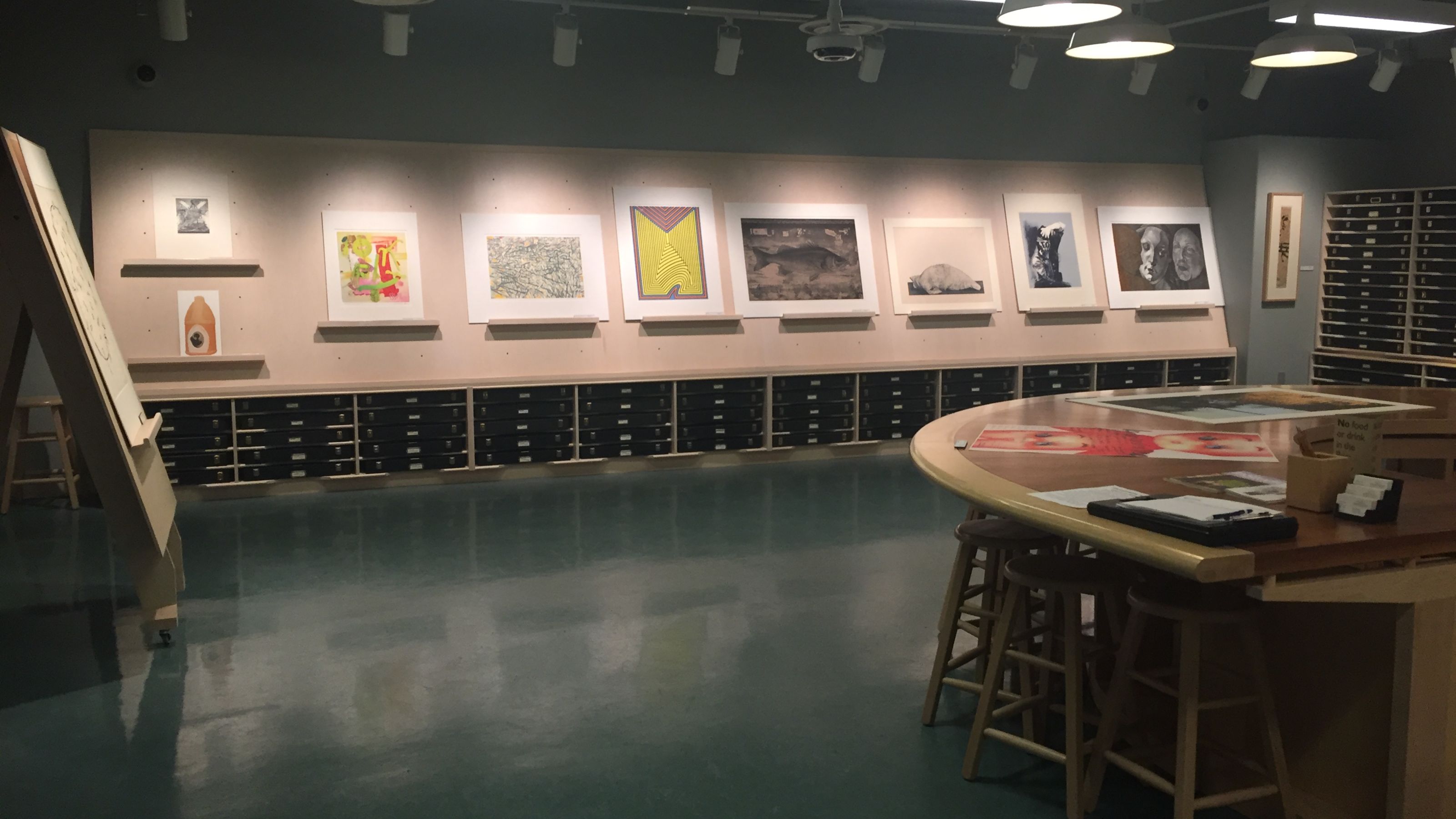
Celebrating its 30th anniversary in 2026, the PSC has grown to include nearly 4,000 works on paper. Most of the collection is comprised of printmaking – an artistic process that transfers images from a matrix such as a woodblock, metal plate or lithographic stone onto another surface like paper or fabric – but it also includes drawings and photographs.
While the U of A has collected art since its founding in 1908, in 1950 a donation of 200 works from prominent pianist, singer and choir conductor Emma (Read) Newton, the wife of the university’s fourth president Dr. Robert Newton, led to the creation of the Central Collection of Art and Historical Artifacts. Donated works included prints from English-born Canadian artist Walter J. Phillips, who is credited with introducing Japanese-style colour woodblock printing to Canada. Visitors can see the evolution of these prints and the different steps involved at the PSC today.
Sharp's Dock - Pender Harbour, 1952
Ink on paper: watercolour woodcut
Walter J. Phillips, RCA
Born Barton-upon-Humber, England, 1884
Died Victoria, British Columbia, 1963
University of Alberta Museums Art Collection
University of Alberta Museums
1965.4a-n
By the 1970s, the collection had evolved from an informal assembly of donated items into a professionally curated system, and in 1981, the Print and Drawing Study Room was established in the basement of the Biological Sciences Building as its first home. In 1996, the collection moved to the Fine Arts Building (FAB) into the new PSC, a collaboration between the U of A Museums and Department of Art and Design.
In recent years, the PSC has seen donations from former U of A professors who have risen to international printmaking fame, including professor emeritus Walter Jule and distinguished professor emerita Liz Ingram, who were both instrumental in establishing Canada's first printmaking master's program at the U of A with professor emeritus Lyndal Osborne. “We've always had an art acquisition policy and strategy to collect the best art of the artists,” says Tom Hunter, collections assistant at U of A Museums.
The PSC is open by appointment to the U of A community and the public, and has capacity for 20 people. When the new 5,000 square feet Kenneth and Sandra Wong Gallery opens in early 2027, it will be home to all of the Museum Collections on campus and occasionally host print-based exhibitions, while the PSC will remain in its present location in FAB.
Currently, the PSC has many collaborations, including with U School and DiscoverE, the Society of Northern Alberta Print-Artists (SNAP) and community groups such as adult literacy classes. For the National Day for Truth and Reconciliation in 2024 and 2025, the PSC worked with the U of A Museums and Library Indigenous Initiatives team to organize Connecting with the Art of Survivors, a program that shared artworks and books about the history of residential schools in Canada and its impact on generations.
Most often, the PSC is frequented by undergraduate and graduate classes, including the internationally recognized Printmaking program. Sean Caulfield, chair of the Department of Art & Design, says “Throughout my career at the U of A, the Print Study Centre has been an invaluable tool for both my teaching and research. For instructors, it’s a vital resource that gives students first-hand access to innovative international printmaking from diverse historical periods. Seeing actual artworks is essential for students to understand the complex technical, formal and conceptual processes behind high-caliber art, which is a unique experience the PSC consistently provides. As a researcher, the PSC has had a profound impact on the direction of my work, serving as a continuous source of motivation and artistic reflection."
While there's nothing like seeing the real thing, for those who are not able to visit the PSC, online print exhibitions are an accessible, excellent way to learn.
Students of East Asian Studies in particular come to see the PSC’s large number of Japanese works, including modern masterpieces from media and print artist Ryoji Ikeda, who served as a visiting, guest and adjunct professor at the U of A on and off from 1994 to now, and donated approximately 300 of his works. “He's a national treasure in Japan,” says Tom.
Equally exceptional is a print by Yosuke Imai titled Sushi-Maru II ‘Hira-Suzuki’, the famous etching of a fish caught by the artist himself, which uses chine collé, a technique where a tissue-thin paper and stronger paper below it create a subtle, delicate backdrop. A print from the same series also resides at the Victoria and Albert Museum in London, England, a detail that gives an opportunity to dismantle a common misconception about prints: that they’re not original pieces of art.
“They are each unique pieces,” says Tom. “If you think of the matrix used, depending on whether it's a woodblock or an etching plate, each time the artist pulls a print from that, it changes a little bit, so the first one is going to be different from the last one.” Nadia adds that “it's great to have one print by an artist, but it's even better to have at least two or three, so we can have a comparison.”
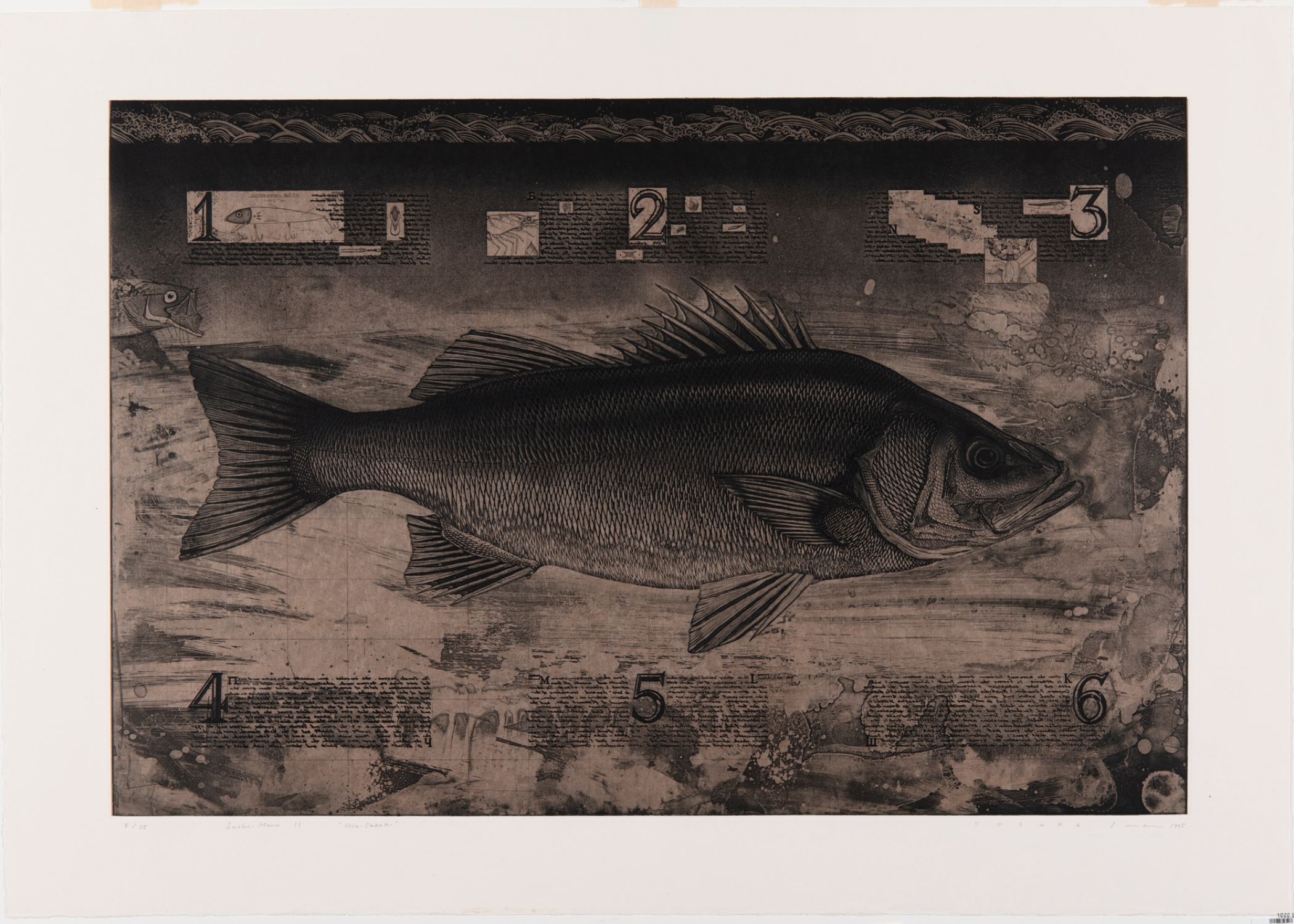
Ink on paper: etching; aquatint; chine collé
Yosuke Imai
Born Ehime, Japan, 1965
University of Alberta Museums Art Collection
University of Alberta Museums
1999.8
The PSC has many historic prints as well, including Ukiyo-e, a genre of Japanese art that translates to "pictures of the floating world,” which uses woodblock prints and was produced from the Edo period through the 20th century. However, the collection stretches back much further: its oldest print is The Small Horse dating back to 1505, which was engraved onto a steel sheet (most likely for a book) by Albrecht Dürer, a master printmaker and painter from Nuremberg known for bringing the Italian Renaissance to Northern Europe.
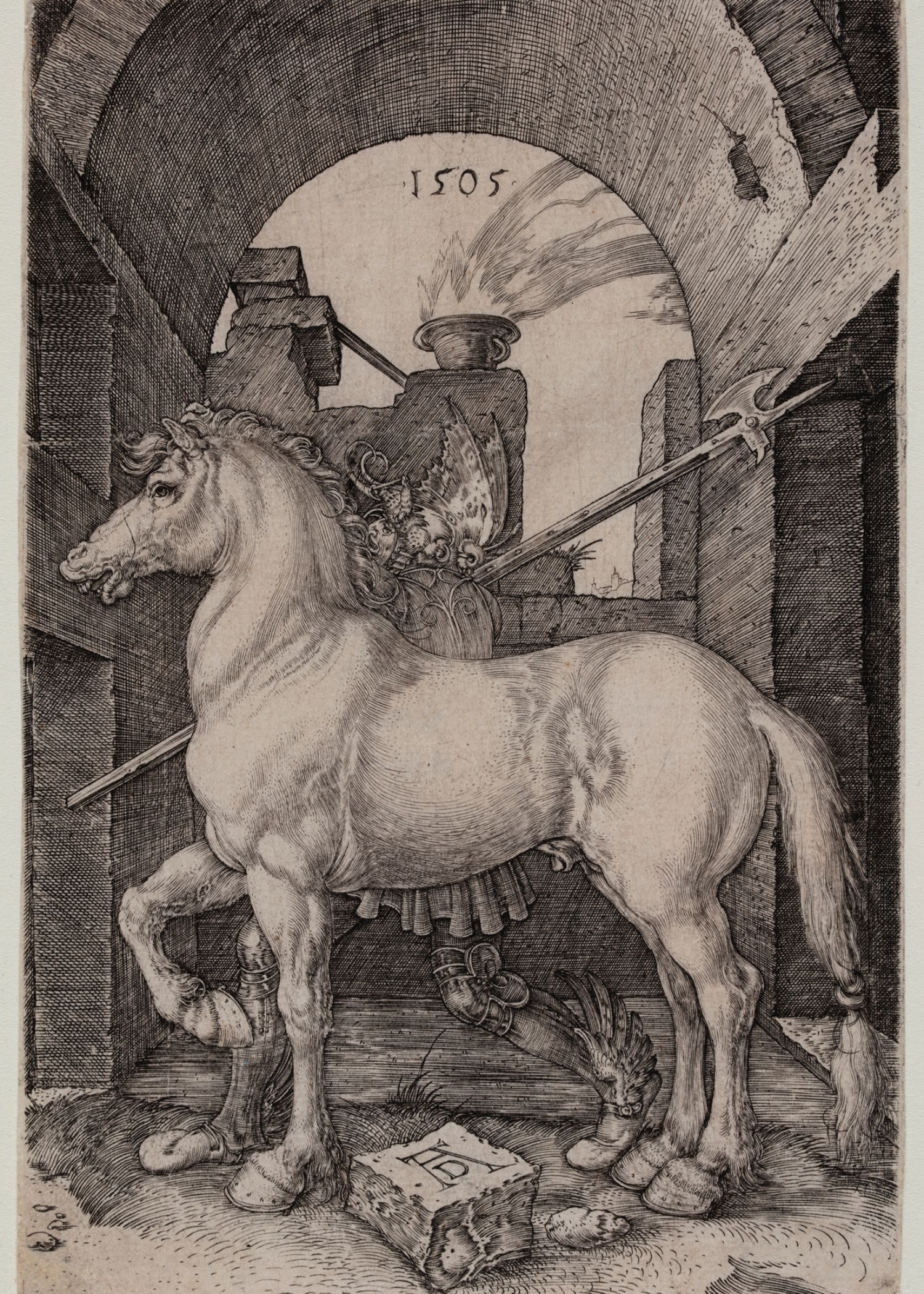
Ink on paper: engraving
Albrecht Dürer
Born Nuremberg, Bavaria, 1471
Died Nuremberg, Bavaria, 1528
University of Alberta Museums Art Collection
University of Alberta Museums
1985.45.2
European art is no stranger to the PSC, and visitors can come face to face with the works of Rembrandt van Rijn, who revolutionized printmaking during the Dutch Golden Age, and legendary Spanish printmaker and painter Francisco José de Goya y Lucientes, often called the last of the Old Masters and the first of the Moderns.
Presently, the PSC is trying to collect more art by women, including Indigenous women and women of colour. Some recently-acquired works are by Cinthia Sifa Mulanga, a contemporary artist from the Democratic Republic of the Congo, whose practice in painting and collage focuses on the representation of Black women. The PSC also recently acquired works by Inuit artist Kenojuak Ashevak, known as the "grandmother of Inuit art." Kenojuak’s famous 1981 stonecut and stencil print The Owl Rules the Summertime, which was produced on stone in Nunavut, can be admired at the PSC.
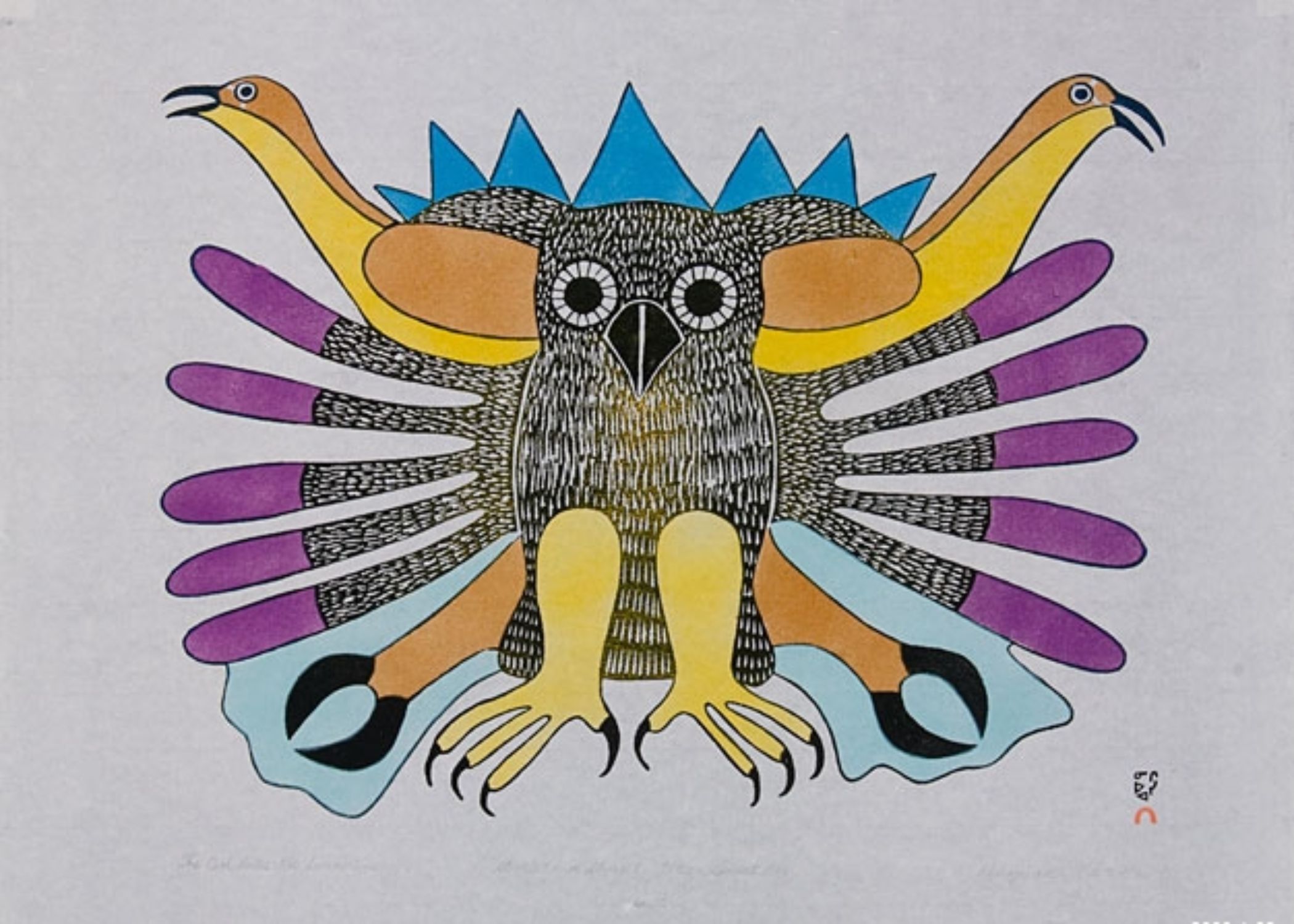
Ink on paper: stonecut and stencil
Kenojuak Ashevak, CC, RCA
Born Baffin Island, Nunavut, 1927
Died Kinngait, Nunavut, 2013
University of Alberta Museums Art Collection
University of Alberta Museums
2008.1.62
Another focus is acquiring more Indigenous art from areas around the U of A, including Treaty 6, Treaty 7 and Treaty 8 territories. Works by Cree printmaker and painter Jane Ash Poitras – a U of A two-time alumna, a former lecturer and an honorary doctor from Fort Chipewyan, Alberta – are featured in the PSC, while the neon sculpture ᐁᑳᐏᔭ ᐸᑭᒌ (ēkāwiya pakicī /Don’t give up) by Joi T. Arcand, an artist from Muskeg Lake Cree Nation, Saskatchewan, hangs inside the new First Peoples' House.
Register for free events with the PSC during U of A Days 2026:
To book an appointment with the PSC, please email museums@ualberta.ca.