East Asian Studies


Welcome to the Department of East Asian Studies!
The Department of East Asian Studies is an interdisciplinary home for research and education about the societies and cultures of China, Korea and Japan, run by scholars working in the social sciences, humanities and fine arts. Our undergraduate program emphasizes giving students high levels of language proficiency in Chinese, Korean and Japanese language, while also giving them the cultural understanding to be effective professionals in a variety of business and government careers relating to Asia. At the graduate level, our MA program gives students intensive scholarly training in field-specific research methods, and has an excellent success rate placing them in top PhD programs in Canada and the United States.
Get to know East Asian Studies at the University of Alberta!
The Department of East Asian Studies is an interdisciplinary home for research and education about the societies and cultures of China, Korea and Japan, run by scholars working in the social sciences, humanities and fine arts. Our undergraduate program emphasizes giving students high levels of language proficiency in Chinese, Korean and Japanese language, while also giving them the cultural understanding to be effective professionals in a variety of business and government careers relating to Asia. At the graduate level, our MA program gives students intensive scholarly training in field-specific research methods, and has an excellent success rate placing them in top PhD programs in Canada and the United States.
Programs
East Asian Studies Degree Program
East Asian Studies majors are able to choose from a wide array of fascinating and lucrative career paths, both in Asia and in Canada. East Asian nations occupy positions of critical importance to the world economy, international relations and cultural exchange. Therefore, employers understand the value of having employees with advanced language skills in Chinese, Japanese and Korean, as well as the cultural and historical knowledge necessary for effective engagement.
East Asian Studies Honors Degree Program
Our honors program is designed for students who want to go on to research Asia in graduate school. In addition to their coursework, students do a major research project in collaboration with one of our professors; this gives our honors students a unique opportunity to learn research skills and supercharge their graduate school applications.
Chinese Language
Like almost all university Chinese programs, we teach Mandarin, the standard dialect for business communication across China. In addition to being a critical language for business whose importance will only grow in the 21st century, Chinese is actually much easier than you think! There’s no conjugating verbs, no tenses or moods, not even singular and plural! Even the writing system is easier than it looks–and our award-winning teachers know exactly how to introduce it in a way that makes sense to Canadians.
Korean Language
Korea has its own amazing and distinct Asian culture for millennia – and until recently, almost no one outside the peninsula noticed. But now K-pop and K-drama have taken the world by storm, and Korean is one of the fastest growing world languages. In our program, we have designed our classes to encourage pop culture fans to learn Korean in a way that deepens their understanding of Korean society. We designed our own textbooks from the ground up to make the language as easy and fun as possible, and our instructors have been recognized by the South Korean government as among the best in the world.
Japanese Language
Year after year, Japanese is one of the most popular languages on campus – no matter how many classes we open, they always fill up. (We are guessing there are a lot of anime fans? But it’s not required!) If you want to register, be sure to jump on Bear Tracks as soon as the system opens!
Graduate Program - MA in East Asian Studies
The two-year master's thesis-based degree program in East Asian Studies aims at providing graduate students with advanced disciplinary training and a profound understanding of research methods in Asian cultures. Accommodating a diverse array of research interests in linguistics, literature, art history, religion and cultural studies, we maintain individual attention and direction for students.
fall term 2026
mwf 3:00 - 3:50 p.M.
EASIA 240: Prehistoric Pots to Hello Kitty: Introduction to Japanese Culture
How has religion shaped concepts of beauty in Japan? When was writing poetry the best way to get a date? Why were the samurai into Chinese painting? Why is tea important to Japanese aesthetics? What’s so great about the Great Wave? Why is Godzilla the bomb? What makes Hello Kitty cute?
This course answers all these questions and more! We will examine Japanese cultural forms (literature, art, etc.) from their earliest extant examples (Jomon pottery, ca.10,000 BCE) to modern cultural icons like Godzilla and Hello Kitty. Through our examination of these works we will make our way through Japanese cultural history while considering the ways in which religion, history, and politics can combine to influence cultural production. Since we will be looking at many famous examples of Japanese art, literature, architecture, etc., this is a GREAT course to take if you are planning to visit Japan and see the sights! No prerequisites. All readings will be in English, and no previous knowledge of Japanese language or culture is needed.
Instructor: Anne Commons
fall term 2026
TR 2:00 - 3:20 p.M.
EASIA 374: Korea-Canada Relations
This multidisciplinary course examines the historical, political, social, and cultural dimensions of Korea-Canada relations. Students explore key moments from early Canadian missionary activities in Korea through the Korean War to contemporary economic, educational, and cultural exchanges. The course addresses both South and North Korean relations with Canada while emphasizing Korean Canadian communities, their experiences, and cultural productions. Through case studies of missionaries, artists, immigrants, and diaspora communities, students develop a critical understanding of transnational connections. The course incorporates diverse materials, including historical documents, literature, film, and art. Combining lectures, discussions, and multimedia resources, the course provides comprehensive learning about this significant bilateral relationship.
Boyoung Chang
News + Events
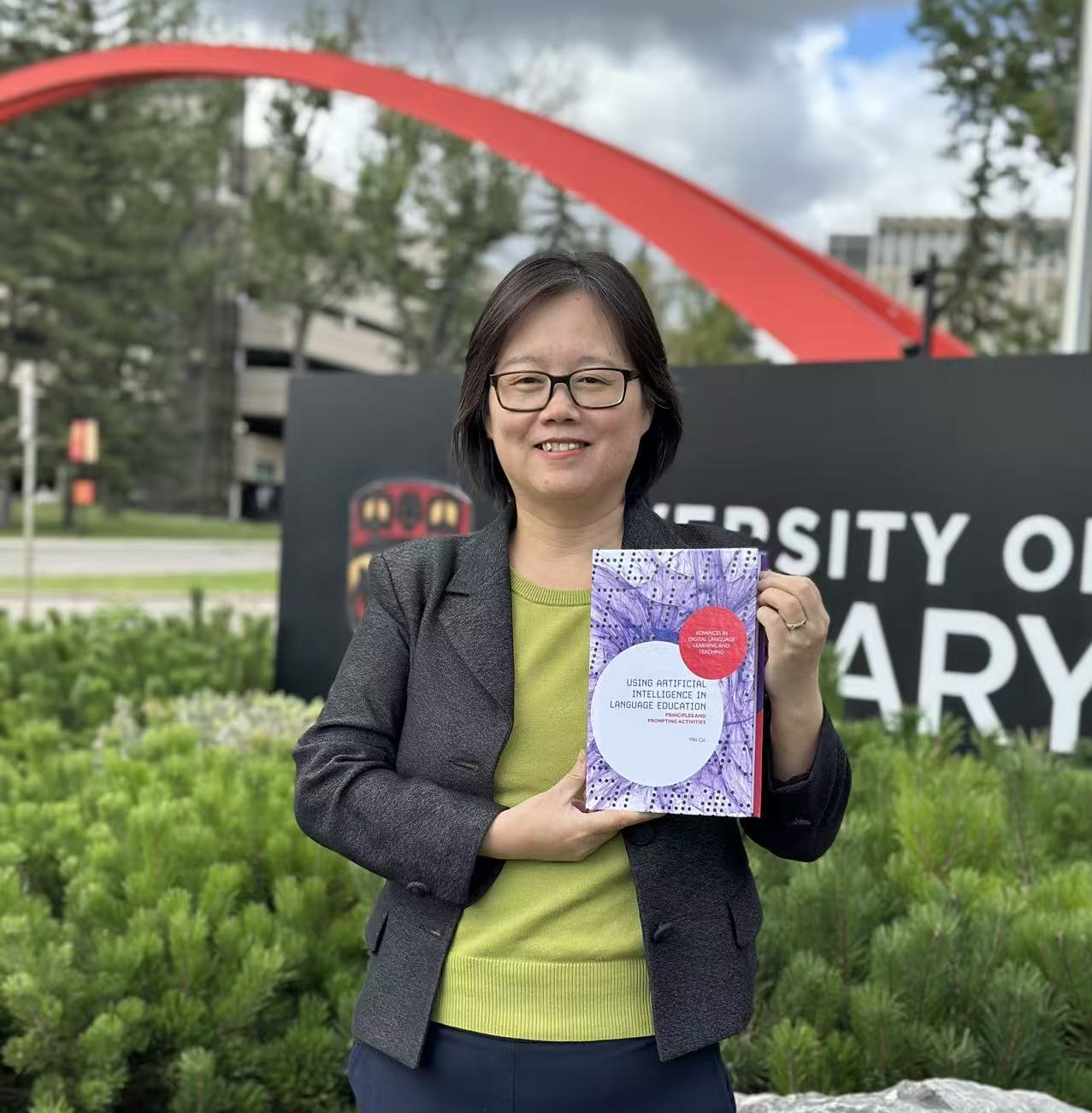
Nov. 24 - Principled AI: From AI Affordances to Purposeful Language Learning
Join the Departments of East Asian Studies and Modern Languages and Cultural Studies on Tuesday, November 24 from 1:30-3 p.m. in Pembina 3-58 for "Principled AI: From AI Affordances to Purposeful Language Learning", a talk by Dr. Wei Cai.
Giving
Leave a Legacy
Your donation supports new learning opportunities and experiences for students, funds research and builds spaces for innovation and education.