 YouAlberta
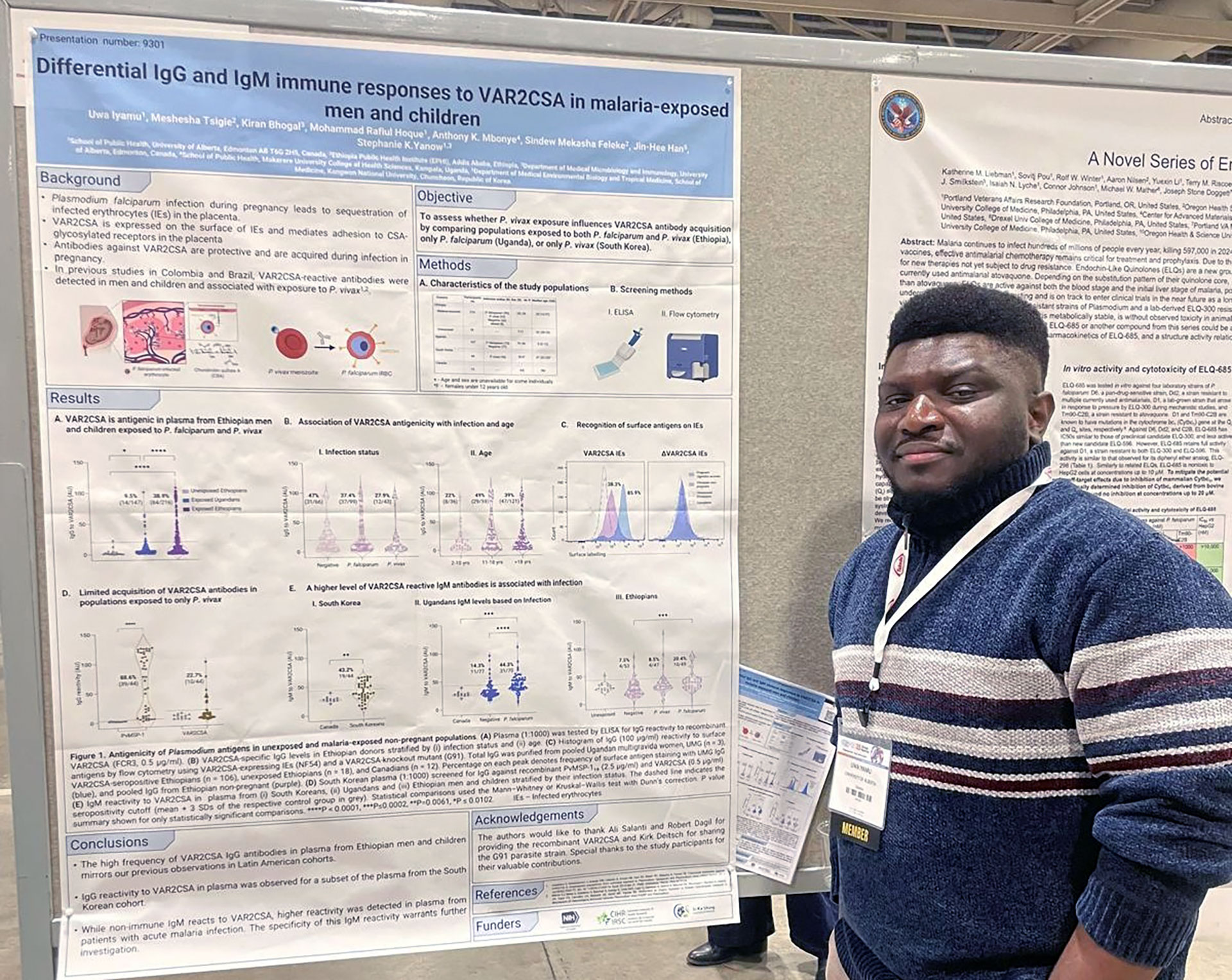

I was recently introduced to Uwa, a U of A student whose time in the lab has added up to much more than just scientific data.
Through our conversation, I learned how Uwa turned a research position into a masterclass in mentorship, and how the Experiential Learning in Innovation, Technology, and Entrepreneurship (ELITE) Program for Black Youth, SPP-ARC trainee resources and Li Ka Shing Institute of Virology grants offered supportive experiences that helped him get there.
Can you tell us a bit about yourself and what initially brought you to the U of A to conduct malaria research?
I’m a sixth-year doctoral student in the School of Public Health at the U of A. I completed my master’s degree in biomedical and health science at Monash University in Australia and a bachelor’s degree in biochemistry in my home country, Nigeria.
Through my lived experience of both the direct and indirect impacts of malaria, I developed a strong interest in vaccine research and in understanding the immune mechanisms that help the body fight the disease. This interest led me to my current doctoral research under the supervision of Dr. Stephanie Yanow, which focuses on pregnancy-associated malaria, a condition that leads to negative health outcomes for both mothers and babies.
Pregnant women are especially susceptible to malaria; therefore, improving our understanding of immune processes during this vulnerable stage and advancing biologic interventions such as vaccines is critically important.

When did you realize your time in the lab was turning into a leadership journey?
My doctoral project involves substantial laboratory-based research, and that was my expectation when I began the program: that most of the skills I would acquire would be technical and lab-focused, with less emphasis on transferable or leadership skills.
This perspective changed after I had the opportunity to supervise a student in the lab. Our lab participated in the WISEST program, which provides high school students with short but meaningful experiences in university research laboratories. I was privileged to supervise a high school student through this program, and that experience significantly reshaped my thinking about the skills we develop as graduate students.
Observing the student’s growth, from being initially anxious and lacking confidence to becoming more confident and engaged, was deeply impactful. Receiving feedback from the mentee about how mentorship supported their learning and confidence made the experience especially fulfilling and helped me recognize that my lab-based research was also becoming a leadership journey.
Can you share a bit about your involvement with U of A’s ELITE Program for Black Youth?
I was involved as a co-chair of the internship presentation workshops. Serving as a co-chair allowed me to see how early access to research experiences and mentorship can help address barriers such as limited exposure to careers within and outside academia and low confidence in scientific communication.
Witnessing students present their work and articulate the projects they worked on and their specific roles highlighted the program’s impact on building confidence, early research engagement, and scientific communication skills. One participant shared how they were initially anxious about the lab-based experience and uncertain about whether they would fit in, but gradually grew more confident in their research abilities.
This experience was personally meaningful and influenced my decision to remain involved in the program. It reinforced my appreciation for initiatives that support early development and exposure of Black youth to STEM-related fields.
How did receiving support, like the SPP-ARC training opportunities and Li Ka Shing grants, impact your ability to focus on both your research and your personal growth?
Travel grants awarded by the Li Ka Shing Institute of Virology have had a significant impact on my ability to focus on my research. These grants provided opportunities to attend international conferences, such as the annual meetings organized by the American Society of Tropical Medicine and Hygiene (ASTMH).
I engaged with experts from diverse disciplines, which strengthened my confidence in scientific communication and helped me articulate my research more effectively to both specialists and broader audiences.
Additionally, SPP-ARCing Connections Outside Academia (an SPP-ARC training event) offered insights into potential non-academic career paths. This event provides opportunities for graduate students to engage in one-on-one conversations with leaders of organizations from diverse disciplines.
What advice would you give to other Black or international students who might be interested in research?
My main advice to other Black or international students interested in research is to actively seek out mentorship opportunities in any form.
Mentorship is a two-way relationship; not only are you learning from others, but you also gain insight into your own strengths and areas for improvement. At the U of A, several institutes offer structured mentorship programs.
These experiences help international graduate students build transferable skills that are highly valued both within and outside academia. I encourage students to take advantage of professional development workshops available through campusBRIDGE .
In addition, volunteering is a fantastic way to connect with the university community and learn about paid internship opportunities. Participating in events organized by the U of A Black Students' Association is an excellent way to stay informed and connected.