 YouAlberta
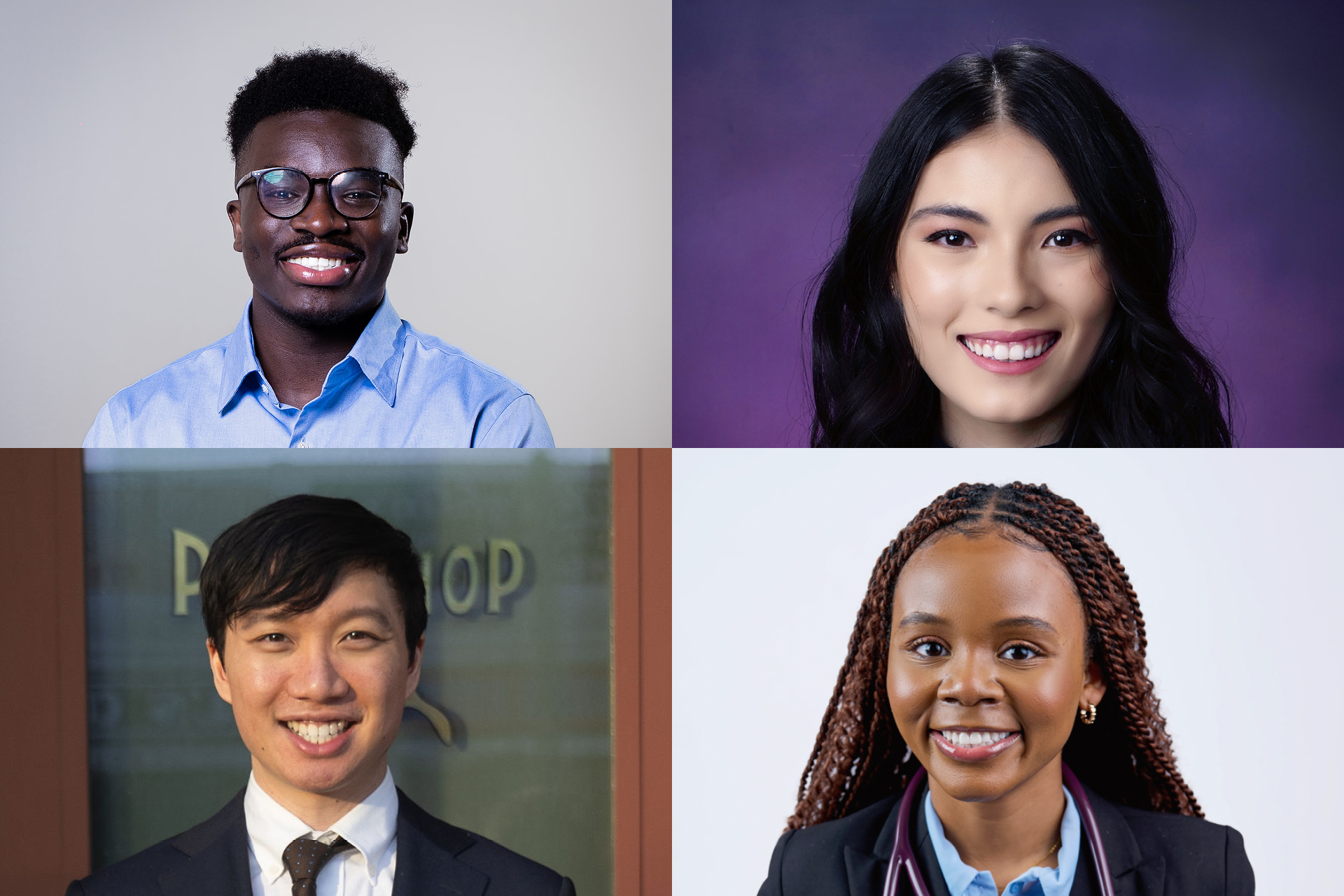

Each year, the Alberta Council for Global Cooperation (ACGC) highlights 30 young leaders making a difference in their communities and beyond. This year, several of those recipients are U of A students and grads tackling issues ranging from social justice and housing advocacy to global education and health equity.
I caught up with four of this year’s U of A recipients: Sophia, Jean Bruce, Precious and Ren An to learn more about their work, how their time at the U of A shaped their vision and what’s up next for them.
Sophia: Advocating for youth transit and community mobility
Program: Civil and environmental engineering
As a student, Sophia transformed a slam poem into a national initiative to make transit free for youth, helping over 300,000 young people get where they need to go. By centring community connection, she inspired a movement that now spans 27 communities across Canada.
What sparked your advocacy for youth transit accessibility?
Growing up, I was a really shy kid and didn’t like speaking about what I believed in. But in high school, I began to notice how many of my friends struggled to get to school, work and around the community because they didn’t have reliable transportation. It didn’t feel fair.
Seeing those shared struggles pushed me to act. I wrote a slam poem and performed it at City Council. That moment led to me becoming the only youth advisor on two community plans, and eventually to leading a national initiative to make transit free for youth.
How has collaborating with the broader community impacted your work?
People are often surprised when I say that two of the biggest supporters of my work were a restaurant owner and a masseuse. In both cases, they had young children, so they understood immediately how fare-free transit creates access to belonging, opportunity and mobility for their kids and for other families in the community.
Through collaborating with a variety of people and inviting them in, my advocacy became a movement beyond one voice or one field. It became a collective call for change.
Jean Bruce: Redefining student housing and community support
Program: Economics and political science
Drawing from his own challenges as an international student, Jean Bruce co-founded Elev, a platform built for students and by students to address the systemic challenges of securing safe and affordable housing.
How did your personal journey lead to the creation of Elev?
The spark came from my own experience navigating housing as a student, especially as an international one. I remember how uncertain and overwhelming it felt trying to secure a place to live from afar, without clear guidance, without trust in the system and without knowing what to expect when I arrived.
What started as a personal challenge became an opportunity to build something better. Elev was born out of that shift. It was a way to take something that once felt uncertain and fragmented and turn it into something structured, supportive and rooted in community.
How did your time at the U of A shape your broader vision?
My time at the U of A deepened my understanding that local issues are often connected to global systems.
It helped me see that things like housing insecurity, migration, affordability and access to opportunity aren’t isolated challenges. What the university gave me, beyond academics, was exposure to people from different backgrounds, disciplines and ways of thinking. That challenged me to move beyond just passion and think more critically about systems, structures and sustainability.
Precious: Fostering inclusive spaces and health equity
Program: nursing
Precious is dedicated to building community and advocating for health equity. As co-founder of the U of A’s Canadian Black Nurses Alliance chapter, she creates spaces where students feel supported and represented within the healthcare field.
Can you share a moment that demonstrated the power of interdisciplinary collaboration?
One of the most meaningful examples of interdisciplinary collaboration was serving as co-president of the Canadian Black Nurses Alliance chapter, where I partnered with the Black Medical Students’ Association and the Black Pharmacy Students’ Association to organize an annual Black History Month health sciences gala.
Bringing together students from nursing, medicine and pharmacy required coordination across multiple schedules. This experience taught me that problem-solving is strongest when it is collaborative. We had to navigate logistics, delegate responsibilities and ensure that every voice was heard while working toward a shared vision.
How do you approach difficult conversations in your advocacy work?
I believe that difficult conversations begin with calling people in rather than calling them out. I approach difficult conversations with empathy, curiosity and a commitment to education. I also often use stories, lived experiences and practical examples to humanize the issue rather than relying only on statistics or abstract concepts.
Personal narratives can help people connect emotionally and understand why change matters.
Ren An : Bridging global goals with local engagement
Program: community engagement, School of Public Health
Ren An connects the Sustainable Development Goals (SDGs) with actionable local change. By co-founding the United Nations SDG Students’ Association, he’s dedicated to restructuring spaces so people can meaningfully contribute to shaping the systems that affect them.
How has your approach to addressing community issues evolved?
My time in the master's in community engagement program at the U of A has significantly shaped how I approach global and local issues.
It shifted my perspective from focusing solely on outcomes to also thinking about process — how decisions are made, who’s involved and whose voices are being centred. It’s also reinforced that addressing complex global challenges requires more than technical solutions — it requires building relationships, fostering trust with stakeholders and restructuring spaces so that people can meaningfully contribute to shaping the systems that affect them.
What does this Top 30 Under 30 recognition mean to you?
Being named to the Top 30 Under 30 is less of a milestone marking past accomplishments and more of a reminder to continue the work ahead.
It reinforces my commitment to creating meaningful change and gives me the confidence to take on larger, more ambitious goals. I see this recognition as a reflection of that collective effort, and a reminder of the importance of giving back to the communities that have made my own growth possible.
This year’s Top 30 Under 30 recipients from the U of A prove that local action can create global change. Through education, advocacy and community building, they inspire the next generation of students to think bigger and make a difference wherever their passions take them.