 YouAlberta
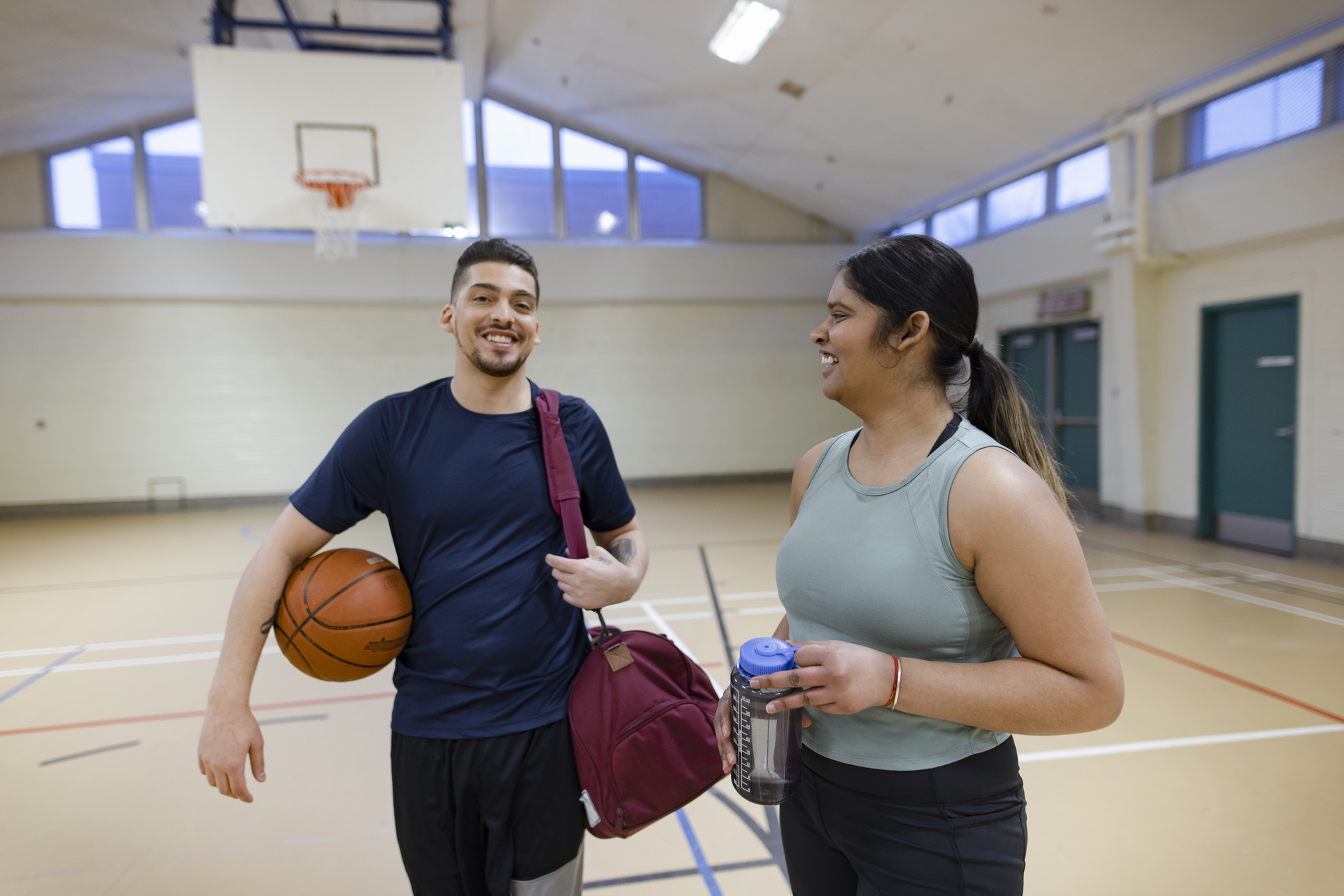

Register now for fall 2026 recreation sports until Sept. 14, 2026.
Moving to a new city for university is a massive shift, and sometimes the best way to settle in is to participate in recreational sports.
For many students, recreational sports at the U of A are more than just a place to play hockey or soccer; they’re a place of community.
I chatted with Iseult, Jaya and Joseph, who not only play recreational sports but have also worked as student recreation facilitators with Campus and Community Recreation (CCR). In this role, they keep the games running smoothly.
You play recreational sports, but you’re also recreation facilitators. What’s it like being the person in charge during those late-night games?
Iseult: I truly valued my role as a recreation facilitator with CCR. The sense of community created by both staff and participants fostered a welcoming, positive environment that made every shift enjoyable.
The position also gave me a strong sense of pride, as I was able to contribute meaningfully and help create positive experiences for each participant. While shifts could occasionally be stressful, the role helped me develop valuable skills in handling high-pressure situations, making quick decisions and problem-solving effectively.
Jaya: Being a recreation facilitator brings a high level of responsibility as we aim to provide students, community members and alumni with an inclusive, low-pressure environment to develop skills and confidence to enjoy play without unnecessary constraints.
The role requires us to make sound decisions, manage conflicts and ensure smooth programming. It strengthens our leadership, confidence and reliability, so we can deliver a high-quality experience for all participants.
Joseph: I was very honoured to hold the position, which allowed me to help the community around me find their footing in sports and recreation. I had to show up consistently to every shift with a readiness to lead others, resolve conflicts and promote student well-being.
These are values I’ve gained throughout my life that enable me to serve those around me effectively. I felt I made a difference for the handful of students and community members I was fortunate enough to meet in this role.
You moved here from somewhere else. How did jumping into recreation sports help you find your footing at U of A?
Iseult: Moving from British Columbia at 17 to attend U of A was a major transition in my life that required significant personal growth and independence. Back home, sports gave me a strong sense of community and belonging, while also serving as an important outlet for stress and emotions.
By staying involved in sports with CCR, I connected with like-minded people, built a support system and balanced the demands of university life — including many late-night study sessions.
Jaya: Moving to Edmonton was a significant adjustment, as I navigated leaving my family and friends while finding my place at the U of A.
Joining recreation sports gave me an immediate sense of community, connection and structure. It not only helped me meet new people but also helped me maintain balance outside of academics. As I became more familiar with the recreation sports and their programming, I was able to play multiple times a week and try a variety of sports!
Joseph: Coming from a different province meant I needed to find a new community as I pursued my degree. Sports have always been a big part of my life, and naturally I gravitated toward them to find like-minded people. By participating in recreational sports, I had something exciting to look forward to every single week, which helped to maintain a healthy balance with my work and school commitments.
For students at Campus Saint-Jean (CSJ), what’s the best way to get involved?
Iseult: As a student from CSJ myself, I found CCR online the summer before my first year. Coming into university, I was invited to join a team as a free agent, and I became friends with that team and played with them for four years!
The advice I would give to CSJ students wanting to get involved is not to be afraid to show up. CCR is for everyone! I would also suggest reaching out to AUFSJ, as they occasionally sponsor teams that any CSJ student can participate in.
If someone is worried they aren’t "pro" enough to join, what’s your best advice for them?
Iseult: I always make sure to let people know that CCR has something for every interest and level! We have intramurals, club sports, group fitness, puzzle nights and even a board game and video game den.
I know coming into a sports environment can feel intimidating, but we create an environment built on inclusivity, community, respect and fun. There are activities for all skill levels and interests, so don’t be afraid to try something new! The best part is that everyone starts somewhere, and there’s always a place where you can feel comfortable and supported while meeting new people!
Jaya: Our recreation sports are open to ALL! Regardless of what you play or your skill level, there are always people who play to learn and develop their skills (like me!). It’s less about performance and more about building connections, staying active and most importantly, having fun!
The best way to feel comfortable and improve is to get involved and give it a try!
Joseph: CCR is built on a foundation of fun, community and inclusiveness. The point of recreational sports is to provide an engaging, welcoming environment where people of all backgrounds and skill levels can have fun and be part of something. As long as you’re having a good time and making meaningful connections while you’re participating, you are a “pro” in our eyes, no matter your actual skill level.
Be honest. What’s the go-to post-game snack or tradition for your squad?
Iseult: My basketball team would often take the LRT to The Pint on Jasper Avenue to grab a Wing Wednesday deal! I remember they always made fun of me for getting chicken tenders and an iced tea rather than the classic wings and beer ... but what can I say, I like my chicken boneless!
Jaya: As a recreational facilitator, our tradition would be going to the Students’ Union Building (SUB) right before our shift starts to get snacks or dinner! As for my sports teams, we stick around after our games to debrief and chat. Regardless of what we do, our traditions benefit the social aspect of our lives by helping build and maintain lifelong friendships!
Joseph: A tradition my team always does is naming a “player of the game” after each game. This is always a fun way to encourage each other to keep working hard and foster friendly, supportive competition. As for a post-game snack, you can’t beat a classic chocolate milk.