Rural Libraries: Keepers of Books, Gatherers of Plurality
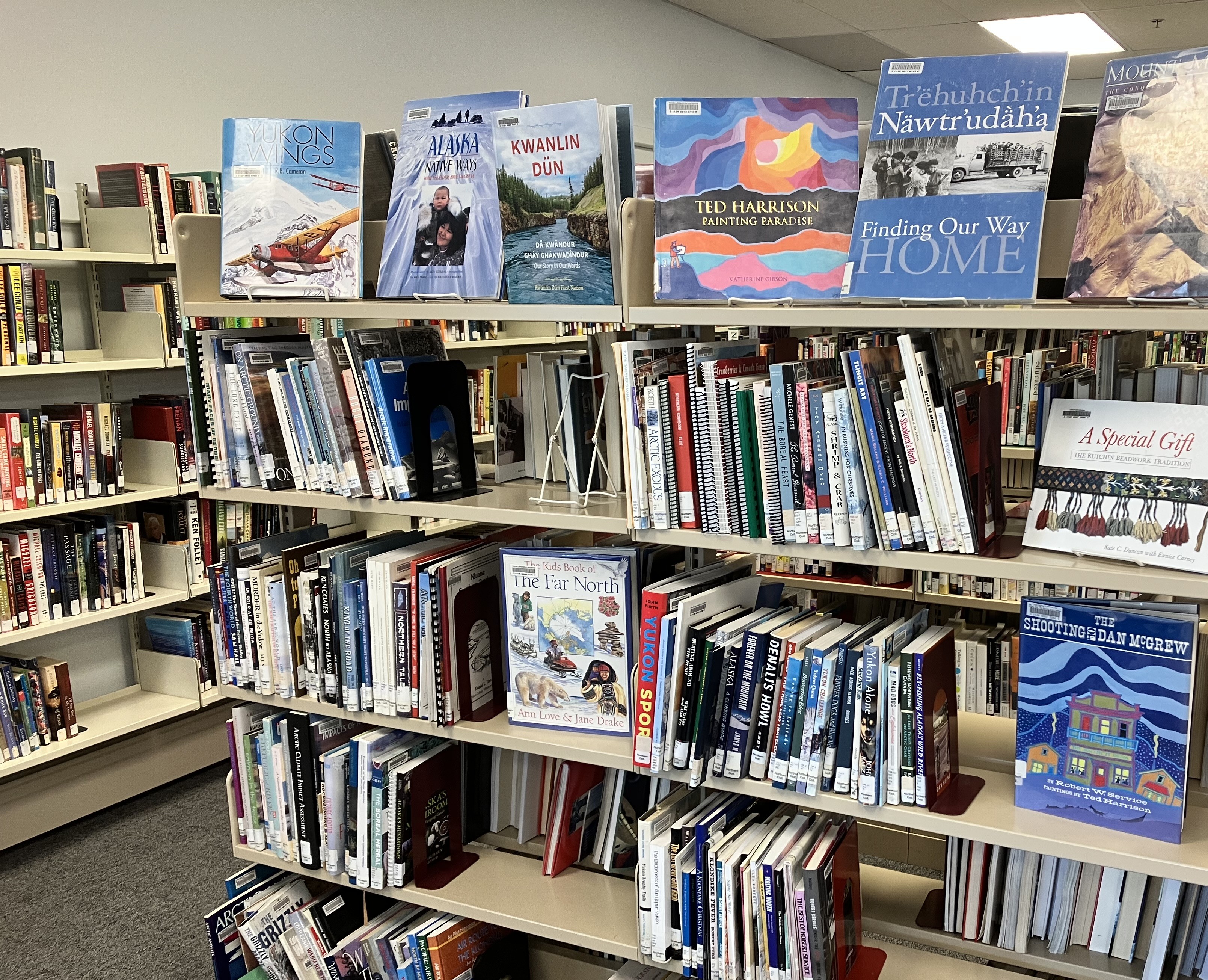
In this interview Laticia Chapman-Rainway answers questions about her dissertation, "Rural Community Libraries in Western Canada and the Phenomenology of Publicness: Keepers of Books, Gatherers of Plurality." These responses are pulled from an online interview that took place April 16, 2026. She answers 10 questions:
- What drew you to focus on libraries?
- In your dissertation you talked about when regional libraries started out and what the catalysts were to start regional libraries, could you provide a background?
- At that time in history, were there people in the communities who were champions of the libraries or was the push coming from outside the community?
- How have our public libraries changed over time? Has their role changed?
- In your dissertation you bring in the concept of the “public thing” as an underthought democratic resource? Can you unpack that a bit?
- In your quest to capture an idea of a publicness in using the library and focusing not in terms of an institution or policy but the feeling of publicness, what did you find?
- In terms of the library then, what is that like feelingness of being in that public space?
- How does being rural, small, or remote influence the space or a library and its significance?
- What is your hope for our regional libraries?
- Do you have any thoughts around Alberta’s situation about book bans in schools and libraries?
Her full dissertation can be found here.
1. What drew you to focus on libraries?
At first I was interested in public life in rural communities but I realized that was a little bit abstract and I needed something concrete that could hold the concept of what public space is in a rural community. I didn’t have libraries—or any place in particular—in my mind when I was first conceptualizing the project. I had read a book called Public Things by Bonnie Honig, a political theorist whose work I draw on in my dissertation. Within the book, libraries come up a lot as an example of a public thing, though they were not the main focus of the book. From there I realized that public libraries encompass everything that I was looking for in a place that could hold the concept I was exploring. Plus, I was also bookish as a kid and teen growing up in a small community, I liked going to the library. Not just because it was a chance to be surrounded by books but also because I found it an interesting place to be where people who you might not notice in the other parts of your life in the community would show up and hang out. There is always such a variety of people whether it’s seniors, members of the arts community, moms and kids, cowboys from way out west catching up on the newspaper, or teenagers from all backgrounds hanging out in the library as a safe, comfortable, welcoming space to be on their own. Libraries as a focus made a lot of sense to me.
Back to top
2. In your dissertation you talked about when regional libraries started out and what the catalysts were to start regional libraries, could you provide a background?
Well, British Columbia was the first, though concurrently with PEI. These were the first provinces to develop regional library systems. So two different ends of the country. This happened in the late 1920s and got off the ground in the early 1930s. It's interesting to look back at how they started because you get into some interesting territory about the kind of rationale people had for libraries and at the time there was a pretty big association between libraries and education. There were debates happening about what kind of material is appropriate for libraries. There were questions like: Do we want to carry penny novels? What kind of literature has public value? There were positive assumptions that everyone can be educated and that everyone is interested in education over their whole life process. These assumptions applied to whether you were a farmer or an accountant. At the same time, there was an assumption that libraries were needed in order to bring everybody up to a certain standard educationally and a fear that if this standard wasn’t addressed as a kind of centralized or state-led project then people and places were going to fall behind. More than that the fear was that not having a library would be a detriment to the place itself and could be a detriment to the country. The risk of not having a library was that it could hold the country back from economic progress. So it's this kind of double-edged argument where on the one hand there was a belief in people's capacity and desire to learn and to educate and there's also this kind of push to bring everybody up to a particular standard for the good of the country.
Back to top
3. At that time in history, were there people in the communities who were champions of the libraries or was the push coming from outside the community?
Yes, that's something I actually spend quite a bit of time on in the dissertation. I would say first that there were a lot of communities that had libraries in some form or another before there was a regional library. It's really interesting, the community library definitely predates the regional library. Sometimes it was led and created by a women's group or a church group. In some places, it was a local businessman who had a reading room or interestingly, there were even subscription libraries, where folks paid a fee for access. So there were all these different ways that libraries looked before they became public and tied to the state as a social public service.
Another interesting thing is that there was often a continuity between people who were involved in a library when it was just a community library and the people who remained involved when it became a regional library. And yes, there were always local champions of libraries. People who advocated for a regional branch to open in their community though they often had different motivations for the library than the regional organizers. For the local champions, the library or a library in their community was not necessarily so bound up in the worry about people being left behind or a community being a kind of threat to the country’s economy if communities were ‘left behind’. That is fear-based. The community champions were more often very motivated by a love of books.
There's a great quote from a woman in Saskatchewan who was involved in some of the regional experiments in public libraries that were being tried before the regional system that exists today was brought into being. She talks about how growing up on the farm and how getting to go into town often meant having the chance to go to the library. At the library she was able to indulge in her passion for stories and expose herself to a world of stories and literature. That kind of love of books often really motivates people who are involved in community libraries.
Back to top
4. How have our public libraries changed over time? Has their role changed?
I think there are aspects of change over time but also a continuity around libraries. As much as people who talk about libraries talk about all the new things that libraries offer, people who really love libraries are still very interested in books. People who love libraries are also interested in that kind of unhurried space where you can be doing your own thing, but you can also chat with the librarian. It has that kind of community feeling that you can go there and hang out. I'd say that the feeling of just being there has actually intensified over time. You know one of the things that has changed is, especially after 2000, personal computers and home internet started becoming much more of a thing. Libraries got worried about what kind of service they could provide now that people can go on the internet and find information, libraries weren’t acting as a reference service anymore. That is when libraries started to offer a lot more community programming and transformed into another kind of community center. You can go to the library and access free programming and events every month.
I would say that they've also changed to become more explicitly inclusive of everyone, including acknowledging things like homelessness and poverty exist in rural communities and not just in urban centers. Libraries are often a place for seniors on fixed incomes to go and get entertainment and social connection. Libraries are often very inclusive of children and families. That includes understanding and responding to the needs of their communities like installing a change table in the washroom or installing a little community pantry stocked with non-perishable food items and hygiene supplies. In the instance of the one library I visited that had a community pantry, they knew that in this particular community people would know if you were going into the food bank but they wouldn't necessarily know what you were going into the library for. So one of the important things the library was doing was offering people that kind of privacy and autonomy at the same time as getting some help.
Back to top
5. In your dissertation you bring in the concept of the “public thing” as an underthought democratic resource? Can you unpack that a bit?
So, this is the more kind of theory, political theory, element of the dissertation. And obviously, there's a lot of scholarship on democracy and democratic theory. How do we think about how we conceptualize what this thing called democracy is? What are the parts of it? What makes it work or not work? For me, I got really interested in the experiential side of publicness. Like what does it feel like to be in a public place? What makes it feel different from a private place, whether that's a commercial entity or your own home. I'm making an assumption, but why is that necessary for us to have the experience of publicness?
A lot of the work that I was reading was exploring things like libraries and public space as necessary to democracy, but I noticed that that shifted the emphasis off of the space itself and onto democracy. For me, I wanted to explore the thing itself and what it is like and what makes it feel so important to us. I tried to concentrate on those questions and that's why I went and visited libraries, to spend time in them and to try to capture some idea and to think about and write about that feeling of publicness. Not how does it work as an institutional or policy thing but what is the feeling of publicness.
Back to top
6. In your quest to capture an idea of a publicness in using the library and focusing not in terms of an institution or policy but the feeling of publicness, what did you find?
Well, I can bring in the thinker who I really relied on the most, besides Bonnie Honig. This is Hannah Arent. In her book, The Human Condition, she talks about public life a lot and what makes public life distinct from private life. One thing that she really emphasizes is that publicness consists of being able to see and hear other people. She has a really interesting way of thinking about that. Drawing from the philosophical tradition of phenomenology, she talks about an object, a table, as a way of understanding how public things work to bring us into a specific relationship with each other. The table allows me to see the person and hear the person across from me. The table relates us but that relationality consists of both a connection to and a separation from the other person. There's kind of a suggestion that if the thing wasn't in between us, we might just be on top of each other and then we wouldn't be able to make a distinction between ourselves and another person. There would not be that kind of interplay of perception happening. And recognizing both our connectedness, or our shared reality, and our inherently unique perspectives on this reality is necessary for public dialogue, for communication. That's when I got into the experiential side of things, that sense of what it is like to have this sensation of being in public. In your own home you're not necessarily thinking about what is my relation to other people in the same way. There's a little bit more of that kind of sense that like my household is a kind of extension of myself. For example you might have disagreements with your partner or negotiations, you're not the same person, obviously, but in public it's very clear that other people are not an extension of yourself and yet you're still involved in a collective endeavor. So the table that we sit around it signifies both something shared as well as a sort of phenomenological fact that for there to be something shared, we can't just be on top of each other. We have to be able to have the distance between us to see and hear each other. I was really attracted to the complexity of the idea and also the fact that you can feel it, not just conceptualize it, it's not just a policy. There's something necessary to publicness that is about lived experience of being in relation with other people and what is necessary to that relation.
Back to top
7. In terms of the library then, what is that like feelingness of being in that public space?
I think here we get back to like libraries as spaces of information; you're seeing books on the shelves and you're seeing different perspectives. An example is I saw a lot of book displays marking different events, pride and indigenous peoples month. There's that kind of necessary recognition that these are things that people are reading about in the community. Not just big things that are very topical, are maybe controversial and attract a lot of attention, but smaller things. In one library I noticed there was a book on childhood vaccine schedules and then next to it there was a book that offered an alternative take on vaccines or there was a biography of Donald Trump and a book arguing that Trump is the worst thing that's ever happened in democratic politics. So, libraries can't offer just one perspective. The nature of information is to be kind of overflowing and whatever you're interested in, there are different takes on the topic.
Back to top
8. How does being rural, small, or remote influence the space or a library and its significance?
Rural libraries often have to jockey over space. There aren't usually a lot of buildings available. Unless it's a really old historic building, you're probably not going to get a purpose-built library. Rural libraries often have moved several times. The library in the town that I grew up in moved from a small heritage building to the site of the Canadian Tire, which had moved to a bigger building and upgraded its space. So the old Canadian Tire was converted to the library. So in order to have a library, due to the need to repurpose a space, there is significant community effort and debate.
Being rural affects the internal aspects of the library as well. More than one librarian that I talked to told me about being tapped on the shoulder for the job by the previous librarian. They were noticed as someone who used the library a lot, for example they were homeschooling and brought their kids there to get books or to do lessons. Or someone who was kind of known in the community as an advocate for the arts or literacy or, and this is the most important, they were known to have the kind of personality that might work as a community librarian. There's that kind of informal job selection process and folks are hired not necessarily because of qualifications or because you came looking for the job. That’s maybe not true for all community librarians, especially in the regional systems, but it was true for a lot of people I spoke with. And for community librarians in a rural area, they are a jack of all trades, they do something of everything. They don't have a specialized job. They manage administrative tasks and definitely talk with the public. They are hosting programming, coming up with ideas for programming, talking to other community groups and being involved in fundraising. They are also involved in the social work aspect of things when that's necessary. They are involved in everything as a community librarian. And that is not a feature of urban libraries where jobs are much more compartmentalized and specialized, where you probably have a specific job description like “children’s librarian” that describes your daily job activities pretty closely.
Back to top
9. What is your hope for our regional libraries?
Well, I don't know if that's for me to say because I think one of the things that was important is just noticing that every community library is a little bit different, it is serving its community and every community is a little bit different. And so, there are tricky issues in some communities, particularly around staffing, like finding a person for the job. Librarians usually stay in their jobs for a long time, but if there aren't that many people in the community and the position is only a part-time position, many people need more than that financially and it can be hard to find the right person. So money, or employment, can be an issue. But one thing I wanted to draw attention to is that when I spoke with librarians in rural communities they were all thoughtful, creative people who are really plugged into their community and really thinking seriously about what the community needs and what the role of the library is in figuring out how to make things happen for the community.
What I might hope for the regional library is probably a little different from what I might hope for an individual community library. I don't want to make it sound like this is not happening because it is happening, but I just think it's really important for regional libraries to stay focused on providing services to communities. Like finding as much room as possible to keep libraries in communities open and open as many hours a week as possible. There used to be book vans or bookmobiles which would take books from the central library in the region or a central depository in the region out to even more remote communities that didn't even have a library. So, once a week or once every couple of weeks the book van would show up in the little community and then you'd either pick up books you'd already ordered or you could go see what they brought and take out a book. Some people still remember that fondly. I think there's been a shift of expectation from where the library used to come to you and now you come to the library. I think it should be maintained as much as possible that the library comes to you.
Back to top
10. Do you have any thoughts around Alberta’s situation about book bans in schools and libraries?
I'm not an expert in the Alberta situation because I did not go to an Alberta library. That was for historical reasons because I wanted to focus on where the regional libraries started. But if I’m not going to talk about Alberta specifically, I can say that one thing that I noticed over the course of doing this research—I came up with the basic concept in 2021—when I realized I was going to write about libraries, and this would come up in conversation, people told me, "Oh, I love libraries” or “I went to libraries all the time as a kid” and they wanted to share their memories of the good things about libraries, of how libraries had positively affected their lives. It was really nice to have a research topic that people immediately had something to talk about and something positive that they wanted to share. And then over the next few years when I told people about my research, they shifted from wanting to share their own positive experiences to wanting to know what I thought about something they had read about book bans. There has been a shift that I observed in real time about what things people want to talk about regarding libraries. Book bans, access to information, and freedom of information weren't the focus of the dissertation but I did talk about it a little bit in my conclusion just because it started to stand out to me as a shift that I'd noticed.
I do want to say after talking to some librarians about this topic, I really had a lot of respect for the librarians in terms of the nuances of their positions and the real facts that they are trying to negotiate. They are experiencing more challenges to books in their libraries and responding to that involves balancing the fact that, yes, the library is an institution that's committed to access to information but also it's rooted in the community and at the very least I don’t think that people want to alienate each other. The library is also a space for the community and it would be going against a key part of its mission to just become a space for one part of the community or some faction of the community as opposed to the whole community. So I think the way that librarians are working these things out, in real time, is something we should pay more attention to.
During my research I interviewed one librarian whose interview did not make it into the dissertation. She told me about the policy in place for when someone challenges a book at her library. You have to fill out a form that says what your specific issue is with the book and why you think the information is inaccurate or inappropriate and therefore shouldn’t be in the library. There's a process in place that really asks people to think through if their claim has merit.. The librarian wasn’t saying that all books belong in the library or that everything ever written has merit but the process they have is asking people to think through if their issue with this book has merit and if they have actually engaged enough with the book to have a substantive argument for removing it from the library. On the other hand, if you have a government policy that says, this book isn't allowed and this book is allowed, then there is a clash between the mission or the constitution of the public library, which takes access to information very seriously, vs. government policy. But when it comes to people interacting over a book, people in the community, there is usually a way to think through the issue. If a community member does raise a substantive issue about a book, and it does contain inaccurate or poor information, then the library can decide that maybe this book doesn’t have public value. Or maybe it’s worth keeping as an example of outdated information that we still need to understand the past, or to understand the difference between a bad argument and a good argument!. Conversely the library can also find that the claim doesn't have merit based on the substance of the book and not remove it from the shelf just because it's upsetting. Ultimately though, it’s helpful to have policy in place that allows libraries and the public to have those substantive interactions on a personal level. I think it’s not helpful to simply have a ban that someone can point to and say, "Well, the law says this, so you shouldn't have this kind of book." If it just comes down to a ban, then there is no space for exploring the content and having these important conversations. I want to emphasize that people living in the community are actively engaged in working these things out for their community and I didn’t hear about anyone really trying to impose any particular point of view. Everybody's involved in trying to push things the direction they want things to go a little bit. But in general, what I saw was people being really careful, thoughtful, respectful, and creative, with librarians especially trying to hold as many perspectives as possible.
If I could emphasize one thing, it would be that individual librarians really matter in smaller communities. I met some really neat librarians who are doing cool things whether because that's just the way they think or because of some personal experience. Libraries often struggle to attract teenagers and one librarian was doing all kinds of fun programming that was really popular with teenagers in the community, to the point where a bunch of adults were asking “Why can't the library do that for us too?”. There's a real possibility of being creative and plugged into the community through the library. Libraries can ask who's missing from this space and what can we offer them. That insight takes knowing the community and caring about the community to, I think, be able to see that and to provide creative solutions.
Back to top