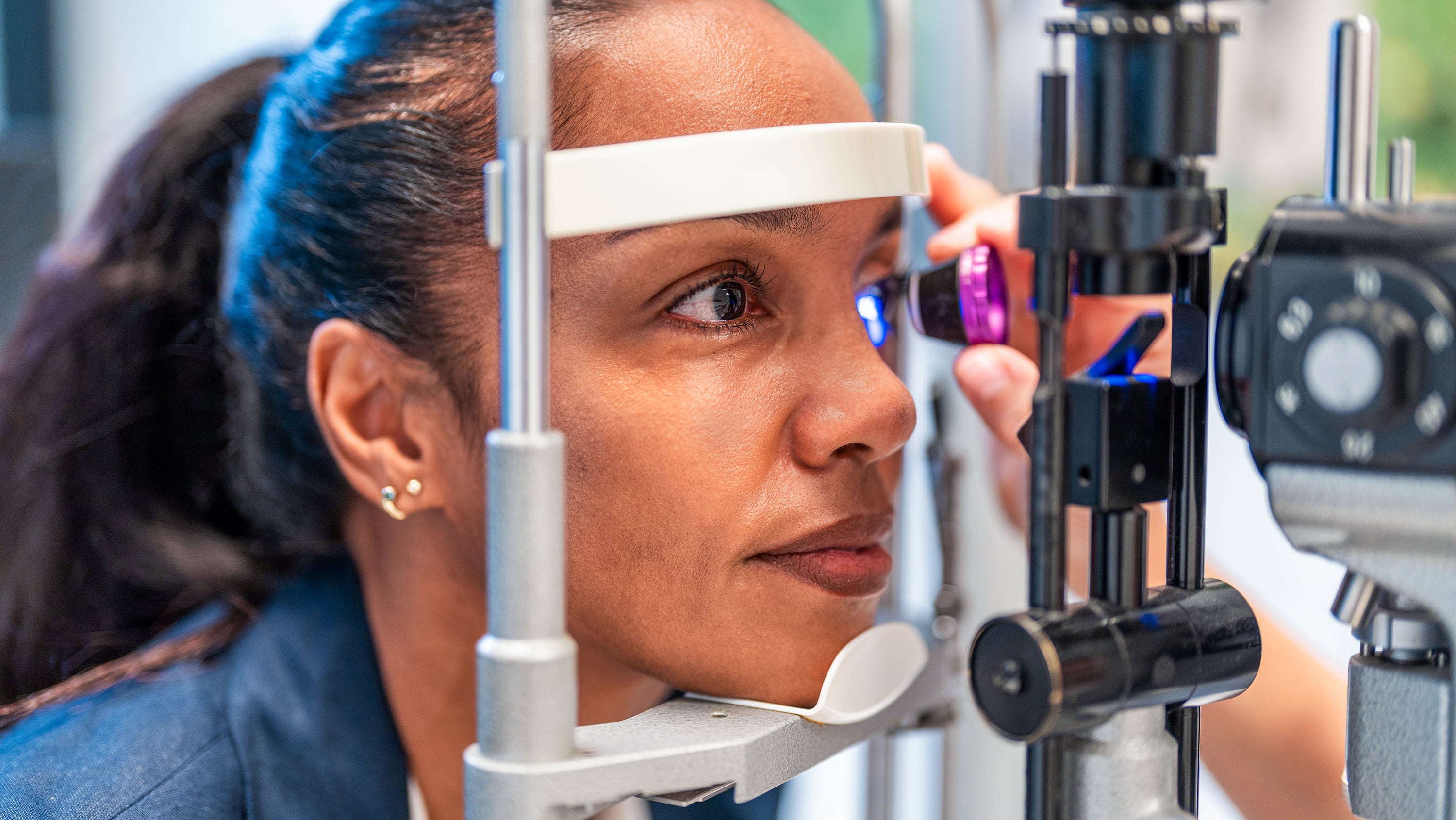
A unique interdisciplinary clinic for patients with a rare eye condition is improving access to care from central and northern Alberta to British Columbia and the Northwest Territories.
Uveitis is an inflammation of the eye that can lead to blindness if left untreated. It is caused by autoimmune diseases such as multiple sclerosis, lupus, rheumatoid arthritis and sarcoidosis. Treatment may involve steroids, systemic anti-inflammatories or immune suppression.
Until recently, patients had to travel regularly to Edmonton for separate appointments with their rheumatologist and ophthalmologist, often waiting months for updates to their prescriptions as the two specialists communicated from their separate offices.
Now, the Combined Rheumatology and Ophthalmology Uveitis Clinic allows patients to see rheumatologist Dr. Lilia Olaru and ophthalmologist Dr. Matthew Tennant, and colleagues, at just one joint appointment.
The clinic has been a life-saver — and a sight-saver — for patient Karen Hopfner of Beaverlodge, who has to drive six hours to Edmonton for care.
“Now I go in once every three or six months, they do all the eye tests, then Dr. Olaru and Dr. Tennant come in together and decide how to adjust my medication,” Hopfner says. “Last time, they had my prescription ready in Beaverlodge before I got home.”
The clinic started five years ago, seeing 10 or 15 patients every three months. It is now held every two weeks and sees up to 55 patients a day.
“We aim to use steroid-sparing medications because steroids are detrimental in the long term,” says Olaru, who suggested the unique clinic model. “We are providing access to better, more appropriate care for our patients, which reduces morbidity and potentially even mortality.”
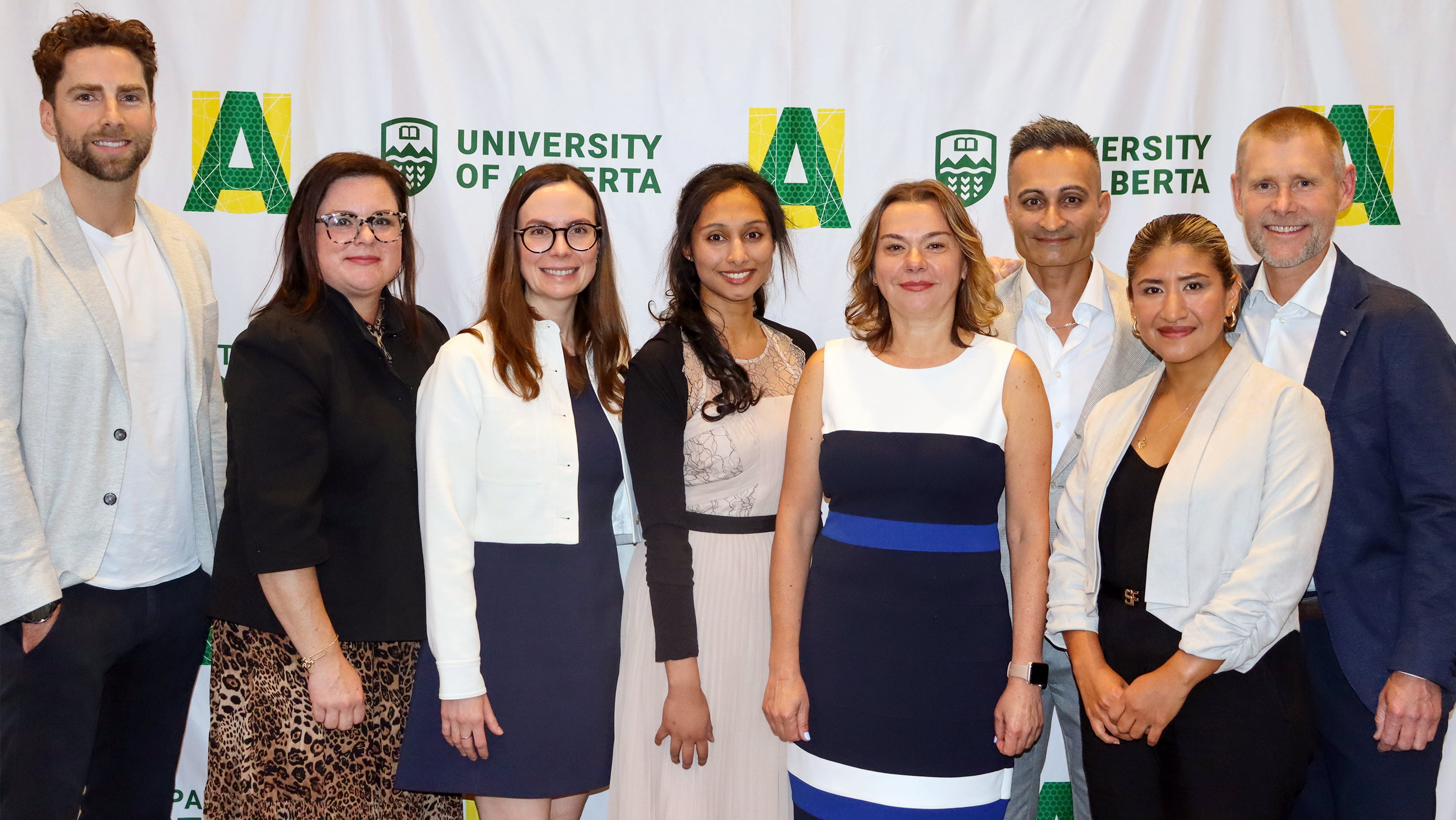
In partnership with Alberta Health Services and Alberta Retina Consultants, the service aims to reduce travel time for patients and fast-track their time to treatment. The clinic recently won the Cooperation, Collaboration, and Teamwork Award from the U of A’s Department of Medicine.
“Not curable, but manageable”
Hopfner got a cold in the spring of 2019 that just wouldn’t go away. “My ears were ringing, my sinuses hurt, my skin was itchy, and my head was pounding,” she remembers. “And then I started to lose my eyesight.”
Antibiotics, eye drops, several hospital visits, a CAT scan, an MRI and even a spinal tap failed to reveal what was wrong with her.
Finally she was med-evacuated from her home in Beaverlodge to Edmonton, where an ophthalmologist figured it out: She has a rare condition called Vogt–Koyanagi–Harada disease, an autoimmune disease that causes uveitis and other systemic inflammation.
“I asked Dr. Tennant, ‘Is it curable?’ And he told me, ‘No, but it’s manageable.’”
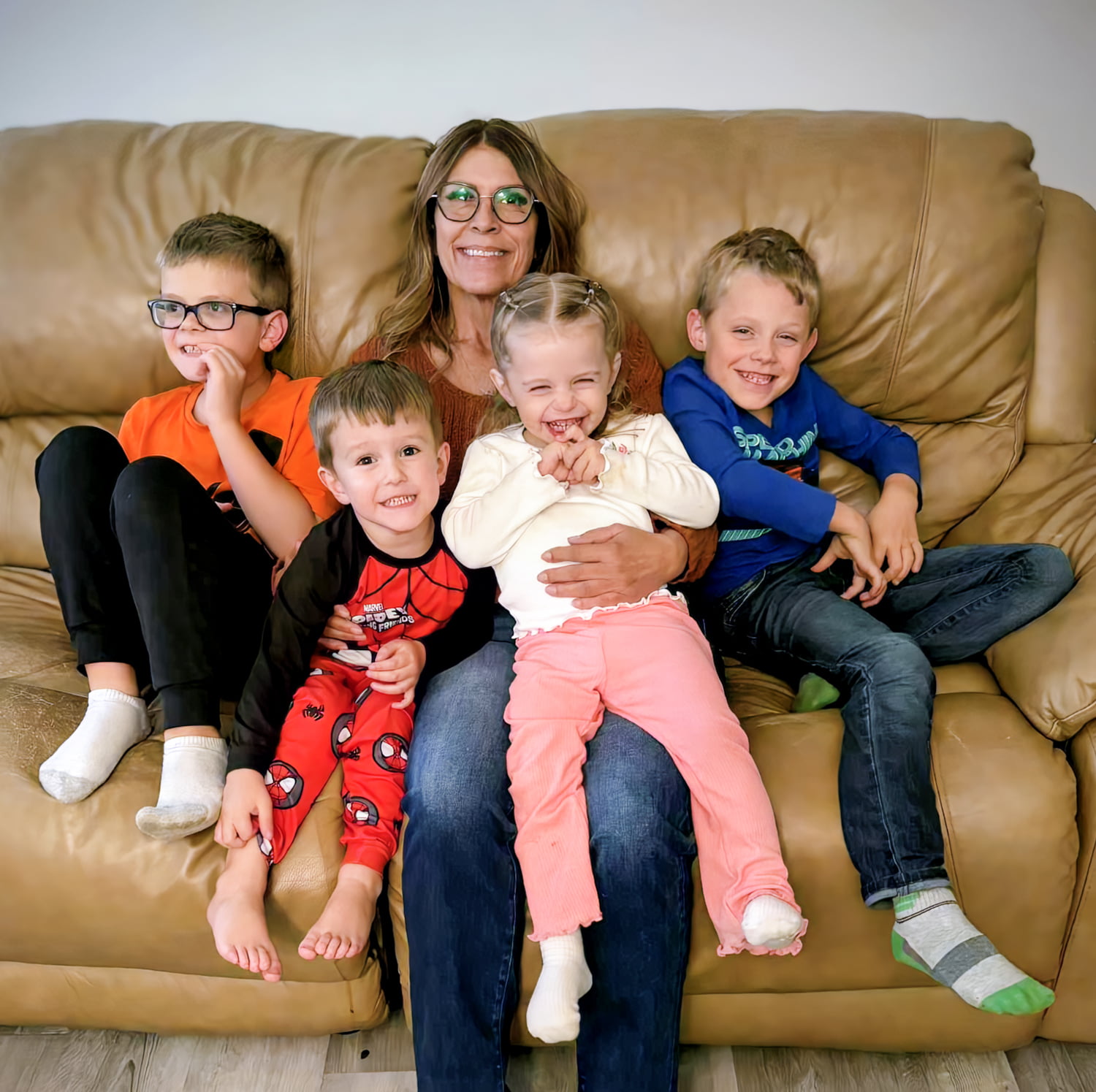
Hopfner’s condition has now been stabilized thanks to Olaru and Tennant’s joint care, and she is able to take care of her three-year-old granddaughter and seven-year-old grandson full time. She is always on alert for redness in her eyes, the first sign of a flare-up. When that happens, she asks her sister to take time off work and drive her to Edmonton for more intensive treatment.
From Tennant’s perspective, the combo clinic is beneficial for resident doctors who are learning each specialty, because they might otherwise only rarely see patients with uveitis.
But the best part is seeing the patients who benefit.
“All of a sudden, we have lots of patients with good control of their uveitis, which was not the case in the past. We can see them less often, and some actually get off their medication,” he says.
“Anything we can do to reduce barriers to care for patients living in northern and rural communities is super important.”