A world of opportunity
Adrianna MacPherson - 28 October 2025

Russell Schnell, ’66 BSc with Distinction, is a climate scientist who grew up with his eyes on the skies. He is also a member of the Intergovernmental Panel on Climate Change and a co-recipient of the Nobel Peace Prize.
”I just loved watching clouds form,” he says, a fascination that later fuelled his groundbreaking work in the atmospheric sciences.
Raised in rural Alberta, Schnell didn’t know anyone who had attended university in science. But he’s always been the type to seize any opportunity with both hands. When he was accepted at the University of Alberta, he hitchhiked to Edmonton with the necessities in tow to register for his classes, confident he’d learn the ropes once he got there.
Initially, he had his sights set on medical school, but a job at the Alberta Research Council during his first year changed the trajectory of his career. Schnell, a licensed pilot with the Royal Canadian Air Cadets, was hired to study hailstorms — “they wanted me to fly light planes after storms, to assess and photograph the damage.”
It was during his time there that he had his “eureka” moment. As Schnell explains, it’s actually very difficult for clouds to produce rain. The vast majority never do, because they lack one key ingredient: ice nuclei. These are tiny particles that provide a surface for the freezing water droplets within clouds to cling to, essentially kickstarting precipitation.
Many hypothesized about what these ice nuclei could be created from, but Schnell had a new perspective.
“I grew up in a rural area where everybody was a farmer, and hailstorms would devastate their crops. Later, scientists would ask me, where did the nuclei come from? And to me it was obvious — they came from vegetation.”
Schnell demonstrated that particular bacteria on decaying leaves could serve as very effective ice nuclei, and the finding was soon commercialized into a product called SNOWMAX, an innovative way to produce artificial snow on ski hills with substantially less energy.
That was just the beginning of a decades-long career in which Schnell has done everything from serving as deputy director of the National Oceanic and Atmospheric Administration’s Global Monitoring Laboratory in Colorado to leading the Mauna Loa Atmospheric Baseline Observatory in Hawaii. He has worked in 92 countries, advancing climate science by focusing on the data.
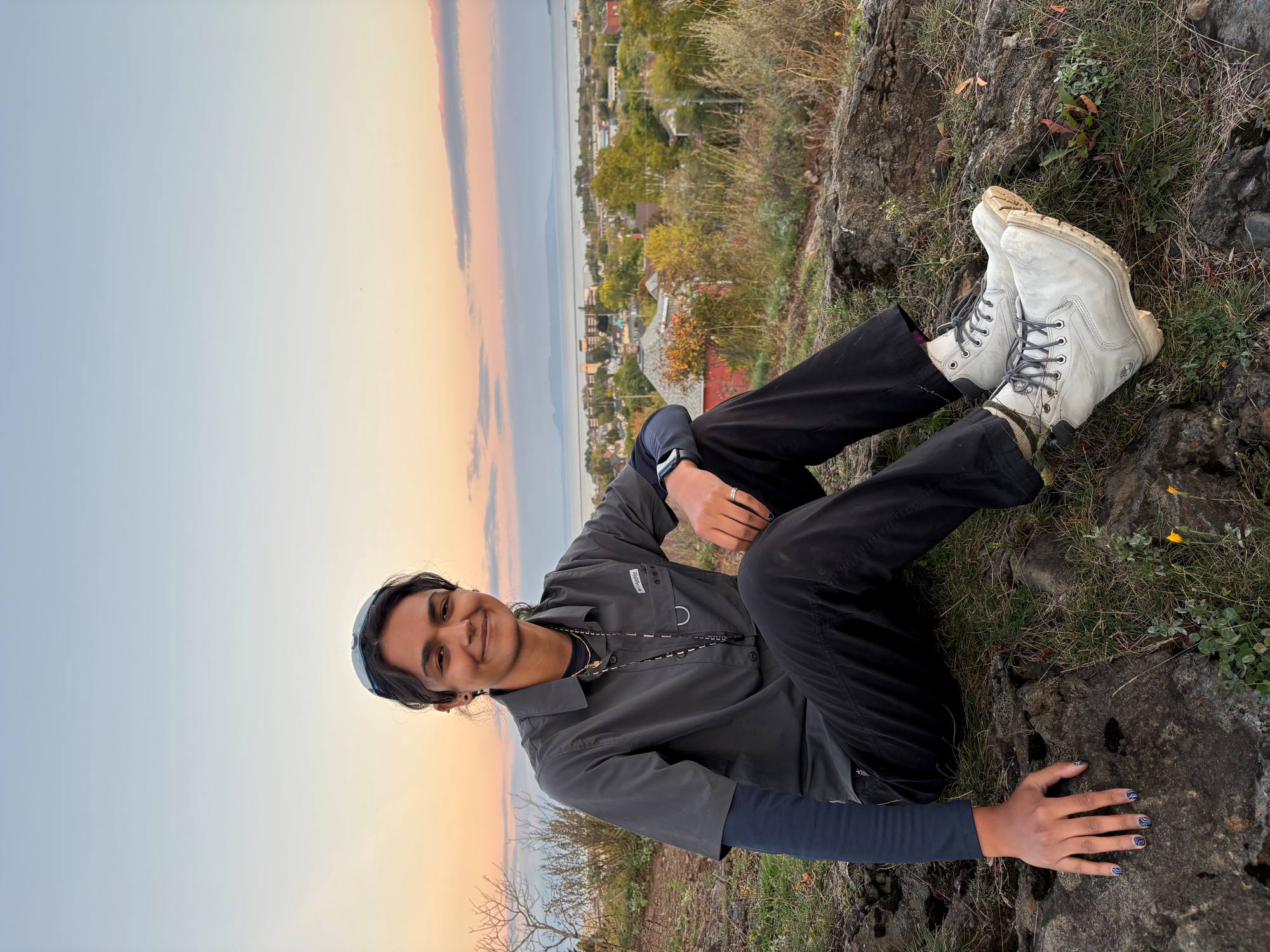
Schnell wanted to ensure other students had opportunities to broaden their horizons and make connections around the world just as he did, so he began funding the Dr. Russell Schnell Travel Award in Earth and Atmospheric Sciences.
His support reflects the goals of Shape the Future — the University of Alberta’s campaign to enrich student experiences through donor-funded opportunities that prepare them to lead, discover and make a global impact.
With the award’s support, students can travel to a conference to present their research and meet others in their field.
“Later on, people who were at that conference will remember their name, and it’ll open that door,” he says. “It’s simple things like that that can change your life so easily.”
U of A students will shape the future. You can help.
With your support, the next generation of change makers can access the resources, experiences and student spaces they need to tackle today’s challenges and shape a brighter tomorrow.
Find Out More
The latest award recipient, doctoral student Sanaa Mughal, aims to better understand the changing Earth by looking at the evolution of eukaryotes, complex organisms that originated almost 2 billion years ago that she says are “the ancestors of all living animals.” Life and environmental change are intimately linked and influence each other. For Mughal and many others, the fossil record is a direct way researchers can trace their co-evolution.
Supported by Schnell’s Travel Award, Mughal recently attended Life and Planet in London, a conference focused on topics directly related to her research. And, proving a new perspective can make all the difference, she says a conversation at the conference helped her unlock a research question she’d been grappling with for months. “Being able to travel and talk to people from other lab groups has definitely benefited me.”
“The present is the key to the past and the future,” Mughal says about her research. “Scientific laws are consistent through time, so if we can understand how and why Earth responded to changes in the past using what we know about processes in the present, we can also use them to predict what might happen globally in terms of environmental changes in the future.”
Want to learn how the Faculty of Science is supporting student experience through the Shape the Future campaign? Learn more about their flagship program, the Science Experiential Skills Advantage program — which breaks down barriers to research opportunities and gives students hands-on experience.
Students have a remarkable will to change the world. They will broaden our horizons, feed the world, improve health outcomes and take on inequity. Join the Shape the Future campaign as we raise $100 million to provide the next generation of U of A change makers with the access, opportunities and spaces that will help them shape an inspiring future for all.
- See how Taing and others will make a difference in the Shape the Future video .
- More Stories of Impact: