Edmonton Southwest Region series
26 October 2026
The Kule Folklore Centre is pleased to launch the “Edmonton Southwest Region” series — a set of posts reporting on the research and fieldwork that was carried out this summer by two archival assistants at the Bohdan Medwidsky Ukrainian Folklore Archives, Illia Pokotylo and Jonathan Grossman, under the supervision of the BMUFA archivist, Nataliia Yesypenko. Together, they worked on KuFC’s contribution to an archival project of the South West Ukrainian Canadian Historical Society (SWUCHS). The Past President of SWUCHS, Donald Sendziak, had reached out to the centre’s past director, Larisa Sembaliuk Cheladyn, with a proposal to do archival work with materials related to the Edmonton Southwest Region. In the initial stage, Illia and Jonathan compiled a finding guide for the Medwidsky Archives — mapping out archival collections connected to the Ukrainian community in the region southwest of Edmonton — focusing on the areas surrounding Nisku, Leduc, Thorsby, and Calmar, communities that are often overshadowed by the more well-known settlements northeast of Edmonton.
While this project required digging deep into the BMUFA’s archival records, it also took Illia and Jon out of the archives and directly into the communities, exploring the region itself. The results of this fieldwork captured “then and now” photographs that contrast historical archival images, taken by Harry (Hryhory) Yopyk in the Spring of 1978 (today in the BMUFA fonds), with contemporary views, demonstrating the continuity and change that these local communities have experienced over time.
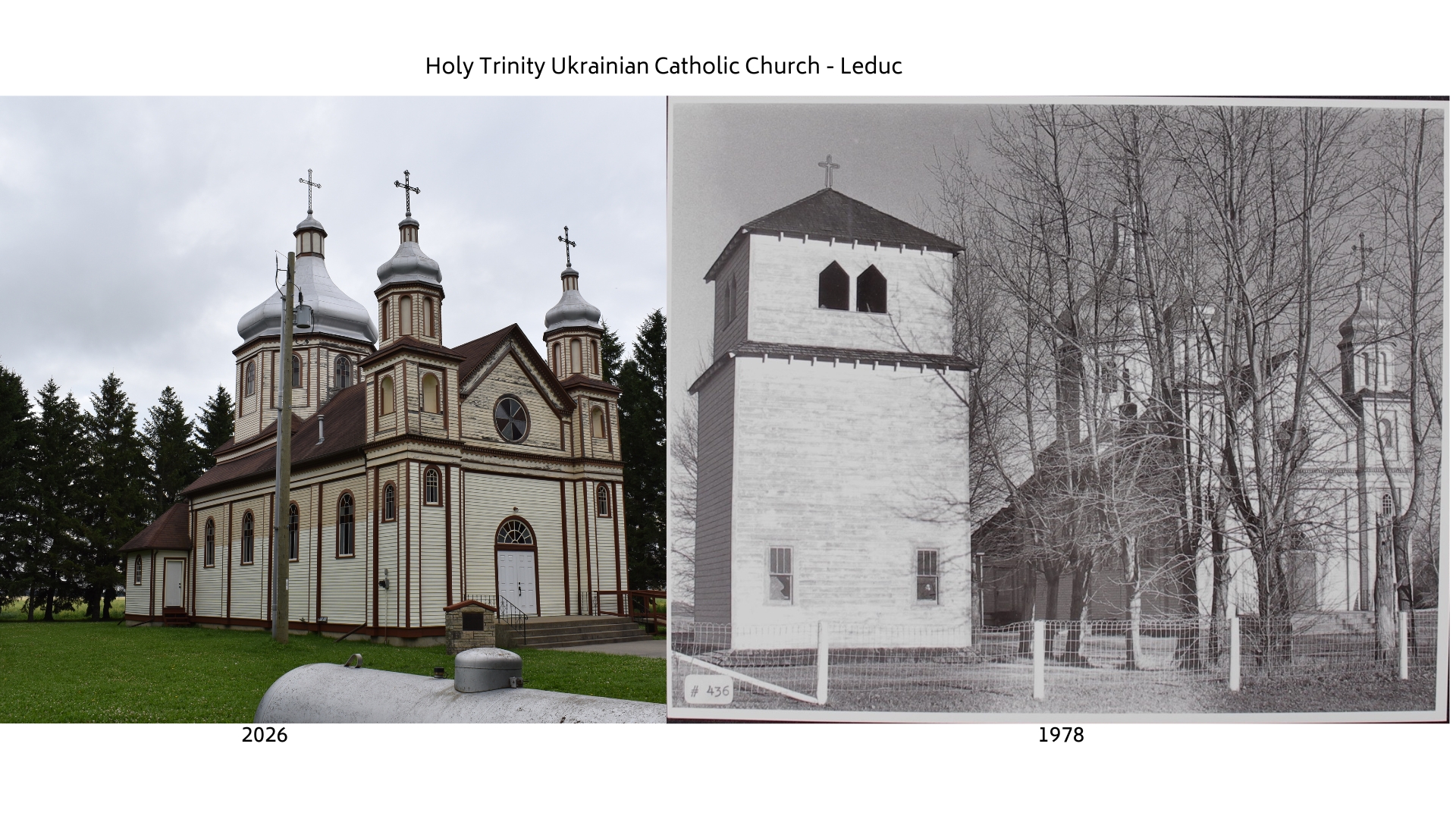
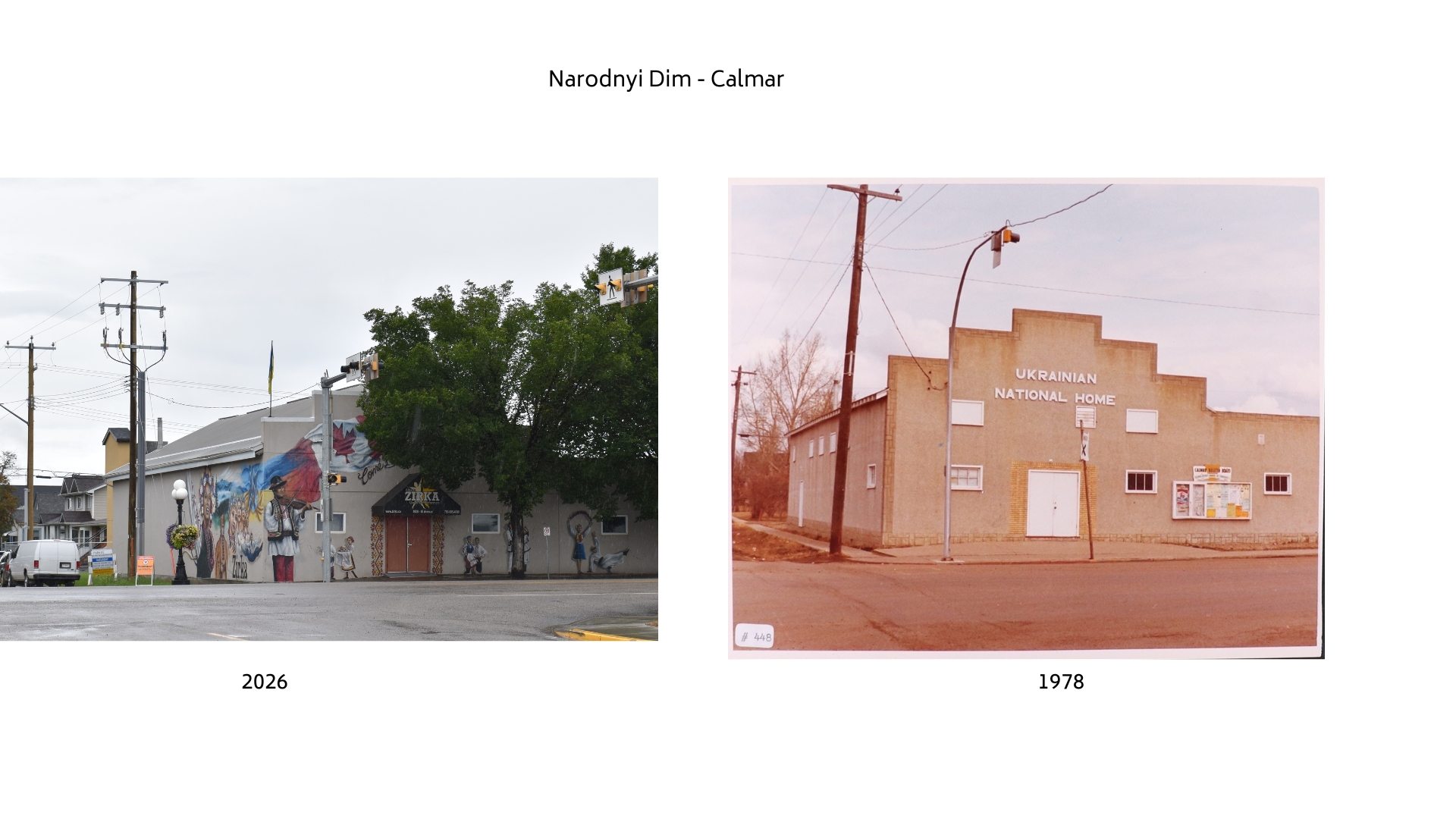
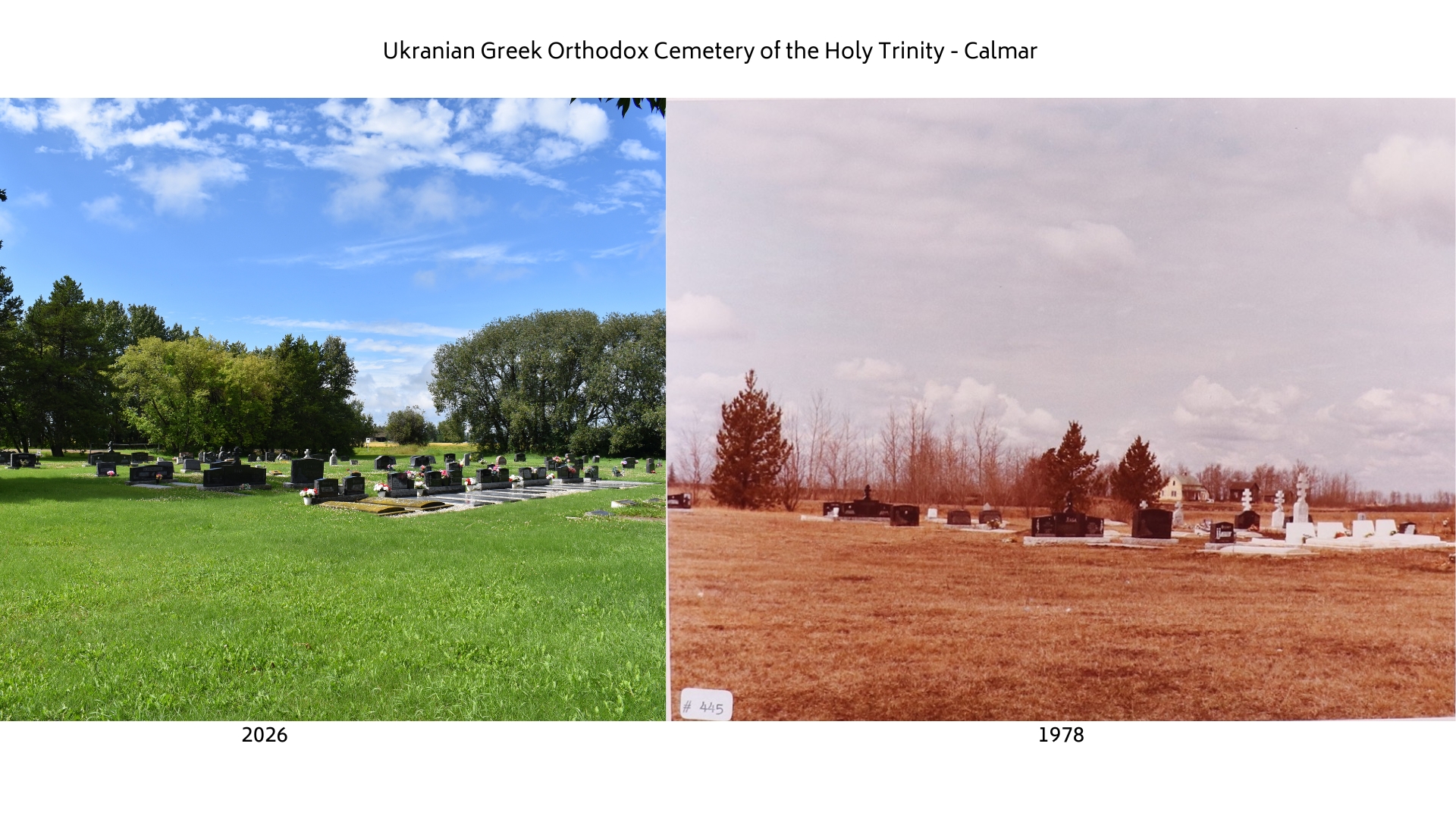
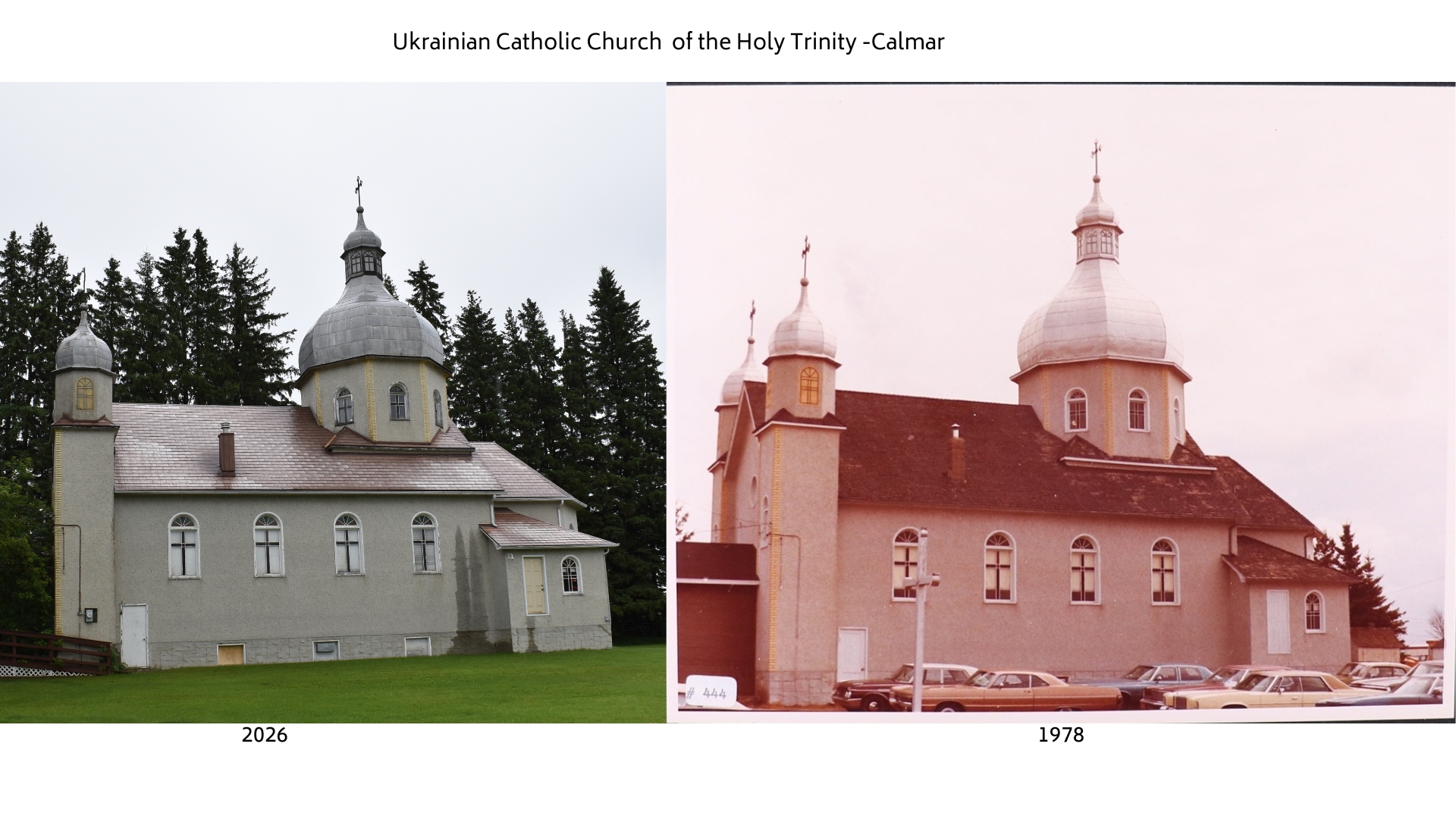
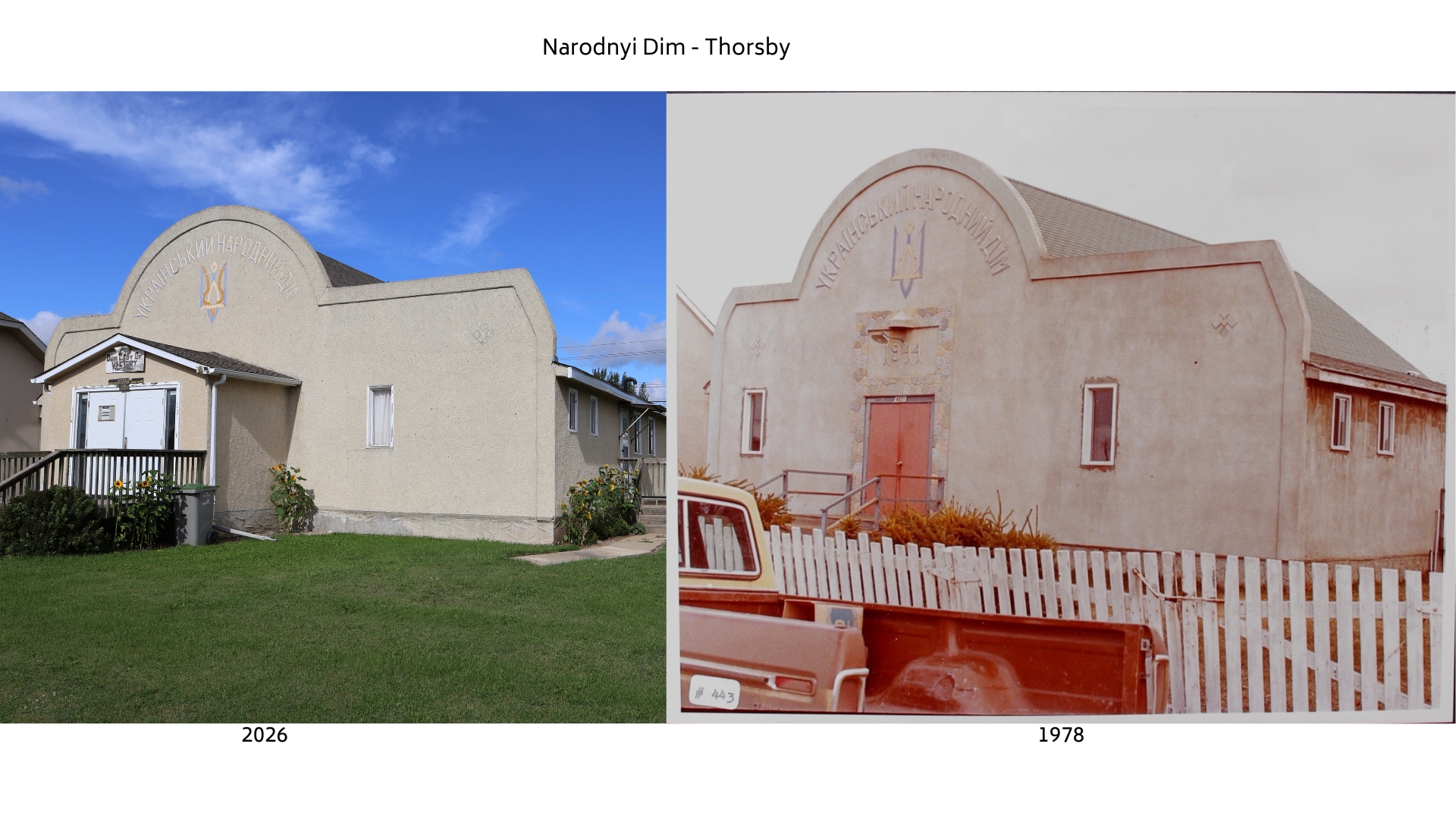
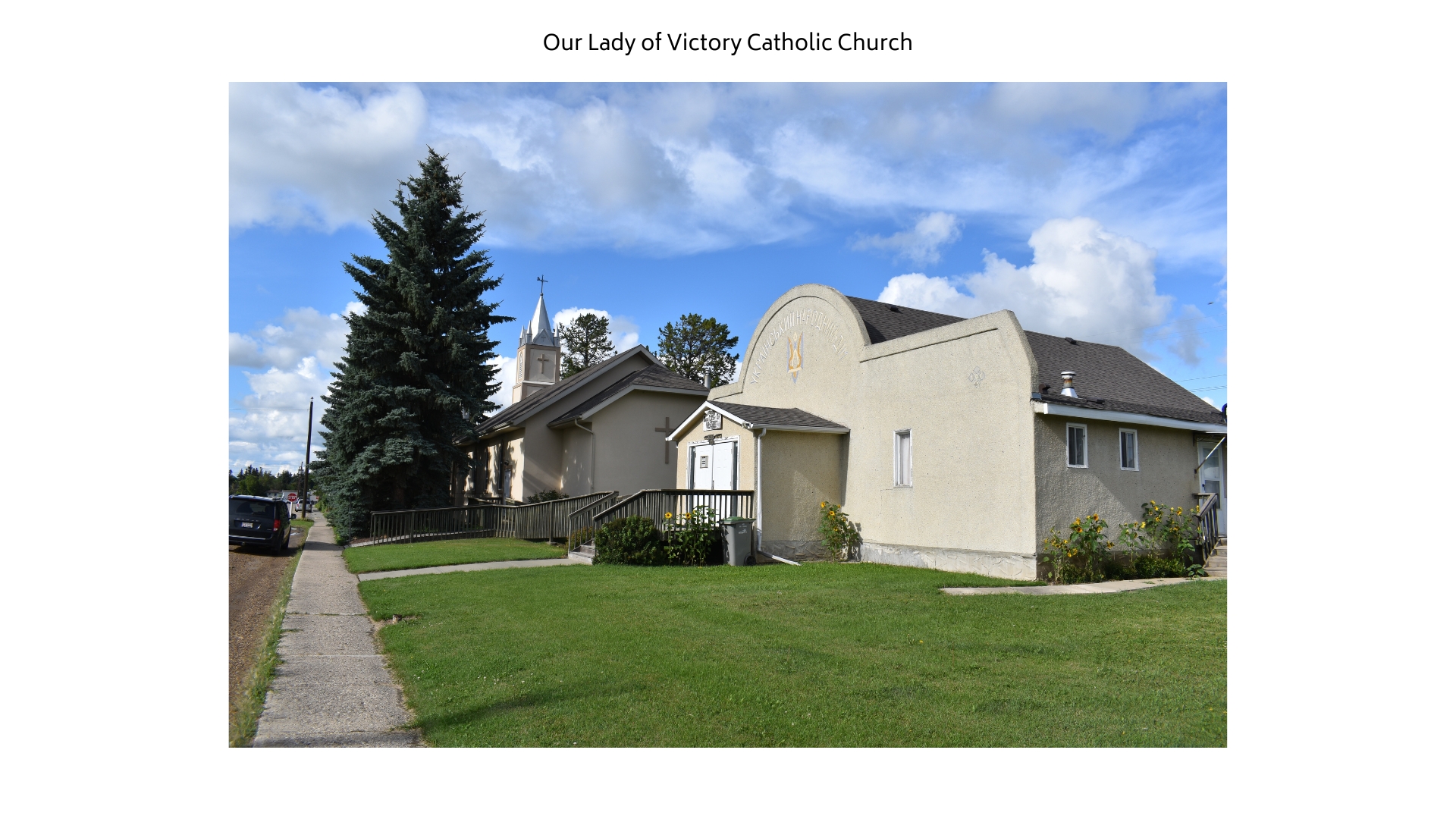
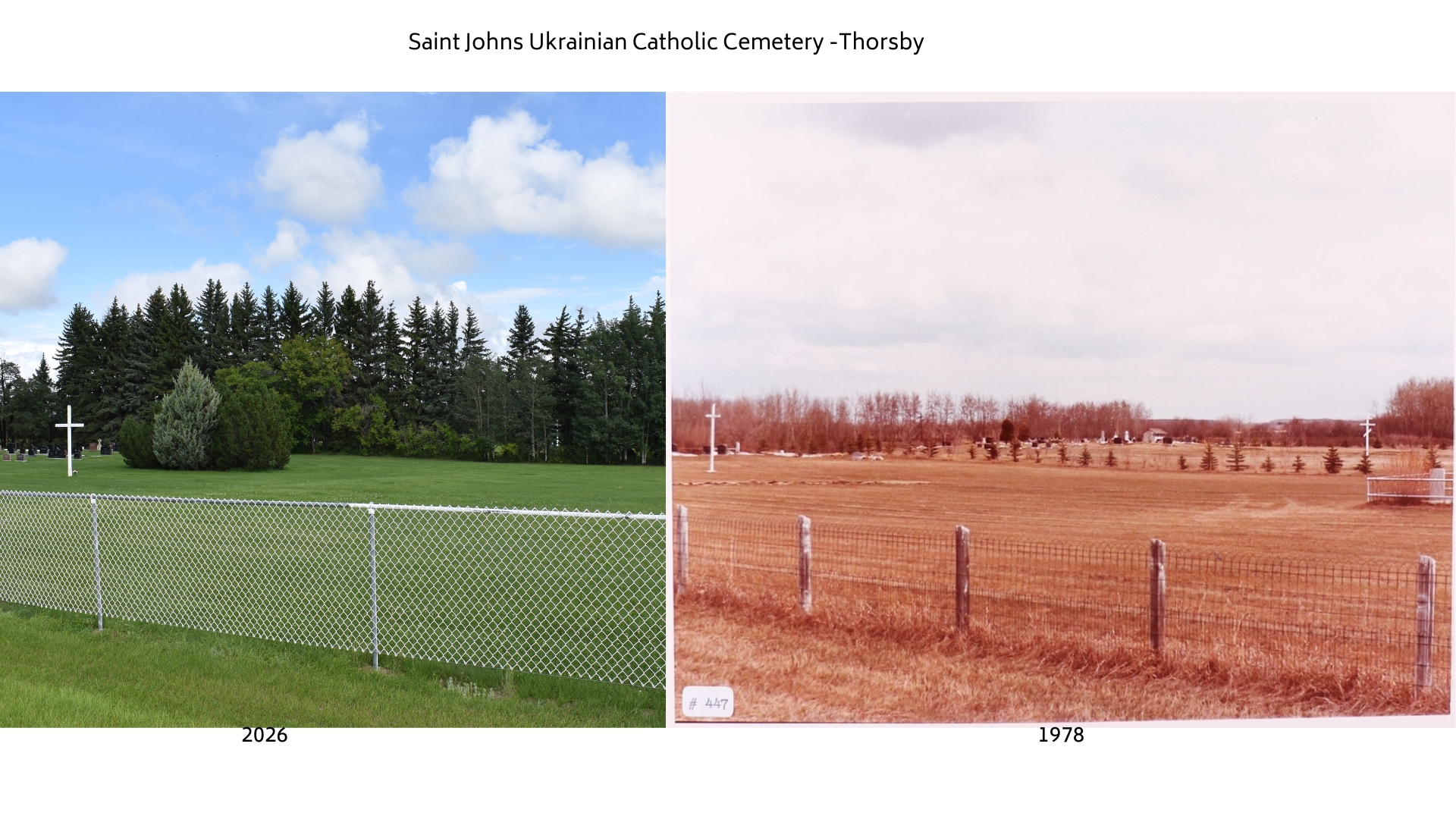
Illia and Jonathan: “We visited and photographed dozens of landmarks connected to the Ukrainian community in the region, including churches, graveyards, community halls, and local businesses. Many of these places demonstrate that Ukrainian heritage in this region does not belong solely to the past; rather, they highlight that a proud Ukrainian population is still present there today. Ukrainian churches and graveyards remain in use within these communities, and businesses owned by the descendants of Ukrainian pioneers continue to thrive.
“Alongside this cultural continuity, the landmarks of the region also reveal significant change, as many historic structures have shifted hands and taken on entirely new roles over the decades. The former Ukrainian National Hall (Narodnyi Dim) in Thorsby is a prime example of this evolution, a discovery that was revealed to us entirely by accident. Just as we were about to give up the search for any remaining physical traces of the town’s Ukrainian hall, Illia suggested we take one last detour down a quiet side street. This turn led us right to the Narodnyi Dim we had been searching for. Physically, the building appeared nearly identical to the archival photographs, still showcasing the Ukrainian tryzub on its original signage. What had changed about it was revealed to us by the building's caretaker, Dona Mae Bendfeld, who happened to notice us photographing it. She said that the building is now owned by the Our Lady of Victory Roman Catholic Church, which uses it for parishioners to gather for coffee and fellowship after Mass. The caretaker also mentioned that the space is also still used by parishioners of the local St. John the Baptist Ukrainian Catholic Church. This happy discovery during our research illustrated how the physical legacy of the Ukrainian community in the region continues to anchor social life, evolving to bring people together in new and unexpected ways.”
Follow to see resources in the BMUFA related to the Ukrainian Communities Southwest of Edmonton: