Dr. Paulina (Sîpihkokîsikowiskwêw, Blue Sky Woman) Jonhson - 2026 Cluster Recipient
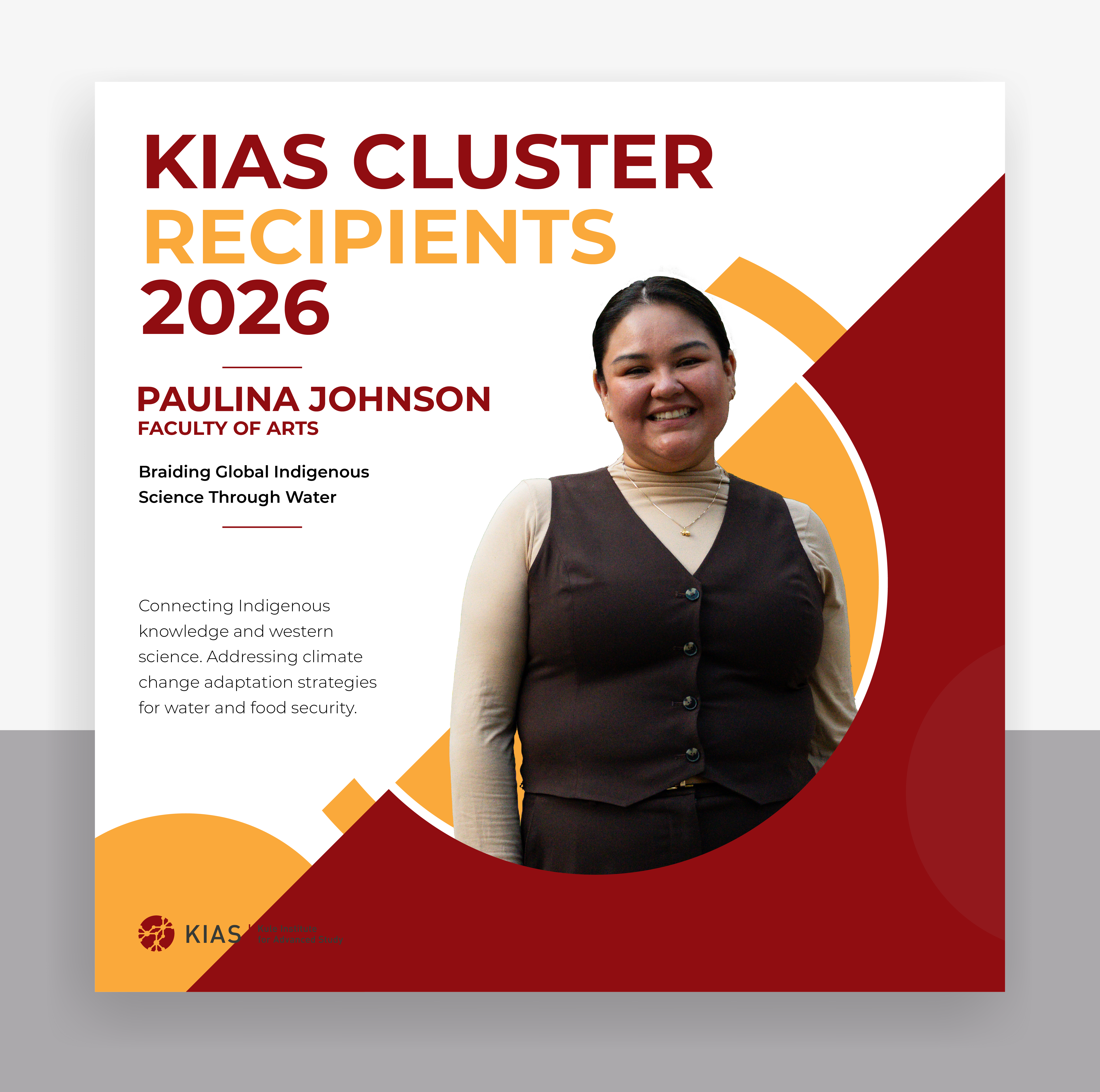
Braiding Global Indigenous Science Through Water
Project Lead: Dr. Sheena Wilson
Assistant Professor
Faculty of Arts
Department of Sociology
A global participatory workshop-based initiative within a larger research project called Relational Accountability of Mother Earth methods of walking
Project Description:
Climate change represents an unprecedented global challenge, with its adverse impacts felt in various regions and sectors across the globe. The Sixth IPCC Assessment Report further articulates that although vulnerable communities historically contributed the least to global climate change, they are inordinately the most affected. While several related climate change adaptation and mitigation strategies have been put into practice, systemic barriers pushed vulnerable sectors to maladapt, and subsequently, hinder their successful implementation. These inequities are the result of the complex land situated histories of settler colonialism, and are reinforced by capitalism, white supremacy, and lasting colonial presence in policy, institutions, and infrastructure. Therefore, the challenges faced across these regions require the concerted efforts of interdisciplinary teams and different Knowledge systems. For instance, Indigenous peoples around the globe often describe a temporal depth of their connections with ancestral lands “since time immemorial”. Their spiritually-oriented societies maintain cultural and spiritual relationships with their traditional territories, further bringing deep connections drawn from personal lived experiences, teachings, and sacred Knowledge handed down through generations. Given that Indigenous Peoples have observed the environment for millennia, their Knowledge about the land and water provide significant place-based insights on regional environmental issues that the Western worldview may not always capture.
There is a general consensus that climate change has already disrupted both human societies and natural ecosystems, with risks not only appearing concurrently (e.g., increased occurrence of heat/drought and heavy rainfall events) but are also complex and cascaded (e.g., wildfires affecting people, assets, and ecosystems). Climate change vulnerability further manifests across diverse geographic scales and is amplified by inequities and marginalization, often intertwined with factors related to gender, ethnicity, and poverty. This is particularly pronounced for numerous Indigenous Peoples and rural communities where heightened vulnerability is intricately interwoven with historical and ongoing patterns of inequity (e.g., colonialism).
Bringing together Western science practices and Indigenous Knowledges allows us to create a braiding of Knowledge in a way that enables us to develop research methods for greater and more effective science. Western science often lacks appropriate methods for Indigenous-based and centered research programs. By approaching water through a multidisciplinary approach, centered in Indigenous Knowledge, we can utilize the appropriate and ethical Indigenous research methods in a community conscious way. Our methodological approaches will be shared with our International science partners to enable Knowledge braiding and cross-fertilization on how each of us may conduct research in a good way. To honour the needs of Indigenous communities, especially on topics related to water, health, and sovereignty, it is imperative to work through an Indigenous lens and with Indigenous-centered methods.
University of Alberta Team Members:
- Dr. Paulina Johnson (PI)
- Dr. Diana Moreiras Reynaga
- Dr. Patricia Steinhauer
- Dr. Noella Steinhauer