Rural Surgical Training Expands as RSONA Marks First Year of Province Wide Support
23 December 2025
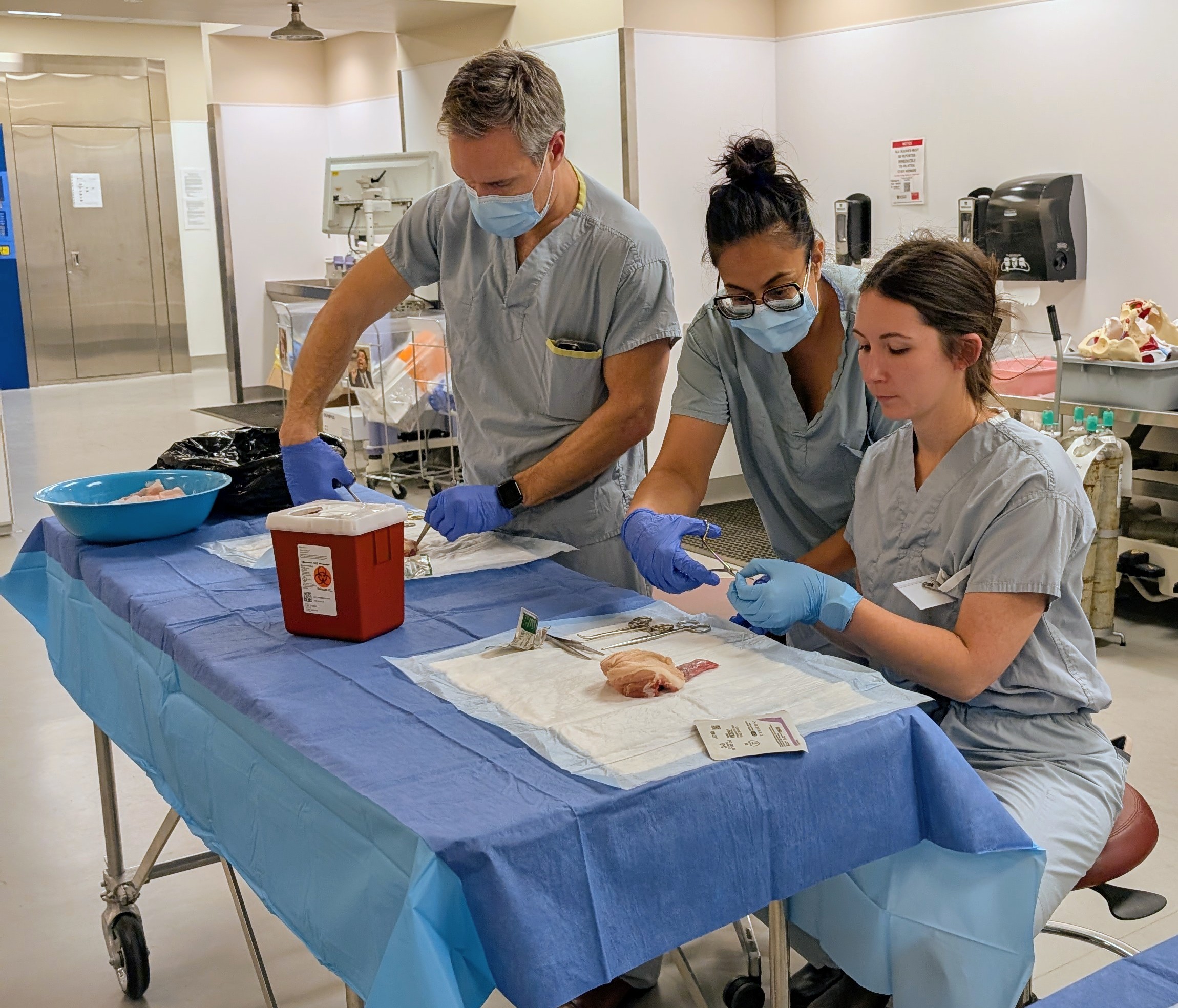
A province‑wide effort to strengthen surgical and obstetrical care in rural Alberta marked a major milestone this winter, as the Rural Surgical and Obstetrical Networks of Alberta (RSONA) completed its first full year of hands‑on training for rural physicians.
The year culminated with a comprehensive surgical and obstetrical clinical and surgical simulation lab held in December 2025, at Advanced Technical Skills Simulation Laboratory, bringing together rural family physicians with Enhanced /Obstetrical surgical skills providers, Rural OBGYN, General Practitioner Anesthesia and nursing teams from across the province. The full-day lab combined high-fidelity clinical scenarios and surgical simulation to reinforce critical procedural skills, promote team-based decision-making, and address the unique challenges of delivering care in rural and remote settings.
RSONA’s work is grounded in collaboration with two units within the University of Alberta’s Faculty of Medicine & Dentistry: the Office Of Global Surgery and the Office of Rural Regional Health (ORRH). These groups provide multidisciplinary expertise, training support, and academic leadership to help strengthen rural surgical capacity across the province. The program operates as part of RSONA, within Acute Care Alberta to support, sustain, and enhance surgical and obstetrical care in rural communities.
Rural providers who participated in the December training described the experience as transformative. Dr. Scott Macleod GPA (General Practitioners Anesthesia) from High River, shared: “The RSONA training program was a fantastic experience to help me develop my skills in regards to high acuity low occurrence (HALO) events. The program is supported by fantastic facilitators who have experience in rural settings and know what it is like dealing with an emergency in a setting with limited resources.” The simulations we went through were realistic and relevant to my practice. The debriefs following provided great learning from a medical perspective, as well as from an operational perspective and how our teams can work together to optimize patient care, he said. “The afternoon session in the surgical lab was the best hands-on experience I have had in any of my medical training. I am very grateful to have had this opportunity and bring these new skills back my community.”
As the program grows, organizers say it also holds meaningful potential for improving health outcomes in Indigenous communities, many of which rely on rural hospitals as their closest point of surgical and obstetrical care. Strengthening local surgical capacity reduces the need for long-distance travel, supports continuity of care, and helps rural teams build stronger, more culturally responsive relationships with the communities they serve.
The program is also supported by Sue Yorke, Senior Consultant for Provincial Learning and Development with Acute Care Alberta, one of the four new sector-based agencies being created as Alberta transitions away from the single-system AHS model. Yorke said “As Alberta moves toward a new, sector-based health system, initiatives like this surgical lab highlight the importance of coordinated learning and innovation. Supporting practical, clinically relevant training is essential to building a resilient and responsive surgical system.”
Dr. Mark Prins, Director of the ORRH and CoProgram Director for Enhanced Surgical Skills in the Department of Family Medicine, said the collaboration reflects the realities of rural medicine. Dr. Prins says, “The scope of practice of rural physicians performing surgical procedures, including cesarean sections, spans the boundaries between the Royal College specialties of general surgery, obstetrics, and gastroenterology.” These physicians work in local teams that include anesthesia and nursing colleagues. RSONA provides Continuing Medical Education and helps coordinate hospital privileging, continued quality improvement, and coaching for all members of rural surgical teams. RSONA also collaborates with the educational institutions to co-design learning objectives to ensure that trainees enter the workforce with skills that are needed by the patients and supported by the health authority.
The scope of practice of rural physicians performing surgical procedures, including Caesarean section sections, spans the boundaries between the Royal College specialties of general surgery, obstetrics, and gastroenterology. These physicians work in local teams that include anesthesia and nursing colleagues. RSONA was designed to coordinate support for all three clinical domains, and represent a rural perspective at provincial-level strategic planning. RSONA delivers a provincial mandate to coordinate CME, hospital privileging, continued quality improvement, and coaching for all members of rural surgical teams. The program benefits from the expertise of University of Alberta surgical skills trainer Carmelie Deschamps, a Rural General Surgery Fellow with the Office of Global Surgery. RSONA also collaborates with the educational institutions to co-design learning objectives to ensure that trainees enter the workforce with skills that are needed by the patients and supported by the health authority.
The most recent training session, held in December at the University of Calgary (the inaugural session was hosted by the University of Alberta earlier in the year). Participants included physicians from across Alberta, among them Dr. Hafeez Fatima Bhatti, an obstetrician-gynecologist practising in Camrose. The RSONA program provides practical, hands-on training that directly supports safe and confident surgical practice in rural settings, Bhatti said. “It offers a focused, skills-based learning environment where rural OB/GYN physicians can refine and maintain essential surgical competencies while learning alongside colleagues from across Alberta. “Programs like this are invaluable in strengthening local surgical capacity and sustaining high-quality patient care in rural and remote communities,” she said.
As RSONA continues its mandate, organizers say the demand for rural surgical and obstetrical training continues to grow—reflecting both the challenges and the commitment of providers working to keep care close to home for Alberta’s rural residents.