Strengthening Global Health Systems Through Surgical Innovation
28 August 2026
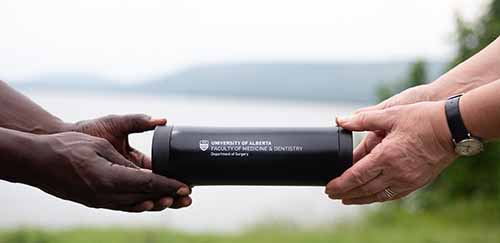
The Office of Global Surgery collaborates with global partners
Research to Impact: Advancing Surgical Systems Through Evidence, Innovation and Implementation
Across the world, inequities in access to safe, timely and appropriate surgical care are shaped by far more than the availability of an operating room. Workforce shortages, geography, health information systems, infrastructure, training opportunities, referral pathways and the ability of health systems to adopt and sustain innovation all influence whether patients receive the care they need.
Research within the Office of Global Surgery (OGS) is examining these challenges from multiple perspectives. OGS's published and ongoing research spans very different geographic and clinical contexts. It aims to demonstrate the value of approaching global surgery as a health systems challenge. Improving access to surgical care requires attention not only to clinical expertise, but also to workforce, information systems, technology, education, policy, partnerships and the structures that connect them.
From pediatric surgical capacity in Kenya and digital health systems in Uganda and Nairobi, to rural surgical workforce planning and provider support here in Alberta. While the settings and research questions vary, a common theme connects the work: how can evidence be translated into practical, sustainable improvements in surgical and health systems?
Recent OGS research examining the potential development of a pediatric liver transplantation program in Kenya illustrates this challenge. Liver disease affects a substantial pediatric population in the country, yet access to pediatric liver transplantation in sub-Saharan Africa remains extremely limited.
The research examines both need and capacity, recognizing that establishing a highly specialized surgical service requires more than demonstrating clinical demand. Understanding existing health-system capacity is equally important when considering whether and how a sustainable program could be developed.
That same needs-based thinking is informing research closer to home.
An ongoing OGS study is using geomodelling to examine Alberta's rural surgical workforce, focusing on family physicians with Enhanced Surgical Skills (ESS) and Obstetrical Surgical Skills (OSS). Rather than simply counting providers, the research aims to bring together geography, procedure availability, workforce entry and attrition, population growth and demographic change. The goal is to develop a more detailed understanding of where surgical capacity exists, where gaps may emerge, and what workforce distribution could support more equitable access to care.
Together, these projects ask an important health-system question: What capacity do we need, where do we need it, and how can evidence help us plan for it?
Designing Technology Around the Health System
Technology offers enormous potential to strengthen healthcare, particularly where geography, infrastructure or limited resources create barriers to care. OGS research also demonstrates that successful innovation depends on understanding the environment in which technology will be used. Research conducted in Kibera, Nairobi, examining Electronic Medical Record implementation in two primary care clinics found that some of the most important barriers to sustainability were not technological at all. Healthcare workers identified challenges involving identity management, staff training, incentives and long-term sustainability alongside more familiar infrastructure issues such as electricity, internet connectivity and interoperability.
A second publication examining the development and evaluation of a mobile trauma registry for low- and middle-income countries explored a different approach to this challenge. Research from Uganda examined how mobile-phone-based technology could support trauma data collection while responding to infrastructure and sustainability barriers that have contributed to the failure of traditional trauma registries.
One current project is examining the potential use of large language models such as ChatGPT, Claude and Gemini to support caregiver education for complex pediatric congenital conditions, including tracheoesophageal fistula/esophageal atresia and abdominal wall defects.
The potential is significant: AI may provide a relatively rapid and affordable way to develop more accessible educational information. However, the research also recognizes the risks which include inaccuracies, inconsistencies, hallucinations and patient-safety concerns. The question, therefore, is not simply whether AI can generate patient information. It is whether these tools can be used accurately, safely and appropriately within the context of care.
Strengthening the People Who Deliver Surgical Care
Technology and infrastructure alone cannot sustain surgical systems. The people delivering care must also be supported. This is particularly important in rural and remote communities, where surgical and obstetrical providers may practise far from tertiary colleagues and have fewer opportunities for coaching, mentorship, continuing education and professional support.
Through OGS and the Rural Surgical and Obstetrical Networks of Alberta (RSONA), researchers are examining how formal coaching relationships could help strengthen those connections. One ongoing mixed-methods study is evaluating Virti, an AI-enabled simulation tool designed to assess and onboard tertiary specialists who will serve as coaches for rural ESS and OSS physicians. Potential coaches work through simulated rural coaching situations and are assessed against context-appropriate coaching competencies. The study will examine the validity, acceptability and usefulness of the approach.
Looking Ahead
Several of the projects highlighted here remain in progress, and findings from those studies have not yet been published. They represent questions OGS researchers and partners are actively investigating rather than established conclusions.
Together with recently published research, however, they demonstrate a growing portfolio focused on generating evidence that can strengthen surgical systems and improve equitable access to care at home in Alberta and around the world.