 YouAlberta

Note: This story explores themes of death in the context of a museum exhibit that contains sensitive and descriptive content, which can be triggering. If you’re hesitant about visiting this exhibit, it’s important to note that there’s very clear messaging about the content and warnings are included for more sensitive images and displays. There are also a number of spaces to reflect, sit and take a break if you need one.
Engaging with questions about death and dying isn’t usually at the top of our to-do lists. But as someone who has recently experienced loss, death is on my mind a lot.
When I first heard about the Royal Alberta Museum (RAM)’s new feature exhibit on death, I was pretty sure it wasn’t for me and that I’d need to steer clear. In fact, the last time I visited the RAM, I walked right past this exhibit.
Months later, after hearing from friends about how excellent it was, I decided to give it a try. I’ll be sharing some of the highlights and a few reflections as someone who’s currently grieving the loss of my grandmother and a close friend.
The exhibit’s narrative follows guiding questions that invite the audience to reflect on the three types of death: physical, social and spiritual. At the start, it’s made clear that the aim of the exhibit is to explore these big questions and the answers offered by individuals, communities and ecosystems. How do we deal with death, and how do we commemorate life?
Starting with the natural world, we’re reminded that death is everywhere — and that with it also comes new life. It was fascinating to see a model of a whale fall, where organisms thrive in the corpse of a whale, creating a whole new ecosystem — a reminder that death sustains life.
The exhibit also introduces types of burials, including the culture around funerals, coffins and how we’ve dealt with bodies throughout history. For instance, you can learn about the four different types of cremation as demonstrated with the remains of a chicken or see examples of green burials.
Viewing a traditional kusōzu piece, a Japanese art form that depicts the nine stages of decay of a human body, really stood out to me. This art is a meditation tool for Buddhist monks: a reflective process for considering the impermanence of life and for working on detachment from the physical form. Not only were these works beautiful, but they were also an important reminder that across cultures, death and dying are responded to and grappled with very differently.
The exhibit takes the viewer on a journey, travelling around the world and across centuries to discover more about cultural and religious traditions that surround death — from Egyptian mummification to Incan Capacocha ceremonies to Mexican ofrendas and Jewish burial societies.
With multimedia and interactive displays that engage all of your senses — literally (more on that in a minute) — the exhibit brings a range of design elements, including gentle music and the sounds of funeral or procession-related instruments. It even makes use of shadows and lighting to engage the audience.
Perhaps what was most shocking was the display titled “What Do Dead Bodies Smell Like?” And yes, you can smell two of the odours of decaying bodies, putrescine and cadaverine. This is totally optional, of course, but when will you have this opportunity again? While it made me a bit uncomfortable, it’s also a part of the exhibit that will stick with me for a very long time.
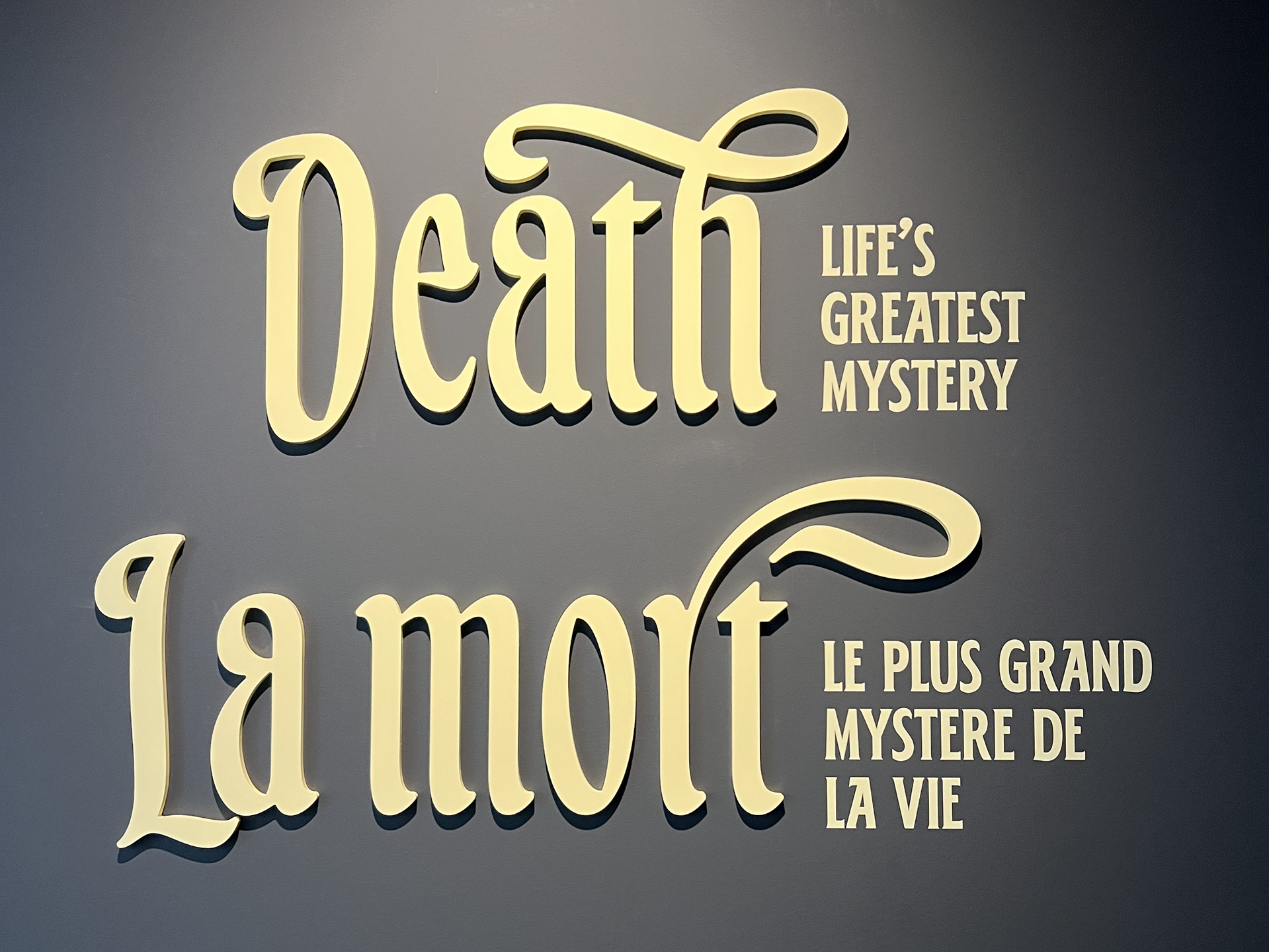
Without revealing too much, I highly recommend visiting Death: Life's Greatest Mystery. It’s a visually beautiful, interactive, engaging and meaningful journey that allows you to think about death, dying and your personal relationship with loss in new ways.
For me, it’s a reminder that we’ll all die. It’s an inescapable part of our humanity and something we all have in common. More importantly, it shows us how diverse cultural and social responses to death are around the world. I was surprised to learn that funerals and similar ceremonies have declined significantly in Canada and the United States. I’m curious about how this may have impacted our culture around death, the way we speak about it and the way we relate to those who are grieving.
Based on my experience, I do think we’re in a time of reduced grief or death "literacy" (as the folks at the Pilgrims Hospice call it). Perhaps travelling around the world and across time at Death: Life's Greatest Mystery is one way we can begin to reimagine what it looks like to take care of each other in grief, in remembrance and in the ongoing work of moving through loss. It gives us permission to talk about it openly, to grieve as we need and to be curious about the mysteries within death and dying.
Walking out of the exhibit, I felt a sense of comfort because grief is so profoundly shared. And, if death is something we all carry, then learning how to engage with it is one of the most vulnerable, raw and human things we can do.
Visit Death: Life's Greatest Mystery at the RAM from Feb. 26 to Sept. 7, 2026.