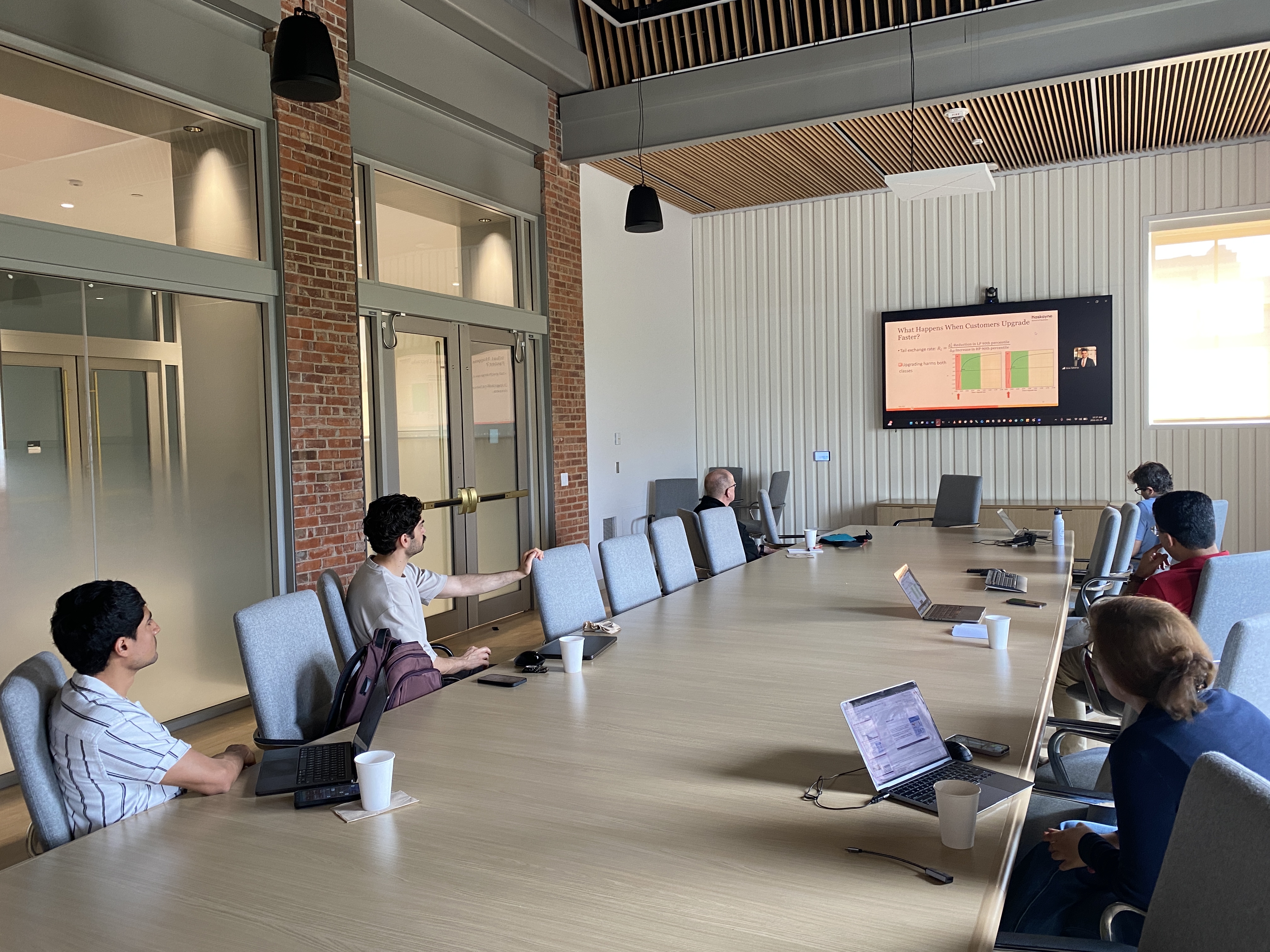
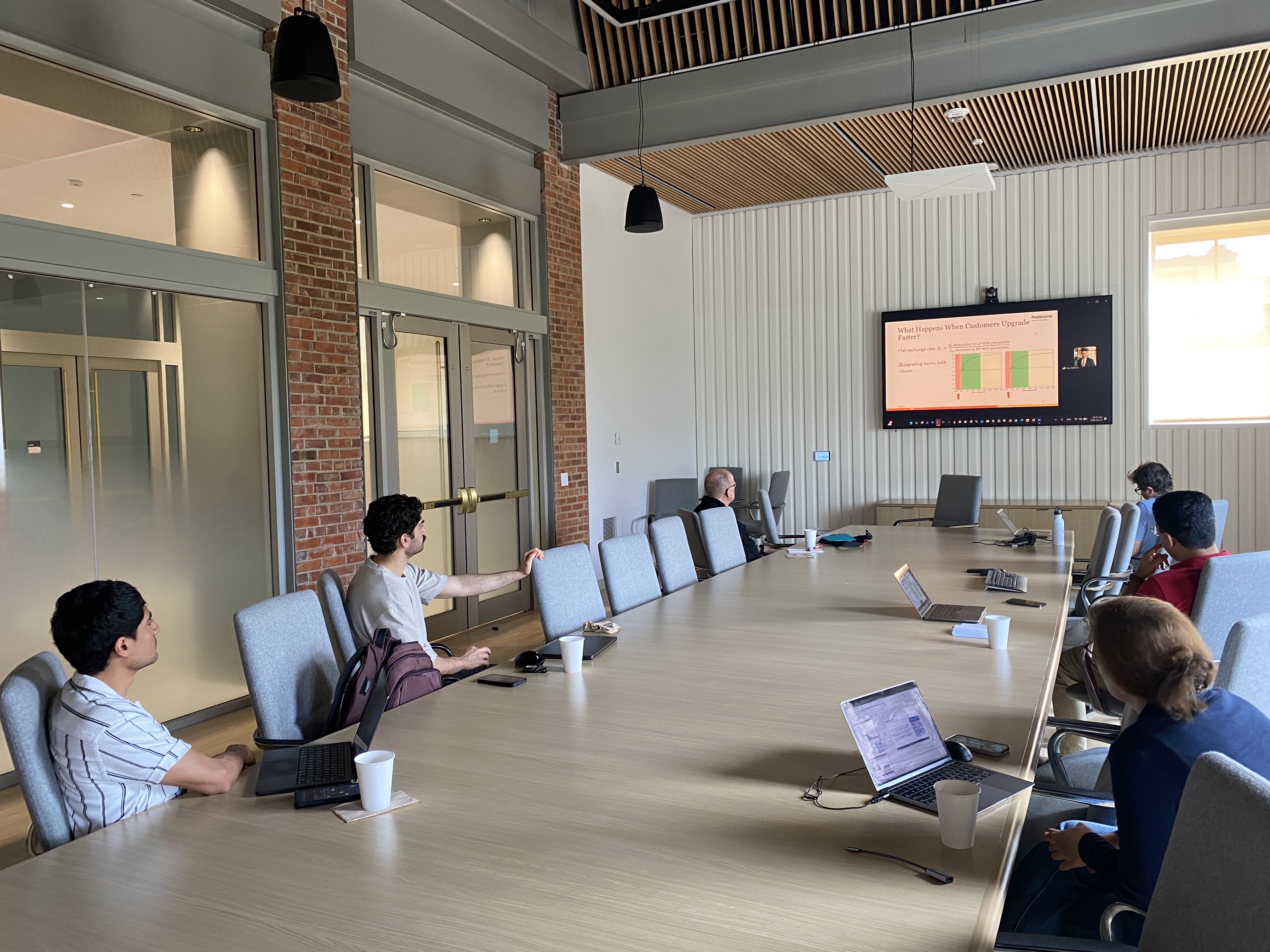
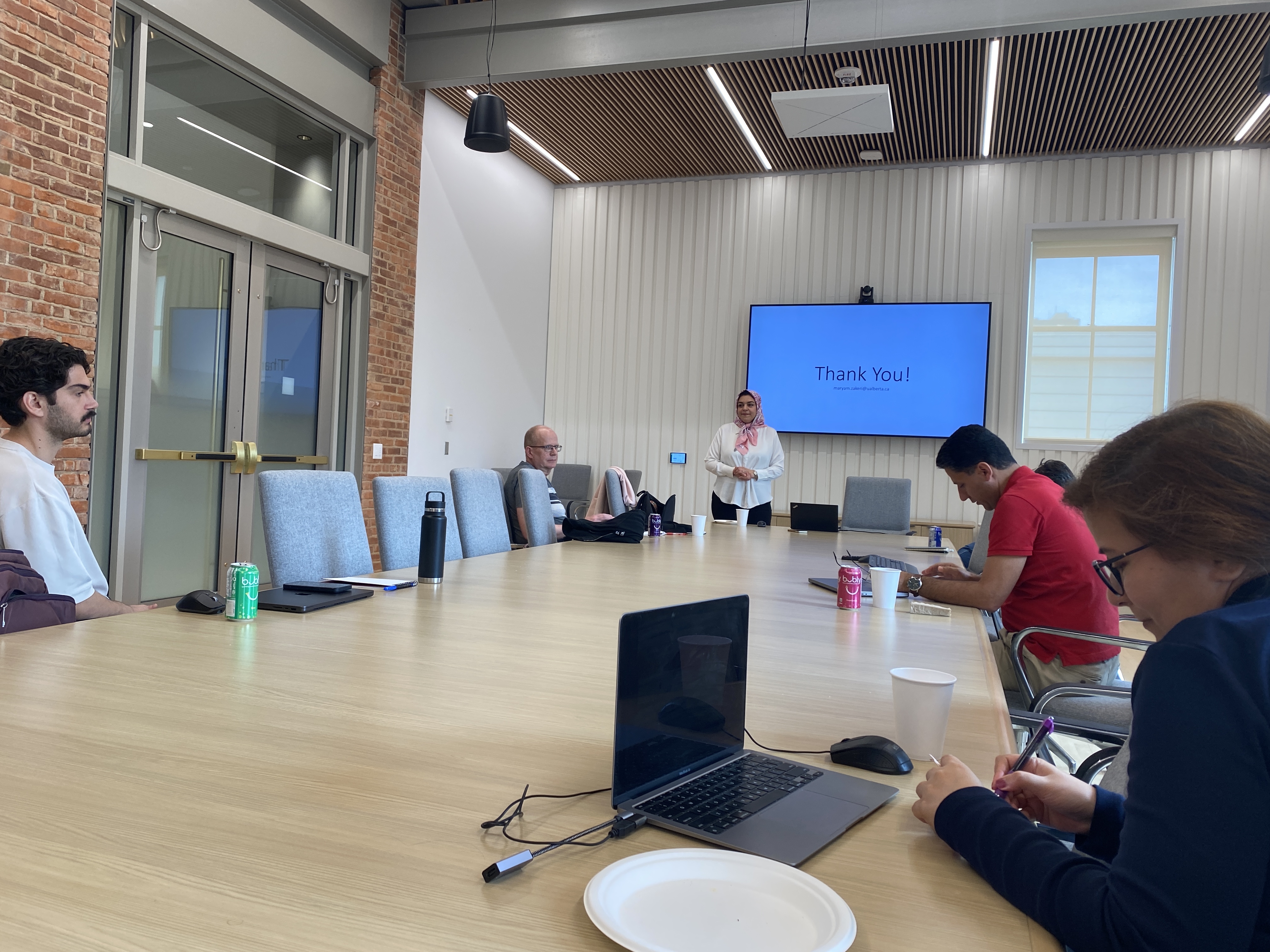
The AI Centre for Decision Analytics (AI4DA), in collaboration with the Canadian Operational Research Society (CORS) Alberta Student Chapter, recently hosted the CORS Alberta Student Chapter Workshop, a hybrid research showcase bringing together PhD students, postdoctoral fellows, and researchers from the University of Alberta and the University of Calgary ahead of the annual CORS conference.
The workshop provided participants with an opportunity to present their ongoing research, receive feedback from peers and faculty members, and connect with researchers across Alberta. Each presentation included dedicated time for discussion and Q&A, allowing presenters to refine their work while strengthening academic and professional connections prior to the conference.
Presenter Highlights
Sina Taheria
When Waiting Changes Your Priority: Queueing Systems with Stochastic Priority Upgrading
“We study a single-server priority queueing system in which low-priority customers may upgrade.”
Maryam Zakeri
Adaptive behaviour of paramedics: the heterogeneous impact of paramedic crew workload on scene decisions
“Emergency medical services (EMS) play a critical role in patient care, yet the variability in demand by severity, timing, and location, makes capacity planning challenging. Paramedics must stabilize, treat, refer or transport patients while managing both physical and cognitive fatigue, which may influence their decision-making. This research explores how fatigue affects EMS crew decisions on scene. We develop a workload measure that represents fatigue and employ statistical methods to establish a causal link between workload and scene outcomes. Specifically, we design a complexity–discretion framework grounded in the operational characteristics of three call types—cardiac arrest, trauma, and opioid overdose—and analyze scene time and transport decisions across these call types through this operational lens. Our findings provide insights for optimizing EMS resource management and improving patient care efficiency.”
Erfan Rafieikia
Learning-Augmented Benders Cut Generation for Large-Scale Optimization
“In this talk, we present a learning-augmented approach to address the computational challenges of solving large-scale mixed-integer optimization problems using the Benders decomposition (BD) method. The classical multi-cut BD method requires repeatedly solving the full set of subproblems to generate exact Benders cuts, which can become computationally expensive in problems with many subproblems. Our approach integrates machine learning directly into the decomposition process to generate valid approximate Benders cuts, which helps avoid solving many subproblems exactly. We establish theoretical bounds on the resulting optimality gap and demonstrate the effectiveness of the proposed framework through computational experiments on large-scale stochastic optimization problems.”
Parang zadtootaghaj
Improving Access to Maternal Care Through Remote Monitoring
“High-risk pregnancies often warrant more frequent evaluation of symptoms and complications (e.g., decreased fetal movement, elevated blood pressure), but regular in-person assessments can place significant strain on patients and healthcare systems. Remote maternal-fetal monitoring offers a promising alternative by enabling clinicians to track maternal and fetal health indicators from home. In this talk, we investigate how remote monitoring can be integrated into prenatal care pathways to improve access and continuity of care for high-risk pregnancies. We explore operational and policy considerations related to reimbursement structures, patient assignment strategies, and the coordination between virtual and in-person care. Our findings highlight opportunities to improve healthcare delivery while reducing unnecessary clinic visits and supporting system capacity.”
Roham Bahri
Surgeon-in-the-Loop Decision-Focused Learning for Operating Room Planning
“Operating rooms are costly and capacity-constrained resources, yet horizon-level surgical plans are often built from surgeon-provided duration estimates that can be systematically biased. Existing AI-driven scheduling methods optimize directly on predicted durations but rarely account for how surgeons react to AI recommendations in practice. In this work, we propose a surgeon-in-the-loop decision-focused learning framework that jointly models surgical duration prediction, surgeon behavioural responses, and downstream operating room scheduling decisions. By integrating human behavioural feedback into the learning and optimization loop, our approach aims to improve schedule reliability, reduce overtime and idle time, and support more effective collaboration between clinicians and AI systems in surgical planning.”
The workshop highlighted the breadth of interdisciplinary research taking place across Alberta in operations research, analytics, and artificial intelligence. Through presentations, discussion, and networking, participants were able to exchange ideas, strengthen their research, and prepare for continued engagement at the upcoming CORS conference.
AI4DA Researchers Present at CORS 2026
Following the workshop, researchers from the AI4DA centre also presented at the Canadian Operational Research Society (CORS) 2026 Conference in Kingston, Ontario. The presenters included Parang Zadtootaghaj, Erfan Rafieikia, and Roham Bahri.
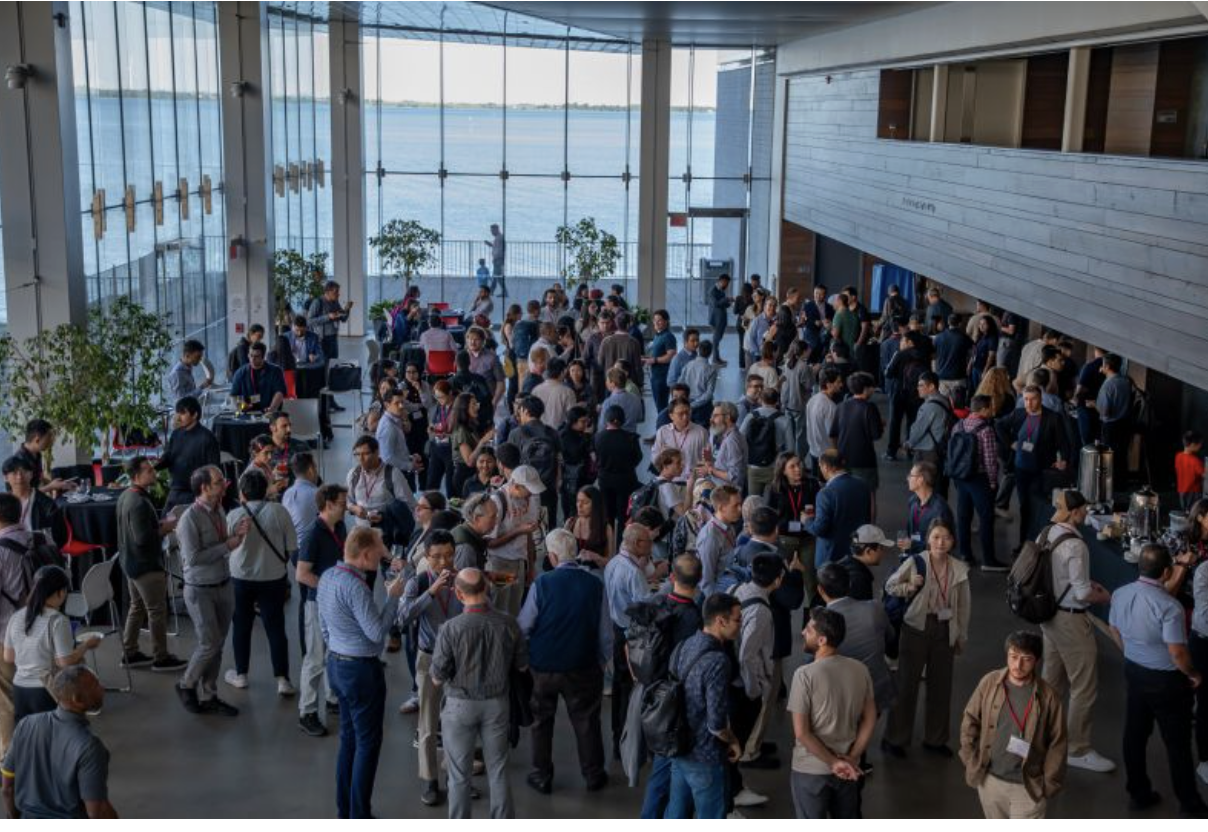
The conference brought together more than 350 speakers from over 50 institutions across 19 technical tracks and special sessions, highlighting the latest research and applications in operations research, analytics, artificial intelligence, optimization, healthcare, transportation, sustainability, and related fields.
Throughout the conference, AI4DA researchers attended technical sessions, engaged with researchers from across Canada, and explored emerging developments in decision analytics and operations research. The event also provided valuable opportunities to exchange ideas, build new connections, and gain insights into current research and industry trends.
Congratulations to the CORS organizing committee, volunteers, speakers, and attendees for delivering another successful conference. AI4DA looks forward to seeing how the ideas and collaborations sparked at CORS 2026 continue to advance research and innovation within the operations research community.