The secret Lives (& Deaths) of Cajal-Retzius Cells
Dr. Adrianne Watson - 28 January 2026
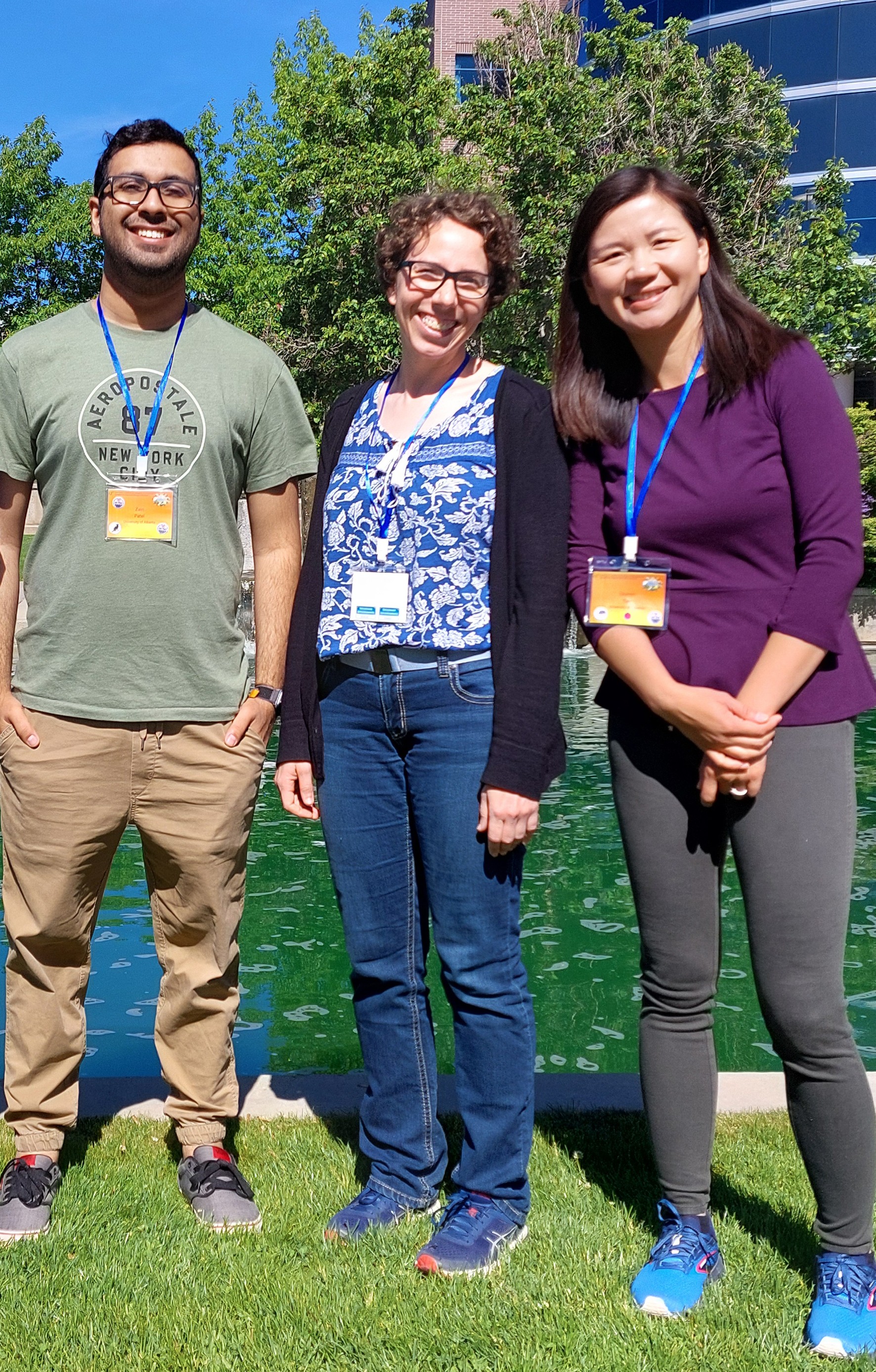
Main authors (l-r): Zain Patel, Rebekah van Bruggen, Dr. Qiumin Tan
Did you know the biggest period of change for our brain is during development? By the time we are born, our brains are already estimated to contain 86 billion neurons. Considering that neuronal production begins at 5 weeks post-conception, these cells are produced within just 35 weeks-this is an average rate of 250 000 neurons per minute!
While this number is impressive, it does not account for all the cells that are eliminated during development. In fact, a large proportion of neurons, up to 50% depending on the brain region, undergo programmed cell death during development. This is a natural part of growing, and essential for healthy brain growth.
What happens if neurons don’t die according to plan? The persistence of unnecessary, unhelpful neurons can disrupt the formation of healthy brain circuitry. Genetic variants that disrupt normal, programmed cell death are associated with neurodevelopmental disorders. These types of mutations have long been recognized as potential factors in disorders such as autism and epilepsy. However, exactly how and why certain neurons undergo planned cell death is still unclear.
A new study from Dr. Qiumin Tan’s research group at the University holds some answers. Led by PhD student Zain Patel and published in the journal, Cell Death and Disease, this work identifies a molecular switch that drives cell death of a specific neuron population in the hippocampus. These results help us to understand how programmed cell death during development is controlled, providing insight into the underpinnings of normal development and neurological disorders.
Patel investigated a special group of neurons discovered by two early neuroscientists-Santiago Ramón y Cajal and Gustaf Retzius. Like their namesake, Cajal-Retzius cells are pioneers in the hippocampus, an area responsible for learning and memory. These cells arise early in embryonic development and help guide other neuron and cell populations to build this brain region.
In mice, the majority of Cajal-Retzius cells die within the first few weeks of life with only a select few persisting to adulthood. The question is, how do these cells know that it is time to die?
Enter capicua. It’s a known regulator of brain development making it a great candidate.
As you might expect, the first experiment was simply to make capicua go away and see what happened. Sure enough, no capicua meant much more Cajal-Retzius cells persisted into adulthood. But there was a surprise in store that required a different train of thought.
Usually, when there are more Cajal-Retzius cells, there are also learning and memory deficits and increased seizure susceptibility. However, removing capicua led to normal mice. To delve further into the mechanism, Patel performed an analysis of the genetic information of each Cajal-Retzius neuron.
The Cajal-Retzius cell population wasn’t uniform; there were four distinct clusters. Each group has a unique signature, suggesting differing functions in the developing brain. The role of capicua was no longer a single purpose. Instead, a new door of possibilities had opened including the development of normal behaviour.
Of course, there was one last question that Patel wanted to answer - how does capicua lead to cell death? Turns out, it stops the function of one particular protein known as fibroblast growth factor 1 - or FGF1. As the name implies, when it’s around, cells live. When it’s not, cells are more prone to die.
This work shows us that allowing for some things to die is normal for growth; and in some cases, preventing death is detrimental when circumvented. However, as we learned from capicua-mediated Cajal-Retzius persistence, this isn’t always harmful in the ways that we expect. Instead, it is important to look below the surface, to really understand why things happen the way they do in order to facilitate growth.