Why A New Generation of Chinese immigrants is choosing Japan over the West?
16 December 2025
Why are aspiring Chinese migrants increasingly choosing Japan as their next destination? And why is this wave so unique? In this podcast interview, China Institute Director Philippe Rheault sits down with journalist Takehiro Masutomo 舛友雄大 to unpack the "Run-Ri" phenomenon, the subject of his newly published book (Run Ri: A Field Report on Why Chinese Are “Running” to Japan Under Xi Jinping).
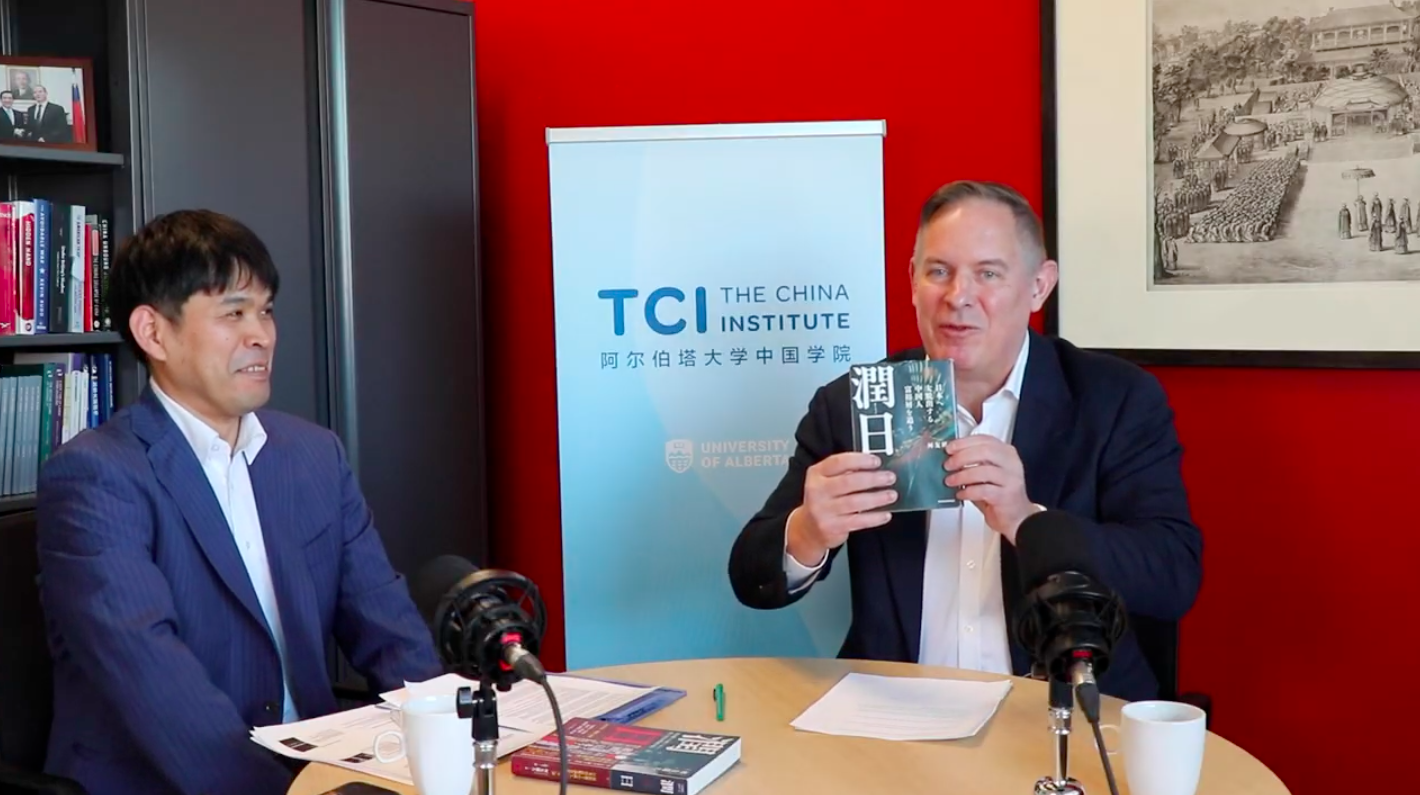
TCI Interview with the Author of “Run-Ri”
Full Q&A transcript (Texts are lightly edited for clarity. PR=Philippe Rheault; Hiro=Takehiro Masutomo)
From Rural Kyushu to China via Canada
- PR: Before we get into your book, could you start by telling us a bit about your journey? How did you end up focusing on China and on this “Run-Ri” phenomenon?
- Hiro: I grew up in rural Kyushu, in southern Japan. At that time, I never met any Chinese person in my daily life. That changed when I came to Canada as an exchange student and studied at McGill in Montreal. There I made my first Chinese friends. They were very kind, and my image of China completely changed. I visited China with them, and that’s really how my interest in China started. Even though I only spent one year in Canada, it changed my life. At that time in Japan, I simply didn’t have that kind of opportunity to build friendships with Chinese students.
What Is “Run-Ri”?
- PR: Let’s turn to your book and this “Run-Ri” phenomenon. The word itself is a bit of a play on words. How would you explain it to people who haven’t heard it before?
- Hiro: “Run” in Chinese originally means to moisturize or to profit, but it sounds like the English word “run,” and online it became slang for “to run away” or “to leave.” The character “Ri” (日) means Japan. So “Run-Ri” literally means “running to Japan.” I see three main driving forces behind this recent exodus from China to Japan: 1) Securing assets: Many people no longer feel safe keeping their assets in China. That’s why they are buying luxury properties in Japan; 2) Education: They want better educational opportunities for their children. Competition in China is extremely intense. In Japan, because of depopulation, the competition for school places is far less fierce; 3) Freedom of expression: Japan still offers freedom of speech and expression in a way that is increasingly constrained in China.
Who Are the Run-Ri? Class, Cities, and Housing
- PR: What kind of people are we talking about? Is this a middle-class story, upper-middle class, or very wealthy elites?
- Hiro: I would say there are roughly three layers: middle class, upper-middle class, and the super rich.
Even the “middle class” in this group usually already own an apartment in a big Chinese city. If you have a flat in Shenzhen, Guangzhou, Shanghai or Beijing, it’s not impossible to sell it and buy an apartment in Tokyo. So they tend to come from Tier 1 cities.
Japan has also become relatively affordable for them. The yen has depreciated and inflation remains low. For urban residents in China, the cost of living—except housing—is often manageable, and Japanese housing can actually be attractive when you convert from yuan to yen.
- PR: And where do these different groups tend to live in Japan?
- Hiro: Middle and upper-middle class Run-Ri often buy high-rise condominiums in the Tokyo Bay area. These are about 20 minutes from Ginza, which is so not far from central Tokyo.
The super rich, however, prefer core central districts like Roppongi. They like low-rise, larger, more exclusive apartments. And importantly, they tend to avoid buildings where there is a high concentration of other Chinese residents. Someone like Jack Ma, for example, wouldn’t want to live in a tower where everyone is watching him. In my book, I mention some of his properties in places like Hokkaido and Kyoto.
Families with children, on the other hand, might choose areas like Bunkyo, near the University of Tokyo and prestigious public elementary schools, because of the education environment.
Education and the Growing Chinese Presence in Japanese Schools
- PR: You mention education as a main motivation. What changes are we seeing in Japanese schools and universities?
- Hiro: The presence of Chinese students is very visible. At the University of Tokyo, for instance, about 14% of students are now from China. That’s a very high share. In some Western universities, including in Canada, there are many Chinese international students, but their percentage is usually lower.
One reason in Japan is that universities have struggled to attract students from places like India, so they rely more on Chinese students. Interestingly, tuition fees in Japan are still the same for domestic and international students. There’s no higher “international fee” yet. That might change, and there are discussions in Japan about raising fees for foreign students, but for now the structure is different from countries like Canada.
Earlier Waves of Chinese Migration to Japan
- PR: Before we go deeper into today’s situation, can you say a few words about earlier waves of Chinese migration to Japan? How does this compare historically?
- Hiro: Historically, the first large wave of Chinese migration to Japan happened about a century ago, in the late Qing period. Many Chinese students were sent to Japan to learn modern Western thought, basically everything from political ideas to science and engineering. These were often liberal-minded intellectuals.
The more recent pre-pandemic migration, however, was quite different. Many came as students or as “technical interns,” essentially cheap labor. There were also people from Fujian who followed more traditional migration routes, sometimes similar to earlier Chinese migration to Canada.
Today’s Run-Ri are different again, who are more likely from big cities in the northeast and the Pearl River Delta, with significant assets and often limited Japanese language skills. They are typically in their 30s or older, coming with families, not as young students.
Is Japan Really Closed to Immigration?
- PR: I think many people, including myself, had the impression that Japan is very closed to immigration. But your book suggests a more complex reality.
- Hiro: Yes, Japan officially still insists “we are not an immigration country.” Politicians repeat this line. But in practice, Japan has been receiving many foreign workers and residents through side doors, including technical interns, student visas, Business Manager visas, Highly Skilled Professional visas, and so on.
Chinese nationals are now the largest foreign group in Japan, recently passing 900,000 and projected to reach 1 million. About a quarter of them live in Tokyo, at around 250,000 to 300,000. Of these, roughly 100,000 are what I call Run-Ri, and about half of them live in Tokyo, mostly for lifestyle reasons. Other nationalities include Vietnamese, Filipinos, Indians, Nepalese, Indonesians and so on. But Japan still lacks robust integration programs, precisely because it doesn’t officially see itself as an immigration country. That creates a gap. There’s an economic and demographic need for migrants, but no coherent integration policy.
Why Japan Rather Than the US, Canada or Australia?
- PR: Many people might ask why choosing Japan instead of places like the US, Canada, or Australia?
- Hiro: Until recently, the US was clearly the top destination. But several trends changed that, such as the deterioration of US–China relations, rising anti-Asian and anti-Chinese sentiment in the US, and rougher student and work visa environments. All of these have made the US less attractive. That has spillover effects on Canada, Australia, the UK and others, likely because they get pulled into the same geopolitical frame.
For Japan, two additional factors matter: first, geographic proximity and connectivity. From Shanghai, flying to Tokyo or Osaka takes about as long as flying to Beijing. The two countries are operating in the same time zone and connected by many flights, making it easy to maintain family and business ties.
Secondly, possible quasi-immigrant lifestyle. Many Run-Ri are what I call “quasi-immigrants.” They don’t cut ties with China. They keep businesses, factories, or properties in China and travel back and forth. That’s easier from Japan than from North America. Because of this, many Run-Ri are quite low-key politically. They don’t want to provoke the Chinese Communist Party too much. They still have family in China and don’t want to cross any invisible red lines.
Studying China from Japan
- PR: You haven’t been to China since 2018. How has that shaped your work?
- Hiro: It has become very difficult for foreign correspondents to report from China. Many Japanese nationals have been detained, and it’s hard to know where the red lines are. Access to ordinary people is limited, and it is harder to dig for stories. From Tokyo, I interview Chinese tourists and Run-Ri residents instead. By talking to them in Japan, I can still get a sense of what is happening inside China. It’s not a perfect substitute, but it’s one window into a country that is becoming more of a “black box” for foreign journalists.
Mixed Feelings in China: Pride, Frustration, and the Desire to Leave
- PR: It seems the motivations driving recent emigrants from China have become more mixed. China’s growing economic strength has boosted national pride, while the frustrations from the COVID period, concerns about future restrictions, and hopes for better opportunities still push people to leave. This mix feels more intertwined than before. Do you see this complexity among those who come to Japan?
- Hiro: Yes very much so. The “run” phenomenon is only one part of the picture, and many people also recognize the positive side of China’s rapid development. For example, the glorious story about AI development. But among the Chinese immigrants who actually arrive in Japan, there is no single motivation anymore.
Each person has a different mix of reasons: some worry about future lockdowns, others want to diversify their financial risks, some seek new professional opportunities, and many are thinking about their children’s education or long-term stability.So you end up with people who are proud of being Chinese, but also want a backup plan for their assets, their children’s education, or their personal freedom. Run-Ri is just one visible expression of that mix.
Anti-Japan Sentiment and Cultural Attraction
- PR: You were in China during some of the large anti-Japan protests in 2012. I had personally experienced this during my diplomatic tenure in Chongqing, not a typical city holding friendly feelings to Japan. How does anti-Japan sentiment fit into the story?
- Hiro: Yes, I was in Beijing during the 2012 protests, and in 2005 too–rough incidents. But interestingly, today we don’t see large anti-Japan demonstrations, even when political tensions rise. For example, over remarks about Taiwan by Japan’s current leadership.
As for the Run-Ri, I don’t think they are secretly anti-Japan. Most are in their 30s or older, and grew up using Japanese products and watching Japanese TV, anime, or movies. In the 2010s many already visited Japan as tourists when visa rules were relaxed. That created familiarity and attachment. For this generation, Japan is not just a “historical enemy” but also a place of everyday cultural influence.
Bubbles, Enclaves, New Cultural Spaces, and a Diverse Ecosystem
- PR: Can you describe the everyday lifestyle of Run-Ri in Tokyo? Do they integrate, or do they live in bubbles?
- Hiro: To a large extent, they live in their own bubbles. Many cannot command good Japanese, so they rely on Chinese-language spaces and networks. That includes: 1) Private clubs for the wealthy, where they can gather spontaneously with friends without worrying about reservations; 2) Chinese-language bookstores in Tokyo, with at least five that I know, which host events and serve as hubs for intellectuals, writers, and artists; 3) Online communities on WeChat and other platforms.
These spaces show how diverse the Run-Ri are. Some are business people running factories or property investments; others are exiled intellectuals or creatives who want to work on topics they cannot freely explore in mainland China.
One reason I wrote the book was to show Japanese readers that “Chinese people” are not necessarily all the same. There are very different types of Chinese migrants, and you can only see that through personal stories.
Japanese Perceptions: Real Estate, Inequality, and Backlash
- PR: How does the average Japanese citizen see this phenomenon?
- Hiro: If you live in Tokyo, you probably know that wealthy Chinese are buying apartments and luxury goods. That’s widely recognized.
Recently, frustration has grown. Housing prices in Tokyo are rising, and many apartments are out of reach for average Japanese citizens. People see news about Chinese buyers snapping up units in central districts and making portfolio investments in Japanese equities. This feeds into a larger narrative of inequality and foreign influence. That, in turn, contributes to the growing political heat over immigration, including the rise of right-leaning political forces, calls for stricter immigration and foreign resident policies, and tighter rules on Business Manager visas and Airbnb-type accommodations, as well as debates about land sales to foreigners. So economics, housing, and immigration politics are mutually reinenforcing.
Political Influence and Perspectives from Other Countries
- PR: Is there concern in Japan about potential political influence from these new migrants?
- Hiro: It’s a topic that is only now coming into view. There are still relatively few China-born politicians in Japan, but the number of Chinese residents interested in local politics is increasing.
The more realistic scenario in the near term is not necessarily Chinese-born members of parliament, but Chinese-background staffers working in local governments or in the offices of influential politicians–as a path for shaping local politics.
As for political interference, I don't think many Japanese people are aware of this risk yet. Some Western countries, including Canada and Australia, have had more experience with questions of foreign influence and diaspora politics. I think Japan can learn from those precedents.
Where Do Run-Ri Get Their Information?
- PR: Where do Run-Ri get their news and information? Are they plugged into Japanese media, Chinese media, or something else to inform their worldview?
- Hiro: I haven’t conducted a systematic survey, but from what I can see, many follow Chinese social media, especially platforms like Xiaohongshu and WeChat. Xiaohongshu is like a Chinese version of Instagram, but with more text and lifestyle content. It’s accessible both inside and outside China. It has become an important platform for people living abroad to stay connected with trends and discourse at home.
Looking Ahead: Going Beyond Japan
- PR: Finally, what’s next for you? Are you planning to continue this line of work?
- Hiro: Yes. I’ve started thinking about expanding this research beyond Japan. There are interesting Chinese communities emerging in many parts of the world: in the West, in the Global South, in the Middle East, in Africa. I’d like to look at how these communities differ from one another, and how they interact with local societies and with China itself. Run-Ri in Japan is one piece of a much larger global story of Chinese mobility and migration.
- PR: That’s fascinating. Thank you, Takehiro. I learned a lot, and I’m sure our audience will too.
- Hiro: Thank you very much for having me.
Takehiro Masutomo is a Japanese journalist and researcher focusing on China and Southeast Asia. Quadrilingual in Japanese, Chinese, English, and Indonesian, he previously worked for Caixin in Beijing and is currently a research fellow at Waseda University. His latest book, Run Ri: A Field Report on Why Chinese Are “Running” to Japan Under Xi Jinping, came out 2025 in Japanese and Traditional Chinese.