Performance Studies
U of A’s PhD in Performance Studies was introduced in 2012 and is the only doctoral program with an exclusive focus on Performance Studies in Canada. No longer limiting the study of theatre to the written script or conventional stage, Performance Studies is an expanding field that analyzes performance on a continuum of cultural discourse and expression, including but not limited to such topics as rituals and rites, every day ceremonies and practices, gestural behavior, dramaturgies of scientific knowledge production, dance and movement as a way of knowing, body art, relational aesthetics and social practice, new media and digital technologies, as well as large scale, public and theatrical spectacles from the stage to the streets. Our interdisciplinary faculty members make valuable contributions to critical theory, theatre and performance history, performance and activist art practice and theory, as well as critical disability studies, science and technology studies (STS), critical making and media studies grounded in a research-creational ethos.
Key Contacts
 Dr. Selena COUTURE (PhD program coordinator)
Selena Couture’s research deconstructs conceptions of settler colonial white possession while foregrounding the maintenance of Indigenous places through performance. A scholar with a settler background, her work aims to create responsible relations with Indigenous peoples, the land, the waters, and flora and fauna, particularly in the era of unprecedented anthropogenic climate change.
Her research has been published in Theatre Journal, Canadian Theatre Review, Performance Matters, and alt.theatre. Book publications include, her monograph, Against the Current and Into the Light: Performing History and Land in Coast Salish Territories and Vancouver's Stanley Park (McGill-Queen's University Press, Indigenous and Northern series, 2020), and collaborative projects: On this Patch of Grass: City Parks and Occupied Lands (Fernwood 2018) and Richard Brinsley Sheridan's Pizarro (Broadview Press, 2017).
She was a member of the 2020 – 2023 cohort of Kule Scholars at the U of A, focusing on climate resiliency in the 21st Century, and is a co-investigator with the 2020 – 2027 Social Sciences and Humanities Research Council partnership grant, Hemispheric Encounters: Developing Transborder Research-Creation Practices where she co-directs the Ecologies Research Cluster with Sérgio Andrade (U of Amsterdam). This research cluster delves into legacies of transnational resource extraction and land politics focusing on site-based performance strategies that address politics of land (and agencies of its more-than-human inhabitants), as well as spatial politics of occupying public spaces.
Before her career in academia, Couture was an alternative school teacher in Vancouver for many years. Couture also has a passion for working in the community, having served on the board of directors with Vancouver’s PuSh International Performing Arts Festival since 2022 and on the board of directors for the Solid State Community Society since 2015.
Primary Teaching Areas: Theoretical Approaches to Theatre and Performance; Canadian Theatre; Indigenous Performance and Politics; Theatre and Performance Historiography; Theatre and Performance Studies Research Methodologies

Research areas include: Theatre Practice (directing and acting), International Collaboration, Interdisciplinary Pedagogy, Performance as Research, African Folktales in Uganda, Translation (German to English)
Melanie Dreyer-Lude specializes in intercultural and multilingual theatre projects. She has directed over 80 productions in a variety of international locations, including Germany, Turkey, and Uganda. Fluent in German, Dreyer-Lude translates and directs contemporary German plays, which have been produced in the United States and Canada and published in international magazines and anthologies. A two-time Fulbright scholar, her current research focuses on locating, archiving, analyzing, and adapting traditional stories from small villages in Uganda. Her most recent book, The Adaptable Degree, offers statistical evidence for the employability of theatre graduates across all work sectors. She holds an MA in dramatic literature from Washington University St. Louis, an MFA in directing from Northwestern University, and a doctorate in Educational Leadership and Policy Analysis from the University of Missouri. She is currently a full professor in the Department of Drama at the University of Alberta.
Primary Teaching Areas: Acting (all levels), Directing (all levels), Public Speaking, Performance Pedagogy, Cross Disciplinary Application of Theatre Training
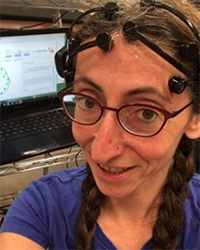
Yelena Gluzman is an Assistant Professor in Science, Technology and Society (STS), co-appointed between Media and Technology Studies and the Department of Art and Design. She draws on her background of making experimental theater to theorize and experiment with ways of knowing at multiple sites: in the cognitive neuroscience lab, in access work and criptech, and in collaborative projects that bring together disparate disciplines, methods and worldviews. She has written extensively on research-creation, interdisciplinarity and reflexivity in collections like Imagined Theatres, The Routledge Handbook of Art, Science and Technology Studies and Performance as Research: Methods, Knowledge, Impact, and journals like TDR: The Drama Review, Performance Matters, and Engaging Science Technology and Society (ESTS). She is a founding member of Ugly Duckling Presse, a Brooklyn-based small press that publishes poetry, translation, performance texts and artist books. As an editor at UDP, she co-founded the 10-volume Emergency Index series, documenting a decade of performance practice across the globe, the Emergency Playscripts series that highlights experimental performance texts, and most recently the Sentimental Ed series, which publishes text that formally or otherwise enact their arguments. Recently, her experimental ethnographic film on real-time captioning for d/Deaf and Hard-of-hearing students, Invisible Machines, received a number of awards, including the 2025 Making and Doing Award from the Society for Social Studies of Science.She is the Director of the Experimental Ways of Knowing (EWOK) Lab, and co-lead of the Art and Design Working Group for the NFRF-funded Co-Designing a Smartwear Revolution project.
Primary teaching areas: Art, Design and Disability, Science and Technology Studies, Science Communication, Social Robots, Ethnographic Film, Research-Creation.
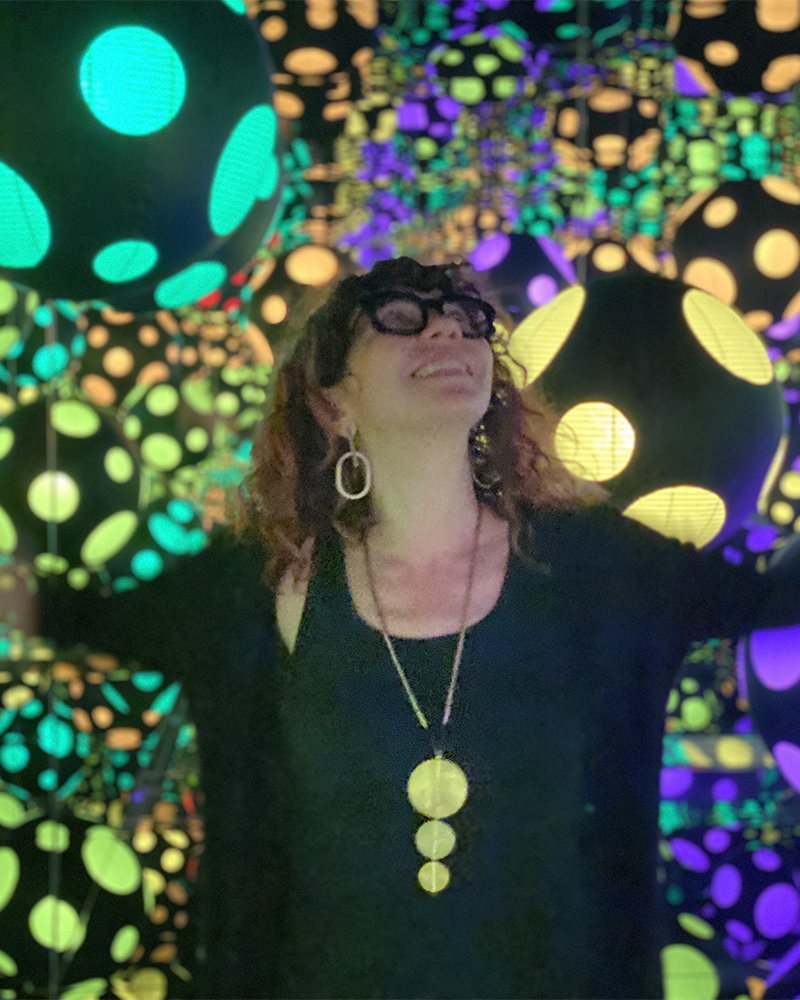
Natalie Loveless is a scholar, artist, and curator, whose work has helped establish research-creation as a transformative mode of interdisciplinary knowledge production. Bridging contemporary performance art, feminist theory, and ecological ethics, her work demonstrates how artistic practice can generate new forms of public knowledge capable of addressing urgent social and environmental challenges.
She is author of How to Make Art at the End of the World: A Manifesto for Research-Creation (Duke UP 2019), editor of Knowings and Knots: Methodologies and Ecologies in Research-Creation (University of Alberta Press 2019), co-editor of both Responding to Site: The Performance Work of Marilyn Arsem (Intellect Press 2020) and The Routledge Companion to Performance Art (Routledge 2026). Research-creational projects include New Maternalisms, a project bringing together feminist art practice, theory and curation, and an interdisciplinary collaborative project on global vaccination called <Immune Nations> that culminated in a high-profile exhibition at UNAIDS in Geneva during the 2017 World Health Assembly, and Speculative Energy Futures, part of the Just Powers initiative funded by the Future Energy Systems Canada First Research Excellence Fund (CFREF). In 2020 was elected to the Royal Society of Canada (College of New Scholars, Artists, and Scientists) for her scholarship at the intersection of research-creation and social and ecological justice.
Loveless currently teaches courses in contemporary art with a focus on performance, relational aesthetics, and social practice, and in feminist art practice and theory with a focus on intersectional justice and ecological ethics. She also runs the Research-Creation and Social Justice CoLABoratory.
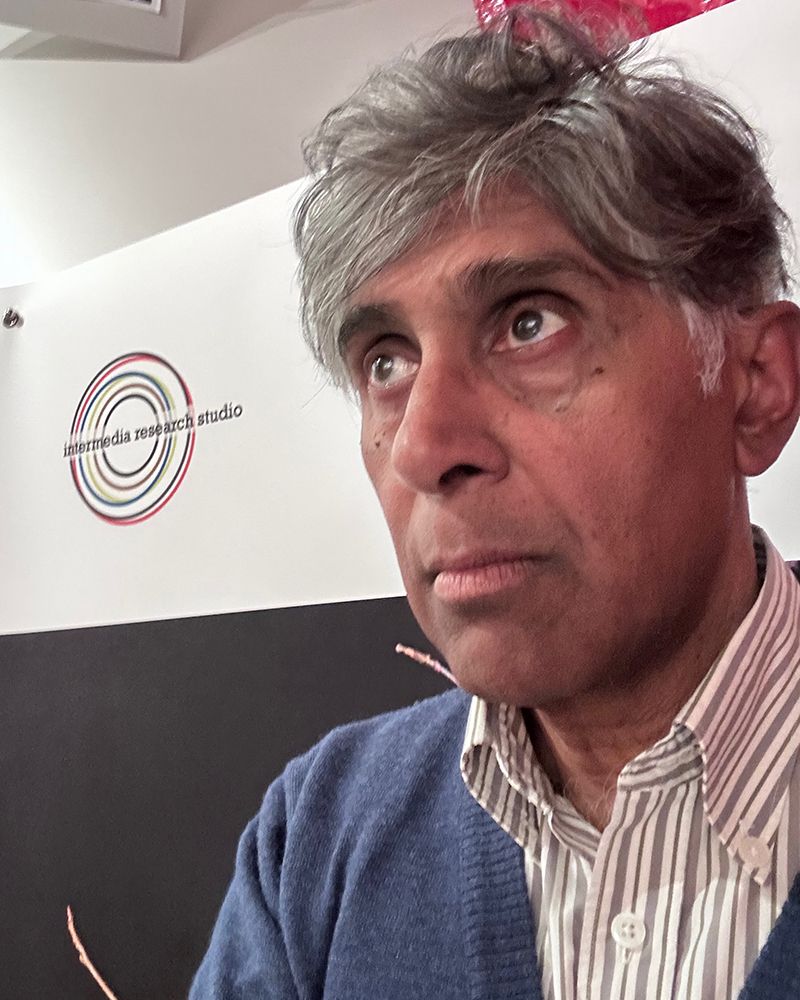
Dr. Sourayan Mookerjea is Professor of Sociology and director of the Intermedia Research Studio, Department of Sociology, University of Alberta, Treaty Six Territory where his research and teaching engages with intermedia theory, research-creation, anti-oppression critical theory, post-Western Marxism, global sociology, political ecology and energy humanities. He is a co-founder of Spectacular Data: Fascism and the Coded Present and Platform Acceleration: Imperial Logistics and Subaltern Counter-Environments. Recent research includes co-director of Feminist Energy Futures Powershift and Environmental Social Justice, iDoc Intermedia, and co-investigator on the research-creation collaboration, Speculative Energy Futures. He is a founding member of the Feminisms and Degrowth Alliance Writing Collective. His research, poetry and research-creation probes include contributions to publications, interventions and exhibitions such as: Toxic Media Ecologies: Critical Responses to the Cultural Politics of Planetary Crisis (co-edited with D. Mounsef, Routledge 2027), The Routledge Handbook of Degrowth (2026), Imagining and Enacting Post-Carbon Futures (2025), The Energy Emergency Repair Kit (Fordham UP 2024), The Elgar Companion to Antonio Gramsci (2023), Best Canadian Short Stories (2023), UnPacking Energy Transitions (The Square, St. Gallen, 2022), Prototypes For Possible Worlds (FAB Gallery, 2019), Polyglot Magazine of Poetry and Art (2017), In-Toxic (Latitude 53, 2016).
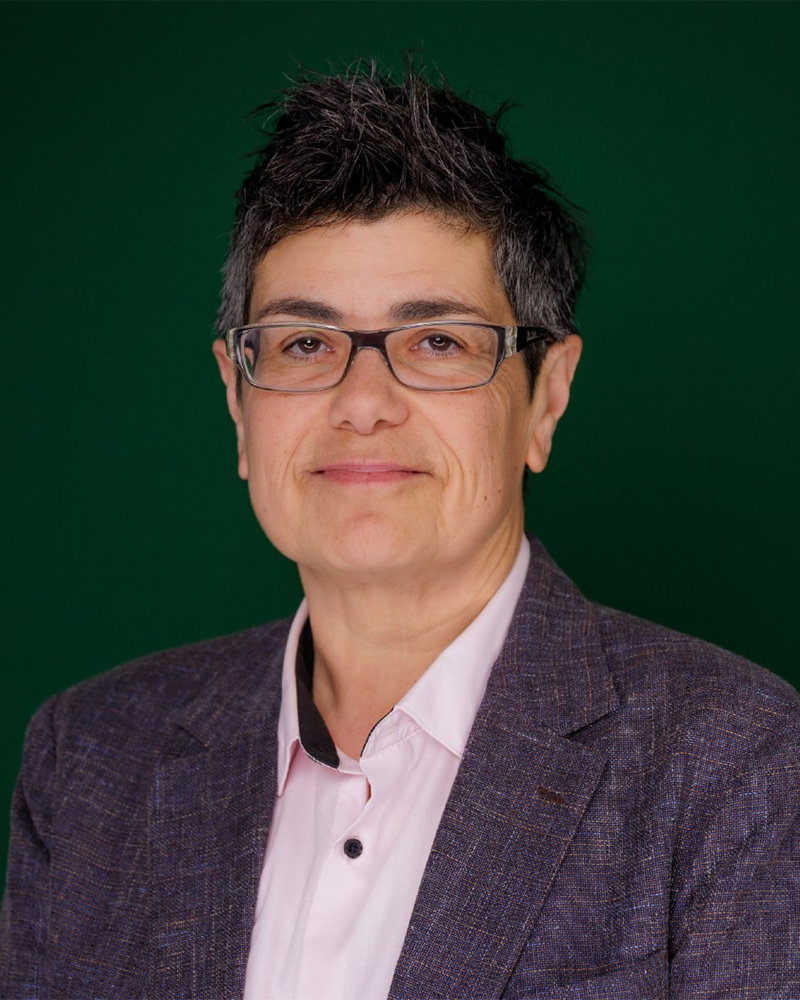
Research focuses on modern and contemporary French and Francophone theatre, politics, gender and performance, theories of the body, intermediality and adaption theory, AI and the Arts. Dr. Donia Mounsef's research focuses on the fascination contemporary culture has with the subjection of the body to spectacular forms of coercion. Her book, Spectacles of Violence: Coercive Desire in Contemporary Culture challenges the carnavalesque view on the violence spectacle. Her monograph Chair et révolte dans le théâtre de Bernard-Marie Koltès (L’Harmattan 2005) was one of the first full-length studies of Koltès’ theatre as it established new forms of writing the body in performance in late 20th century. Mounsef's other areas of research focus on intermediality in performance or the integration of media and technology into theatre as well as water in performance and the “Blue Humanities” as “Seatricals.” Her co-edited collection, Toxic Media Ecologies (forthcoming from Routledge) foregrounds the objective subjectiveness of crises and considers how we as subjects are connected to each other through multiple crises. Mounsef’s current research is on spectacular data and AI, Ethics and the Arts.
Primary Teaching Areas: Play and Performance Analysis, Critical Theory, Playwriting, Media and Performance. Graduate Seminars in Contemporary Performance Studies, Gender and Desire, Intermediality and Digital Theatre, Contemporary Theory. Graduate Supervision.

Stefano Muneroni is a theatre historian, translator, and production dramaturg. His research is grounded in both Performance Studies and Italian Studies with an emphasis on postcolonial and border theory, migration studies, and translation and adaptation theory. He holds a cross appointment with the Department of Modern Languages & Cultural Studies. His most recent dramaturgical credits include Hecuba, A Slight of Mind, Boundless Border, Yerma, Angels in America, The Mill on the Floss, and The Toxic Bus Incident. Recent staged translations include Xavier Villaurrutia’s The Absent One, and Osvaldo Dragún’s A Toothache, a Plague, and a Dog. He published articles on Latin American theatre, religion and drama, and translation. He is the author of Play Analysis: A Dramaturgical Approach (Kendall Hunt 2014), Staging Sainthood in the Early Modern Period (Palgrave 2017), and the translation and critical edition of Sforza Pallavicino’s Martyr Hermenegild (Center for Reformation and Renaissance Studies Press 2019). Muneroni is now working on a new book project titled Mediterranean Migration in Italian Theatre, Performance, and Public Art.
Primary Teaching Areas: Play Analysis, Modernist Stage, Performance Theory, Italian Cinema, Italian Culture in the Media, and Italian Fairytales. He has offered graduate seminars in Border Theatre, Intercultural Theatre, Post-Colonial Theory, Dramaturgy, and Theory & Practice of Adaptation.
Emerit Faculty
As a faculty member from 1999 to 2026, Dr. Defraeye's research has been focused on Reception Theories and Theatre of Provocation, dealing mainly with the application of performance theory to contemporary theatre practice, and to the examination of social spheres. The key theme is Shock and Provocation in the Theatre. The work is largely comparative in nature and uses performance studies, especially audience reception to examine Theatre of Provocation. His two lengthy publications on playwright Peter Handke are a prime example of his approach to play analysis as is the in-depth treatment of the controversy around the Benton play The Romans in Britain. His two articles on Atilla Richard Lukacs are in the tradition of Performance Studies and are critical reflections on a specific practice of painting, seen as a performative cultural practice.
Dr. Rosalind Kerr
Dr. Kerr (faculty member from 1997-2012) combined her studies of the sixteenth-century Italian commedia dell'arte actresses and the impact that they had on shaping the early modern stage, with her work on contemporary Canadian experimental and queer theatre. She also has experience as a dramaturge, actor, and director. Most of her research has focused on the re/presentation of the gendered body and the multiple ways in which it signifies meanings on the stage.
U of A Drama offers a wide scope of approaches to new play development. Several faculty members (Kim McCaw, Jan Selman, David Barnet, Dr. Piet Defraeye, Beau Coleman, Lin Snelling and Jane Heather) contribute to Canada's new play development via work with individual playwrights and organizations which workshop and produce new plays.
Kim McCaw's multiple contributions to new plays are nationally recognized. He was the recipient of Canada's National Play Development Award in 1993.Kathleen Weiss's current creative activity focuses on iconographic dramaturgy, a creative process well-suited to the increasing interest in image-driven theatrical events.
Through faculty expertise, the department's annual New Works Festival, several graduate course offerings (DR 607, DR 681) and student work placements, the Department of Drama is uniquely positioned to further specialize and develop new play dramaturgy.