
Informality and Everyday Urbanism Lab (INFELA)
About the Lab
The Informality and Everyday Urbanism Lab (INFELA) is a research hub that examines how people in cities create, adapt and sustain urban spaces through informal practices, networks and infrastructures. Informality and Everyday urbanism are the heart of cities-from street vending, to informal housing, to community gardens, to grassroots governance and everyday survival strategies, these activities provide essential services, create economic opportunities and bring life to cities. At the INFELA, our work challenges dominant narratives that frame informality as a problem to be eradicated. Our focus is to engage with, make sense of, and amplify the small, incremental and often ‘invisible’ ways through which urban dwellers navigate everyday life in cities. We are committed to generate knowledge and evidence to demonstrate how urban informality can be harnessed to build inclusive, resilient and sustainable cities.
Vision
To become a leading centre for knowledge production, training, and community engagement on urban informality and everyday urbanism—advancing critical scholarship, shaping inclusive urban policy, and inspiring innovative, grounded solutions for cities in the Global South and beyond.
Research Lead
Graduate Students
Lab Location: Tory 3-95
Research Themes and Publications
Urban governance, everyday resistance and agency of the poor
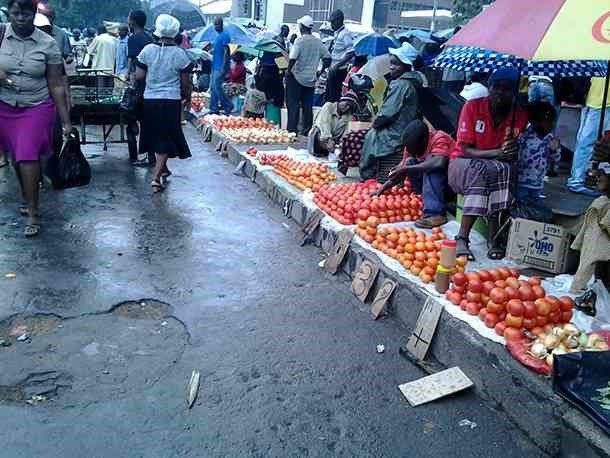
Under this theme, our research examines the politics of governing informal economies, with a focus on street vending as a contested urban practice. In many cities in the Global South, street vending provides livelihoods for marginalized groups, particularly women, migrants, and the urban poor, yet it is often subjected to violent crackdowns by municipal authorities. We investigate how urban governance frameworks — from municipal bylaws to urban planning strategies — regulate, criminalize, or incorporate informal work, and how vendors resist exclusionary measures. Our work draws on critical urban theory, right-to-the-city debates, and feminist political economy to understand street vending as both an economic activity and a site of political struggle. Some of our publications under this theme include:
Asante, L, A, Bandauko, E & Amoah, M (2026). From Markets to ‘Mal-kets’: Infrastructure Modernization or Cultural Erosion? Cities. https://doi.org/10.1016/j.
Bandauko, E & Asante, L, A (2026). ‘Displace, Dump and Cage?’: Contested Logics of Spatial Formalization of Street Traders in Harare and Kumasi. Habitat International. https://doi.org/10.1016/j.
Bandauko, E (2025). 'No one can just occupy the space without our permission…': Informal governance mechanisms and the politics of street traders’ access to space in Harare’s contested Central Business District (CBD). Social & Cultural Geography. https://doi.org/10.1080/
Bandauko, E & Arku, G (2025). A tale of two Harare(s): Contested narratives of world class city ideals and everyday urbanism in an informalizing city. Cities. 167. https://doi.org/10.1016/j.
Gender and appropriation of public space in Harare’s contested central city area
‘Shadowing the state’: Subaltern surveillance and the rhythms of everyday resistance
 Informal Infrastructures and Do It Yourself (DIY) Urbanism
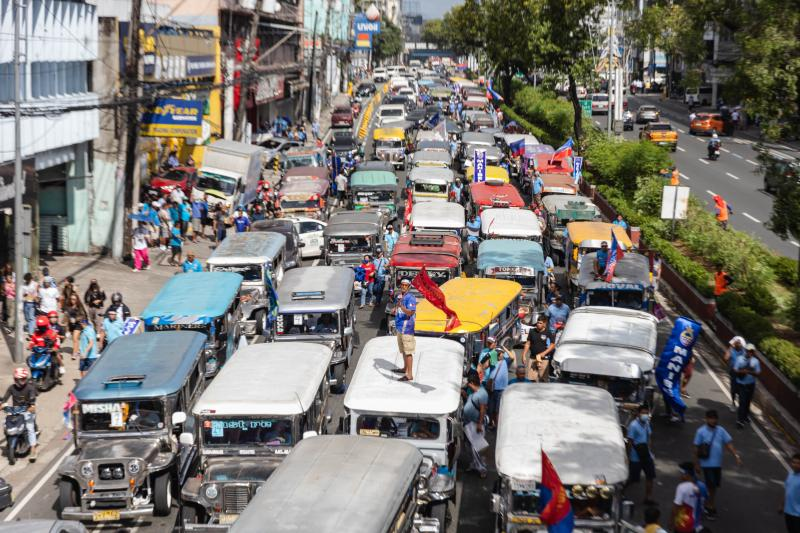
People living in slums and informal settlements are often disconnected from urban infrastructure systems. However, they are never passive victims of infrastructural abandonment. Our research explores the diverse strategies that residents use to self-provide infrastructure and services. These may include household innovations like community-led waste collection schemes, informal transport services, or the repurposing of materials to build roads, sanitation facilities, drainage channels, and public spaces. Such practices reflect both necessity and ingenuity—what we call “infrastructural bricolage”—and reveal how people adapt technologies, negotiate access to networks, and create systems outside formal channels. We are interested in the drivers of these practices, the constraints that shape them, and the possibilities they open for reimagining urban futures. Studying DIY urbanism allows us to see informal settlements not just as sites of deprivation, but as spaces of innovation, resilience, and alternative visions for city-making. Some of the publications under this theme include:
Bandauko, E & Finn, B, M (2026). Informal Infrastructuring: The Defining Feature of 21st Century Urbanization. Progress in Human Geography. https://doi.org/10.1177/
Bandauko, E & Finn, B, M (2025). Toward supported self-provisioning: Assessing the constraints and generative possibilities of informal modes of urban life. Journal of Urban Affairs. https://doi.org/10.1080/
 Place attachment in informal settlements
Informal settlements are often portrayed as deplorable and ‘rough’ neighbourhoods where life is assumed to be uniformly miserable. Through this research theme, we seek to challenge and demystify such dystopian narratives by exploring how residents themselves experience and value their places of abode-without romanticizing life in these places. We investigate how both individual attributes and neighbourhood characteristics influence the ways people develop emotional bonds, attachments, and a sense of belonging to their residential environments. In doing so, we highlight the lived realities that reveal informal settlements as complex social and spatial landscapes—places that can hold deep meaning, resilience, and pride for those who call them home. Examples of research publications under this theme are:
“The unwavering bond”: Examining sense of place in Harare’s informal urban neighbourhoods.
Geographies of Precarity
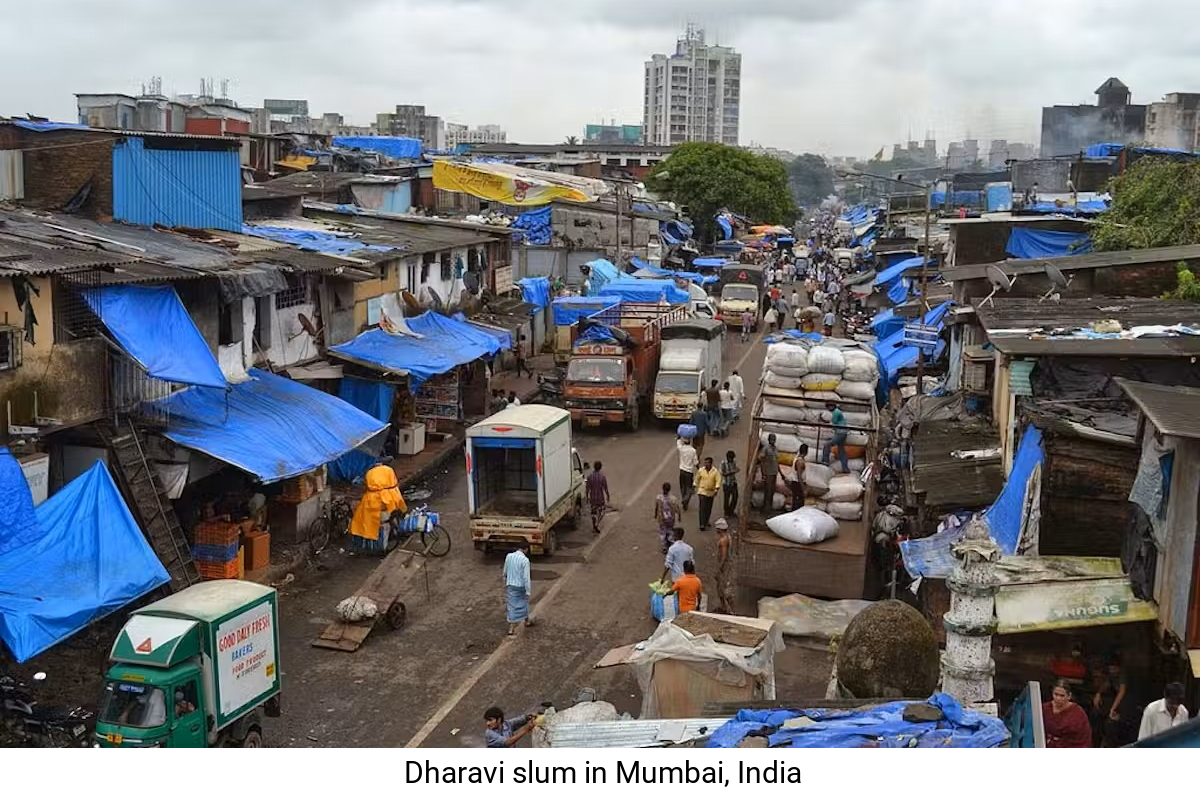
This theme examines experiences of urban precarity, focusing on slums and informal settlements in Global South cities. We investigate how precarious conditions are produced through historical legacies, political–economic restructuring, planning regimes, and state practices, and how they are unevenly distributed across urban space. At the same time, the theme explores how urban precarity is actively lived and negotiated. Through comparative and grounded research, the theme highlights how everyday struggles in informal settlements reshape urban governance and reveal the political nature of precarity in contemporary cities. Publications under this theme include:
Necrospatial Containment and Slow Violence in Harare’s Informal Settlements