Principal Investigators
Space is inherently multi-disciplinary, requiring collaboration among scientists and engineers with a diversity of expertise. ISSET includes the following Principal Investigators:
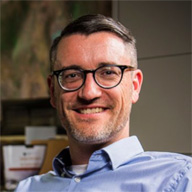
Dr. Christopher D. K. Herd
Department of Earth and Atmospheric Sciences, Professor
Currently the Principal Director of ISSET, Dr. Herd is an expert in the study of planets and planetary objects in the Solar System through research on samples in the form of meteorites, and simulation of conditions of formation using the High Temperature Planetary Petrology Lab. He is the curator of the University of Alberta Meteorite Collection, the largest University-based collection in Canada. The Meteorite Curation Facility that houses the collection includes the world 's only subzero lab for the curation and handling of pristine meteorites and planetary samples, especially those that contain (or may contain) organic matter. Dr. Herd has lent his expertise to a number of committees and working groups relating sample return from asteroids, comets and Mars, and is a member of the Science Team on the NASA Mars 2020 Perseverance rover mission.
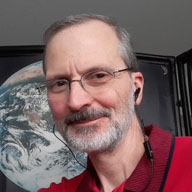
Dr. Carlos F. Lange
Department of Mechanical Engineering. Associate Professor
Dr. Lange, the current Deputy Director of ISSET, was Science Team member of the 2008 Phoenix Mars Lander mission, where he contributed with the concept, preliminary design, and numerical characterization of an image-based wind indicator for speed and direction, called the Telltale. Dr. Lange's group performed the first CFD (computational fluid dynamics) simulations of wind speed and temperature around a Mars lander and modelled the effect of dust devils on water vapour transport from the regolith to the Martian atmosphere. He is one of the main advisors for the AlbertaSat cubesat team, focusing on thermal management and modelling, and he currently serves as the Principal Investigator for their Ex-Alta 3 cubesat to be launched in 2027.
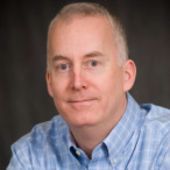
Dr. Duncan G. Elliott
Department of Electrical and Computer Engineering, Professor
Dr. D. Elliott is an expert in embedded & autonomous systems, low earth orbit satellite communications, MEMS sensors, signal processing, and RF and error correction circuits. Prior to joining in the University of Alberta, he was with Nortel in data communications, MO-SAID Technologies as a DRAM designer, and IBM Microelectronics as a contractor in application-specific memory design. He is the 2001 recipient of the Colton Medal in microelectronics for his work on Computational RAM, which has been commercialized and can be found in cell phones. Currently. Dr. D. Elliott serves as faculty advisor for the University of Alberta AlbertaSat (satellite) and Aerial Robotics Groups.
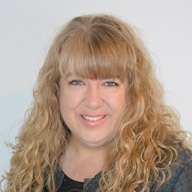
Dr. Janet A. W. Elliott
Department of Chemical and Materials Engineering, Professor and Canada Research Chair in Interfacial Thermodynamics
Dr. J. A. W. Elliott conducts interdisciplinary research specializing in thermodynamics, colloid and surface science, cryopreservation, and cryobiology. research. Dr. Elliott runs a collaborative, interdisciplinary cryobiology research group. The group’s interests include experimental and computational cryobiology and cryopreservation of many cell and tissue types for medical and biotechnology applications. Their work encompasses fundamental and applied research, from cryobiological thermodynamics and transport through to clinical implementation. Some of Dr. Elliott's research areas have been explored in the context of space physical sciences and near-free-fall experiments. She has participated in apparatus design, performed experiments in reduced gravity (two flights), trained operators (including Canadian astronaut Marc Garneau) and provided safety and other documentation for NASA KC-135 parabolic flight experiments for five campaigns.
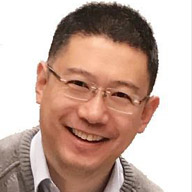
Dr. Jie Han
Department of Electrical and Computer Engineering, Assistant Professor
Dr. Han's research focuses on the design and modeling of probabilistic, energy-efficient and fault-tolerant circuits and systems based on nanoscale devices. Such engineering has applications to the high-radiation space environment. Prior to joining the University of Alberta, he was a NASA INAC (Institute for Nanoelectronics and Computing) Postdoctoral Fellow in the Department of Electrical and Computer Engineering at the University of Florida, and a Research Scientist at the Advanced Medical Diagnostics SA/BV in Belgium.
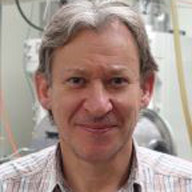
Dr. Wolfgang Jaeger
Department of Chemistry, Professor.
Dr. Jaeger, a 2002 Steacie Fellow, manages the Laboratory for Laser Spectropscopy and Atmospheric Sensing, established in collaboration with Dr. Tulip (Department of Electrical and Computer Engineering), a specialist in laser research and instrumentation development for medical and environmental applications. This team has won a competition to submit a proposal to NASA for a Scout Mission to Mars for a viable scientific plan for the mission and prototype development for the scientific instrumentation, focused on a trace gas sensor for H2O, CH4, and CO4 for the Martian atmosphere.
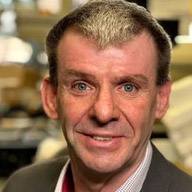
Dr. Ian R. Mann
Department of Physics. Professor
Dr. Mann's research focuses on understanding solar-terrestrial coupling, specifically the excitation of global scale waves in near-Earth space, the aurora, and understanding the dynamics of the Van Allen radiation belts. He was the inaugural Principal Director of ISSET (2007-2014) and led the growth of the Institute into what it is today.
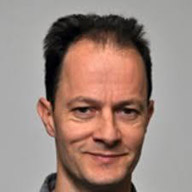
Dr. Benoit Rivard
Department of Earth and Atmospheric Sciences, Professor, Associate Chair (Research)
Dr. Rivard is a geologist with particular interest in the development of applied geological remote sensing. Remote sensing can be used to investigate processes that have modified planetary surfaces over wide ranging spatial and temporal scales. These modifications are represented in the material properties of the surface (mineralogy, composition, texture, physical state). The measurements of reflected and emitted radiation in the laboratory, the field, or from airborne or spaceborne platforms carry fundamental information about the material properties.
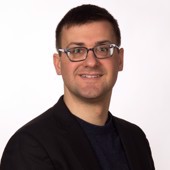
Dr. Dan Sameoto
Department of Mechanical Engineering. Assistant Professor
Dr. Sameoto is an expert in micromanufacturing, polymers and composites, smart materials and biomimetics. Prior to joining the University of Alberta, he held a joint NSERC-European Space Agency funded PDF on the development ofgecko-inspired adhesives for space applications. Currently he is applying gecko based adhesives for robotic pick-and-place and 3D Printing of Adaptable Wireless Systems to be used in remote sensing and satellite communications.
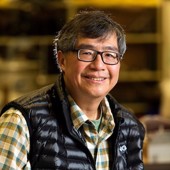
Dr. Ying Y. Tsui
Department of Electrical and Computer Engineering, Professor
Dr. Tsui's research program aims to unfold the many details in laser matter interactions and also to develop useful applications that could benefit society. A comprehensive set of diagnostic and modeling capabilities to probe and to analyze the very complex, fast evolving and interrelating phenomena in laser matter interactions are being developed. Many of these diagnostics and models are being applied to a wide range of fields.
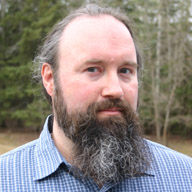
Dr. W. Ted Allison
Department of Biological Sciences, Professor
W. Ted Allison is a neuroscientist currently appointed as a Professor in the Department of Biological Sciences in the Faculty of Science. His team develops zebrafish as preclinical models of human health, especially to understand the pathomechanisms and improve treatments for vision loss, dementias, neurotrauma and neuro-complications of cancer. His team is refining ground analogs of space environments to use zebrafish as powerful and flexible models of astronaut health, including microgravity and galactic cosmic radiation.
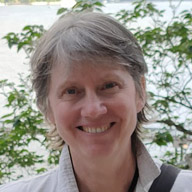
Svetlana Komarova
Department of Biomedical Engineering, Professor
Dr. Komarova’s research interest is in biomedical engineering relevant to mineralized tissues, including bone, teeth and eggshell. She studies the interactions of mechanical, chemical, and biological stimuli in cell, tissue and body function in the context of health (from growth to healthy aging), disease (arthritis, genetic disorders such as osteogenesis imperfecta) and extreme environment (space travel). She uses a variety of experimental approaches and develops computational support for her projects, including "digital twins", computational representations of physiological systems for experiment troubleshooting and optimization.
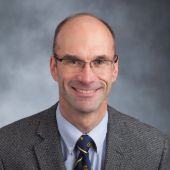
Michael Lipsett
Department of Mechanical Engineering, Professor
Professor Lipsett is a faculty advisor for mechanical and systems engineering for AlbertaSat. He is a co-investigator on the RADICALS space weather satellite project. He provides consultations to regional aerospace companies.
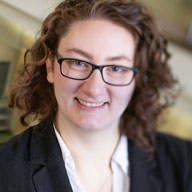
Abigail Azari
Departments of Physics and Electrical and Computer Engineering, Assistant Professor
Dr. Abigail Azari is an Executive Member of ISSET, and an Assistant Professor jointly appointed in the departments of Physics and Electrical and Computer Engineering at the University of Alberta. She is also a Canada CIFAR AI Chair and research Fellow at the Alberta Machine Intelligence Institute. Her group aims to develop the use of machine intelligence for scientific discovery in space science and exploration, centering in planetary science and space physics. They focus on addressing outstanding challenges in uncertainty quantification and the inclusion of physical information. These challenges are broadly shared between scientific domains and their focus centers on probabilistic machine learning and inverse problems.
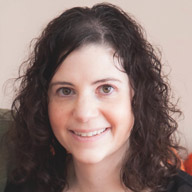
Lindsey Westover
Departments of Biomedical Engineering and Mechanical Engineering, Assitant Professor
Dr. Westover joined the Faculty of Engineering in 2018 and is cross-appointed in both the Departments of Biomedical Engineering and Mechanical Engineering. Dr. Westover’s research includes laboratory experimental work, computational modeling, and in vivo experimental work. Her research interests include, Noninvasive assessment of the integrity of biological structures, Vibration analysis for evaluation of osseointegration of percutaneous implants, Joint biomechanics including evaluation of ligaments and cartilage, Asymmetry analysis for evaluation of spinal deformity, Mechanical testing of biological tissues, and Numerical analysis and computational modeling of biological systems.