Catching up with … Eun Jung (Jenny) Doerksen
2 July 2026
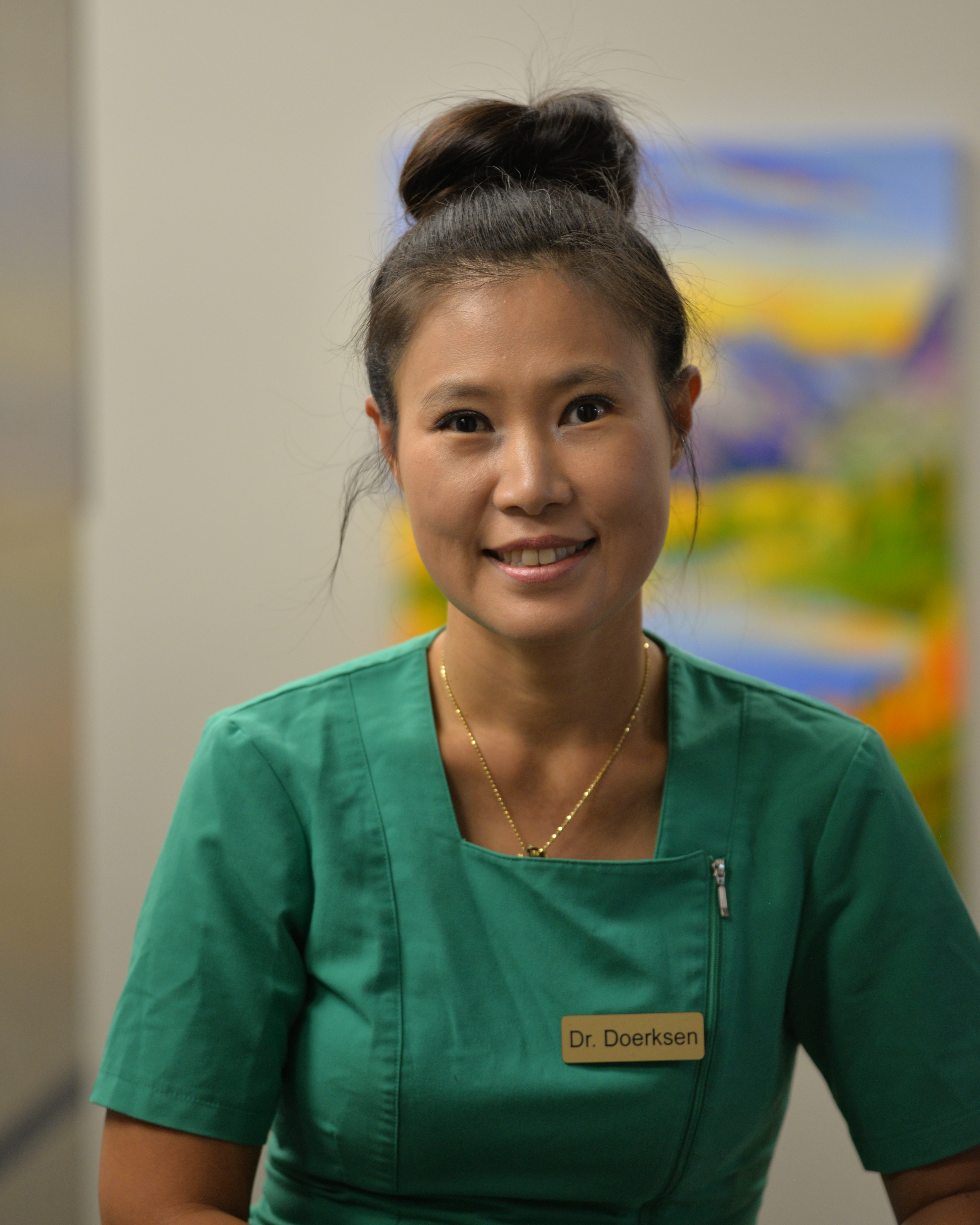
Eun Jung (Jenny) Doerksen
After emigrating from South Korea in Grade 7 with her family, Jenny Doerksen, ’13 DDS, grew up in southern Alberta, her spare evenings and weekends spent doing homework and helping out in her parents’ convenience store/gas station on Highway 3 just east of Taber while dreaming about a future in health care. As a child, she would watch TV shows where surgeons were always saving people’s lives, and thought, “They’re like superheroes!” One day in middle school, the choice between medicine and dentistry came clear when her parents’ friend’s daughter, who was a doctor herself, said, “You should go into dentistry.”
“I loved working with my hands, and while becoming a surgeon sounded fascinating, surgery is traditionally a difficult profession for women who want to have a family,” says Doerksen. “I wanted to have a good balance of personal life with my professional life.”
We caught up with Doerksen, who now owns her dental practice in Red Deer, to learn more about why she enjoys dentistry, what it was like being president of the Alberta Dental Association, and why she believes dental professionals need a strong community.
What do you love about what you do?
I think dentistry is a combination of science and art. For instance, people might feel ashamed of their broken teeth, but they come back after work is done and say, “I really love my smile now.” I enjoy giving new confidence and purpose to their lives. It is also rewarding to work with children — they have a shorter attention span so it’s a fun challenge to make the experience positive for them. I’ve learned a lot from working with geriatric patients, too, finding different ways to adapt to the needs of patients with limited postures, for example.
Sometimes adolescent patients come in and talk about their future, and I have had a few do job shadowing with me so they can see what it might be like to one day be a dentist. That’s always very fulfilling as well.
What do you remember most from your time in the School of Dentistry?
I loved the old Dent-Pharm building and I’ll never forget going there for my interview. The cohort was also a very small group of students — about 30, all smart, very dedicated, and with the same goal. It was a great, tight-knit group. Everybody knew everybody — maybe at times too much!
What were the biggest challenges during school?
Dentistry is a very intense program; it can be stressful and at times overwhelming. I remember crying once in class due to some frustration, and one of my classmates helped and supported me during my struggle. The benefit of being in a small group is you realize everyone feels the same, so you empathize with each other. It was a very competitive group, but everyone was also so compassionate to each other.
Tell us about your experience as president of the Alberta Dental Association.
I was the president-elect for a year, then elected to be president in 2023. The other candidates had 35-plus years experience in dentistry, one owned more than 23 clinics, one of them had been my professor … and compared to them, I did not think I was ready for a leadership position. 2023 was an important time for our dental profession. It was right during the time that the federal government introduced the Canadian Dental Care Plan. I never imagined I’d do that many interviews — for radio, newspapers and TV! Sometimes I had to do two or three a day, and I would have to juggle my patients with running out to do an interview.
I think in leadership, you need humility — you need to be a good listener. You also need to want to advocate for others. So I tried to bring those qualities to my time as president.
How important is mentorship for the future of dentistry?
When I first graduated school, I had wanted more mentorship and guidance — someone to tell me, “It’s OK; it will get easier and better.” Dentistry is a lonely profession, and as president I wanted to build an association that supports those professionals. We did numerous in-person visitations around the province. I believe when you meet people face to face it makes it easier for them to tell you about their concerns and ideas, so those visits were crucial. We wanted to assure them that we were working closely with them and listening to their issues. The association is still somewhat new, but I feel like we’re building trust with our members.
I’m hoping that in 10 years we will have made a significant impact in our dental profession, and that our dentists will continue to provide ethical and compassionate care to our patients while feeling supported, loved and respected.