Where identities intersect
Native Studies Staff - 26 February 2026
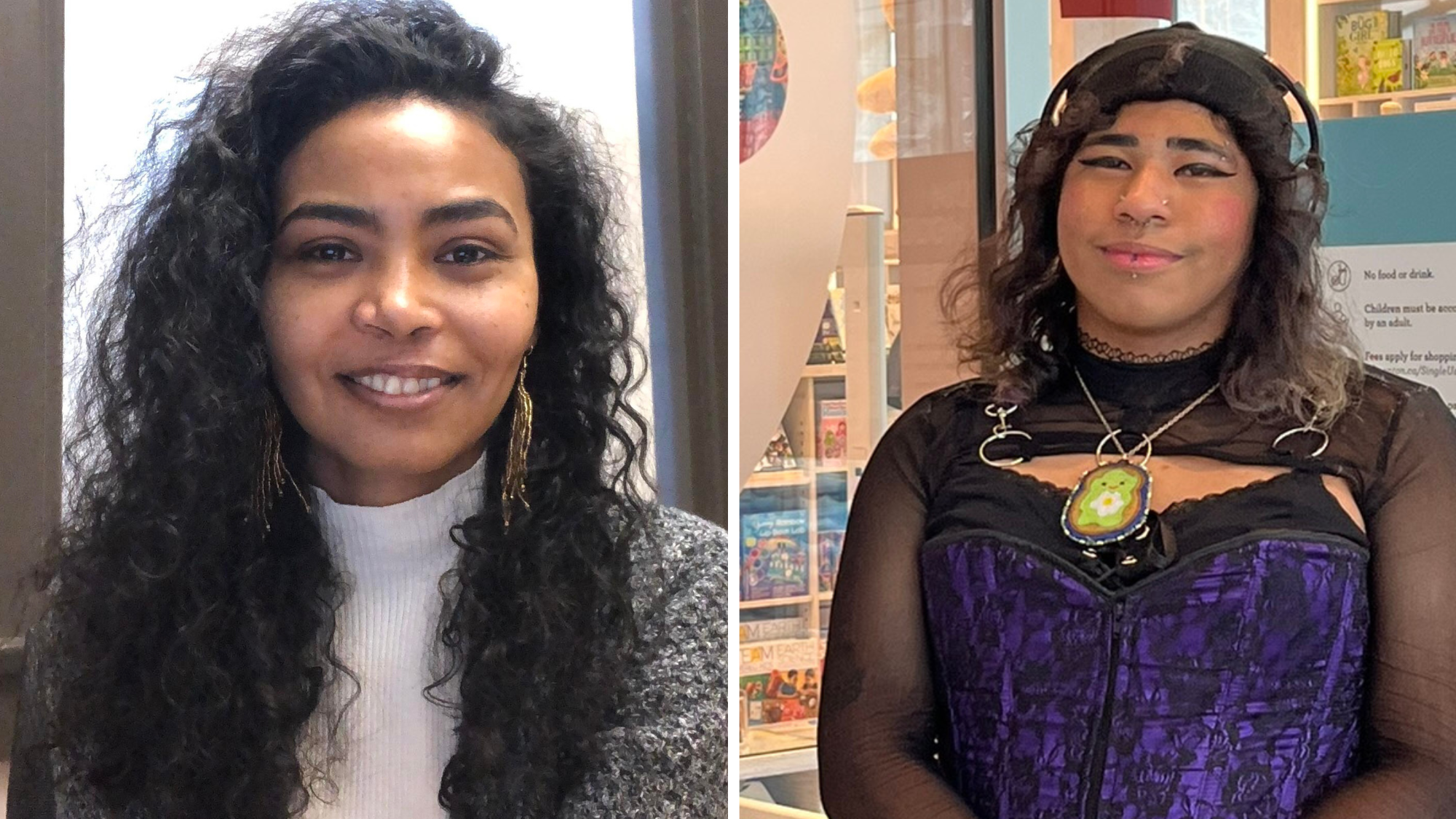
Etanda Arden (left) and Birdie Bull (right) are both Black and Indigenous - an identity that can be challenging to navigate.
If you spot a figure whizzing around the University of Alberta campus on an e-bike, clad in purple and clutching supplies for their beadwork projects, chances are you’ve just seen Birdie Bull.
While their presence on campus may be vibrant and distinct, Bull, a Plains Cree and Black student in the Faculty of Native Studies, has spent a lifetime navigating a world that often feels like it doesn’t have a place for them. “A lot of my internal struggles have to do with not understanding the intersection of my identity, what it means to be both Black and Indigenous,” says Bull. “You have a uniquely different experience that you can’t really relate to anyone else with.”
It’s a struggle that Etanda Arden knows well. Arden, a General Administrator in the Faculty of Native Studies who is Dene and Black, was born in Yellowknife and raised in northwestern Ontario. “I grew up predominantly in Indigenous communities, and didn’t really have any exposure to a Black community. So it was kind of confusing and difficult to be recognized as Black, but not really understand what that meant,” she says.
Creating what didn’t exist
Though they’re at different stages in their lives, Bull and Arden have a common thread linking them. As Afro-Indigenous people, they know what it’s like to feel too Black for some spaces, too Indigenous for others, to never truly see themselves represented in the world around them. Both eventually realized that if the representation they sought didn’t exist, they could start changing that — so they turned to the arts to create tangible representations of their identity.
Bull began making beadwork creations in 2020 when they participated in the Nîkânîw Indigenous Youth Leadership Program at Clareview Community Recreation Centre. After learning how to make pony bead lanyards, they were hooked — they quickly crafted a variety of lanyards, sold them, bought more beads, and started a beading business called Coral Cree Creations.
“The Indigenous teachings about beading say that beadwork is a part of you, a part of your spirit,” says Bull. “It’s a way of expressing myself.”
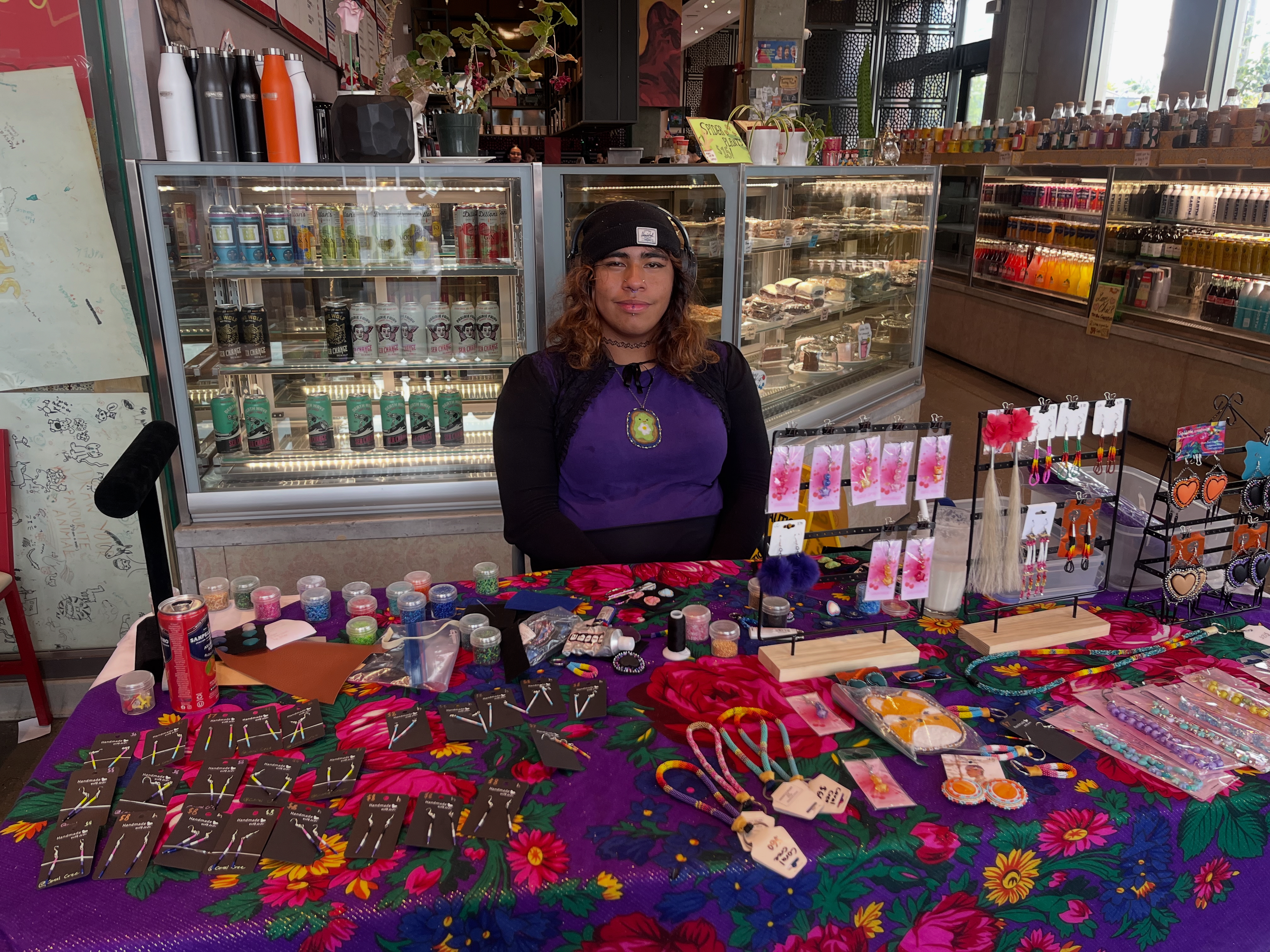
Many of their creations are Pride-themed, allowing them to represent their queer and gender-nonforming identity while connecting with their Cree roots. And though they incorporate many vibrant colours in their pieces, when crafting their own visual identity, they stick to one shade — purple, a colour they wear because they experience gender dysphoria when clad in any other hue.
While Bull used their beading tools to express their identity, Arden opted to pick up a pen. A few years ago, she wrote an article for the Yellowhead Institute about the lack of Afro-Indigenous identity representation in post-secondary.
“It’s hard to be a person when your identity isn’t recognized; when there is no record of you, no discussion,” writes Arden, and the impact of that lack is something that reverberates throughout her life.
“I didn’t ever find any representation of my identity anywhere,” she says. It was this lack of representation that made her feel ashamed to be Black; she didn’t even share that part of herself until she was 10 or 11 years old, once she and her friends started to engage with hip-hop culture.
Now that Arden has been given some tools to unpack her internalized anti-Black racism, she almost feels a secondary shame for ever not being proud of who she is. She acknowledges she still has work to do, and she’s still learning how to exist within two different communities, especially when neither are perfect.
“The most overt anti-Black racism I’ve experienced has been from Indigenous people,” Arden says, adding that it’s hardly ever addressed within Indigenous communities. But it’s those types of blind spots that she’s learned to recognize in her post-secondary education.
Bridging the gap, building what’s next
Bull has tried to find ways to explore those blind spots through the courses they take and the research projects they choose. When they wrap up their degree in the Faculty of Native Studies, they’re considering pursuing a Master of Arts in Indigenous Languages at University nuhelot'įne thaiyots'į nistameyimâkanak Blue Quills (UnBQ). “I feel these experiences set me up to be a very engaged Two-Spirit Afro-Indigenous cultural facilitator and advocate,” says Bull.
For Bull and Arden, navigating their Afro-Indigenous identity is a constant balancing act. The act of creation grounds them and offers them a way to explore all facets of themselves.
“As an Afro-Indigenous person, a lot of Indigenous resurgence doesn’t fully encompass my identity, but a lot of Black resurgence doesn’t address the Indian Act, so that’s where getting both my identities together is really hard,” says Bull. “I really strive to use art and literature to start bridging that gap.”
Bull plans to continue teaching workshops related to their beadwork pursuits, finding that when participants’ hands are busy crafting, their minds are often more open. “There’s a lot more engagement, people are more willing to use the information that you give them [during workshops],” Bull says. They are striving to build a bigger Afro-Indigenous art community, hoping to pull together both Black and Indigenous artists for some type of artisan event.
Arden seeks a future where Afro-Indigenous identity is more normalized, part of the conversation the same way that Black or Indigenous identity are as separate entities. “Acknowledging the Afro-Indigenous identity is crucial for both communities in their pursuit of liberation and decolonization,” she says.
It's something the Faculty of Native Studies is trying to foster as well with its Solidarity Through Scholarship Award, which is awarded to students in the program who identify as Black and are in good academic standing.
Above all, Arden wants the next generation to be bold and to make their voices heard.
“If I were to give any advice to younger Afro-Indigenous peoples, I would say: speak your truth, even if you’re scared. You matter, and your voice deserves to be heard. We deserve to exist without fragmenting ourselves to make others comfortable.”