Convocation 2026: Devonn Drossel
Native Studies Staff - 5 June 2026
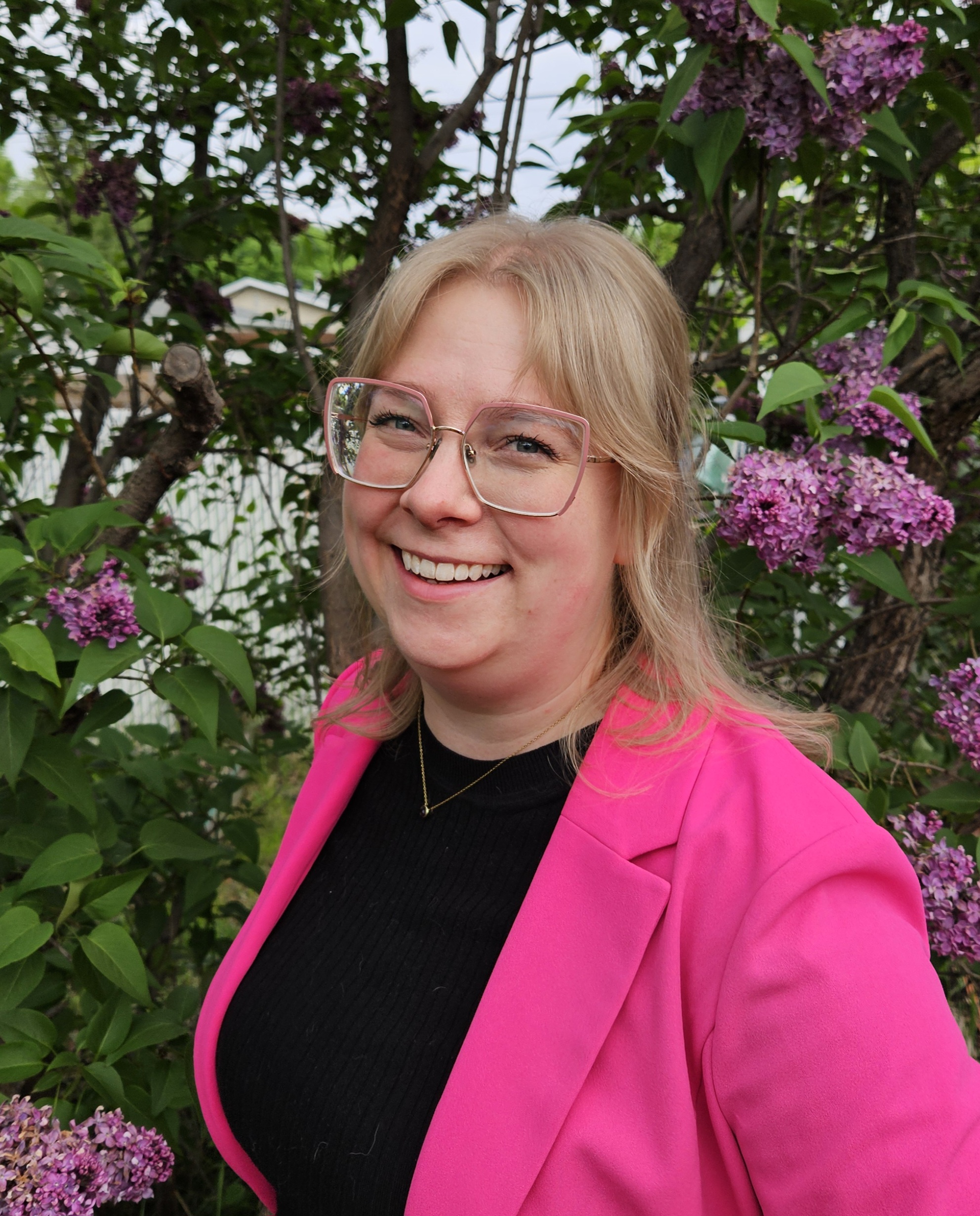
Devonn Drossel is graduating with her Master of Arts in Native Studies.
Beading and gardening are two of Devonn Drossel's pastimes — both of which heavily influenced her time with the Faculty of Native Studies.
Devonn is Métis, a citizen of the Otipemisiwak Métis Government with family ties to northern Saskatchewan. She is graduating with her Master of Arts in Native Studies. In her time with the faculty, Devonn made and continues to make a profound impact with her work with Light Fires: Indigenous Prison Arts and Education Project.
Perhaps just as important in her journey was her community; having people to regularly check in with while in grad school is key. "I guarantee they [your community] want to support you as much as you need to be supported, so give them the chance to do that," she recommends.
After graduation, Devonn plans on spending more time gardening and beading and building her backyard greenhouse business, which was born out of her studies and research of urban Métis food practices.
From all of us at the Faculty of Native Studies — congratulations, Devonn!
What led you to choose this area of study, and why the U of A?
Learning to bead, actually. I was taught by Judy Anderson during my undergraduate degree at the University of Calgary, and in the context of her classes she always pushed us to think deeply about what we were making and why. My beading projects always ended up focusing on, or including, food and its connection to my identity as a Métis person in the city. Around this time I also began to notice that although I knew many Métis people who practiced culturally-significant food practices in the city, there seemed to be a pervasive assumption that urban Indigenous food practices were either not possible, or that they were less important or significant than others. I wanted to do research that challenged that. The University of Alberta and the Faculty of Native Studies specifically felt like an obvious choice. I admit I was a little starstruck by the fact that so many scholars — whose work I'd spend my undergraduate career reading — called FNS home. Being a part of that community felt inspiring and I also knew it was a place that would support the research I wanted to do.
Tell us about your favourite professor and/or class.
My favourite class was NS 590, Community-Based Research, taught by Dr. Nancy Van Styvendale. For me, this class was so exciting and inspiring because it provided me and my cohort with such an incredible variety of examples of how good research can be done. Nancy encouraged us to try different and unconventional research germination methods out and to think deeply about which ones were good fits for the research we wanted to do, and why. A close second was NS 550, Research Practicum in Indigenous Studies (also taught by Nancy), because I got to create a podcast about Métis food sovereignty for the Rupertsland Centre for Métis Research (RCMR).
Did you face any significant challenges while you were a student, and if so, how did you respond?
The first few years were especially challenging, in part because I started during the COVID-19 pandemic, which forced me to redesign my research project. Additionally, my mom was hospitalized after having a series of strokes and my partner went through some serious health challenges that required a lot of support and some pretty big life changes. To cope, I started going to counselling regularly which helped a lot and tried to treat myself the way I would treat a loved one who I knew was struggling: with kindness, patience and reminders that I was doing the best that I could, and that was okay. It was easy to feel discouraged by the fact that I felt like I was taking too long or going about the whole process wrong, but in hindsight I was doing my best and it got me here.
What advice do you have for current or future students?
Spend time regularly with the people who build you up! Grad school can be very isolating. It's really easy to stick your nose in a book or your laptop and pretty much keep it there for the entirety of your program, with little to no breaks for socializing or relationship-building. I did a lot of that, and I think it makes the already-challenging experience of grad school much harder. I highly recommend taking the opportunities to write alongside your cohort, to go for walks in the river valley, or to catch up consistently with your friends who live in different cities. They're your community, and I guarantee they want to support you as much as you need to be supported, so give them the chance to do that.How do you plan on celebrating convocation?
My partner and I are going to go on the Edmonton Streetcar the day after convocation (we've never been before!) and then later in June I think I'll have a little garden party in my backyard to celebrate.What’s next after graduation?
For now, I'm going to continue working with the Light Fires: Indigenous Prison Arts and Education Project (@lightfiresproject) and I'm going to work on expanding my small business, Froggy's Greenhouse, which I started halfway through my degree. More than anything I want to spend way more time gardening, beading, and playing with my dog!