Roots of Change
Building Connections with Indigenous Communities to Reduce Barriers and Create Capacity
Roots of Change is a multi-faceted project that seeks to fundamentally transform connections between Indigenous communities and U of A. We know what barriers we need to dismantle and what changes we need to make, and we need to act now to create more equitable partnerships, to integrate Indigenous ways of knowing within the university and its research.
We propose a community engagement initiative that, like the medicine wheel, has separate components, but is ultimately interconnected.
Researcher Database
A part of Roots of Change starts with creating a comprehensive researcher database of all U of A Indigenous-engaged research for scholars, students, and community members to explore. By connecting with existing knowledge, we give communities direct access to what in the past has been a closed environment, with universities extracting information from communities and offering little in return.
We have developed a database with an interface that enables U of A researchers to add their projects. This work is part of a more significant effort to identify Indigenous-focused research at the University of Alberta to specifically connect to Indigenous community needs and make researchers, funders, students and community members aware of the work being done. The longer-term hope is that this cataloguing will support those involved by identifying potential collaborations, resources and access for communities, nations, and organizations.
Indigenous-Engaged Researcher Database »
Roots of Change Podcast
Roots of Change is a new podcast featuring interviews with an outstanding array of Indigenous scholars and researchers from across the country who are at the top of their domains. Guests come from a diverse set of academic and professional backgrounds: medicine, nursing, business, mathematics, and law — just to name a few.
Each episode profiles the guest and highlights their work, while we talk about everything from decolonization, Indigenization, and integrating Indigenous ways of knowing within the academy, to working with Indigenous communities in a good way.
Meet the Host
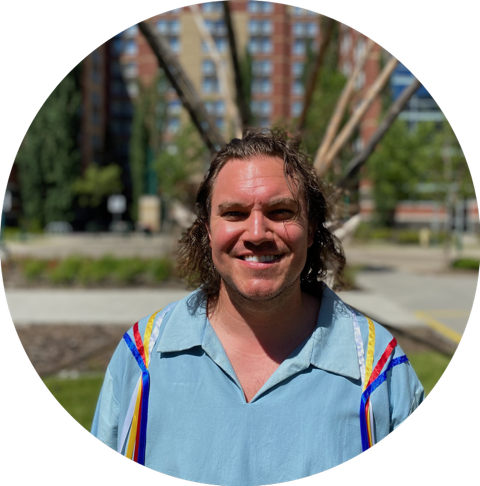
Phil Steinhauer-Mozejko
Phil Steinhauer-Mozejko is from amiskwaciwâskahikan (ᐊᒥᐢᑲᐧᒋᐋᐧᐢᑲᐦᐃᑲᐣ), “Beaver Hills Lodge,” otherwise known as Edmonton. He is a member of onihcikiskwapowin, Saddle Lake Cree Nation, in Treaty 6, and is of nêhiyaw (Plains Cree) and European (Celtic, Polish) ancestry. A proud Master of Arts in Communications and Technology (MACT) alum, Phil is passionate about Native affairs, digital innovation, and is committed to advancing Indigenous sovereignty and self-determination on Turtle Island and Inuit Nunangat.
As an advocate, Phil’s work is grounded in rights-based approaches to digital connectivity, with a steadfast belief that digital access can be key to social, cultural, and economic welfare. His leadership has influenced national policy consultations, including contributions to the Canadian Radio-television and Telecommunications Commission (CRTC), and international dialogues through the UN’s Internet Governance Forum (IGF), the World Summit on the Information Society (WSIS), and the Tribal Broadband Bootcamps (TBB).
With a background in communications and community engagement, Phil has designed and delivered initiatives towards First Nations, Inuit and Métis development in the world of digital connectivity through community-based trainings and mentorship programs, with a goal of long-term capacity sharing between Indigenous and non-Indigenous people. He has convened Indigenous youth, leadership and governance, with federal policymakers, service providers, industry and social enterprise at the Indigenous Connectivity Summit (ICS), and with the Indigenous Connectivity Workshops (ICW) in the United States and Canada.
Phil is lifelong—irrational—fan of the Toronto Raptors, and presently resides as a guest in moh’kinstsis (where the Bow meets the Elbow river, otherwise known as Calgary) in Treaty 7 territory.
Season 1
Raylene Whitford
Raylene Whitford has an MBA from Aberdeen Business School in the UK and is currently completing an interdisciplinary PhD in Indigenous Studies and Business at the University of Alberta. Raylene talks about the confluence of her academic and professional careers and discusses her journey from urban life to corporate and academic pursuits, highlighting her work with the Canadian Sustainability Standards Board. Raylene also reflects on her diverse career, including working as a roughneck, and encourages others to take the long, enriching path, while informing us how her Cree Métis culture remains a vital part of her worldview.
Dr. Shawn Wilson
Dr. Shawn Wilson is a researcher/professor at the University of British Columbia for Indigenous Studies. He is from Opaskwayak Cree Nation in northern Manitoba and lives in Sylix Territory in Kelowna, BC. His research project aims at defining rules/guidelines for respecting/safeguarding sacred teachings (ceremonial/star knowledge). He has worked all over Austria, New Zealand, Norway, and Hawaii. Shawn talks about how Indigenous knowledge moves in different ways, similarities/strengths/differences (Indigenous movement/academy), decolonization/Indigenization, capacity building/sharing and rationality.
Janice Makokis
Janice Makokis is an Indigenous rights scholar, advocate and consultant from Saddle Lake Cree Nation, Treaty 6. She has a joint position between Yellowhead Tribal Council and University of Alberta (Indigenous Relations/Policy Advisor/Faculty). She also is an advisor and teaches Indigenous studies/law and governance courses in Onion Lake Cree Nation. Janice talks about the difference between Aboriginal Law and Indigenous Law, connects with Indigenous community and youth.
Dr. Kisha Supernant
Dr. Kisha Supernant, Director of the Prairie Institute of Indigenous Archeology at the University of Alberta. She is (Métis/Papaschase/British) a teacher, researcher, and writer. She completes much of her research in Western Canada and explores how archaeologists and Indigenous communities can build collaborative research relationships and consults on how technology can best be applied to search for unmarked graves. Kisha talks about her archaeologist field work and burial grounds, communities and building capacity. Including Heart Centered Practice Vs Head Centered.
Dr. Lana Whiskeyjack
Dr. Lana Whiskeyjack is a University of Alberta associate professor in the Faculty of Arts – Women and Gender Studies. She is a Cree visual storyteller, scholar and arts actionist educator from Saddle Lake Cree Nation, Treaty 6. She learned traditional arts from her mother and grandmother (quilting and singing). Involved with decolonial community research with several institutions. Lana sits on the steering committee RESOLVE, University of Calgary based network to coordinate research on violence against women and girls in Alberta, Saskatchewan, and Manitoba. Lana talks about can we distinguish between art and creation, thinking about work at a western level, decolonization/Indigenization, capacity building/sharing, ceremony/spirit, and Indigenous curriculum/requirements and effectiveness.
Dr. Gina Starblanket
Dr. Gina Starblanket is an Associate Professor at the University of Victoria’s School of Indigenous Governance, a program that she herself graduated from in 2017. She was hired for this position in 2018 along with several other Indigenous women to restructure the program to be more inclusive of queer and feminist lenses. A woman of Cree and Saulteaux heritage, and a member of Star Blanket Cree Nation in Treaty 4 territory, Starblanket’s research explores Indigenous governance and treaties, and how the intersections thereof with Indigenous feminism, relationality, and decolonization. Gina talks about Indigenous Governance Program at University of Victoria, Prairie Indigenous Relationality Network, relationship building, and impacting political science/knowledge at academy.
Season 2
Dr. Kim Tallbear
Dr. Kim Tallbear is Sisseton Wahpeton Oyate professor specializing in racial politics and science. She grew up in South Dakota and Twin City, Minnesota. The area of study is DNA and Indigenous identities. Kim talks about colonial soup, ethical integration with a community, work with scientists who have politics in the right places, and we know Indigenous knowledge is based on systematic data, and decolonization/Indigenization.
Dr. Florence Glanfield
Dr. Florence Glanfield is the Vice-Provost of Indigenous Programming and Research and a Professor of Mathematics Education in the Faculty of Education at the University of Alberta. A member of the Métis Nation from northeastern Alberta, Dr. Glanfield’s love of mathematics began when she was a child. She recalls how her father and grandfather encouraged her to identify patterns and connections in the world around her, a skill that she now helps grow in students and teachers-students alike. As a teacher, you need to examine what you are teaching. Mathematics is all about relationships, Florence loves math because of the relationships and aligns with who she is as an Indigenous person. Florence talks about decolonization/Indigenization, anti-colonialism, and capacity building.
Dr. Max Liboiron
Dr. Max Liboiron Professor in Geography and former VP (Indigenous research) at Memorial University, NL. from Red River Métis/Michif and settlers raised in Lac La Biche, Treaty 6. Max has influenced national policy on both plastics and Indigenous research, invented technologies, and protocols for community monitoring of plastics and created protocols for fostering research collectives. She talks about decolonization/Indigenization, and capacity building/sharing.
KD King
KD King was born and raised in Northern Alberta, proud two-spirited Métis, Treaty 8. Became a nurse and his PhD research was looking at HPV-related cancer prevention in Métis communities in Alberta. KD talks about his present work with Métis Nation of Ontario Covid 19 work (HPV research is progressing), capacity building, call to Action 22, decolonization/Indigenization.
Dr. Alika Lafontaine
Dr. Alika Lafontaine is an anesthesiologist based in Grande Prairie, Alberta, and in 2022 became the first Indigenous physician to become president of the Canadian Medical Association (CMA). He has served on numerous boards and committees for the Alberta Medical Association, the Canadian Medical Association, the Royal College of Physicians and Surgeons of Canada, HealthCareCAN, and the Indigenous Physicians Association of Canada.
Brenda Gunn
Brenda Gunn is an Associate Professor in the Faculty of Law at the University of Manitoba, a position she has held since 2015. A Manitoba Métis woman, her research interests include Indigenous rights and Indigenous law within Canadian and international legal systems. She earned her JD from the University of Toronto in 2005 and her LLM in Indigenous Peoples Law and Policy from the University of Arizona in 2006. She was first hired as an Assistant Professor at the University of Manitoba in 2009. Brenda talks about her work at the university, Aboriginal vs Indigenous Law, decolonization/Indigenization, capacity building, and themes in academia (native and nonnative).
Jessie Loyer
Jessie Loyer is an academic librarian at the University of Alberta libraries. She previously worked as a collection librarian for Anthropology and Indigenous Studies at Mount Royal University. A member of Michel First Nation in central Alberta, Loyer’s academic work focuses on Indigenous perspectives on information literacy, language revitalization, and the development of reciprocal research relationships following the protocols Nêhiyaw and Michif kinship. Jesse talks about knowledge systems on both the academic side and the Indigenous side, the approach to media communicating Indigenous messages, data (information sovereignty), capacity building, and the decolonization/Indigenization movement.
Host: Phil Steinhauer-Mozejko
Production Team: Phil Steinhauer-Mozejko and Chad Blain