Contested Citizenship in Conversation
Lauren Bannon - 19 May 2026
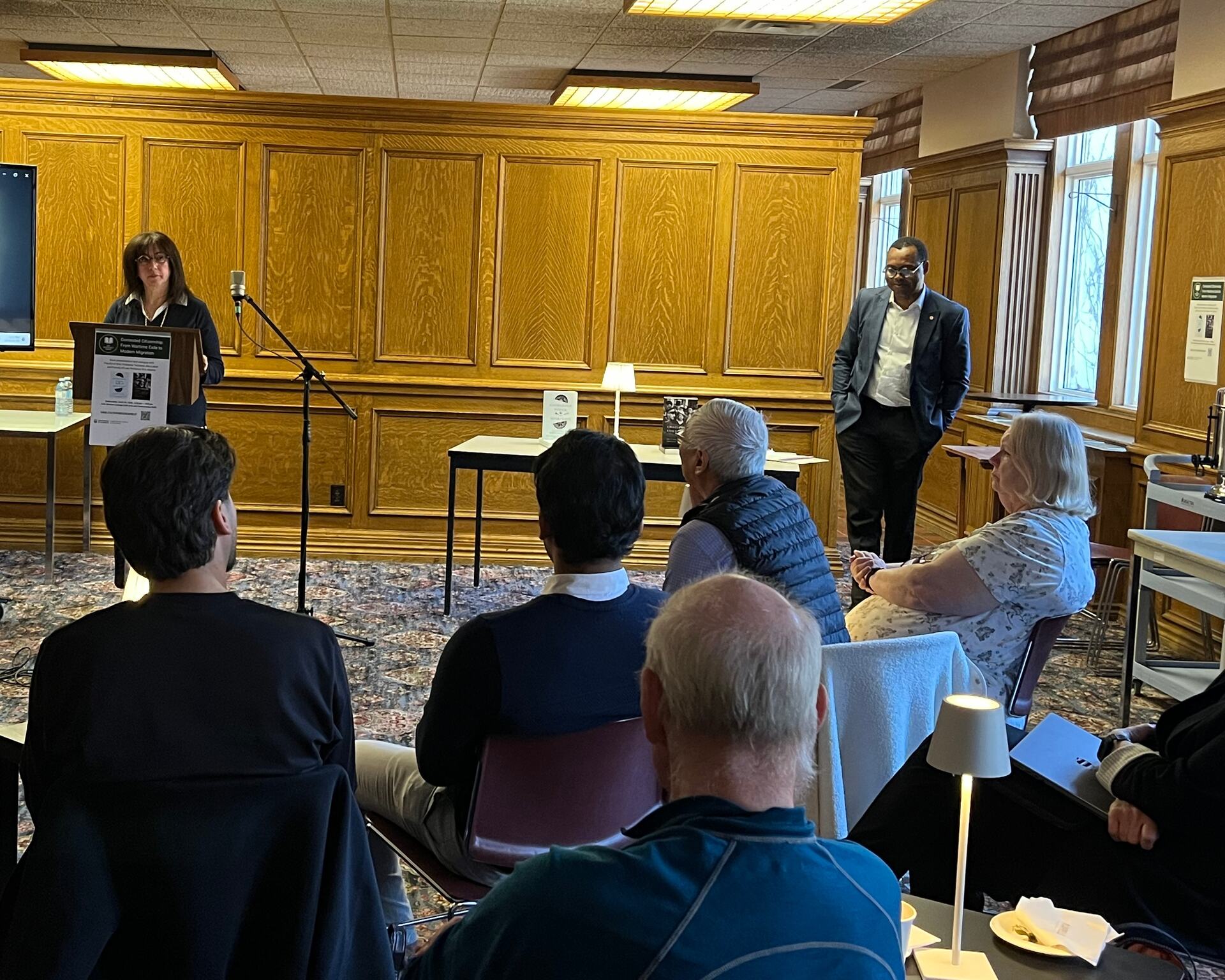
Though North Campus was quiet as winter term came to an end, the Arts Student Lounge was abuzz with intellectual energy on April 29 as the College of Social Sciences and Humanities (CSSH) hosted its second SSH Bookshelf Series, Contested Citizenship: From Wartime Exile to Modern Migration.
The afternoon was spent showcasing new books from the areas of political science, history and law. Dr. Yasmeen Abu-Laban, professor in the Faculty of Arts and Canada Research Chair in the Politics of Citizenship and Human Rights, presented on the book Knowledge, Power, and Migration: Contesting the North/South Divide, which she co-edited. Dr. Jordan Stanger-Ross of the University of Victoria joined in virtually to speak about Challenging Exile: Japanese Canadians and the Wartime Constitution, a book co-authored with Dr. Eric Adams, a former Faculty of Law professor, who was recently appointed justice of the Court of King’s Bench of Alberta.
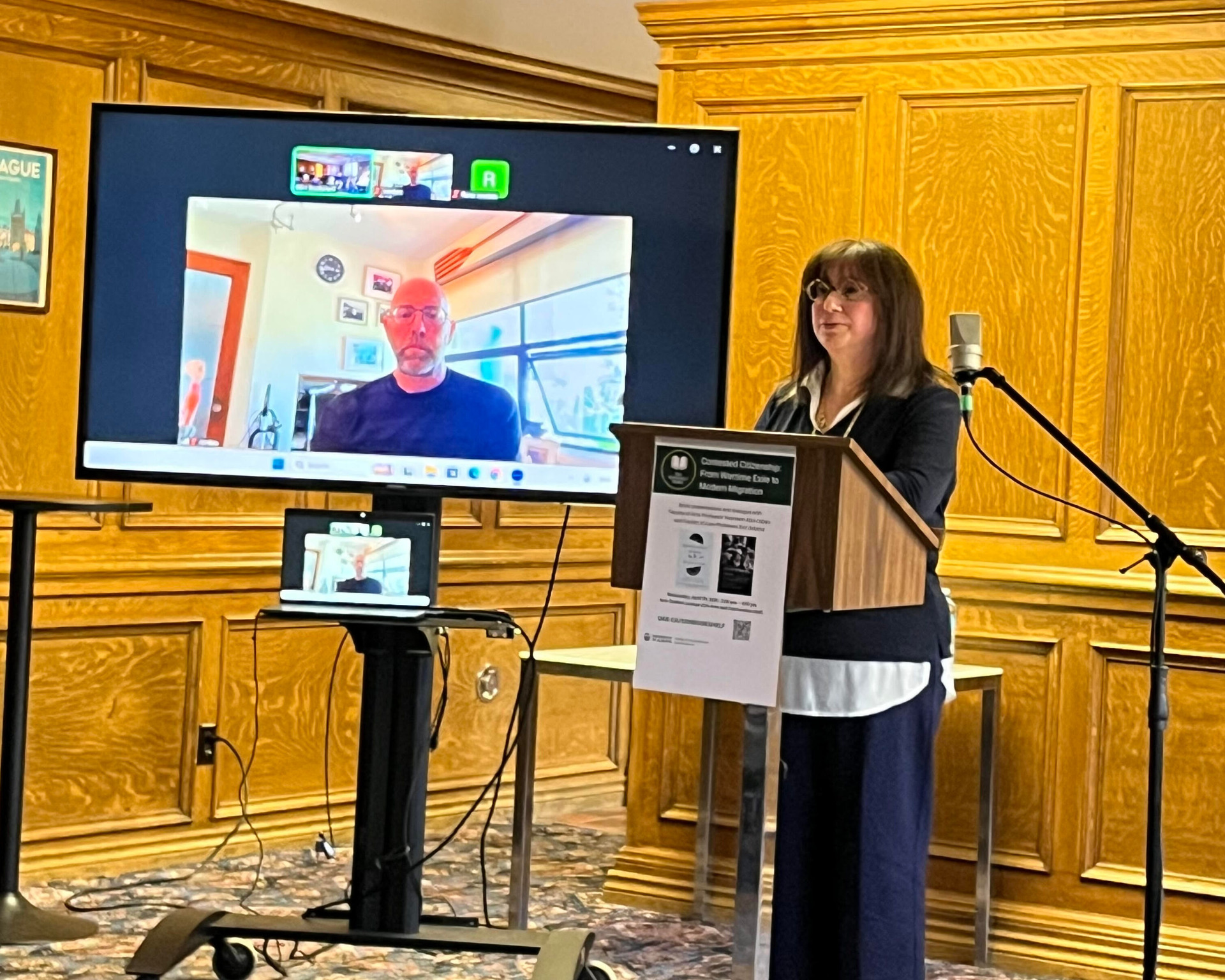
Both presentations highlighted the importance of scholarly research for illuminating and tackling injustices, whether they happened decades ago or are happening today.
“It was a pleasure to hear Dr. Abu-Laban and Dr. Stanger-Ross speak to their areas of expertise,” says Dr. Temitope Oriola, associate dean, research of CSSH. “Initiatives such as the SSH Bookshelf series are an excellent showcase of vital work happening across the social sciences and humanities and invariably spark intellectually scintillating deliberation regarding pressing societal issues.”
Shifting the Conversation
The book Knowledge, Power, and Migration: Contesting the North/South Divide walks readers through a gap in how immigration is understood, pointing to the fact that most knowledge deemed expert comes from wealthy countries in the Global North, even though the majority of the world’s refugees are located in the Global South.
Rather than a single perspective, the book explores a collection of stories and research that challenge the idea that Western researchers have all the answers. It shows how experiences of people in the Global South are often dismissed and argues for a system that recognizes the real-world inequalities people face.
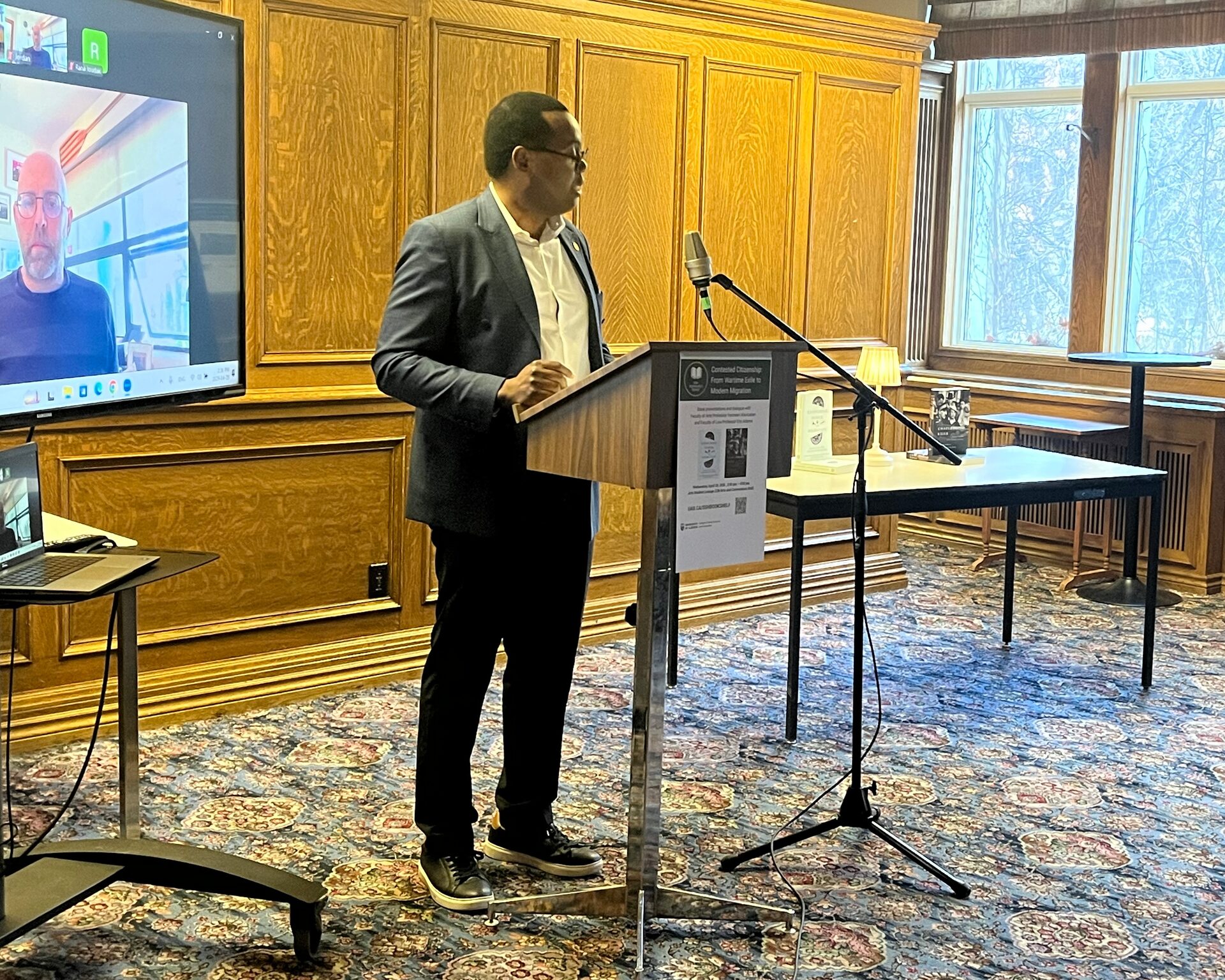
In her talk, Abu-Laban highlighted a crisis in immigration policy on a global scale and the ways that governments are responding. She spoke about how modern policies are still steered by colonial mindsets, leading to a decline in stable residence options and a global trend toward treating human movement as a security threat. She pointed to the United States as an example, sharing figures where 60,000 people were held in detention by ICE, and 29 individuals died in custody since the start of 2026. Abu-Laban said this serves as an illustration of a system that has prioritized policing over human rights.
Beyond these challenges, the talk made the argument that there is an urgent need to change who actually leads conversations around immigration and movement. Abu-Laban explained that by looking toward scholars and migrants from the Global South, we can start to build a system that reflects the realities of human movement. Ultimately, her presentation encouraged the audience to move beyond preconceived notions and engage with the perspectives of the people who are actually living the story, contributing to a more informed and nuanced global perspective.
A Cascade of Injustice
Challenging Exile: Japanese Canadians and the Wartime Constitution takes a look at the years right after WWII, when the Canadian government implemented policies that led to the forced displacement of Japanese Canadians. The book details the experiences of thousands of people (75 percent Canadian citizens by birth or naturalization) who were forced to choose between moving to an unfamiliar province or being expelled to post-war Japan. It is the first book to focus on the legal challenge organized by Japanese Canadians to contest their exile at the Supreme Court of Canada.
In his talk, Stanger-Ross brought these histories to life by walking the audience through the "cascade of injustice" during and after the war. He described the period as one in which government policies led to the loss of homes, businesses and property belonging to Japanese Canadians, including the sale of assets while many individuals were being held in internment camps. He explained how the policies and legal measures of the time had profound impacts on both property rights and individuals’ sense of belonging and citizenship.
The presentation wasn't just about the struggle, however. Stanger-Ross also shared a narrative of resistance. He explained how these collective efforts extended beyond opposing deportation policies and focused more broadly on advocating for citizenship rights and equal treatment under the law. He said these stories serve as a reminder that legal protections and civil rights in Canada have been shaped through the actions of individuals and communities who challenged government policies through advocacy and the courts.
The SSH Bookshelf Series aims to publicize research through faculty-authored book presentations, allowing researchers in the social sciences and humanities to celebrate and share their scholarship. For more information or to ask any questions, please email the Director, CSSH Office of Research, Oliver Rossier (orossier@ualberta.ca).