Igniting Purpose
The Student Experience Action Plan Report to Community
Student-centred
In January 2023, the University of Alberta launched its inaugural student experience strategy. Igniting Purpose: The Student Experience Action Plan (SEAP) is our community’s roadmap for intentional investments in high-impact student success areas outlined in SHAPE: A Strategic Plan of Impact. The SEAP’s shared accountability model means countless people are responsible for moving the plan’s goals and actions forward to allow the diversity of the university’s communities to shine through.
RESPONSIVE AND DATA-INFORMED
The heart of the SEAP is the university’s commitment to listen to students and understand their needs.
GOALS, ACTIONS AND IMPACTS
Since 2023, work has been underway to complete the 53 actions aligned with the SEAP's 19 goals in seven thematic areas. Some of the actions are stand-alone projects we will complete and measure for their positive impact on the student experience. Others represent ongoing work that will continue to improve aspects of the student experience over time.
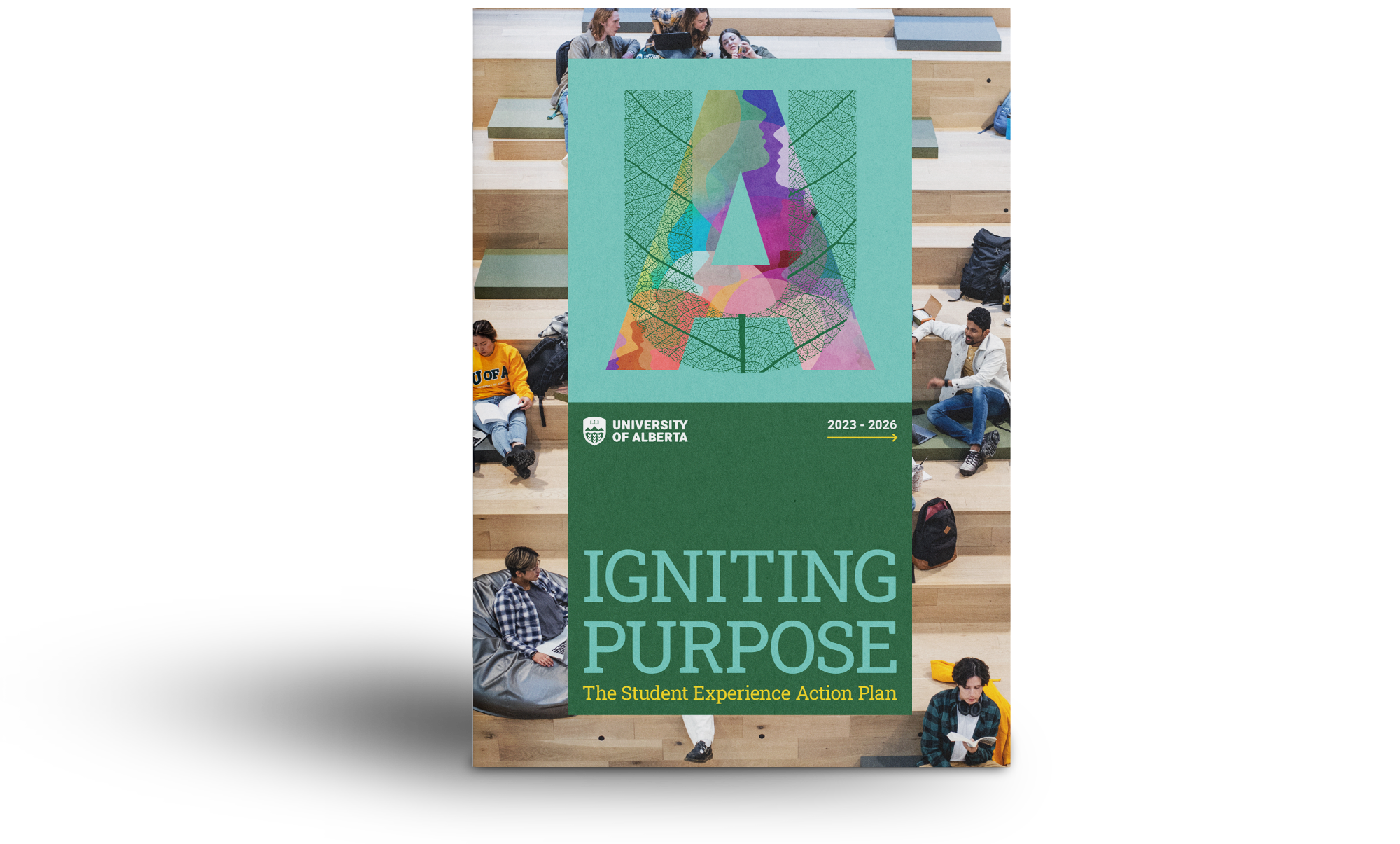
Igniting Purpose: The Student Experience Action Plan
The SEAP is an ongoing call to action. It is our guide to understanding what a positive student experience is and a catalyst for us to embody this vision in its fullest.
2024-25 Report to Community
Highlights by Thematic Areas
Creating safe, accessible and connected campuses

This thematic area continues to encompass several priorities for U of A students. In both the 2024 and 2025 student experience surveys, safety — defined as feeling emotionally, culturally and psychologically safe while on campus — was the top driver of positive student experiences.
90% students agreed or somewhat agreed with the statement they felt safer while on a U of A campus than other public spaces. Initiatives to support safety are regularly offered by the Vice-Provost Access, Community and Belonging (ACB), the Centre for Teaching and Learning, numerous student groups and many individual communities.
At the start of Fall 2025, an email from ACB directed undergraduates to the Consent and Sexual and Gender-Based Violence (SGBV) webpage as part of required awareness training. The webpage features educational videos and a directory of on- and off-campus supports. This initiative reinforces U of A’s commitment to fostering a culture of consent and provides accessible resources for those experiencing the effects of SGBV.
The Office of Safe Disclosure and Human Rights offers workshops and presentations on human rights related topics, including the Being Anti-Racist workshop which was intended for those ready to move from awareness to action.
Spotlight
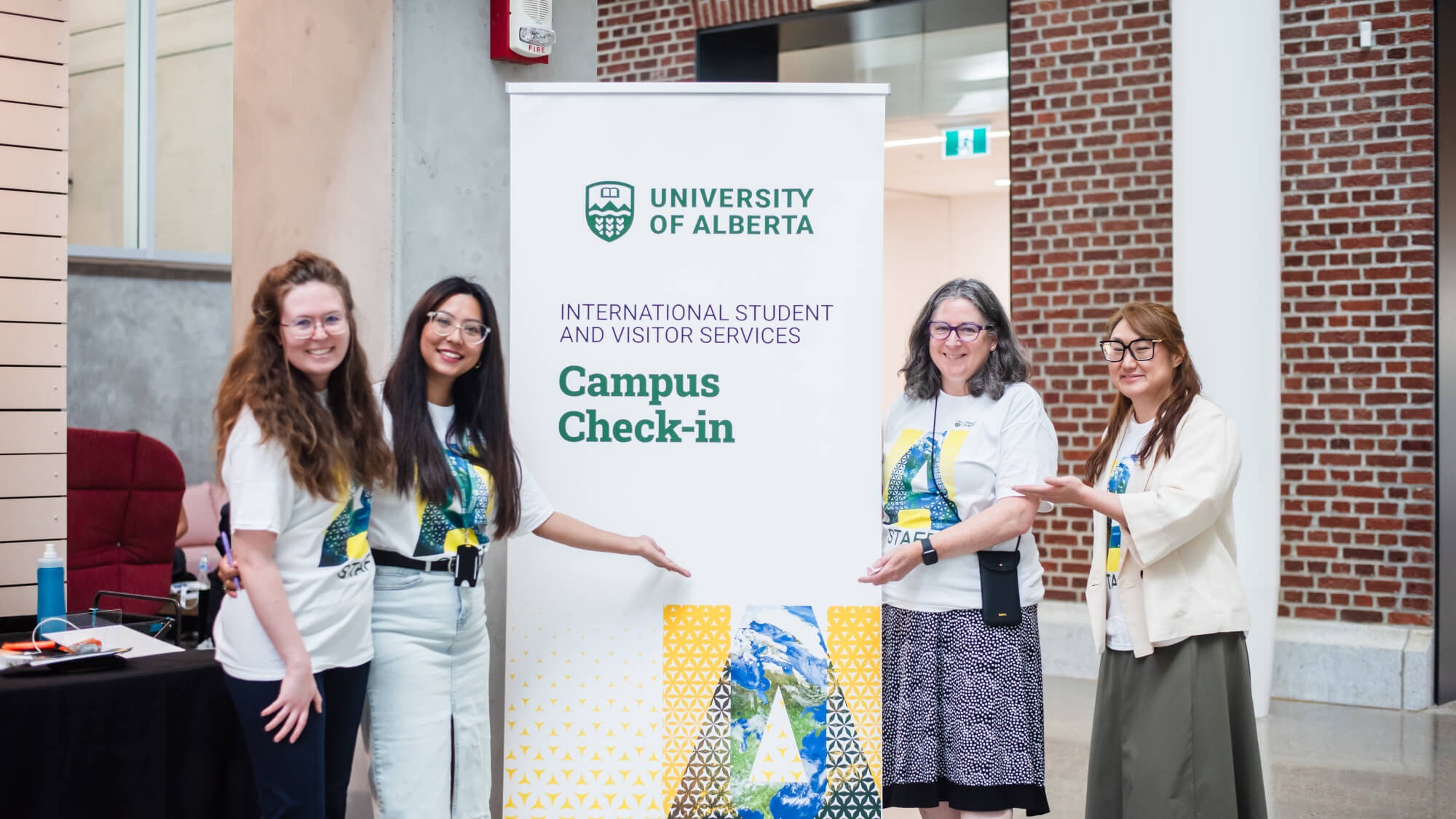
International student websites and service pages were redesigned to provide clearer immigration guidance and easy access to QR-based resources. Students can now find the information that applies to them more quickly, without emailing multiple offices.
Highlights
- Student Success and Experience implemented a new user-friendly portal for academic accommodations. Called Accommodate, the portal makes academic accommodations easier to request and understand for students and instructors.
- Accessibility & Accommodation services supported 21.5% more students with disabilities in 2024-25 than in the previous year, as the number of students receiving accommodations continues to grow at a rate that outpaces overall enrolment.
- The Black Canadians and Anti-Racist Futures course launched in February 2024 on Coursera as part of university-wide equity training.
- Faculty-facing guidance was published by the Vice-Provost ACB to support teaching during geopolitical events, alongside the launch of the Disability Cultures and Access Hub. This allows faculty to respond thoughtfully when global events or accessibility needs affect students.
- The Microgrant Program, led by the Vice-Provost ACB, funded 17 community-led events and initiatives rooted in mutual and collective care. Small-scale funding like this empowers students and staff to create connection and support within their own communities. Other examples of these include Campus Sustainability Grants, International Student Experience Micro-Innovation Grant and CSL Program's Small Grant Fund.
- The university partnered with Edmonton Transit Service (ETS) to designate specific locations on North Campus, South Campus, Campus Saint-Jean and Enterprise Square so that Dedicated Accessible Transit Service (DATS) can better serve the campus community. This initiative improves access for individuals who rely on the service. The project was supported by the Office of the Vice-Provost ACB; the Built Environment Collaboration Table on Disability Cultures and Access; and students and staff from Humanities 101 and the Community Service-Learning program in the Faculty of Arts.
- The university approved the updated Accommodations Policy and the Discrimination and Harassment Policy in June 2025 . The updates have made the policies clearer for students and aligned options for action and support with other major student-facing policies. This makes navigating these easier for students and for the university community who support them.
Demonstrating transparency and affordability

Maintaining transparency in university spending remains a shared priority among students, particularly as affordability has been identified as a critical issue in the SEAP. A key benchmark for improving student affordability is the active reduction of course material costs. In response, multiple faculties have worked to exceed the 35% minimum target for courses and class sections participating in the Zero Textbook Cost initiative.
Spotlight
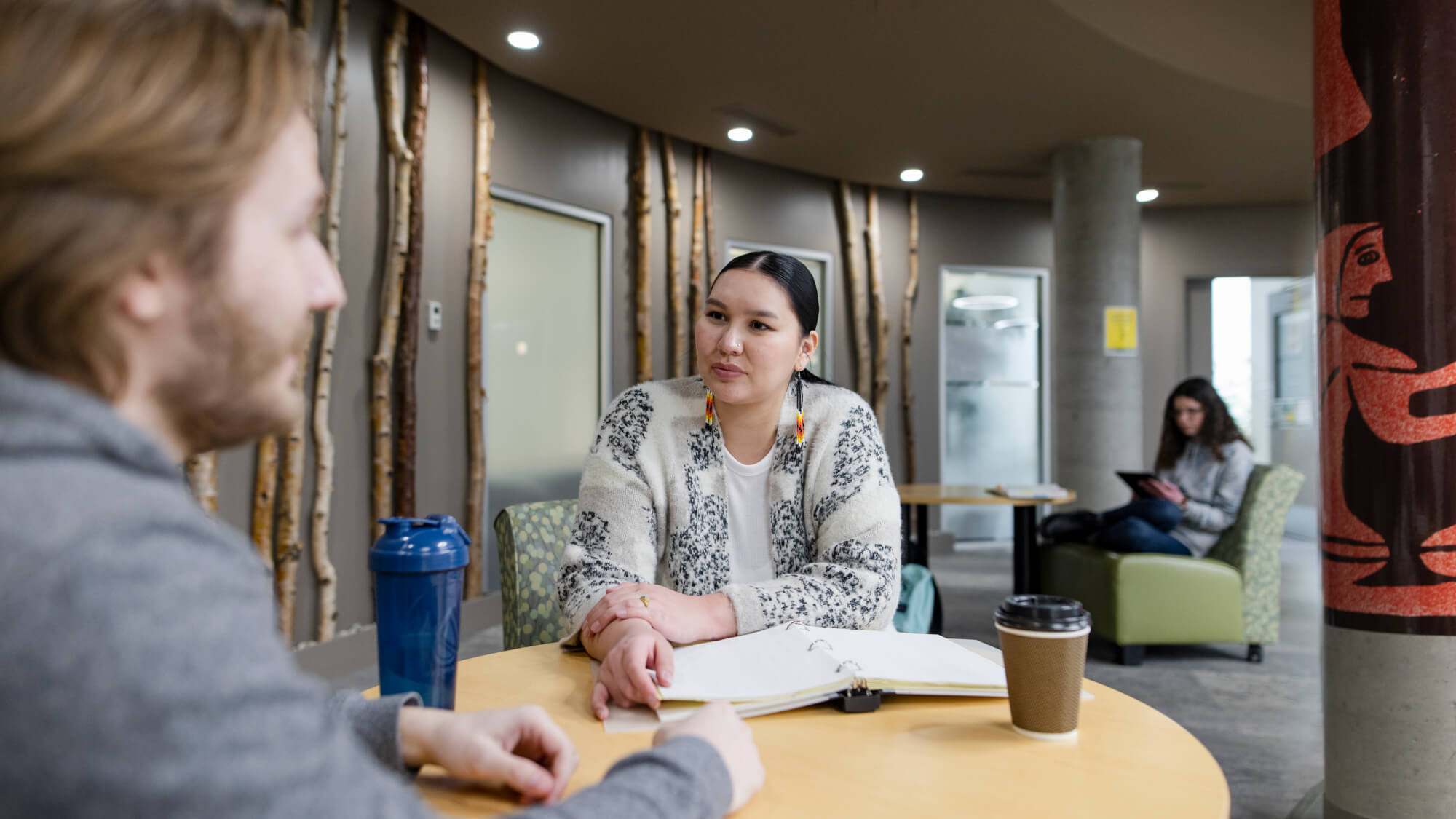
Student Financial Support began accepting applications from Indigenous students early for the U of A’s Domestic Supplementary Bursary program, recognizing that a critical funding gap exists at the beginning of the academic year as Indigenous students experience delays in the transition towards band funding. By accepting applications early, we aim to address this gap and provide potential support.
Highlights
- Libraries led a Zero Textbook Cost “World Tour,” working directly with instructors to expand open and library-based course materials. Through the Zero Textbook Cost initiative, students in approximately 32% of University of Alberta classes did not incur any costs for accessing course materials in 2024-25, increasing the accessibility of learning materials.
In the faculties
- All Native Studies online classes use free materials or materials available from the library.
- Less than 35% of the core sources used by School of Public Health students require a textbook.
- The Alberta School of Business curated a list of Open Educational Resources (OER) for instructors specifically relevant to Business courses.
Enabling academic agency and flexibility

To better empower students, the university focused on streamlining academic requirements and increasing flexibility. By enhancing the transparency of program data, faculties are helping students more confidently access experiential learning opportunities, such as the ALES Mini-Internship Program.
In addition, the launch of the affirmed name functionality allows students to independently identify by the name they choose to be recognized by within the U of A community.
Spotlight
The ALES Mini-Internship Program (AMIP) offers a unique opportunity for students to get first-hand learning experience on careers in agriculture, environmental and food science industries. Twice a year during the Fall and Winter reading weeks, this program matches students with an industry specific organization for a three-day visit and volunteer work. During the Fall 2024 Reading Week, AMIP reached a significant milestone, celebrating over 1,000 student participants.

Highlights
- Women in Scholarship, Engineering, Science, and Technology (WISEST) engaged over 750 U of A students as volunteers in STEM experiential learning opportunities.
- The Undergraduate Research Initiative introduced “Roadmap for Research” as a microcredential program that prepares undergraduate students to seek out and be successful in research during their programs.
- Athletics provided significant experiential learning opportunities, hiring 206 students as part-time staff and summer camp coaches. An additional 70 student volunteers served in health and performance roles, gaining invaluable hands-on experience.
- FreshService, a service management tool that allows students to submit an inquiry or search for answers to commonly asked questions, was implemented at Campus Saint-Jean. Students can now fill out the online form in French, in addition to English, increasing accessibility for francophone students.
- University students and staff can now access a list of standardized definitions for instruction modes and course components online, enabling students to make choices that will work for their learning style and needs when registering for courses.
- The affirmed name functionality was launched, supporting the university in establishing an environment in which all university staff and students can independently identify their primary (affirmed) first, middle and last name by which they wish to be recognized as a member of the U of A community.
- A new March convocation period was added beginning in March 2026 for students who finish their degree requirements by the end of the Fall term (December). This convocation period is not only beneficial for students, but also aims to meet the university’s growing enrolment.
In the faculties
- The faculties of Business and Education are using the Advisor functionality within the “My Schedule Builder” tool to help students create class schedules that align with their program requirements while effectively balancing co-curricular and extra-curricular commitments.
- Rehabilitation Medicine approved new online and hybrid courses to expand learning options, allowing for more flexible learning pathways for current and future students.
- In 2025, The Faculty of Graduate and Postdoctoral Studies published their Action + Partnership Plan, a student-focused plan aimed to position graduate and postdoctoral studies as a compelling choice for learning, teaching and personal development.
Fostering a student-centred learning environment

The 2024–25 academic year saw significant progress in harmonizing the student service ecosystem, highlighted by the opening of the Student Service Centre in the new University Commons and the widespread adoption of a central ticketing system. By streamlining how student information is organized and shared, we have built a strong foundation for continued improvements in the year ahead.
Spotlight
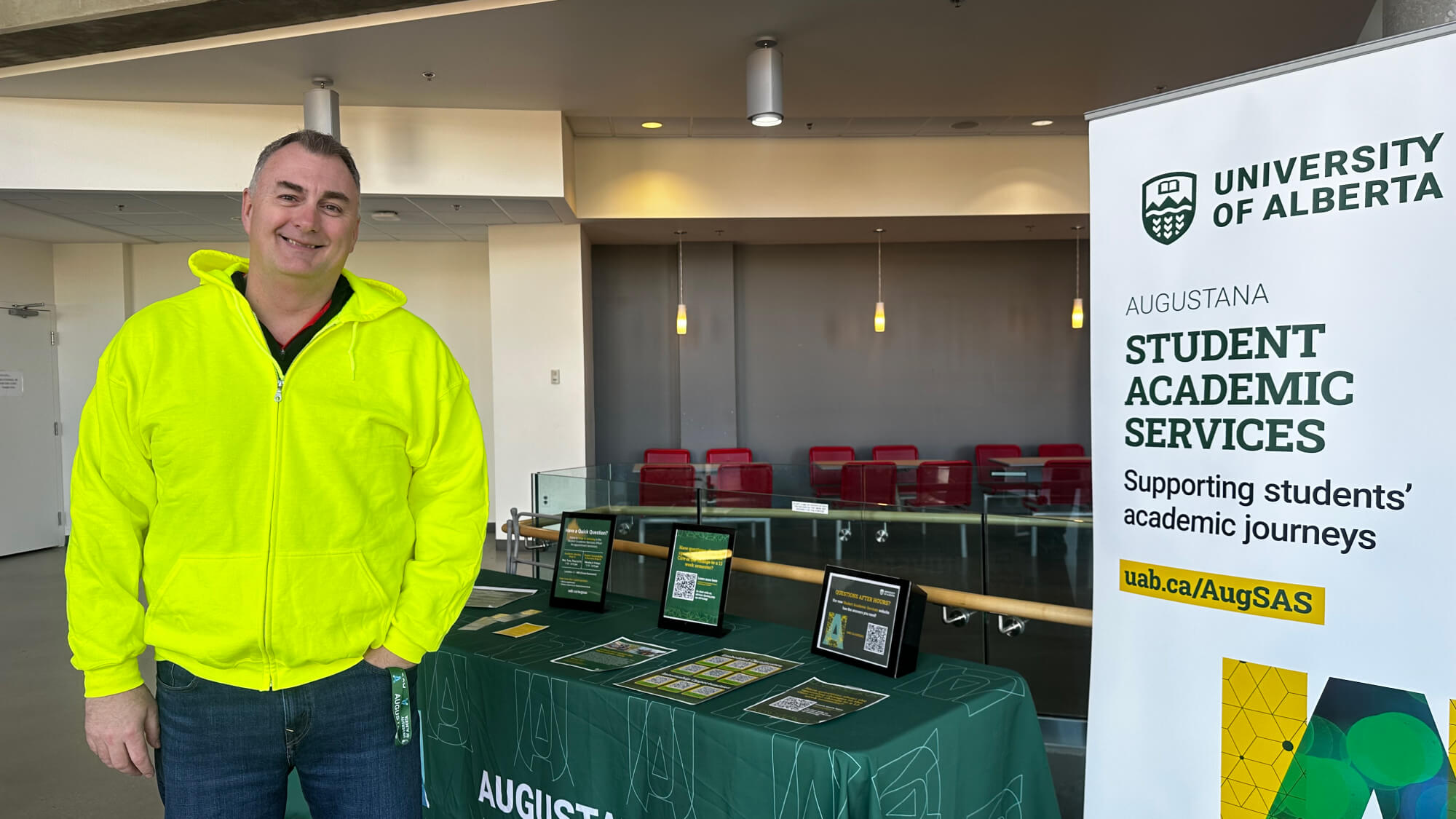
Augustana introduced pop-up advising and a student registration fair, providing more opportunities for one-on-one advising.
Highlights
- To kick off Cybersecurity Awareness Month in October 2025, IST hosted a tradeshow in the newly opened University Commons featuring several cybersecurity-focused tables. One of the tables showcased the Cybersecurity, Hacking and Digital Security (CHADS) student club. CHADS includes members from across the university, many from Computing Science, and they played a key role in the event’s success.
- The Augustana Course Registration Fair took place in March 2025 which allowed students to participate in in-person degree planning with advisors and academic staff.
- Augustana phased out the 3/11 schedule for the 2026-27 academic year, simplifying the academic calendar and aligning with the rest of the university.
- A new advanced search feature was launched in the University of Alberta directory, making it easier for students to find and connect with faculty members seeking undergraduate researchers.
- Student Success and Experience hosted a Student-Facing Academic Leaders' Symposium (SFALS) in November 2024 and convened deans, vice-deans, associate deans and chairs for a full day of connection and dialogue, exploring key topics related to the student experience and learning environment.
In the faculties
- The Faculty of Medicine + Dentistry’s Indigenous and Black student associations were integrated into program leadership, strengthening student representation in decision-making.
Relationships, connection and belonging matter

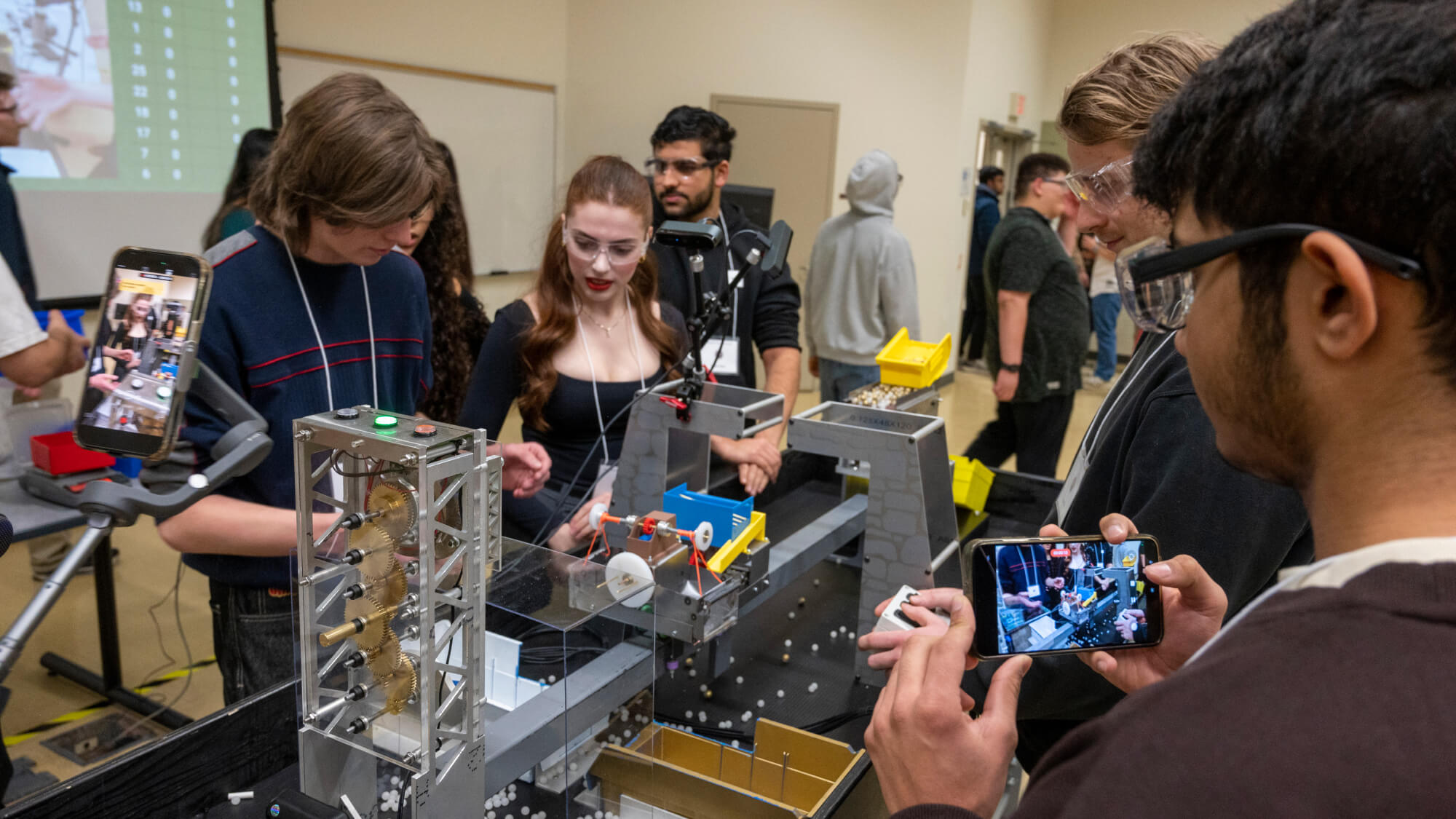
Relationships and connections are at the heart of the student experience. With countless ways to get involved, make friends and expand one’s thinking and network, our diverse community has opportunities for all students. With more than 475 student groups and every level of the university contributing to fostering relationships, the following initiatives are just a few of the highlights.
Spotlight
Student Affairs approved 2,727 student-led events, an 11 per cent increase over the previous year. The approval process also became 28 per cent faster, with average turnaround times reduced from 16.8 to 12.2 calendar days.
Highlights
- Elder Myrna Yellowbird, a member of Samson Cree Nation, regularly visits Augustana two to three times a week as part of a meaningful commitment to supporting First Nations, Métis, and Inuit students and fostering a more inclusive campus environment. Through her presence, she offers opportunities for cultural connection, guidance and the sharing of stories.
- Construction for a reimaged First Peoples’ House (FPH) began. The new home for First Peoples’ House at the University of Alberta is dreamed and designed to go beyond just a physical building. This expanded, love-built space calls in U of A First Nations, Métis, and Inuit students in unprecedented ways. At its heart, it will continue to provide a place of care, belonging and sâkihitowin (love) for students. The ceremonial opening is scheduled for summer 2026.
- First People’s House expanded its meal program during times that can feel isolating, especially when students are unable to return to their remote communities for holidays. These gatherings help students stay connected to the university community and engage in their studies.
- Athletics hosted 163 events on campus in 2024-25, with 23,573 students attending ticketed events, bringing the university community together and building campus spirit.
- International Student and Visitor Services orientation activities and international events were redesigned to intentionally bring students from North Campus and Campus Saint-Jean into shared spaces so that students can experience the university as one community.
In the faculties
- The Faculty of Science created a new Engagement Officer position. This has allowed for increased student engagement, invigoration of the science mentorship program and subsequent enhanced peer support.
- The Faculty of Engineering launched the Engineering Student Leaders program to formally train, recognize and show appreciation for student volunteers. These volunteers support events such as orientation, first-year nights and recruitment initiatives, and may be featured in university publications, faculty social media and other internal and external communication channels.
Prioritizing student success

Having accessible and timely health and wellness supports that are culturally diverse is important to U of A students. The university’s investment in more clinicians for Counselling and Clinical Services and the adoption of a new therapy model were implemented in response to student demand and will be evaluated for their effectiveness. Students can also access academic support resources including instructor and TA help and services offered by academic support centres. Students communicated satisfaction with the current and diverse range of resources which will continue to evolve to meet student needs.
The following highlights reflect enhancements to current services and new initiatives that have kicked off in the past year.
Spotlight
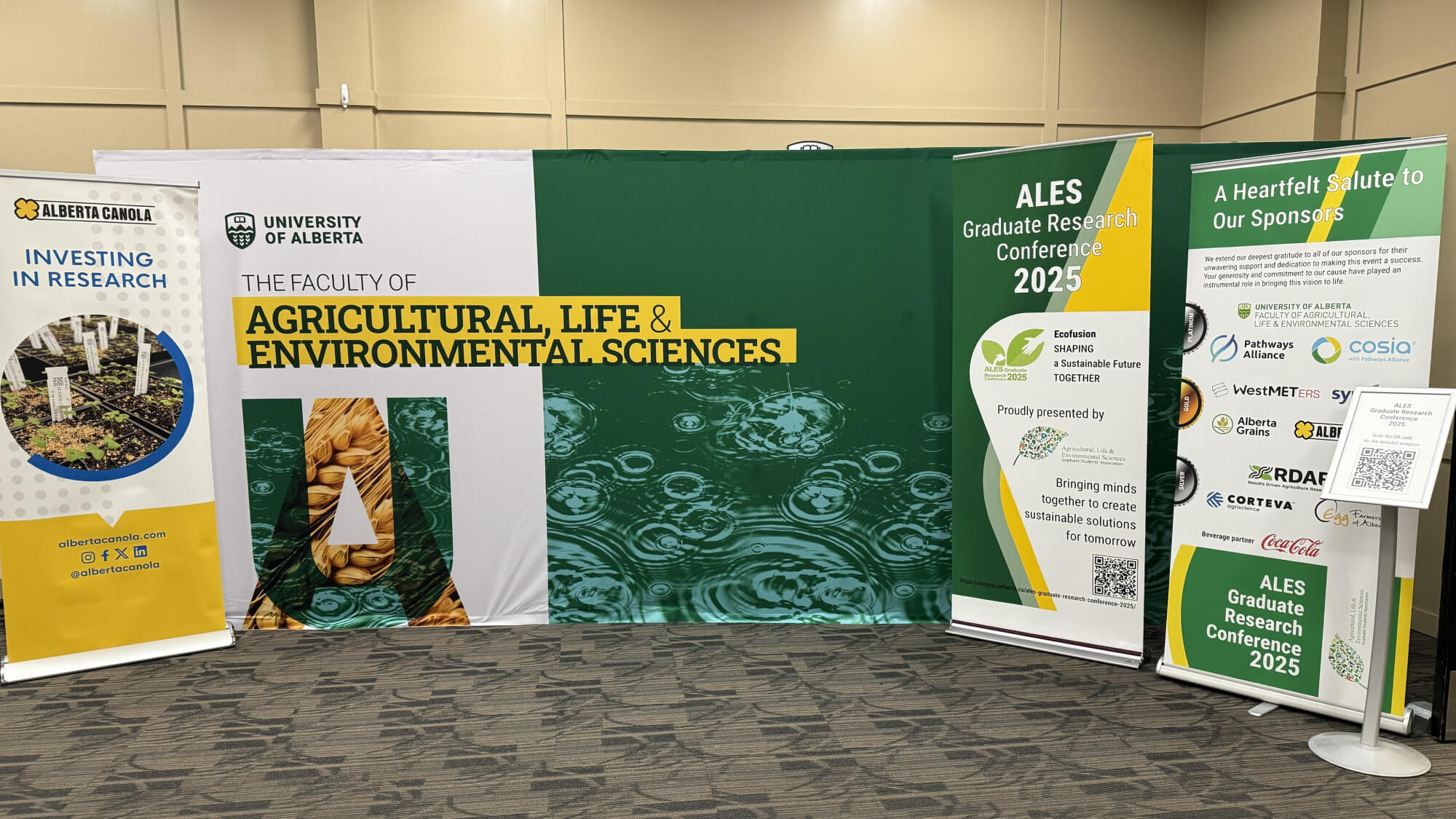
The Graduate Research Symposium, led by the Faculty of Agricultural, Life & Environmental Sciences, expanded into a full, two-day conference in Winter 2025, leading to more structured opportunities for graduate students to present research and build academic networks.
Highlights
- The Library Prize for Undergraduate Research and Sounds of Research competitions were established, increasing visibility and recognition of student research. Applying for these prizes gives students a chance to think critically about their research journey, showcase their work to a broader audience and celebrate undergraduate academic excellence.
- Through “Dose of Support,” students can access a 20-minute drop-in consultation with a team of registered social workers, psychologists, and occupational therapists. These sessions focus on addressing each student’s most immediate concern—whether that’s managing anxiety, building coping strategies, overcoming procrastination, or navigating campus resources.
- The University Health Centre (UHC) moved from drop-in appointments to online booking, reducing wait times and improving access to healthcare for patients. Now patients choose a time that works with their schedule, arriving just ten minutes before their appointment with no need to hold their place in a queue.
- The University of Alberta Sexual Assault Centre (UASAC) focused on improving access to specialized care and strengthening sexual violence prevention across campus. The launch of a new drop-in service that provides immediate access to professional support has made a significant impact, nearly doubling contact points, from 349 to 593 interactions.
In the faculties
- The Faculty of Kinesiology, Sport, and Recreation added wellness “touch-base” events for undergraduate students at the start and end of each semester as well as student-led wellness events with advisor-shared information. Students now receive reminders about mental health supports at key points in the term, not only during orientation.
- The Faculty of Science shortened wait times for academic advising by holding regular drop-in one-on-one advising sessions.
Supporting transition into and out of study

Career related supports, particularly for our graduate and international students, continue to be a key driver of satisfaction. Strengthening entry to the University of Alberta, whether for a first year undergraduate or a PhD student, supports their ability to get the most out of their time here.
Spotlight
Orientation's keynote speaker featured Farrah Khan, an award-winning gender justice advocate and leading expert in consent education. By integrating accessible keynote speaker sessions into orientation programming, the university establishes a shared language of respect and safety for the entire campus community from day one. Farrah’s insights empower students with the critical interpersonal tools needed to navigate relationships healthily, while reinforcing the university’s commitment to a culture of consent and a campus free from sexual harassment.

Highlights
- An internal job posting board was created for students and recent graduates, improving the visibility of career opportunities.
- Library Research Skills modules were introduced in Canvas, including campus-wide research workshops students can access on demand.
- The Graduate Student Online Orientation launched in September 2024. Since then, 871 students have accessed the course and 96% of post-orientation survey respondents agreed the topics were relevant to their experience.
- The Career Centre launched two new initiatives: Career Cafe, a monthly event that creates a low-pressure environment for students, alumni and employers to connect over coffee, and Career Conversations, a space for students to conduct informational interviews with professionals working in their areas of interest.
- The Graduate and Professional Programs Fair was reestablished. By bringing back this fair, students now have direct access to program information and workshops, streamlining their path to advanced degrees. This face-to-face event transforms abstract career goals into tangible, actionable opportunities for post-graduate success.